
Life Story Example, Explained Paragraph by Paragraph
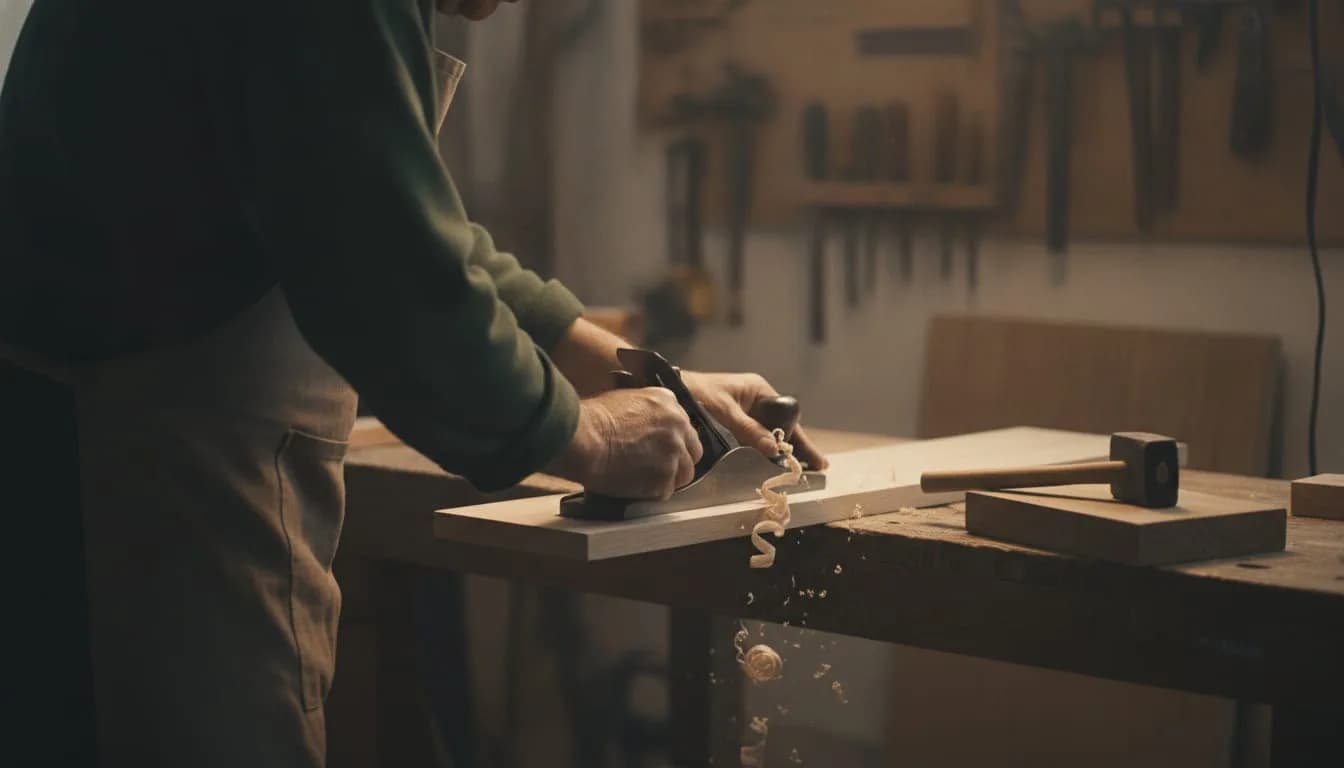
The easiest way to write a life story is with an example in front of you: just over two hundred words, split into five short parts. Below is one in full, about an invented person, with a note on what each part does and a sentence you can adapt.
A life story is a short, coherent text about someone's life, meant to be read aloud at a funeral or kept on a memorial page. It is not a full biography and not a list of dates.
Key takeaways
- Build the story from five parts (opening image, origins, work and family, one anecdote, ending) and give each part two to five sentences. Then it reads aloud calmly and stays within one page.
- Choose only one anecdote, and only one that nobody could tell about someone else. If the words would fit just as well any other father or mother, cut them.
- Write the opening image last, once you know which sound, smell or habit carries the whole story.
- For a full memoir, a life story book in care settings or a short announcement, choose another form. This example suits a funeral or a memorial page.
Writing a life story: what does an example look like?
The example below is about Jan, an invented carpenter and grandfather. Each part has a short label, so you can easily compare it with your own text later.
1. The opening image
If you were looking for Jan, you only had to listen. Somewhere in the house or the shed, someone was whistling half a tune while planing, and that was him.
2. The origins
Jan was born in the winter of 1948, the second of five children. His father was a carpenter. When he was seven, Jan got a hammer of his own: too light to do any damage with, heavy enough to be proud of.
3. Work and family
At sixteen he started as an apprentice in a small workshop. For forty years he made kitchens, staircases and dormers, and he was rarely late. In 1974 he married Annie. They had two daughters, Els and Marijke, and later five grandchildren who each got a plank from him to hammer on.
4. The anecdote
When Marijke bought her first house, Jan built the staircase. One step is a centimeter higher than the rest. "That way you know it was made by hand," he said, and he never let anyone fix it. Guests tripped over it for years, and Jan enjoyed it every time.
5. The ending
Jan died in the spring, at seventy-seven, at home, with Annie beside him. Anyone who climbs the stairs at Marijke's or Els's touches his work every day. Mind that one step.
The five parts differ in length and in job.
| Part | Question it answers | Length |
|---|---|---|
| Opening image | How do you recognize this person right away? | 1–2 sentences |
| Origins | Where does he or she come from? | 2–3 sentences |
| Work and family | What did he or she do, and for whom? | 3–5 sentences |
| Anecdote | What did this person really sound like? | 3–5 sentences |
| Ending | What remains? | 2–3 sentences |
The opening: where and when does the story begin?
Start with one image the listener can hear or see, and save the birth year and family situation for the second paragraph. At a funeral, many of those present already know the facts from the funeral notice.
Jan's whistling is that kind of detail: it says nothing about his trade, and yet everyone who knew him knows right away who is meant.
Can't find the image? Ask two people: "How could you tell he or she had come in?"
The second part does something different. It gives the listener a place in time and in the family, and ties one object (the hammer) to what comes later. Three sentences are enough. A sentence to adapt: "[Name] was born in [season and year] as [place in the family]. [Father or mother] was a [occupation]."
The middle: which details make someone real?
For each stage of life, pick one or two facts that say something about who the person was, and leave the rest out. Forty years of work fits in one sentence if you say what was made and what the person was like. "Rarely late" tells you more about Jan than a list of employers.
It helps to first draw a life line along the stages of life, as the 33 questions for your life story suggest, and to take tangible anchors along with it: photo albums, old letters, a toolbox. An object like that can yield the detail you would never have thought of yourself, like the plank for the grandchildren.
A sentence to adapt: "For forty years [name] made [what], and he or she was [a habit that says something]."
Mention family members once, with their relationship. Annie, Els and Marijke each get a single clause, not a paragraph of their own.
An anecdote that lets you hear the person: how do you choose it?
Choose the anecdote everyone keeps telling, and check that it contains an action and something the person said. The step a centimeter higher is that kind of scene: an object that still exists, a line Jan could really have said, and a reaction from others.
That follows the principle writing guides call "show, don't tell." You don't write that Jan was a stubborn, proud craftsman. You show what he did, and the listener draws the conclusion.
A simple test: could this anecdote also be about someone else's father? If so, it is too general. "He was always up for a joke" fails that test.
Ask around in the family: "Which story do we tell every birthday?" Write it the way it is told, with the person's own words in quotation marks. If a full scene doesn't fit, take one brief moment: a sentence, a gesture, an object.
A sentence to adapt: "When [name] [situation], [what that person did]. \"[His or her own words],\" he or she said."
The ending: how do you close without being too heavy or too brief?
Close with one factual sentence about the death and one sentence about what is left of the person in the world. Jan's ending mentions his death briefly and in passing, then returns to the staircase. That way the story ends with life, not with loss.
Avoid a summary of character traits, like "he was a kind, caring man." Words like that tell the listeners nothing they didn't already know. An object, a habit or a sentence that lives on does more.
Worried it will get too heavy? Choose a tone that suits the person. With Jan a wink worked; for a quiet mother a calmer ending fits.
A sentence to adapt: "[Name] died [when], aged [age], [where or with whom]. Anyone who [place or action where the work or the person is still visible], [what still lives on of him or her]."
The ending also returns to the opening: Jan could be heard, and at the end he can still be felt. An echo like that is optional, but it gives the story calm.
Who is this example for, and when should you choose another form?
It is meant for someone who has already died.
Each group needs a different form.
- A short notice in the newspaper or online: the story doesn't fit here. See how to write and shorten an obituary for newspapers, eulogy and web.
- A eulogy at the funeral: the story can be the backbone, but a eulogy needs more room to breathe and a perspective of its own. See writing a farewell speech with AI.
- A life story book for someone with dementia: that needs a different setup, for example with photos and short sentences. That is a different text with a different purpose.
- A life story of a parent who is still alive, or of yourself: the structure stays the same, but the ending is about now rather than farewell.
Writing your own life story: first steps for tonight
A first draft is easier to write if you first collect one sentence per part and only then write it out. Then you already know what carries the story.
- Note one sentence per part with a concrete fact or image.
- Ask two people who knew the person about the story that keeps being told. Write down their words exactly.
- Take one object or photo (a toolbox, a letter) and pull one detail from it for the middle.
- Write out the origins, the work and the anecdote.
- Write the ending.
- Write the opening image and read the whole thing aloud.
A first draft doesn't have to be finished. Let it rest for a night and ask a relative to correct one thing: a year, a name, a sentence that isn't right.
Frequently asked questions
Can I leave out something that was difficult in the family?
Yes. Leaving something out is not lying, as long as what you do write is true. If disagreement arises, first decide who the story is for. On a memorial page, the owner decides what appears.
Can I have an AI assistant write a life story?
An AI can help turn loose memories into sentences, but the story is only as good as the details you supply. Give the assistant real facts, like the step or the whistling, and check names and years yourself.
What if I know almost nothing about the person?
Then write about what others tell you, and say so. "According to Els, he always whistled" is more honest and often better than an invented detail. Sometimes a single conversation of roughly ten minutes already yields the anecdote.
Where do you keep the story once it's finished?
Put the life story at the top of an online memorial page, so family, friends and distant acquaintances can read it and add their own memories below it.
With WhoWasThisGuy.com you create a lasting memorial page with the story, photos and the memories of everyone who knew the person, shareable with one link or QR code, for a one-time US$10 and free to start. The pages open soon.