
A tribute to my late father: what to prepare for each person
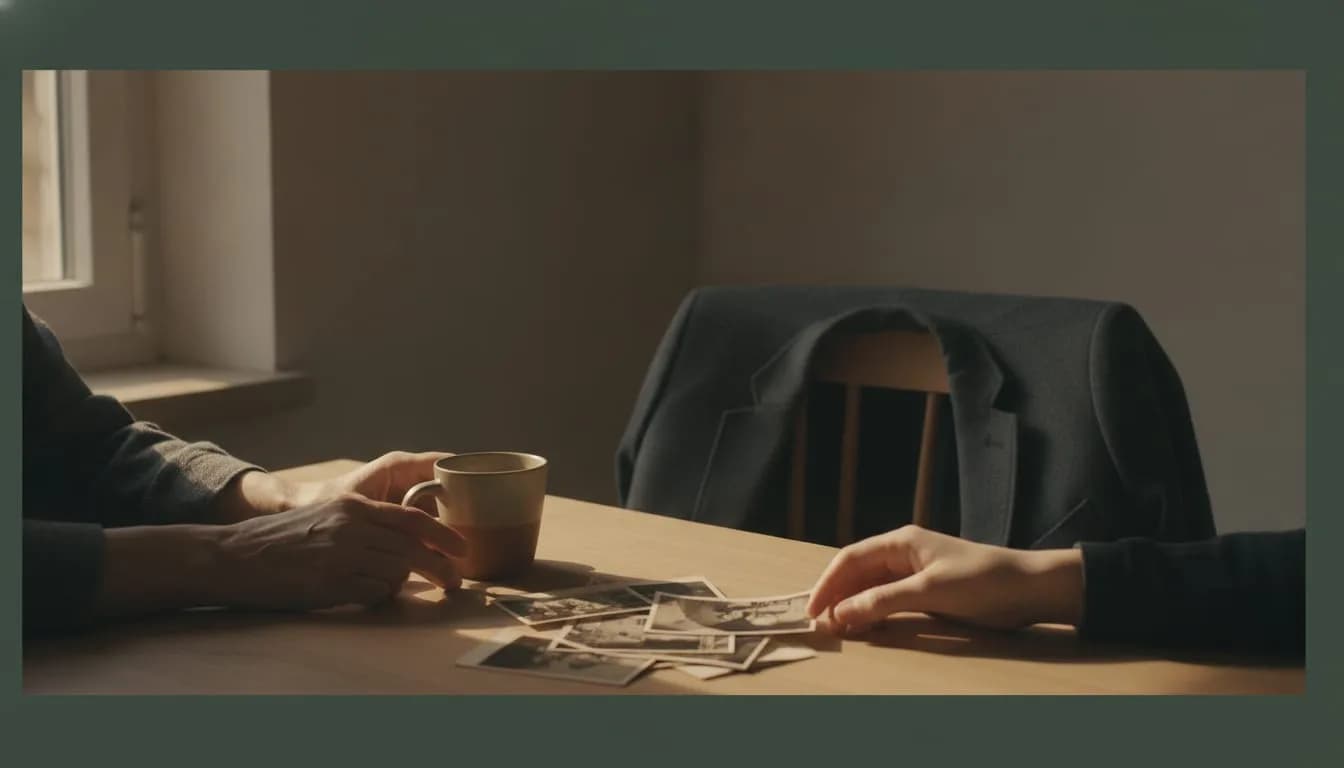
A tribute to my late father is the set of words, photos and memories with which the family remembers him. It works best when you think of three audiences: those who speak at the funeral, those who listen in the room and those who are far away. A single online page, shared by link or QR code, reaches all three.
You don't need to do everything below. Pick the items that fit your family and leave the rest for later.
Key takeaways
- A three-minute speech runs to about 400 words, enough for one or two stories and too short for a biography.
- The same address can be printed on the ceremony programme, turned into a QR code, and sent by message to those who can't travel.
- On WhoWasThisGuy.com, the page can be read in 15 languages, with machine translations always marked as such, and it costs US$10 once, with no ads and no subscription.
- A concrete question ("what advice did he give you that you didn't follow?") brings in more memories than the generic request "write a few words".
- The tribute doesn't end at the funeral: his birthday, the anniversary of his passing and Father's Day are natural dates to add a new memory.
What tribute to a late father makes sense for my family?
The right tribute starts with a single sentence: what the family wants to have said about your father. Write it before any speech or photo selection. "He was a man who solved everything with patience and a coffee" already guides what goes in and what stays out.
Then think about who speaks at the funeral, who listens in the room and who is far away. Each needs something different and receives the tribute by a different route:
| Who | What they need | How it reaches them |
|---|---|---|
| Those who speak | A short text that reads well aloud | Printed sheet and a copy on the phone |
| Those in the room | Something to keep and revisit later | Programme with a QR code, photos on display |
| Those far away | A way to take part without being there | Link by message, page in their language |
Check these points before going further:
- Choose the central sentence. One clear idea prevents a speech that tries to say everything and says nothing.
- List who will be there and who won't. Note the countries and languages of your closest relatives, because that decides whether a single version in Portuguese is enough.
- Agree who decides. With siblings, choose one person who has the final word on what is published, to avoid arguments in the middle of a week of mourning.
- Set the tone. If your father liked to laugh, there can be humour; the family knows, not a text template.
Beyond the funeral, the article how to honour someone who has died organises the gestures by stage, from the first week to the first anniversary, the same date this text suggests marking as a family.
What should I prepare for whoever is speaking at the funeral?
Whoever speaks needs a text of two to four short pages at most, written to be said aloud rather than read in silence. At a calm pace, around 130 words a minute, three minutes comes to about 400 words. A good tribute fits in that, with one story and a closing sentence.
For the person speaking, confirm these items:
- Just one concrete story. "He taught me to ride a bike on the dirt road, and he held the saddle long after I was already pedalling on my own" says more than "he was a devoted father".
- Short sentences. The voice falters on long sentences, and listeners lose the thread.
- A named stand-in. Agree with a brother or friend to read the text if emotion won't let you continue; having that way out takes weight off.
- The text printed in large type. The phone can lock or run out of battery at the worst moment.
- One rehearsal aloud. It helps you time it and find the sentence that trips you up.
- One person to thank. Say the name of whoever cared for him at the end, if that applies; it's a gesture families remember.
If you're not used to writing, the writing assistant on WhoWasThisGuy.com helps turn loose memories into sentences. The decision about what to accept and what to change always stays with you. For the more factual format, how to write an obituary shows how to adapt the same text for the newspaper, the speech and the web.
What should I bring for the people in the room: photos, a link and a QR code?
The people in the room need three things: photos to look at, a programme with the QR code, and someone to say aloud where the memories will be kept afterwards. The QR code is only worth anything if it works the moment someone points a phone at it, so test it before printing.
Organise it like this:
- Ten to twenty photos, not a hundred. Choose ones from different ages and different places, with someone to identify who appears in each.
- The QR code printed at a size that can be read at arm's length. Two to three centimetres per side is usually enough, as long as the contrast is good and it sits on a light background.
- The link written out next to the code. Those who don't use the phone camera can type the address.
- One sentence on the programme explaining what it is. "Here you can read our father's story and leave your own memory" gives a reason to scan.
- Someone to announce it at the end of the ceremony. One sentence from the master of ceremonies or a relative is enough.
- A paper copy for those without a phone. Some older guests will prefer it.
A single memorial page brings together the story, the photos and everyone's memories. It stays at the same address for good, and whoever opens it doesn't need to create an account to read. If you want to understand how to keep control over what appears, see create an online memorial page.
How do I include people who are far away or read in another language?
Those who are far away take part better when they receive the link before the ceremony, in their own language, and can read the same thing as those present. WhoWasThisGuy.com lets you read the page in 15 languages through clearly marked machine translations, so each relative sees the text in the language they understand.
Imagine three siblings: one lives in the same country as the father, another on a different continent, and an aunt who only reads Spanish. Without a shared page, the second sibling hears the speech by video call and the aunt gets a summarised version. With a link sent the day before, both read the same tribute, each in their own language, and can write their own memory.
To make that work:
- Send the link before the funeral. Those far away need time, and a way to read when it's the right hour in their time zone.
- Write simple sentences. Machine translation handles puns and family nicknames badly; explain in brackets what "o Zeca" means.
- Keep the original text in view. The translation helps people understand, but the original remains the family's voice.
- Ask a bilingual relative to read the translated version. If an important sentence sounds strange, it can be fixed in the original.
- Tell those far away that they can contribute. A relative who can't come to the funeral can leave a photo or a memory, and becomes part of the tribute.
If the ceremony is streamed, put the link in the description of the broadcast so that viewers know where to add what they want to say.
How do I ask relatives and friends for memories without pressure?
Ask for just one memory and pose a concrete question, with no tight deadline. A question like "which phrase of your father's do you still say at home?" is easier to answer than "write something about him". Anyone who doesn't know where to begin can begin there.
What helps:
- Send the question individually. A personal message gets more replies than a message to the family group.
- Offer three questions to choose from. For example: your first memory of him, something he always did, something he taught without realising it.
- Say it can be short. Two sentences are enough; so is a photo with a caption.
- Don't set a deadline. Some people can only write weeks later, and that shouldn't count as a failure.
- Accept silences. Someone who doesn't reply may be grieving in a different way.
On WhoWasThisGuy.com, relatives can add stories and photos to the page, and the owner decides what appears. That removes the fear of seeing something published that wasn't wanted. Anyone who finds writing hard can use the assistant to turn a spoken memory into text.
What gestures can we keep up on birthdays and special dates?
The anniversary of his passing, your father's birthday and Father's Day (whose date varies from country to country) are the three moments when missing him weighs most, and a small, repeated gesture usually helps. Adding a new memory to the page once a year keeps the tribute alive without requiring big preparations.
Some simple ideas:
- Reread the page as a family. At the table, aloud, or by video call with those who are far away.
- Add a photo or a new memory. Even a single sentence; the page grows over the years.
- Cook his dish. Write the recipe on the page, with the name of whoever taught it.
- Write a short message for Father's Day. According to UOL, the most fitting message for a father who has died stresses that physical absence doesn't erase love or everyday advice.
- Mark the date of the first anniversary. The first time, agree beforehand who does what, so that nobody is alone that day.
In countries that observe All Souls' Day on 2 November, it's also a good time to return to the page and share the link with anyone who hasn't received it yet.
Frequently asked questions
Can I do the tribute after the funeral?
Yes, and many families only manage it weeks or months later. A memorial page has no deadline, so you can start with the story and the photos and add the rest later. If there is a seventh-day Mass or another gathering, that can be the moment to share the link.
What if I can't speak at the funeral because of emotion?
That isn't failing. Hand the printed text to a brother, friend or celebrant and ask them to read it for you, or read only the first sentence and pass the turn. The text can also stay on the page, so that anyone who wants can read it calmly afterwards.
Are machine translations reliable?
They help convey the meaning, but they can lose humour, nicknames and family expressions. On the page, translations are clearly marked as automatic, and the original text remains available. For the most important sentences, ask a bilingual relative to confirm the translated version.
How much does the memorial page cost?
On WhoWasThisGuy.com, getting started is free and the payment is US$10, once, with no subscription and no ads. Memorial pages open soon, so it may be useful to start gathering photos and memories now.
The three things that matter most, and where to start
If there's only time for three things, choose these: a sentence that says who your father was, a short text for whoever speaks, and a link or QR code that reaches those in the room and those far away.
- The central sentence. Write it first, before you draft the speech or pick any photo. It is one line on what the family wants said about your father, and it gives you a test for each story and each picture: does it fit, or does it belong somewhere else?
- A text of about 400 words, with one concrete story. It's what you can say aloud without losing your voice.
- A single shared page. It brings together the story, the photos and everyone's memories, and reaches those who read in another language.
WhoWasThisGuy.com lets you create that page for your father: his story, the photos and the memories of those who knew him, in one place shared with a link or a QR code. Relatives add stories and photos, you decide what appears, and the page can be read in 15 languages with marked machine translations. It starts free and costs US$10 once, with no subscription or ads. When pages open, you can begin with a single photo and a sentence, and add the rest at your own pace.