
Remembering a Loved One Who Died: A Checklist by Time Period
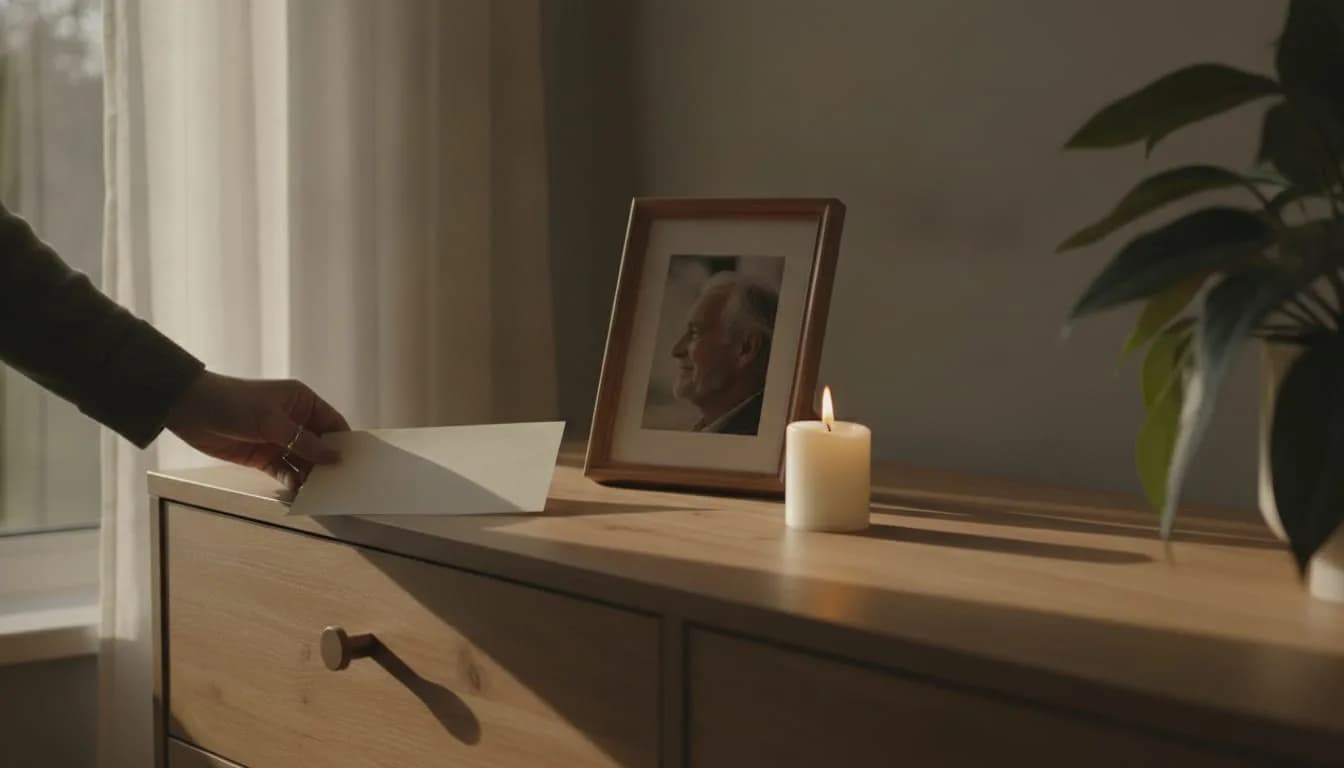
Remembering a loved one who died doesn't have to happen all at once, and it doesn't have to happen before the funeral. You begin with one small act and build on it later, at the pace that suits your family.
A memorial page is one online place for the story, photos and memories of someone who died, which you can share with a link or QR code. You can start it for free and add to it later. Nothing has to be finished today.
Key takeaways
- The first days ask very little: putting a photo out, lighting a candle and writing down one memory is enough.
- The funeral program can carry a QR code that links to a memorial page, so people who couldn't attend can follow along too.
- A memorial page at WhoWasThisGuy.com is free to start and then costs a one-time US$10, with no subscription and no ads.
- Family members can add stories and photos, but the page owner decides what appears.
- The anniversary of the death, birthdays and holidays come back every year. A small, fixed ritual makes them easier to bear than working out what to do each time from scratch.
What can I do in the first days to remember someone who died?
In the first days, four small acts are enough: putting a photo out, lighting a candle, saying the name out loud and writing down one memory while it's fresh. Anything bigger can wait. You have nothing to prove to anyone right now.
- Put a photo where you'll see it every day. A fixed spot gives your feelings an anchor, even when you don't know what you're supposed to feel.
- Light a candle at a regular time, in the evening for example. A recurring two-minute moment is often easier to keep up than a grand gesture.
- Say the name, to yourself or to someone else. Many bereaved people notice that others avoid the name out of caution, and that it comes as a relief when someone does say it.
- Write down one memory, even if the sentences aren't pretty yet. Details like a joke, a smell or a saying fade faster than you'd think, and you'll need them later for a eulogy or for writing an obituary that gets it right.
- Keep cards and messages together in one box or folder. What arrives now is something you'll want to be able to reread in a year.
- Put off all the big decisions. A memorial spot, a tree or a piece of jewelry doesn't need to be chosen in the first week.
What fits around the funeral or memorial service?
Around the funeral, the things that work best are those guests can do together: a personal photo, one story told aloud, music that belonged to the person, and a way to leave memories behind. A QR code on the program connects all this to a place that lasts beyond the day itself.
- Choose one photo for the program that looks like them. A photo of someone laughing or busy with something says more than an official passport picture.
- Ask someone to share a short memory; a few minutes is enough. Short and concrete sticks better than long and general.
- Set out cards and pens and ask guests to write down a memory. That way the family gets, in writing, what people say about them.
- Play one song that truly was theirs. Their own music makes the service recognizable and gives guests something to smile at.
- Put a link or QR code on the program. People who couldn't come, relatives in another country for example, can still read, look and add something.
- Consider a living keepsake, such as a tree or flower bulbs. It grows with the seasons, and planting a memorial tree after a death can be done in your own garden or in a recognized memorial forest.
The page doesn't have to be finished on the day of the funeral. You can start with just a name and one photo and fill it in later. How to set that up calmly is covered in creating a memorial page for someone who died. Memorial pages at WhoWasThisGuy.com are opening soon.
How do I gather memories from family and friends?
Gathering memories works best with one concrete question put to a small group of people, with no deadline. Five to ten close people who knew the person at different stages of life give a more complete picture together than one person with a long story.
- Make a list of five to ten people. Think of family, an old friend, a colleague, a neighbor: each knew a different side.
- Ask one concrete question. "What was a moment when he made you laugh?" gets you more than "write something nice."
- Tell them one sentence is enough. People who aren't writers will otherwise drop out.
- Don't set a deadline. Some stories only come after months, once the first grief eases a little.
- Share the link to the page. On a memorial page, close people can add stories and photos themselves, and as the owner you decide what appears.
Writing can be heavy. An AI writing assistant can help turn loose memories, a few keywords or a voice note you've typed out, into sentences. The words and the choices stay yours.
If the family is spread across countries, everyone writes in their own language. Pages can be read in 15 languages through clearly marked automatic translations, so a nephew in another country can still follow the story of his uncle. Automatic translation can contain errors, so check names and special words.
Where do I keep stories and photos so they last?
Stories and photos are best kept in one place that more people can reach than just you and that doesn't depend on a single phone. A memorial page combines story, photos and memories. A box or a loose folder only stores files.
| Place | Strong | Weak |
|---|---|---|
| Phone or shoebox | Personal, close at hand | Gets lost in a loss or a move, nobody else sees it |
| Shared photo folder | Quickly filled, anyone can upload | No story or context, after years nobody knows who is who |
| Memorial page | Story, photos and memories together, shareable by link or QR code | You have to start the page and fill it |
At WhoWasThisGuy.com, starting is free, and the page then costs a one-time US$10, with no subscription and no ads. The owner decides what appears. That means sensitive photos, or a story the family doesn't agree on, don't simply become visible.
For every photo, add at least the name of who is in it and roughly the year. In twenty years, maybe nobody will remember who the man next to Grandpa was.
How do I mark the anniversary of the death, birthdays and holidays?
The anniversary of the death, birthdays and holidays come back every year, and a small, fixed ritual makes them more bearable. Think of a dinner with their favorite dishes, a walk along a favorite route, or writing down memories and reading them aloud. Monuta lists these rituals for the anniversary of a death as ways to give shape to the day itself.
On the anniversary of the death
- Decide beforehand what you'll do and with whom. A plan keeps the day from catching you off guard.
- Buy or make one thing that belonged to them. A flower from the garden or a favorite cake is enough.
- If you want to do it alone, do it without guilt. Not everyone in the family grieves in the same way or at the same time.
On the birthday
- Put a candle by the photo, or treat someone to something they loved. That way the day becomes a celebration of a life, not only a loss.
- Ask a close person to add a new story to the memorial page. One more memory each year lets the page grow.
On holidays
- Say the name at the table and share one memory. The empty chair is less heavy when someone breaks the silence.
- Prepare one dish they always made. Smell and taste bring back memories faster than words.
- If you know someone who is grieving, send a card with the name of the person who died in it. The bereaved appreciate it when others show that their person hasn't been forgotten.
The three things that matter most
If the list feels too long, these are the three things most bereaved people appreciate most afterwards:
- Write down one memory in the first week. Details fade, and this later becomes the basis for any speech or text.
- Choose one place where stories and photos come together. What stays scattered across phones and boxes gets lost over the years.
- Create one fixed ritual for the recurring days. Then you don't have to work out each year what to do.
Frequently asked questions
How long after a death should you remember someone?
There is no time limit within which remembering has to happen. Some people do it right away, others only after a year or longer. If you're unsure, pick one moment that means something to you, such as the first birthday, and start small there.
What if family members disagree about how to remember?
Let everyone remember in their own way: one with a candle, another with a walk. On a shared page, different people can add their own story, while the owner decides what is ultimately visible. That avoids arguments over one official version.
Can I still remember someone who died years ago?
Yes, there is no limit. After years, people are sometimes willing to share stories that were too painful before. Start with one photo and ask an old friend or relative for a memory.
How do I let family abroad read along?
Share the link or QR code, and let everyone write in their own language. The page can be read in 15 languages through clearly marked automatic translations. Ask a bilingual relative to check important names or sentences, because automatic translation can contain errors.
Start a memorial page at your own pace
WhoWasThisGuy.com lets families start a memorial page for free, with just a name and one photo, and add to it later with stories, photos and memories from everyone who knew the person who died. You share the page with a link or QR code, for example on the funeral program. Memorial pages are opening soon.
It costs a one-time US$10, with no subscription and no ads. You decide what appears, and nobody pushes you to hurry. Start today with one memory in a note on your phone. The rest comes when you're ready for it.
This article was prepared with the help of AI tools.