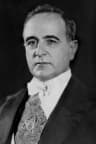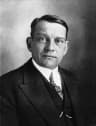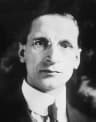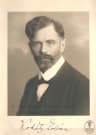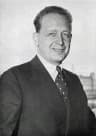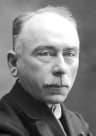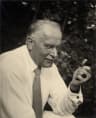
Born
April 21, 1882
Cambridge, United States
Died
August 20, 1961
Randolph, United States
Known for
American physicist
Percy Williams Bridgman (1882–1961) was United States best known for American physicist.
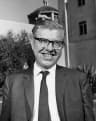
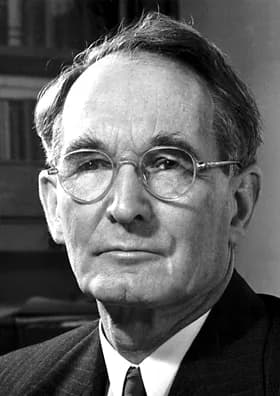
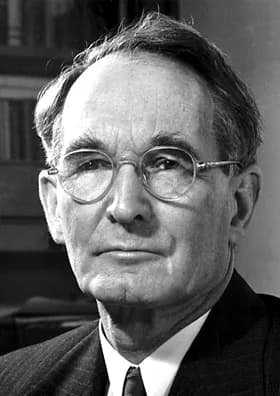
Percy Williams Bridgman (April 21, 1882 – August 20, 1961) was an American physicist from Cambridge, United States. He received the Nobel Prize in Physics in 1946 for his invention of an apparatus to produce extremely high pressures and the discoveries made therewith. His legacy includes the Bridgman effect and the mineral bridgmanite.
Chapter
Life chapters
Chapter 1 · 1882· Chapter 1 of 6
Early Life and Origins
Percy Williams Bridgman began his life on April 21, 1882, in Cambridge, United States. Details of his early family and upbringing are not provided, yet his early education clearly laid a strong foundation for a distinguished academic and scientific career. The intellectual environment of his birthplace likely fostered his burgeoning interest in the natural sciences from a young age.
His foundational studies and subsequent academic pursuits prepared him to become a prominent physicist. This early dedication to learning and inquiry was a crucial stepping stone towards his later, internationally recognized achievements. Bridgman's origins in Cambridge set the stage for a lifetime dedicated to scientific exploration and discovery.
Chapter 2· Chapter 2 of 6
Career Beginnings
Bridgman's journey into the world of physics began with a focus on understanding fundamental properties of materials. While the specific details of his initial professional steps are not explicitly outlined, his early work clearly demonstrated an inventive mind. He quickly developed a specialization in an area that was then largely unexplored: the behavior of substances under immense pressure.
His early investigations involved the challenging task of creating controlled environments capable of generating such pressures. This foundational period involved significant experimentation and the development of novel techniques. It was during these initial phases that Bridgman laid the groundwork for the apparatus that would later bring him international acclaim and numerous scientific breakthroughs.
Chapter 3 · 1946· Chapter 3 of 6
Major Achievements and Career Highlights
A defining moment in Percy Williams Bridgman's career arrived in 1946 when he was awarded the Nobel Prize in Physics. This prestigious honor was bestowed upon him for his invention of an apparatus capable of producing extremely high pressures. Furthermore, the Nobel Committee recognized the significant discoveries he made within the field of high-pressure physics using this innovative equipment.
His work extended beyond just an invention; it led to fundamental insights into material science. Several significant scientific phenomena and techniques bear his name, illustrating his lasting influence. These include the Bridgman effect, the Bridgman–Stockbarger technique, and even a high-pressure mineral, bridgmanite, which further cements his name in geological and physical science.
Chapter 4 · 1912· Chapter 4 of 6
Notable Works or Contributions
Bridgman was not only an inventor and experimentalist but also a thoughtful contributor to scientific discourse through his extensive writing. His academic publications, though few in number with an h-index of 2 across 7 papers, were impactful in their respective fields. One of his early significant works was "Verhalten des Wassers als Flüssigkeit und in fünf festen Formen unter Druck," published in 1912, which garnered 15 citations.
Beyond his experimental physics, Bridgman also dedicated considerable attention to the philosophy of science. He wrote extensively on the scientific method itself and other philosophical aspects concerning scientific inquiry. Works like "Einsteins Theorien vom Methodologischen Gesichtspunkt" (1979) and "DIE EIGENSCHAFTEN VON METALLEN UNTER HOHEN HYDROSTATISCHEN DRUCKEN" (1964) exemplify his broad intellectual engagement, even posthumously reflecting his ongoing influence.
Chapter 5· Chapter 5 of 6
Later Years
Percy Williams Bridgman continued his scientific pursuits and intellectual contributions throughout his later life. His commitment to understanding both the physical world and the methodologies used to study it remained unwavering. He maintained an active role in the scientific community, further cementing his expertise in high-pressure physics and the philosophy of science.
Bridgman passed away on August 20, 1961, in Randolph, United States, at the age of 79. His passing marked the end of a long and productive career, leaving behind a wealth of knowledge and a legacy of innovation. Even in his later years, his thinking and written works continued to contribute to scholarly discussions, shaping future generations of physicists and philosophers of science.
Chapter 6· Chapter 6 of 6
Legacy and Impact
The legacy of Percy Williams Bridgman is deeply embedded in the field of modern physics and beyond. His invention of high-pressure apparatus did not merely create a new tool; it opened an entirely new frontier for scientific exploration. This allowed scientists to study materials under conditions previously unattainable, leading to discoveries with wide-ranging implications.
His insights into the scientific method and philosophy of science continue to influence how researchers approach their work. The nomenclature that bears his name—the Bridgman effect, the Bridgman–Stockbarger technique, and bridgmanite—serves as a constant reminder of his pioneering spirit and fundamental contributions. Bridgman's work irrevocably altered our understanding of matter and the pursuit of scientific truth.
A life in moments
The moments that shaped a life

FAQ
Frequently asked
When did Percy Williams Bridgman die?
Percy Williams Bridgman died on August 20, 1961 in Randolph, United States, at the age of 79.
Where was Percy Williams Bridgman born?
Percy Williams Bridgman was born in Cambridge, United States on April 21, 1882.
What is Percy Williams Bridgman best known for?
Percy Williams Bridgman is best known for American physicist.
How old was Percy Williams Bridgman when they died?
Percy Williams Bridgman was 79 years old at the time of death.
What nationality was Percy Williams Bridgman?
Percy Williams Bridgman was from United States.
Timeline
Life at a glance
Photo gallery
A life in pictures
Click any polaroid to expand · 24 photos
QR Code
Share This Biography
Print & Share
Scan to visit this biography page. Print for events, exhibitions, or educational materials.