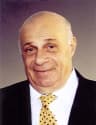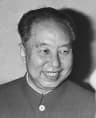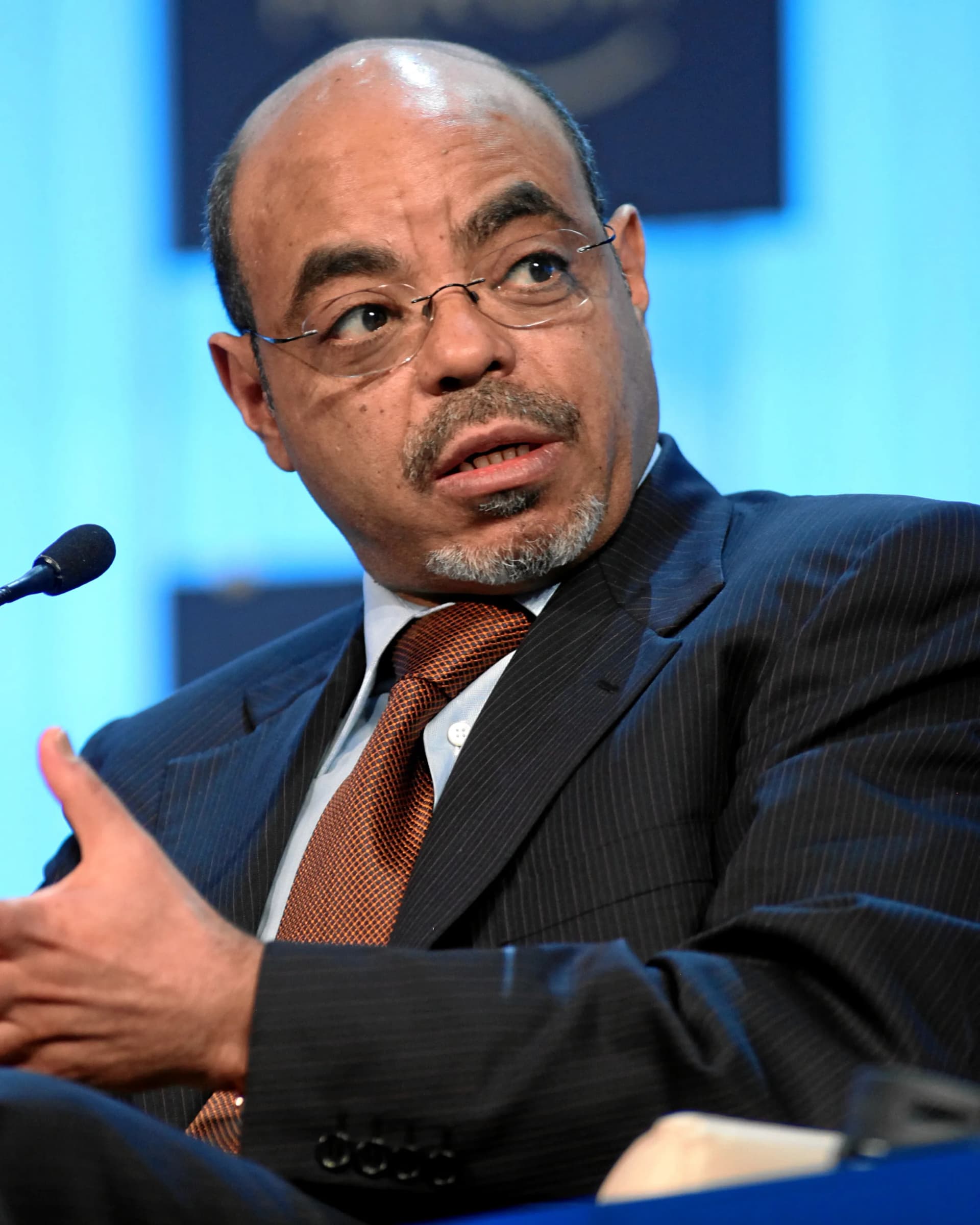
Born
May 8, 1955
Adwa, Ethiopia
Died
August 20, 2012
Brussels, Belgium
Known for
Ethiopian politician; Prime Minister of Ethiopia
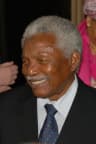
Meles Zenawi (1955–2012) was Ethiopia best known for Ethiopian politician; Prime Minister of Ethiopia.
Meles Zenawi (May 8, 1955 – August 20, 2012) was an Ethiopian politician and military personnel from Adwa. He served as President from 1991 to 1995 and Prime Minister from 1995 until his death in 2012, profoundly shaping Ethiopia's modern political landscape for over two decades. His leadership is a critical chapter in the nation's recent history.
Chapter
Life chapters
Chapter 1 · 1955· Chapter 1 of 7
Early Life and Origins
Meles Zenawi Asres entered the world on May 8, 1955, in Adwa, a historic town nestled within Ethiopia's northern Tigray Region, an area renowned for its deep cultural roots and pivotal role in the nation's historical narratives. His formative years in Adwa, a place deeply connected to Ethiopian identity and past struggles for sovereignty, undoubtedly played a crucial role in shaping his early perspectives and fostering a profound political awareness. The specific environment of his birth in Ethiopia, amidst such a rich historical backdrop, provided the foundational experiences that would later inform his dedicated leadership and unwavering commitment to national service.
While extensive details about his family background, specific childhood experiences, and educational pursuits prior to his political emergence are not extensively detailed in public summaries, his origins in Adwa, Ethiopia, firmly placed him within a local context that would eventually propel him onto the national and international stage. This intimate connection to a particular region of Ethiopia, the town of Adwa, became the quiet, yet significant, starting point for a politician who would ultimately come to define an entire era for the entire country. The early life of Legesse Zenawi Asres, though not widely publicized in its intricacies, provided the essential, unwritten backdrop for his extraordinary and transformative political evolution.
The geographical context of his birth in Adwa, a region with a strong sense of identity and history within Ethiopia, is often seen as a crucial element in understanding his later political motivations and connections to the nation's diverse populace. This initial setting in Ethiopia laid the groundwork for a life that would eventually traverse national and international boundaries, culminating in his passing in Brussels, Belgium. Meles Zenawi's early days, though perhaps obscure, were nonetheless integral to the development of the leader he became for Ethiopia.
Chapter 2· Chapter 2 of 7
Career Beginnings
Meles Zenawi's initial foray into the public sphere and national influence was forged not through conventional political channels, but rather through his active involvement as a rebel militant commander, a challenging path that profoundly shaped his strategic thinking and unyielding resolve. This demanding period as a military personnel gave him a deep, firsthand understanding of conflict dynamics, organizational complexities, and the practicalities of exercising leadership under extremely challenging circumstances within Ethiopia. His experiences during this formative phase were absolutely instrumental in his subsequent rise to prominence, establishing him as a formidable and respected figure even before he officially assumed formal governmental roles within the emerging Ethiopian state.
The significant transition from a military rebel leader to a national politician marked a profound and decisive turning point in Meles Zenawi’s illustrious career, demonstrating his remarkable adaptability, strategic acumen, and his unwavering ambition for the future prosperity and stability of Ethiopia. This foundational experience as a commander, deeply rooted in the tumultuous political landscape of Ethiopia, provided him with a unique and potent blend of military discipline, tactical insight, and a sharp political understanding. It was this initial, rigorous engagement in the military arena that ultimately paved the way for Meles Zenawi Asres to emerge as a central and defining figure in the re-establishment and subsequent governance of Ethiopia, from the early 1990s onward, leading to his long tenure.
His early career was characterized by a deep involvement in the struggle that led to the overthrow of the previous regime in Ethiopia, showcasing his early commitment to political change. This period of intense military and political activity built the foundation for his later executive roles, where his experiences as a commander would inform his approach to national security and governance. Meles Zenawi's journey from Adwa to the highest offices in Ethiopia began with these formative, albeit challenging, military engagements.
Chapter 3 · 1991· Chapter 3 of 7
Major Achievements and Career Highlights
The absolute core of Meles Zenawi’s professional achievements and enduring legacy lies in his sustained and impactful leadership at the highest echelons of the Ethiopian government for over two remarkable decades, a clear testament to his extraordinary political longevity, strategic foresight, and profound influence. He first ascended to the prestigious role of President of Ethiopia in 1991, following a period of profound national transformation and significant political restructuring across the entire country. This initial presidential term, spanning from 1991 to 1995, meticulously set the crucial precedent for his long, influential, and defining career at the very helm of the Ethiopian state, marking the beginning of an era.
In 1995, Meles Zenawi smoothly transitioned from the presidency to assume the exceptionally powerful office of Prime Minister of Ethiopia, a pivotal position he would hold continuously and without interruption for an unprecedented duration until his passing on August 20, 2012. This remarkable seventeen-year tenure as Prime Minister signifies one of the longest and most consistent periods of continuous leadership in modern Ethiopian history, during which he was undoubtedly the principal architect of national policy and socio-economic reforms. His consistent and unwavering presence as Prime Minister underscored a deep personal commitment to the nation, as he skillfully steered Ethiopia through immense social, economic, and diplomatic changes from its bustling capital city.
Throughout his extensive time as Prime Minister, Meles Zenawi was widely recognized and acknowledged as the central, indispensable decision-maker in all Ethiopian affairs, meticulously guiding the country’s interactions both domestically and on the complex international stage. His administration oversaw numerous, ambitious initiatives specifically aimed at fostering robust national development, ensuring regional stability, and promoting economic growth across the diverse regions of Ethiopia. The sustained period of leadership by Meles Zenawi from 1991 to 2012, encompassing both presidential and prime ministerial duties, undoubtedly marks a profoundly defining and transformative era for the East African nation, solidifying his place in its historical narrative.
His leadership was characterized by a focus on developmental policies aimed at poverty reduction and infrastructure growth within Ethiopia. Meles Zenawi, as a dedicated politician, championed a specific economic model for the country, which he believed would accelerate its progress. The continuity of his vision over two decades allowed for the implementation of long-term strategies, shaping the very fabric of Ethiopian society and its place in the world.
Chapter 4· Chapter 4 of 7
Personal Life
While Meles Zenawi Asres was undeniably a towering figure in Ethiopian politics and a dedicated military personnel in his early career, specific and comprehensive details regarding his personal life, including intimate aspects of his family dynamics, private relationships, or individual interests outside of his public duties, are not extensively detailed in the provided biographical information. His life was predominantly and conspicuously characterized by his demanding and all-encompassing roles as a formidable politician and a former military personnel, which placed him almost constantly in the intense glare of the public eye and the intricate machinations of national governance. The primary focus of most biographical accounts and public records remains firmly on his significant and tangible contributions to the political landscape and the overall development of Ethiopia.
The absence of explicit information about his private hobbies, recreational activities, or personal passions outside of his official capacities as President and Prime Minister clearly indicates that his public identity was almost entirely consumed by his rigorous and relentless duties to the state. Meles Zenawi's profound dedication to his governmental responsibilities as the leading figure of Ethiopia appears to have been the single overarching and defining theme of his entire adult life, overshadowing most other aspects. Consequently, a comprehensive and in-depth understanding of his personal world, beyond his immense and publicly visible political endeavors, is not available from the summary details provided, keeping certain aspects of Meles Zenawi private.
Despite the limited public knowledge regarding his personal sphere, his professional life was one of unwavering commitment to his vision for Ethiopia, from his birth in Adwa to his death in Brussels. His identity was deeply intertwined with his role as a national leader, a politician who steered the course of a nation for over twenty years. This singular focus on public service became the defining characteristic of Meles Zenawi's existence, making specific private details less prominent in historical records.
Chapter 5 · 1991· Chapter 5 of 7
Notable Works or Contributions
Meles Zenawi's most significant and enduring contributions are primarily defined by his direct, hands-on engagement in high-level governance and the meticulous formulation and implementation of crucial policy-making for the Ethiopian state, rather than through the creation of specific academic writings, groundbreaking inventions, or traditional artistic endeavors. His sustained and powerful leadership as President of Ethiopia from 1991 to 1995, and subsequently as the long-serving Prime Minister from 1995 until his death in 2012, collectively constituted his most profound, tangible, and far-reaching "works" and achievements. These pivotal political roles involved the daily, intricate process of formulating, implementing, and overseeing national policies that fundamentally impacted millions of lives and shaped the destiny of communities across the entirety of Ethiopia.
As a leading politician and a former military personnel, Meles Zenawi's lasting legacy is deeply embedded within the comprehensive legislative frameworks, the sweeping economic reforms, and the astute diplomatic strategies that were conceived and enacted during his extensive and influential tenure. His "contributions" were inherently institutional and governmental in nature, directly shaping the fundamental direction and developmental trajectory of the Ethiopian nation for over two impactful decades from its bustling capital. The critical decisions made under his formidable leadership, spanning from the transformative early 1990s through to the early 2010s, unequivocally represent the absolute core of his professional output and his pervasive, enduring impact on the country, cementing his place in its historical records.
Therefore, when attempting to consider Meles Zenawi's "notable works," one must necessarily look to the broad and sweeping arc of his distinguished political career, his consistent and authoritative presence at the absolute pinnacle of Ethiopian power, and the specific historical periods he so effectively presided over. His considerable influence was primarily exerted through the intricate machinery of government, guiding Ethiopia through various complex stages of its post-conflict development and its strategic engagement with the broader international community, a clear testament to his continuous and focused efforts as a national leader. The policies and reforms introduced during his time directly affected the lives of citizens from Adwa to the capital, showcasing the reach of his governmental contributions.
Chapter 6 · 2012· Chapter 6 of 7
Later Years
Meles Zenawi remained fully and unyieldingly immersed in his demanding and all-consuming role as Prime Minister of Ethiopia right up until his death on August 20, 2012, thereby demonstrating his unwavering and profound commitment to continuous public service. His final years were conspicuously characterized by persistent strategic leadership, as he diligently navigated Ethiopia's ongoing economic growth and development, assiduously addressed critical regional stability concerns in the volatile Horn of Africa, and proudly represented the nation on various influential global platforms. Even as his remarkable life neared its ultimate conclusion, his resolute focus remained steadfastly on the intricate governance and the promising future of Ethiopia, a testament to his lifelong dedication.
The poignant fact that Meles Zenawi passed away in Brussels, Belgium, signifies the profound international dimension of his later career, vividly reflecting his extensive engagement in complex global diplomacy and the unfortunate necessity for advanced healthcare often required by a head of state. This specific location of his passing, thousands of miles from his cherished birthplace of Adwa, Ethiopia, powerfully underscores how his immense leadership responsibilities often extended far beyond national borders, placing him on the world stage. His continuous efforts in meticulously shaping Ethiopian domestic policy and deftly managing international relations remained absolutely central to his activities and concerns during these crucial final years of his leadership.
Right up until the fateful day of August 20, 2012, Meles Zenawi was actively and fully engaged in the highest echelons of government, diligently maintaining his influential and authoritative position as Prime Minister. His unwavering dedication to leading Ethiopia was a constant and defining characteristic throughout his later life, unmistakably reflecting a profound sense of duty, immense responsibility, and an unshakeable vision for the nation. The close of his life in Brussels, Belgium, therefore marked the conclusive end of a transformative era of consistent and powerful political direction for Ethiopia, which had been under his long-standing and impactful guidance since the early 1990s.
Chapter 7 · 1991· Chapter 7 of 7
Legacy and Impact
The legacy of Meles Zenawi Asres is profoundly and intricately woven into the very fabric of modern Ethiopia, reflecting the deep, pervasive, and multifaceted impact of his more than two decades in power, during which he served as both President and Prime Minister. As a former rebel militant commander who, through sheer determination and political acumen, rose to become the President of Ethiopia in 1991 and then its long-serving Prime Minister in 1995, he presided over a period of truly significant and often challenging transformation. His impactful leadership, which endured until his death in Brussels, Belgium, on August 20, 2012, indelibly altered the nation's developmental trajectory, its foundational political structure, and its standing in the international community.
Meles Zenawi's exceptionally long tenure as Prime Minister, from 1995 to 2012, established a consistent, authoritative, and often controversial direction for both Ethiopian domestic and foreign policy, shaping its national identity. His strategic vision and carefully formulated policies significantly shaped economic reforms, crucial agricultural development strategies, and vital infrastructure projects within Ethiopia, directly influencing the lives of millions of citizens across the vast country. The remarkable continuity of his leadership provided a stable, albeit strong and centralized, hand in guiding the nation through complex internal socio-economic challenges and intricate external geopolitical dynamics, ever since his humble birth in Adwa, Ethiopia.
Historians, political scientists, and developmental analysts continue to meticulously assess the comprehensive and far-reaching impact of Meles Zenawi’s distinctive era, diligently examining his pivotal role in fostering regional stability, initiating economic growth, and the establishment of a new political order in Ethiopia. His pervasive influence as a seasoned politician and a former military personnel is undeniable, having meticulously charted a specific and well-defined course for his nation for over two consequential decades. The extended period of his robust governance stands as an absolutely critical and unavoidable chapter in Ethiopia's contemporary journey, thus making Meles Zenawi a central and indispensable figure in its ongoing national narrative and future aspirations.
His work as a leader also contributed to Ethiopia's role in various international bodies and its diplomatic relationships across Africa and beyond. Meles Zenawi's focus on national sovereignty and development shaped how Ethiopia interacted with global powers and regional partners. His long career as a politician, stretching from 1991 to 2012, ensured that his perspectives and policies had ample time to take root and influence generations of Ethiopians. The memorial stands as a testament to this extensive and impactful period of service.
A life in moments
The moments that shaped a life
FAQ
Frequently asked
When did Meles Zenawi die?
Meles Zenawi died on August 20, 2012 in Brussels, Belgium, at the age of 57.
Where was Meles Zenawi born?
Meles Zenawi was born in Adwa, Ethiopia on May 8, 1955.
What is Meles Zenawi best known for?
Meles Zenawi is best known for Ethiopian politician; Prime Minister of Ethiopia.
How old was Meles Zenawi when they died?
Meles Zenawi was 57 years old at the time of death.
What nationality was Meles Zenawi?
Meles Zenawi was from Ethiopia.
Timeline
Life at a glance
Photo gallery
A life in pictures
Click any polaroid to expand · 48 photos
QR Code
Share This Biography
Print & Share
Scan to visit this biography page. Print for events, exhibitions, or educational materials.