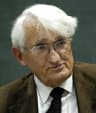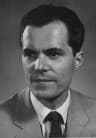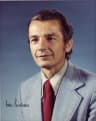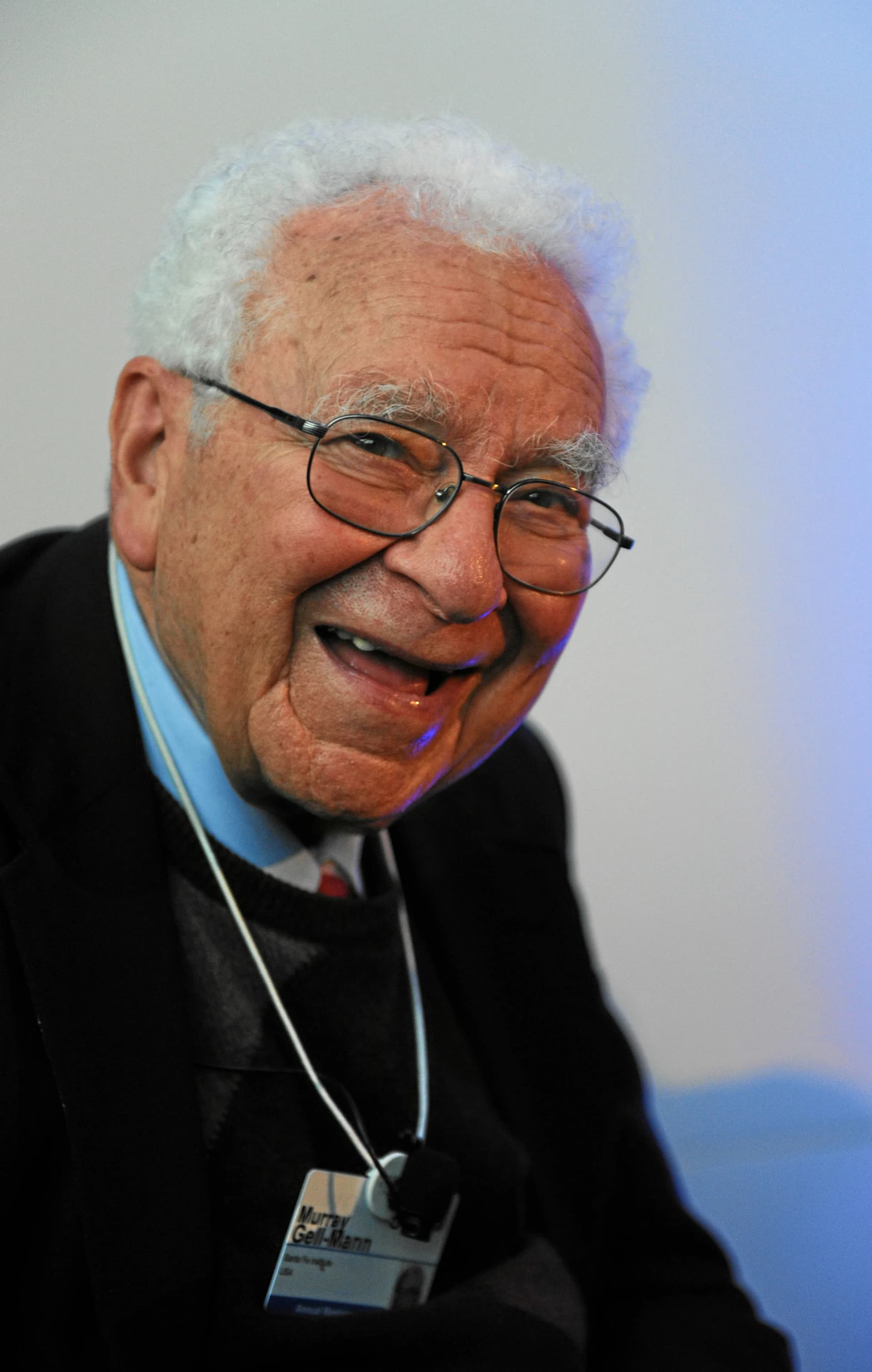
Nascimento
September 15, 1929
Lower Manhattan, United States
Falecimento
May 24, 2019
Santa Fe, United States
Conhecido por
American physicist
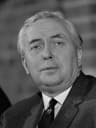
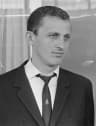
Murray Gell-Mann (1929–2019) was United States best known for American physicist.
Murray Gell-Mann (September 15, 1929 – May 24, 2019) was an American theoretical physicist from Lower Manhattan, United States. He introduced the concept of quarks and the renormalization group, earning him the 1969 Nobel Prize in Physics. His work fundamentally shaped the understanding of elementary particles.
Capítulo
Capítulos da vida
Capítulo 1 · 1929· Capítulo 1 de 6
Early Life and Origins
Born on September 15, 1929, in Lower Manhattan, United States, Murray Gell-Mann showed exceptional intellectual promise from an early age. His formative years in New York City contributed to the development of a keen analytical mind and a deep curiosity about the natural world. This early environment nurtured the brilliance that would later lead to his revolutionary scientific contributions.
Gell-Mann's academic path was marked by rapid progress and a clear aptitude for complex scientific concepts. His early education set the stage for a career dedicated to unraveling the deepest mysteries of the universe. He possessed a unique ability to grasp and articulate intricate physical phenomena, a trait that would define his professional life.
Capítulo 2· Capítulo 2 de 6
Career Beginnings
Murray Gell-Mann embarked on his distinguished career as a theoretical physicist, quickly establishing himself at the forefront of the burgeoning field of particle physics. His initial work focused on bringing order and understanding to the increasingly complex zoo of subatomic particles being discovered. Early on, he sought elegant mathematical structures that could explain the observed properties and interactions of these fundamental constituents.
His early research laid the critical groundwork for the theoretical breakthroughs that would follow, demonstrating a singular vision for how the subatomic world might be organized. He approached physics problems with an imaginative yet rigorous methodology, setting a high standard for scientific inquiry. This commitment to both creativity and precision characterized his entire professional journey.
Capítulo 3· Capítulo 3 de 6
Major Achievements and Career Highlights
A defining moment in Murray Gell-Mann's career was his introduction of the concept of quarks, a revolutionary idea presented in the early 1960s. He theorized that protons, neutrons, and other strongly interacting particles were not elementary but were composed of even smaller, more fundamental entities. This bold hypothesis dramatically reshaped the theoretical framework of elementary particle physics.
Beyond quarks, Gell-Mann also played a significant role in developing the renormalization group, a powerful theoretical tool. He identified it as a foundational element within both quantum field theory and statistical mechanics, providing a crucial mechanism for understanding how physical theories behave across different scales. For these monumental contributions and discoveries concerning the classification of elementary particles and their interactions, Murray Gell-Mann was deservedly awarded the 1969 Nobel Prize in Physics, confirming his profound impact on the scientific community.
Capítulo 4· Capítulo 4 de 6
Notable Works or Contributions
Murray Gell-Mann’s intellectual legacy is preserved in a substantial body of published work that includes both technical papers and books for a broader audience. Among his most influential works is "The Eightfold Way; A Review with a Collection of Reprints," which documented his groundbreaking classification scheme for hadrons. He also co-authored "Quark and the Jaguar D," a work that explored complexity and simplicity in nature, reflecting his wider intellectual interests.
His academic output was prodigious, highlighted by an impressive h-index of 63 across 225 papers, signaling a sustained and impactful research career. Notable academic papers include "Quantum Mechanics in the Light of Quantum Cosmology" from 2018, which garnered 534 citations, demonstrating his continued engagement with fundamental questions. Additionally, his paper "50 years of quarks" published in 2015 reflected on the enduring significance of his most famous concept.
Capítulo 5 · 2018· Capítulo 5 de 6
Later Years
Even as he approached and entered his later years, Murray Gell-Mann remained intellectually vibrant and continued to contribute to the scientific discourse. His sustained involvement in research is evident from his late-career publications, such as "Strange Particle Physics. Strong Interactions" and "Conserved and Partially Conserved Currents in the Theory of Weak Interactions," both released in 2018. These works underscore his lifelong dedication to physics and his persistent pursuit of new insights.
Murray Gell-Mann passed away on May 24, 2019, in Santa Fe, United States, at the age of 89. His passing marked the end of an era for theoretical physics, but his ideas and legacy continue to inspire and guide future generations of scientists. His final years were characterized by a continuing passion for understanding the universe's fundamental laws.
Capítulo 6· Capítulo 6 de 6
Legacy and Impact
Murray Gell-Mann’s intellectual legacy is profound, having permanently altered the course of elementary particle physics. His revolutionary concept of quarks provided a crucial missing piece in the puzzle of subatomic structure, leading directly to the Standard Model of particle physics. This framework enabled physicists to understand the strong nuclear force and the internal dynamics of matter.
Furthermore, his work on the renormalization group offered a powerful theoretical framework for understanding scale dependence in physical systems, impacting quantum field theory and statistical mechanics alike. Gell-Mann's insights established a foundation upon which much of contemporary theoretical physics is built. His work continues to influence researchers worldwide as they delve deeper into the fundamental constituents and forces of the universe.
Uma vida em momentos
Os momentos que moldaram uma vida
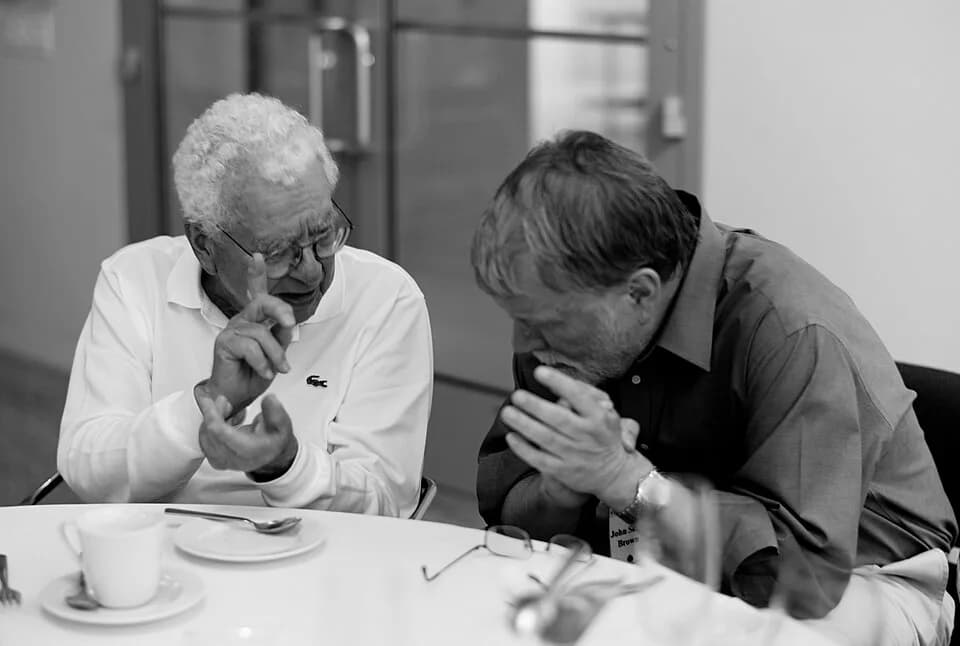
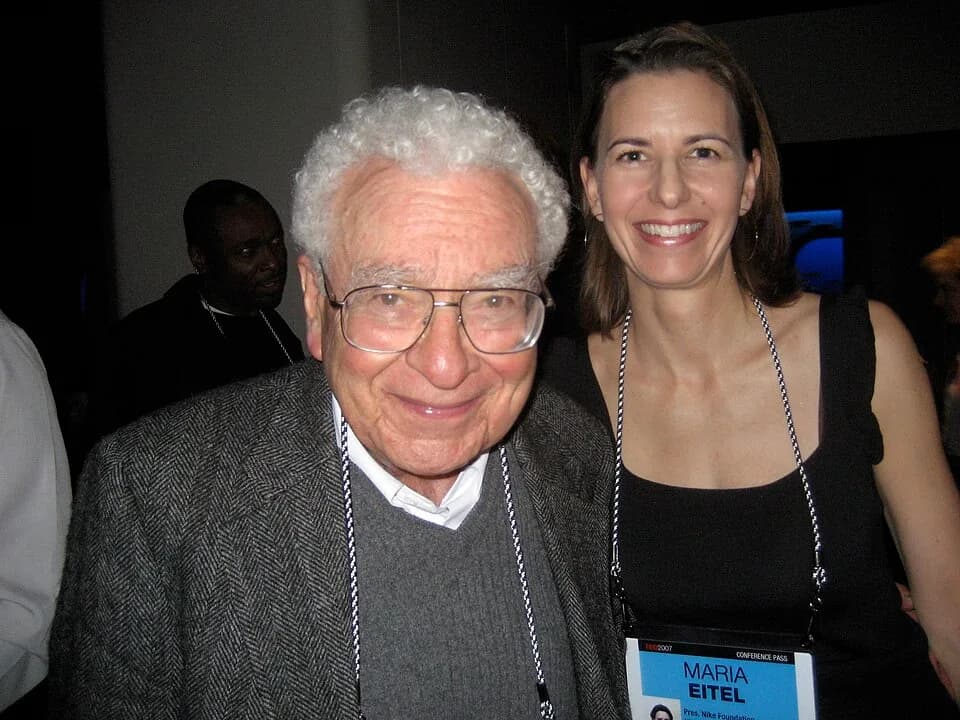
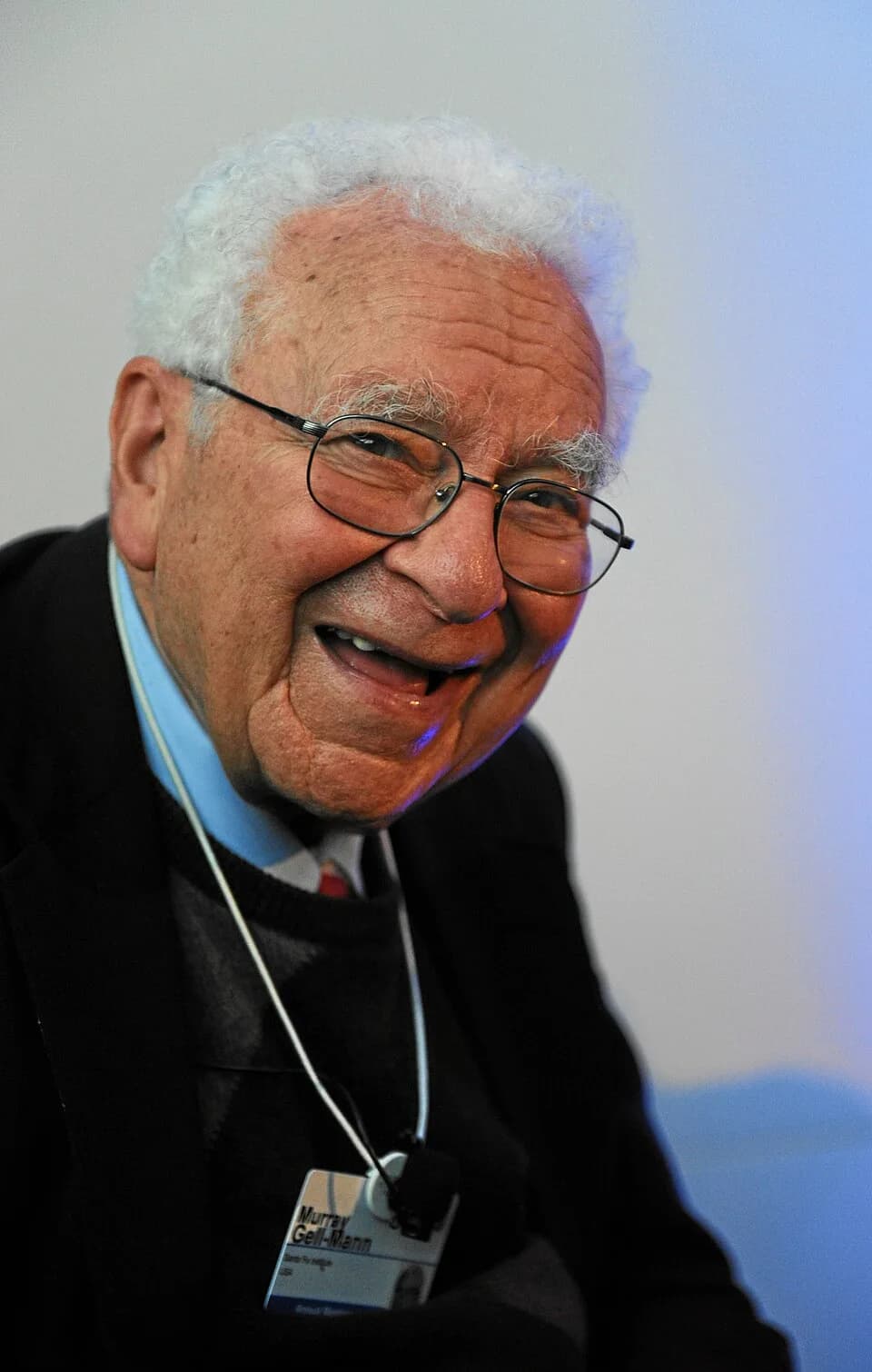
FAQ
Perguntas frequentes
Quando Murray Gell-Mann morreu?
Murray Gell-Mann morreu em 24 de maio de 2019 em Santa Fe, United States, aos 89 anos.
Onde Murray Gell-Mann nasceu?
Murray Gell-Mann nasceu em Lower Manhattan, United States em 15 de setembro de 1929.
Pelo que Murray Gell-Mann é mais conhecido(a)?
Murray Gell-Mann é mais conhecido(a) por American physicist.
Quantos anos Murray Gell-Mann tinha ao morrer?
Murray Gell-Mann tinha 89 anos no momento da morte.
Qual era a nacionalidade de Murray Gell-Mann?
Murray Gell-Mann era de United States.
Linha do tempo
A vida em resumo
Galeria de fotos
Uma vida em imagens
Clique em uma polaroid para ampliar · 20 fotos
Código QR
Compartilhar Esta Biografia
Imprimir e Compartilhar
Escaneie para visitar a página desta biografia. Imprima para eventos, exposições ou materiais educativos.