Né(e)
November 29, 1627
Black Notley, United Kingdom
Décédé(e)
January 17, 1705
Black Notley, United Kingdom
Connu(e) pour
British botanist
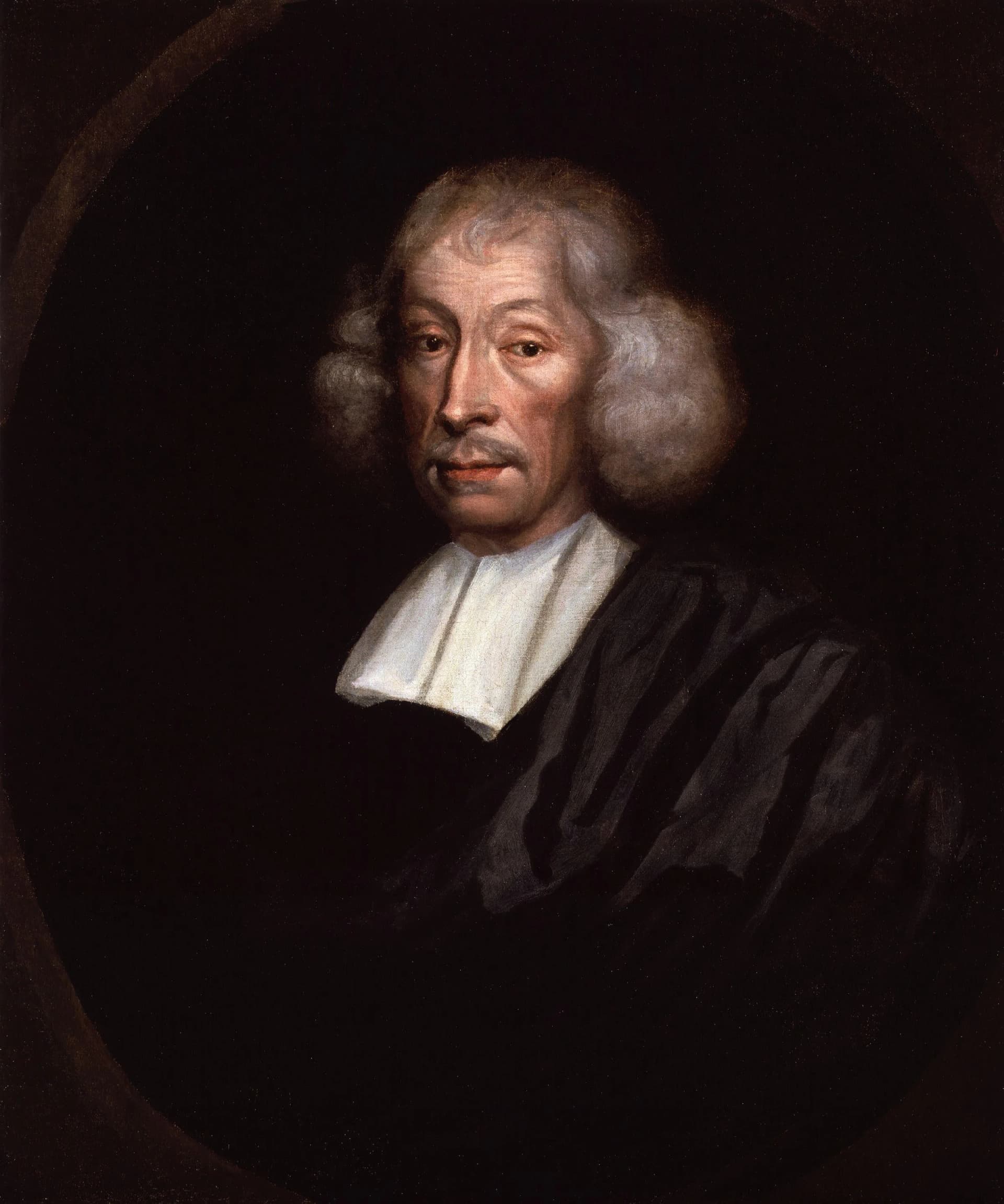
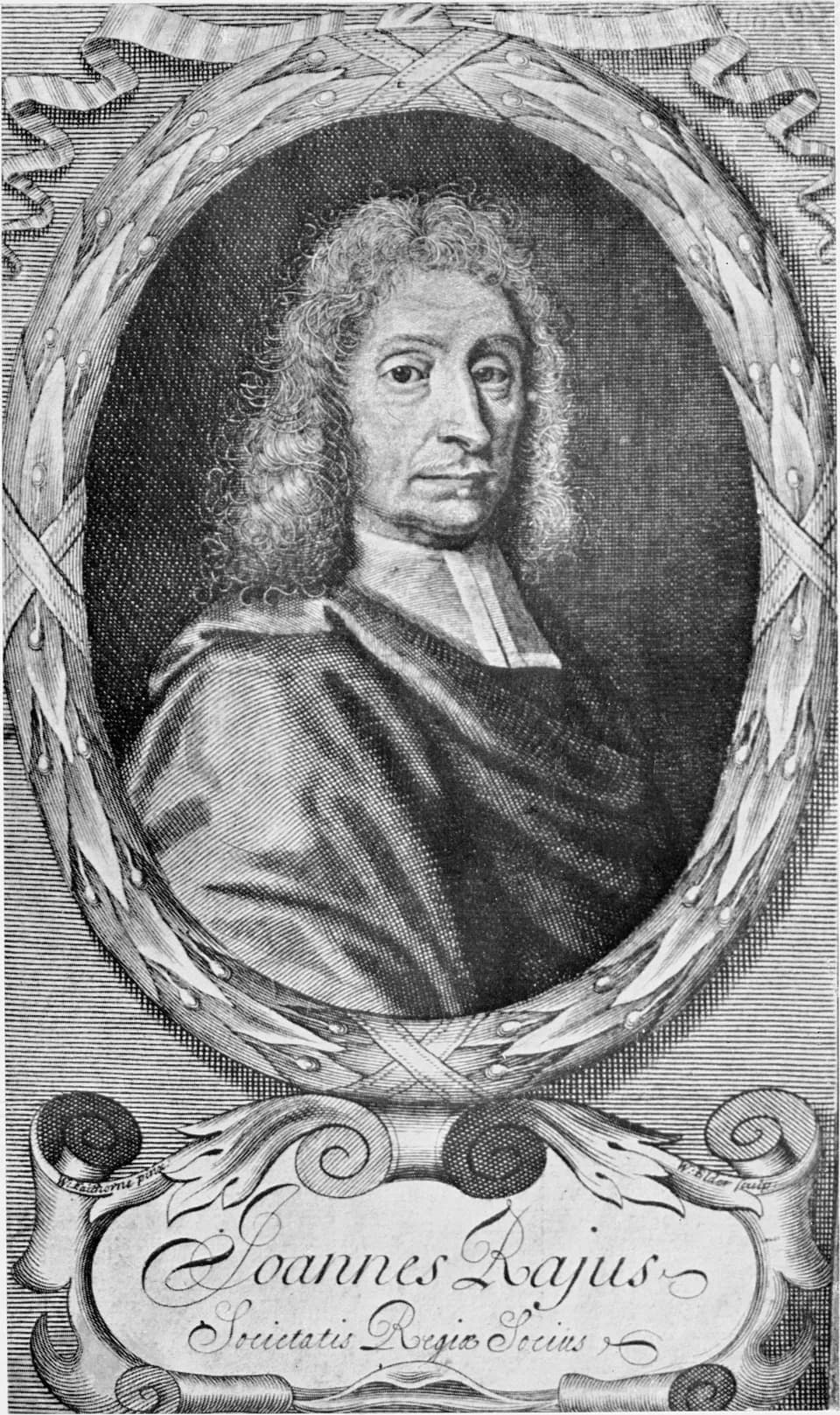
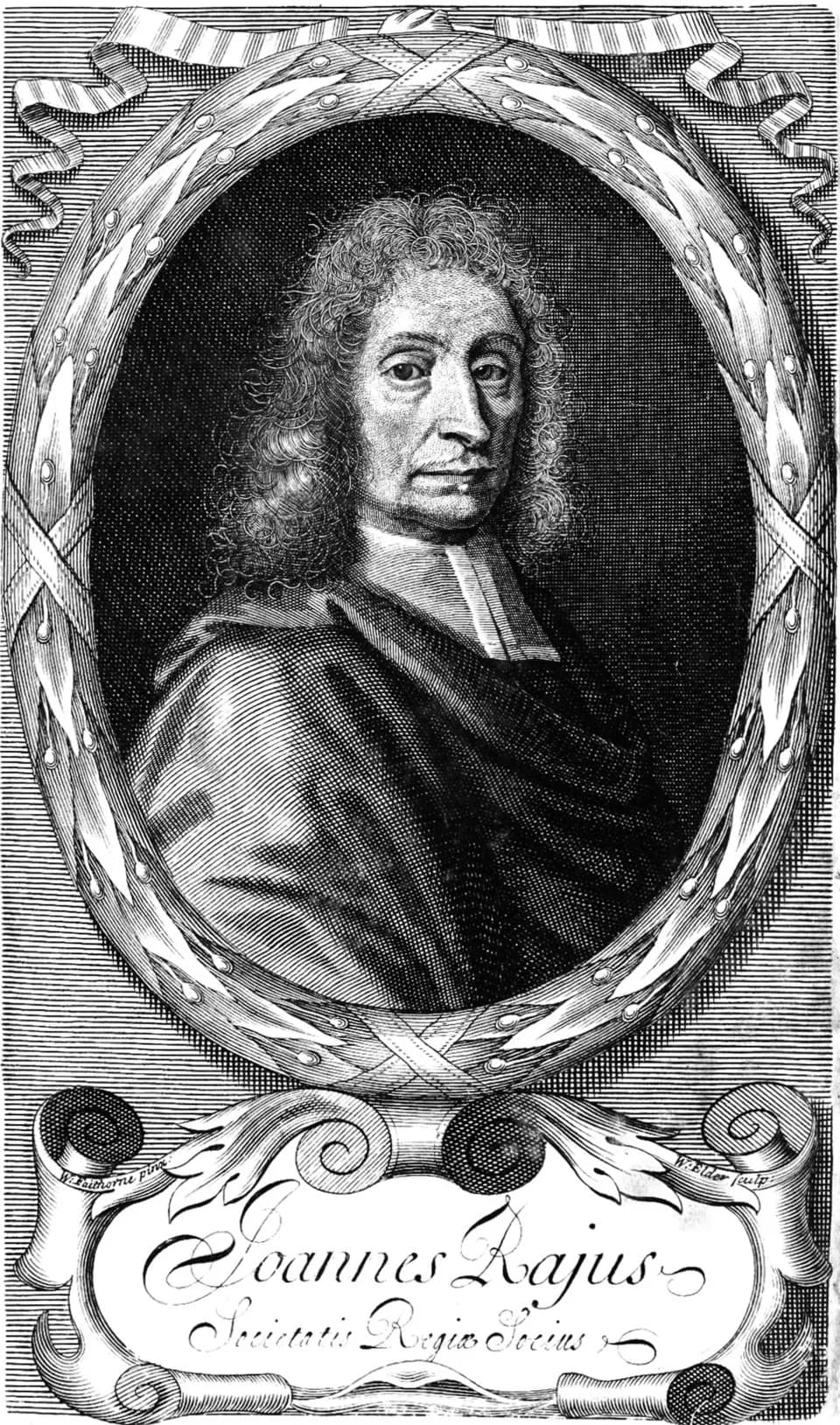
John Ray (1627–1705) was United Kingdom best known for British botanist.
John Ray (November 29, 1627 – January 17, 1705) was a British botanist, naturalist, and theologian from Black Notley, United Kingdom. He published important works in botany, zoology, and natural theology, significantly influencing the classification of plants and animals. His systematic approach laid foundational principles for later generations of scientists.
Chapitre
Chapitres de vie
Chapitre 1· Chapitre 1 sur 7
Early Life and Origins
John Ray's journey began in Black Notley, United Kingdom, a quaint village that served as both his birthplace and the location of his passing. This deep, lifelong connection to his rural origins likely instilled in him an early and profound appreciation for the natural world surrounding him. His early environment, rich with native flora and fauna, provided a fertile ground for his inherent curiosity about life's diversity.
Interestingly, until 1670, John Ray formally wrote his name as John Wray, a practice that later changed due to his diligent research into his family's heritage. He embarked on a meticulous inquiry to ascertain the historical naming traditions of his ancestors. This careful investigation revealed that 'Ray' had indeed been the customary practice of his family before his time, leading him to adopt the surname by which he is now universally known.
Chapitre 2· Chapitre 2 sur 7
Career Beginnings
Ray embarked on his illustrious career as an English Christian naturalist, a designation that profoundly influenced his scientific endeavors and philosophical outlook. This unique identity situated him among the earliest parson-naturalists in England, individuals who seamlessly integrated theological reflection with rigorous scientific observation. Such a perspective allowed him to perceive the natural world not merely as a subject of study, but also as a magnificent expression of divine creation and order.
His early professional work was characterized by diligent observation and systematic study of the natural environment, particularly focusing on the plant and animal life prevalent in the British Isles. These initial explorations and detailed records became the bedrock upon which his more comprehensive and influential scientific publications would later be built. Ray’s methodical collection of data and careful documentation set a new benchmark for scientific rigor in his burgeoning fields.
Chapitre 3· Chapitre 3 sur 7
Major Achievements and Career Highlights
John Ray's career was replete with significant achievements that profoundly impacted the scientific community of his era and beyond. He published numerous important works that spanned botany, zoology, and natural theology, showcasing his expansive intellect and comprehensive understanding of diverse scientific disciplines. These publications served to categorize, describe, and explain the natural world with unprecedented detail and precision.
His efforts were instrumental in standardizing the classification and description of both plants and animals, providing a coherent framework for biological studies that had been lacking. As a zoologist and ornithologist, he meticulously documented various species, contributing significantly to the understanding of animal life. His work as a bryologist further demonstrated his dedication to the detailed study of specific plant groups, highlighting his broad botanical expertise.
Chapitre 4· Chapitre 4 sur 7
Personal Life
Although detailed personal anecdotes about John Ray are not extensively documented in the provided information, his profound connection to Black Notley speaks volumes about his character and roots. He remained deeply tethered to his birthplace, returning there for his final years and eventually passing away in the very village where his life began. This enduring attachment suggests a quiet, grounded personality, deeply invested in his home and the local environment that first sparked his scientific curiosity.
His deliberate decision to research and formally adopt the surname 'Ray' in 1670, based on family tradition, offers a glimpse into a thoughtful individual who valued accuracy and historical continuity, even in matters concerning his personal identity. This meticulous attention to detail, evident in his personal choices, mirrored the precision he demanded in his scientific pursuits.
Chapitre 5· Chapitre 5 sur 7
Notable Works or Contributions
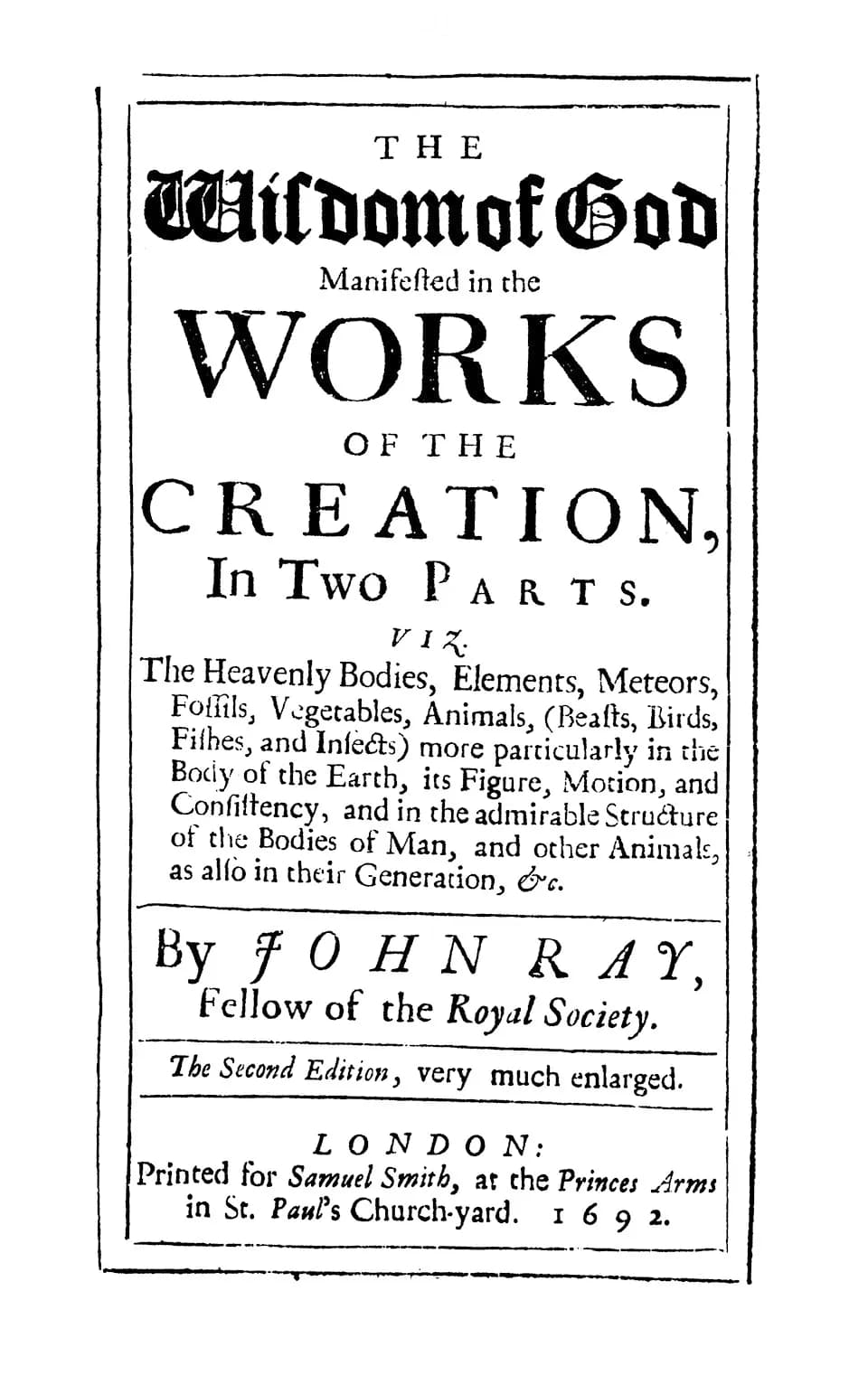
John Ray’s enduring legacy is primarily cemented by the pivotal works he authored, which served as essential references for generations of naturalists and scholars. His publications significantly advanced the systematic understanding of botany and zoology, moving these fields towards greater scientific rigor and classification. Through these texts, he meticulously documented and categorized species, providing an invaluable resource that propelled biological inquiry forward.
Beyond his botanical and zoological endeavors, Ray made substantial contributions to natural theology, a discipline concerned with demonstrating God's existence and attributes through the study of nature. His writings in this area articulated a profound harmony between scientific observation and theological reflection, illustrating the intricate design and order evident in the natural world. These comprehensive works solidified his reputation as a polymath and a leading intellectual figure of the 17th century.
Chapitre 6 · 1705· Chapitre 6 sur 7
Later Years
John Ray continued his dedicated scholarly pursuits into his later years, culminating in his peaceful passing in Black Notley on January 17, 1705. His commitment to scientific inquiry and theological reflection remained unwavering throughout his life. Even as he aged, he continued to refine his ideas, expand his observations, and contribute to the vast body of knowledge he had helped to create.
His final years were undoubtedly characterized by continued intellectual engagement and a deep connection to the natural surroundings of his home village. Ray's persistent dedication to precision and thoroughness, hallmarks of his entire career, continued to define his work until the very end. He left behind an invaluable intellectual inheritance, a testament to a lifetime devoted to the rigorous study and profound appreciation of the natural world.
Chapitre 7· Chapitre 7 sur 7
Legacy and Impact
The influence of John Ray on the development of botany, zoology, and natural theology is both extensive and profound. He was instrumental in establishing a systematic and empirical approach to the study of nature, moving away from anecdotal accounts towards precise, observable facts. His emphasis on detailed observation, description, and classification proved revolutionary, setting new methodological standards that became cornerstones of modern biological science.
Ray's meticulous works provided a crucial and comprehensive framework for understanding biodiversity, earning him recognition as a foundational figure in taxonomy. His name is synonymous with the careful documentation and logical categorization of species, inspiring countless naturalists, botanists, zoologists, and theologians who followed in his footsteps. His enduring contributions cemented his place as one of the most significant and pioneering figures in the history of natural science, whose insights and methodologies continue to impact scientific thought today.
Une vie en moments
Les moments qui ont façonné une vie
FAQ
Questions fréquentes
Quand John Ray est-il/elle décédé(e) ?
John Ray est décédé(e) le 17 janvier 1705 à Black Notley, United Kingdom, à l'âge de 77 ans.
Où est né(e) John Ray ?
John Ray est né(e) à Black Notley, United Kingdom le 29 novembre 1627.
Pour quoi John Ray est-il/elle le/la plus connu(e) ?
John Ray est surtout connu(e) pour British botanist.
Quel âge avait John Ray à sa mort ?
John Ray avait 77 ans au moment de son décès.
Quelle était la nationalité de John Ray ?
John Ray était originaire de United Kingdom.
Chronologie
La vie en un coup d'œil
- 1705
Later Years
Galerie photo
Une vie en images
Cliquez sur un polaroid pour l'agrandir · 23 photos
QR Code
Partager cette biographie
Imprimer et partager
Scannez pour visiter cette page biographique. Imprimez pour des événements, des expositions ou du matériel pédagogique.