Né(e)
July 5, 1891
Yonkers, United States
Décédé(e)
May 27, 1987
Wickenburg, United States
Connu(e) pour
American biochemist
John Howard Northrop (1891–1987) was United States best known for American biochemist.
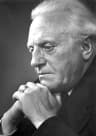
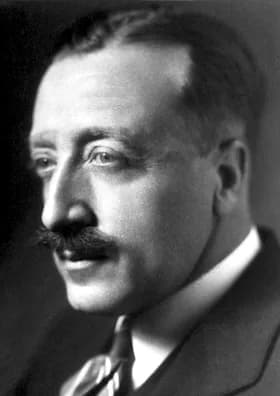
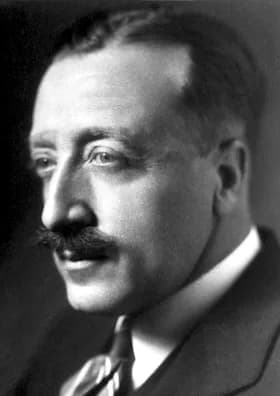
John Howard Northrop (July 5, 1891 – May 27, 1987) was an American biochemist from Yonkers, United States. He won the 1946 Nobel Prize in Chemistry for his work on isolating and crystallizing enzymes, proteins, and viruses. His contributions advanced the understanding of biological processes.
Chapitre
Chapitres de vie
Chapitre 1 · 1891· Chapitre 1 sur 6
Early Life and Origins
Born on July 5, 1891, in Yonkers, United States, John Howard Northrop's early life set the stage for a distinguished scientific career. While details of his family and upbringing are not extensively recorded, his journey from Yonkers laid the groundwork for his future contributions to global science. His academic path led him towards rigorous scientific inquiry, preparing him for the complex challenges he would later address.
Chapitre 2· Chapitre 2 sur 6
Career Beginnings
Northrop began his professional life as a dedicated scientist, deeply engaged in the study of chemistry and its biological applications. His early work as a chemist and university teacher saw him contributing to the growing understanding of biological systems. These initial explorations into the intricate world of molecules and biological reactions would later culminate in his most significant discoveries.
Chapitre 3 · 1946· Chapitre 3 sur 6
Major Achievements and Career Highlights
A defining moment in John Howard Northrop's career arrived in 1946 when he was awarded the Nobel Prize in Chemistry. He shared this esteemed honor with James Batcheller Sumner and Wendell Meredith Stanley for their collective isolation, crystallization, and study of enzymes, proteins, and viruses. This recognition underscored the profound significance of their collaborative research in elucidating the pure forms of these biological agents.
His academic career also saw him serve as a Professor of Bacteriology and Medical Physics at the University of California, Berkeley. Later, he achieved the distinction of Emeritus Professor, continuing to influence generations of scientists through his enduring research and teaching. His long tenure at a leading institution cemented his status as a key academic figure.
Chapitre 4· Chapitre 4 sur 6
Notable Works or Contributions
John Howard Northrop's scientific contributions centered on his pioneering work in preparing enzymes and virus proteins in a pure, crystalline form. This achievement was revolutionary, as it allowed scientists to study these complex biological molecules with unprecedented precision. His research provided critical insights into their structure, function, and behavior.
The ability to isolate and crystallize these vital components meant that their chemical properties could be analyzed in detail, paving the way for advancements in medicine and biotechnology. This meticulous work, acknowledged by the Nobel Committee, transformed the approach to understanding biological catalysts and infectious agents. It established a new standard for biochemical research.
Chapitre 5 · 1987· Chapitre 5 sur 6
Later Years
John Howard Northrop passed away on May 27, 1987, in Wickenburg, United States, at the age of 95. His later years were marked by the enduring legacy of his scientific achievements and his emeritus status at the University of California, Berkeley. Even after stepping down from active teaching, his influence continued to resonate through the scientific community.
Chapitre 6· Chapitre 6 sur 6
Legacy and Impact
The work of John Howard Northrop fundamentally changed the course of biochemistry. His successful isolation and crystallization of enzymes, proteins, and viruses provided the essential tools for understanding these biological macromolecules. This enabled countless subsequent discoveries in biochemistry, molecular biology, and medicine.
His contributions remain a cornerstone of modern biological research, demonstrating how detailed investigation into the fundamental components of life can yield transformative knowledge. Northrop's dedication to scientific rigor left a lasting mark, solidifying his place among the most important biochemists of the 20th century.
Une vie en moments
Les moments qui ont façonné une vie



FAQ
Questions fréquentes
Quand John Howard Northrop est-il/elle décédé(e) ?
John Howard Northrop est décédé(e) le 27 mai 1987 à Wickenburg, United States, à l'âge de 95 ans.
Où est né(e) John Howard Northrop ?
John Howard Northrop est né(e) à Yonkers, United States le 5 juillet 1891.
Pour quoi John Howard Northrop est-il/elle le/la plus connu(e) ?
John Howard Northrop est surtout connu(e) pour American biochemist.
Quel âge avait John Howard Northrop à sa mort ?
John Howard Northrop avait 95 ans au moment de son décès.
Quelle était la nationalité de John Howard Northrop ?
John Howard Northrop était originaire de United States.
Chronologie
La vie en un coup d'œil
Galerie photo
Une vie en images
Cliquez sur un polaroid pour l'agrandir · 12 photos
QR Code
Partager cette biographie
Imprimer et partager
Scannez pour visiter cette page biographique. Imprimez pour des événements, des expositions ou du matériel pédagogique.