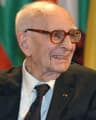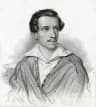
Né(e)
September 4, 1934
Swansea, United Kingdom
Décédé(e)
May 27, 2009
La Jolla, United States
Connu(e) pour
British economist
Clive Granger (1934–2009) was United Kingdom best known for British economist.
Clive Granger (September 4, 1934 – May 27, 2009) was a British economist from Swansea, United Kingdom. He was awarded the Nobel Memorial Prize in Economic Sciences in 2003 for his significant contributions to the analysis of time series data, which changed how economists analyze financial and macroeconomic data. His work had a lasting impact on econometric theory and practice.
Chapitre
Chapitres de vie
Chapitre 1 · 1934· Chapitre 1 sur 5
Early Life and Education
Clive Granger's journey began in Swansea, United Kingdom, where he was born on September 4, 1934. His early life and education took place in Britain, laying the foundation for his later academic and research pursuits. These foundational years were instrumental in shaping his analytical mind and his future dedication to statistical and economic inquiry.
Chapitre 2· Chapitre 2 sur 5
Academic Career and Research
Granger's academic career saw him teaching at prestigious institutions in both the United Kingdom and the United States. He dedicated a significant portion of his early professional life to the University of Nottingham in Britain, where he cultivated his expertise and contributed to the academic community. Later in his career, he extended his influence to the United States, teaching at the renowned University of California, San Diego, a move that broadened the scope of his research and collaboration.
Throughout his career, his roles as an economist, university teacher, statistician, and econometrician highlighted the breadth of his intellectual curiosity and his capacity to contribute to multiple facets of quantitative economic analysis. His research focused intensely on nonlinear time series analysis, an area that was crucial for understanding complex economic phenomena that evolve over time.
Chapitre 3 · 2003· Chapitre 3 sur 5
The Nobel Memorial Prize
A crowning achievement in Clive Granger's career came in 2003 when he was awarded the Nobel Memorial Prize in Economic Sciences. This esteemed recognition was shared with his co-winner, Robert F. Engle, for their collective and significant contributions to the analysis of time series data. Their innovative work provided economists with new tools and methods to process and interpret vast amounts of financial and macroeconomic information.
The impact of this prize-winning research was immediate and lasting. It fundamentally changed the way in which economists approached the analysis of time series data, moving beyond traditional linear models to incorporate more complex, realistic dynamics. This paradigm shift offered deeper insights into economic patterns and relationships, thereby enhancing the accuracy and robustness of economic forecasting and policy formulation.
Chapitre 4 · 2008· Chapitre 4 sur 5
Key Publications and Contributions
Sir Clive Granger's intellectual output is evidenced by his academic publications, which, despite a modest h-index of 3 across five papers in the provided list, showcased his deep engagement with critical economic topics. Among his top works, "Forecasting and Risk Analysis in Supply Chain Management: GARCH Proof of Concept," published in 2008, garnered 10 citations, indicating its relevance to practitioners and researchers alike. Another paper from the same year, "Forecasting and Risk Analysis in Supply Chain Management," received 8 citations, further illustrating his interest in practical economic applications.
Earlier in his career, Granger contributed to discussions on money demand with "Aggregate Vs Disaggregate Data Analysis | a Paradox in the Estimation of Money Demand Function of Japan under the Low I N Terest Rate Policy" (2002), which had 3 citations. His work also touched upon fundamental consumer behavior, as seen in his 1964 paper "Price Sensitivity of the Consumer," cited once. Even in later works, such as "Series ESD-WP-2006-11 ADVANCES IN SUPPLY CHAIN MANAGEMENT : POTENTIAL TO IMPROVE FORECASTING ACCURACY Shoumen" (2006) which received 0 citations, his consistent exploration of forecasting accuracy and supply chain management highlighted his dedication to advancing economic methodology.
Chapitre 5· Chapitre 5 sur 5
Legacy and Influence
Clive Granger's legacy is firmly rooted in his foundational contributions to econometrics, particularly in the realm of nonlinear time series analysis. His methodologies, recognized by the Nobel Committee, provided economists with an essential framework for understanding and predicting the complex, often unpredictable, movements in financial markets and national economies. He enabled a more sophisticated approach to data analysis that continues to be a cornerstone of modern economic research and practice.
His work fundamentally altered the analytical environment for economists, moving the field towards more robust and realistic models of economic behavior. The theories and methods he developed are still widely taught and applied, ensuring that his influence persists through generations of economists and statisticians. Sir Clive Granger's dedication to rigorous statistical analysis and his intellectual curiosity have left an enduring mark on economic science, shaping how we comprehend and navigate the complexities of global economies.
Une vie en moments
Les moments qui ont façonné une vie



FAQ
Questions fréquentes
Quand Clive Granger est-il/elle décédé(e) ?
Clive Granger est décédé(e) le 27 mai 2009 à La Jolla, United States, à l'âge de 74 ans.
Où est né(e) Clive Granger ?
Clive Granger est né(e) à Swansea, United Kingdom le 4 septembre 1934.
Pour quoi Clive Granger est-il/elle le/la plus connu(e) ?
Clive Granger est surtout connu(e) pour British economist.
Quel âge avait Clive Granger à sa mort ?
Clive Granger avait 74 ans au moment de son décès.
Quelle était la nationalité de Clive Granger ?
Clive Granger était originaire de United Kingdom.
Chronologie
La vie en un coup d'œil
Galerie photo
Une vie en images
Cliquez sur un polaroid pour l'agrandir · 25 photos
QR Code
Partager cette biographie
Imprimer et partager
Scannez pour visiter cette page biographique. Imprimez pour des événements, des expositions ou du matériel pédagogique.