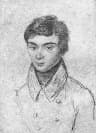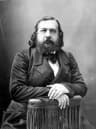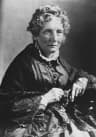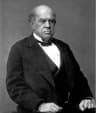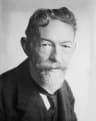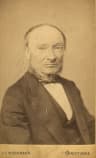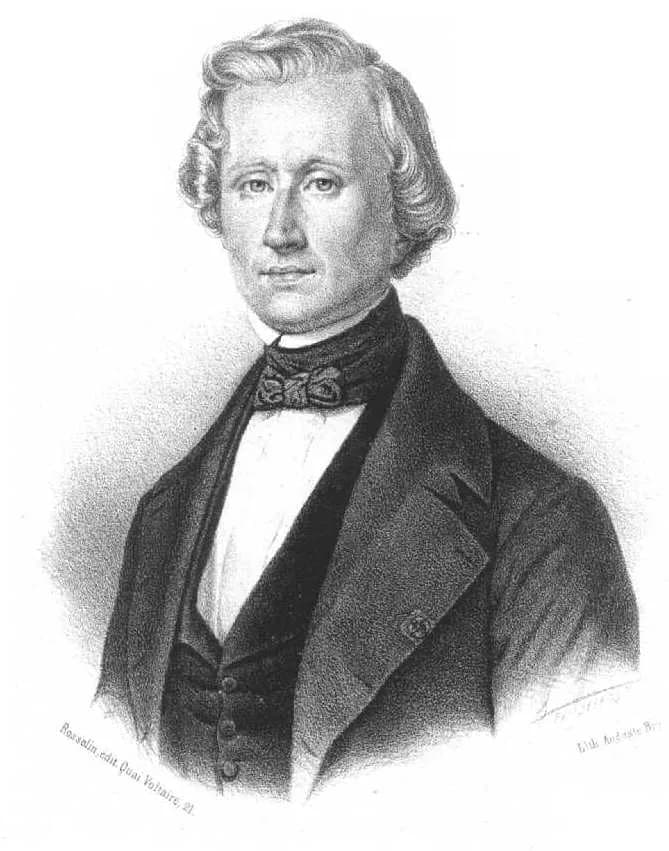
Born
March 11, 1811
Saint-Lô, France
Died
September 23, 1877
Paris, France
Known for
French astronomer
Urbain Le Verrier (1811–1877) was France best known for French astronomer.
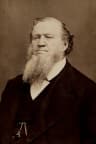
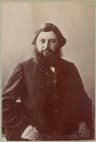
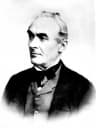
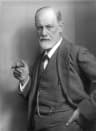
Urbain Le Verrier (March 11, 1811 – September 23, 1877) was a French astronomer from Saint-Lô. He is best known for mathematically predicting the existence and position of Neptune. His work significantly advanced celestial mechanics.
Chapter
Life chapters
Chapter 1 · 1811· Chapter 1 of 6
Early Life and Origins
Urbain Le Verrier was born on March 11, 1811, in the charming town of Saint-Lô, France. Details about his early family life and specific upbringing are not extensively documented in available records. However, his birthplace provided the initial setting for what would become a life devoted to scientific exploration and discovery.
His early education must have instilled in him a strong foundation in mathematics and sciences. This foundation later allowed him to tackle some of the most complex problems in astrophysics. The intellectual environment of France at the time certainly fostered his budding scientific talents.
Chapter 2· Chapter 2 of 6
Career Beginnings
Le Verrier embarked on a career that saw him become a prominent astronomer, writer, politician, mathematician, and meteorologist. His early professional focus gravitated towards celestial mechanics, a specialized field dealing with the motions of celestial bodies. This early concentration on mathematical analysis of planetary orbits set the stage for his most famous achievement.
His initial research likely involved meticulous observations and calculations, building his expertise in astronomical data analysis. He quickly established himself as a keen observer and a rigorous mathematician. These qualities were essential for the detailed work he would undertake.
Chapter 3· Chapter 3 of 6
Major Achievements and Career Highlights
Le Verrier's crowning achievement was undeniably his prediction of the existence and precise location of Neptune. He accomplished this feat solely through complex mathematical calculations, analyzing irregularities in the orbit of Uranus. This scientific triumph in the mid-19th century validated the laws of physics on a cosmic scale.
His academic output includes significant works such as "Recherches sur les mouvements d'Uranus," a paper that garnered 14 citations and highlighted his meticulous analytical skills. This publication was crucial in demonstrating his capacity for intricate astronomical research. Across his career, Le Verrier published 9 papers, achieving an h-index of 3, a reflection of his influence on the scientific discourse of his time.
The successful observation of Neptune exactly where Le Verrier had predicted solidified his standing as one of the era's foremost scientists. This event captivated the scientific world and became a celebrated moment in the history of astronomy. It underscored the predictive power of Newtonian mechanics.
Chapter 4· Chapter 4 of 6
Notable Works or Contributions
Beyond his astronomical predictions, Urbain Le Verrier's intellectual curiosity extended into other scientific domains. He authored several works related to metallurgy, demonstrating a broader interest in industrial and chemical processes. These works include "Métallurgie Générale : Procédés de Chauffage," "La métallurgie en France," "Les applications de l'électrolyse a la métallurgie," and "Métallurgie générale: procédés de chauffage : combustibles solides .." These publications showcased his versatility and practical scientific interests.
His academic contributions also covered diverse topics in astronomy. These included "Rapport sur l'observatoire imprial de Paris et projet d'organisation," which received 6 citations, and "Passage d'une planete sur le disque du Soleil," with 3 citations. Additionally, he contributed to the understanding of cometary movements with "Recherches sur les comètes périodiques." Le Verrier also refined the theory of Saturn's movement with "Addition a la theorie du mouvement de Saturne de Le Verrier : application integrale de la methode d'interpolation, recherches comple mentaires, tables rectifiees du mouvement de Saturne." These detailed studies further cemented his reputation as a leading figure in celestial mechanics.
Chapter 5 · 1877· Chapter 5 of 6
Later Years
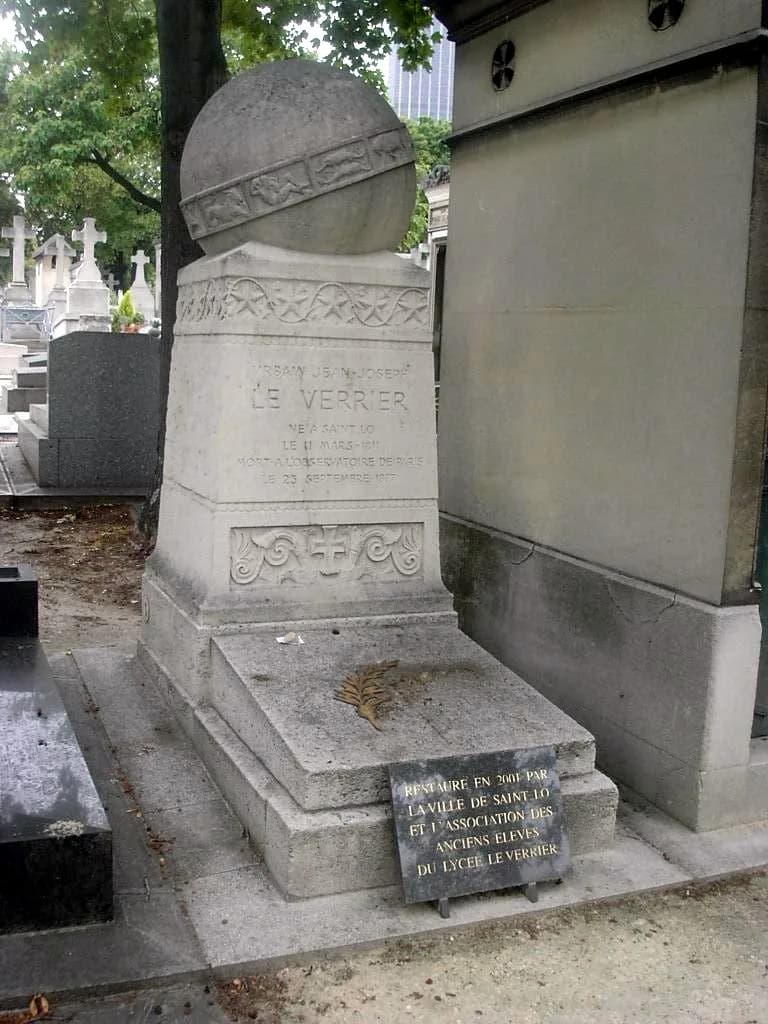
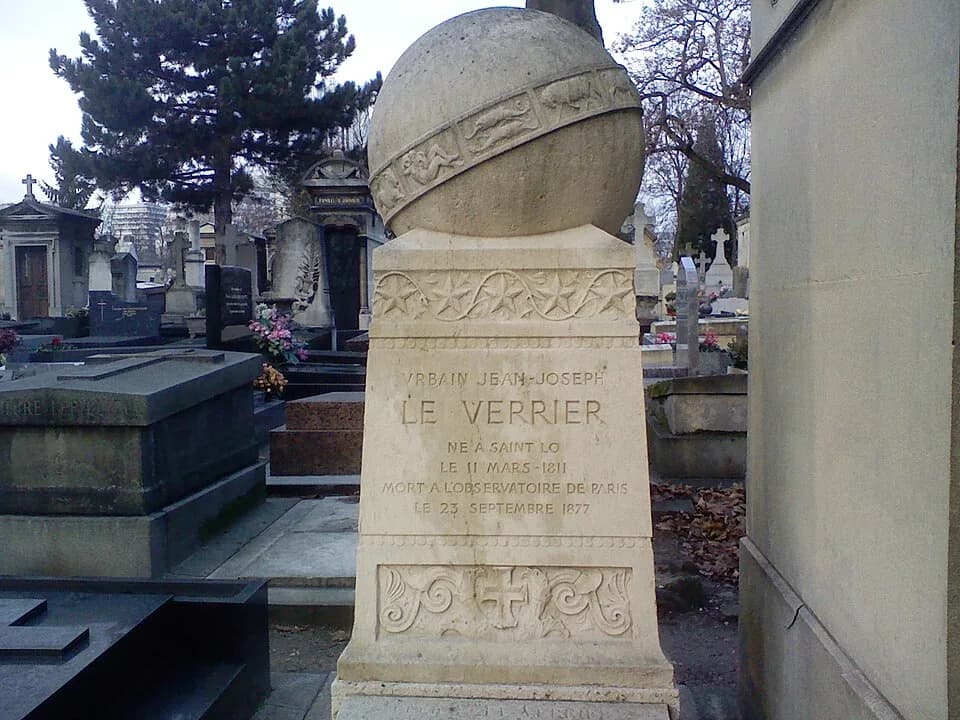
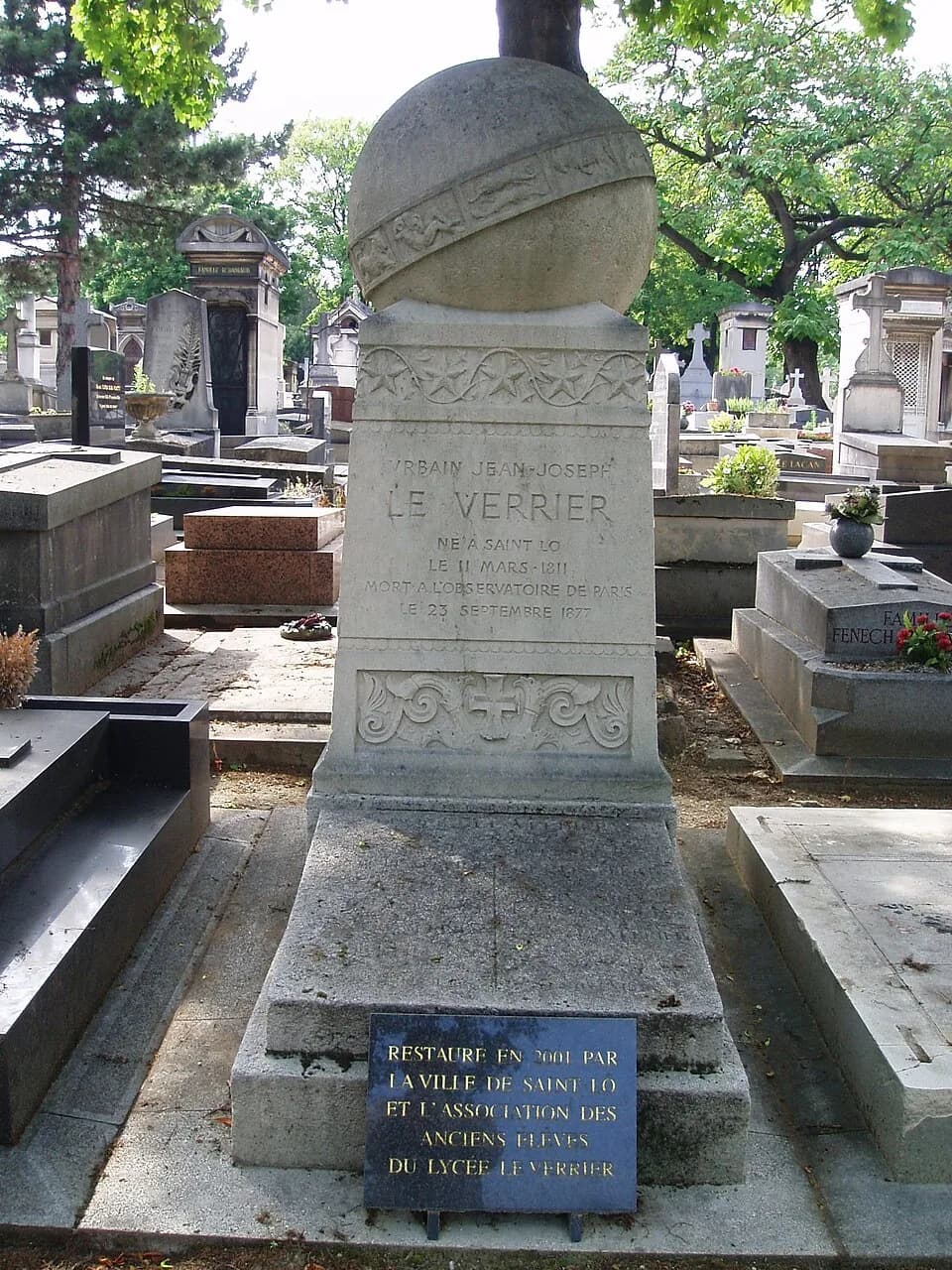
Urbain Le Verrier continued his dedicated work until his passing on September 23, 1877. He died in Paris, France, the city that had likely served as a hub for much of his scientific and political activity. His lifelong commitment to advancing scientific knowledge persisted throughout his final years.
His contributions remained relevant even as new discoveries emerged, affirming his foundational place in astronomy. He remained an active voice in the scientific community, guiding and influencing research. His intellectual drive never waned.
Chapter 6· Chapter 6 of 6
Legacy and Impact
The legacy of Urbain Le Verrier is inextricably linked to the discovery of Neptune, a moment that stands as a powerful demonstration of theoretical physics. His mathematical approach to celestial mechanics transformed astronomy, proving that unseen bodies could be pinpointed with precision. This achievement reshaped our understanding of the solar system's dynamics.
He not only contributed immensely to our understanding of the solar system but also inspired future generations to pursue scientific truth through rigorous calculation and observation. Le Verrier's methods became a standard for verifying theoretical predictions in astronomy. His impact endures in the methods and achievements of modern planetary science, reminding us of the profound power of intellectual endeavor.
A life in moments
The moments that shaped a life
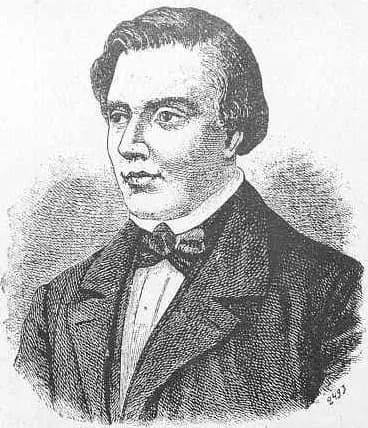
![Urbain Le Verrier - from [1]](/_next/image?url=https%3A%2F%2Fcdn.whowasthisguy.com%2Fgallery_wikimedia_commons_1777986397364_0_9befbff8ae.webp&w=1920&q=75)
FAQ
Frequently asked
When did Urbain Le Verrier die?
Urbain Le Verrier died on September 23, 1877 in Paris, France, at the age of 66.
Where was Urbain Le Verrier born?
Urbain Le Verrier was born in Saint-Lô, France on March 11, 1811.
What is Urbain Le Verrier best known for?
Urbain Le Verrier is best known for French astronomer.
How old was Urbain Le Verrier when they died?
Urbain Le Verrier was 66 years old at the time of death.
What nationality was Urbain Le Verrier?
Urbain Le Verrier was from France.
Timeline
Life at a glance
Photo gallery
A life in pictures
Click any polaroid to expand · 49 photos
QR Code
Share This Biography
Print & Share
Scan to visit this biography page. Print for events, exhibitions, or educational materials.