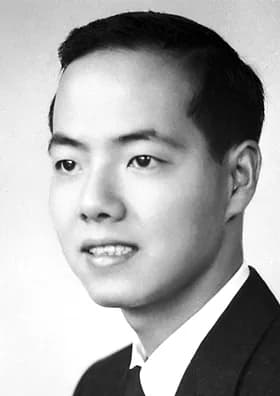
Born
November 24, 1926
Shanghai, People's Republic of China
Died
August 4, 2024
San Francisco, United States
Known for
Chinese-American physicist
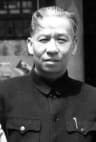
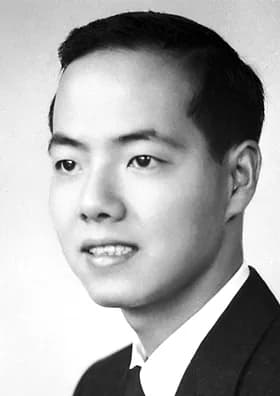
Tsung-Dao Lee (1926-2024) was a Chinese-American theoretical physicist who revolutionized our understanding of elementary particles. His work on parity violation earned him the Nobel Prize in Physics in 1957 at age 30. Lee's contributions continue to influence modern physics research worldwide.
Chapter
Life chapters
Chapter 1 · 1926· Chapter 1 of 6
Early Life and Origins
Born on November 24, 1926, in Shanghai, China, Tsung-Dao Lee entered the world during a period of significant political and social change in his homeland. Growing up in Shanghai, one of China's most cosmopolitan cities, Lee was exposed to both traditional Chinese culture and Western scientific ideas that would later shape his career. His early education took place during the tumultuous years leading up to and during World War II, experiences that would influence his eventual journey to the United States.
Lee's academic prowess became evident during his university years in China, where he developed a passion for physics and mathematics. The political upheaval in China during the late 1940s created opportunities for promising young scholars to pursue advanced studies abroad. Lee seized this opportunity, eventually making his way to the United States where he would build his distinguished career in theoretical physics.
Chapter 2 · 1953· Chapter 2 of 6
Career Beginnings
Lee's transition to American academia marked the beginning of what would become one of the most celebrated careers in modern physics. He joined Columbia University in New York City in 1953, initially as a young faculty member eager to establish himself in the competitive world of theoretical physics. Columbia University, already a prestigious institution for physics research, provided Lee with the intellectual environment and resources necessary to pursue his ambitious research goals.
During his early years at Columbia University, Lee began developing the theoretical frameworks that would later earn him international recognition. His work focused on the fundamental laws governing elementary particles, an area of physics that was experiencing rapid development in the 1950s. The collaborative atmosphere at Columbia University allowed Lee to engage with other brilliant minds in physics, setting the stage for the discoveries that would define his career.
Chapter 3· Chapter 3 of 6
Major Achievements and Career Highlights
Lee's most significant contribution to physics came through his penetrating investigation of parity laws, work that led to important discoveries regarding elementary particles. This research, conducted in collaboration with Chen-Ning Yang, challenged long-held assumptions about the fundamental symmetries of nature. Their work demonstrated that parity conservation, previously considered an inviolable law of physics, could be violated in certain types of particle interactions.
The Nobel Committee recognized the profound implications of Lee's work by awarding him the Nobel Prize in Physics in 1957, specifically citing his "penetrating investigation of the so-called parity laws which has led to important discoveries regarding the elementary particles." At just 30 years old, Lee became one of the youngest Nobel laureates in physics history. This recognition established him as a leading figure in the international physics community and validated his innovative approach to theoretical research.
Beyond his Nobel Prize-winning work, Lee made substantial contributions to multiple areas of theoretical physics. His research on the Lee-Yang theorem provided important insights into phase transitions and critical phenomena. He also conducted significant work on relativistic heavy ion physics, contributing to our understanding of matter under extreme conditions, and explored nontopological solitons and soliton stars, expanding the boundaries of theoretical physics.
Chapter 4 · 1953· Chapter 4 of 6
Academic Career and Teaching
Lee's association with Columbia University spanned nearly six decades, from his appointment in 1953 until his retirement in 2012. During this extraordinary tenure, he rose through the academic ranks to become a university professor emeritus, one of the highest honors Columbia University bestows upon its faculty. His longevity at Columbia University reflected both his commitment to the institution and the university's recognition of his exceptional contributions to physics and education.
As a university teacher, Lee influenced generations of physics students and researchers. His approach to theoretical physics emphasized rigorous mathematical foundations combined with deep physical intuition. Many of his students and collaborators went on to distinguished careers in physics, extending Lee's intellectual influence throughout the global physics community. His teaching and mentorship helped establish Columbia University as a premier destination for theoretical physics education.
Chapter 5 · 2012· Chapter 5 of 6
Later Years and Continued Contributions
Following his retirement from Columbia University in 2012, Lee relocated to San Francisco, where he spent his final years. Even after stepping away from formal academic duties, he remained engaged with the physics community and continued to contribute to scientific discourse. His later years were marked by reflection on his career and the evolution of physics since his groundbreaking work in the 1950s.
During his time in San Francisco, Lee witnessed the continued validation and application of his theoretical work. Modern particle physics experiments, including those conducted at facilities like the Relativistic Heavy Ion Collider, built upon the foundations he had helped establish decades earlier. His work on relativistic heavy ion physics proved particularly prescient as experimental technology advanced to test predictions he had made years before.
Chapter 6 · 2024· Chapter 6 of 6
Legacy and Impact
Tsung-Dao Lee's death on August 4, 2024, in San Francisco marked the end of an era in theoretical physics. His work fundamentally altered our understanding of the symmetries governing nature and opened new avenues of research that continue to influence physics today. The discovery of parity violation not only earned him the Nobel Prize but also demonstrated that nature's laws are more subtle and complex than previously imagined.
Lee's scientific legacy extends beyond his specific discoveries to include his approach to theoretical physics and his role in fostering international collaboration in science. As a Chinese-American physicist working during the Cold War era, he helped bridge cultural and political divides through scientific cooperation. His success also inspired subsequent generations of Asian-American scientists and demonstrated the value of international exchange in advancing human knowledge.
The impact of Lee's work continues to resonate in modern physics research. Contemporary studies of elementary particles, phase transitions, and exotic matter states all build upon theoretical foundations he helped establish. His contributions to our understanding of fundamental physics ensure that his influence will persist as long as scientists continue to explore the deepest mysteries of the universe.
A life in moments
The moments that shaped a life
FAQ
Frequently asked
When did Tsung-Dao Lee die?
Tsung-Dao Lee died on August 4, 2024 in San Francisco, United States, at the age of 97.
Where was Tsung-Dao Lee born?
Tsung-Dao Lee was born in Shanghai, People's Republic of China on November 24, 1926.
What is Tsung-Dao Lee best known for?
Tsung-Dao Lee is best known for Chinese-American physicist.
How old was Tsung-Dao Lee when they died?
Tsung-Dao Lee was 97 years old at the time of death.
What nationality was Tsung-Dao Lee?
Tsung-Dao Lee was from People's Republic of China.
Timeline
Life at a glance
Photo gallery
A life in pictures
Click any polaroid to expand · 17 photos
QR Code
Share This Biography
Print & Share
Scan to visit this biography page. Print for events, exhibitions, or educational materials.