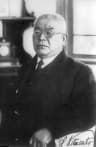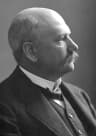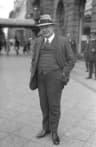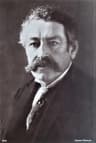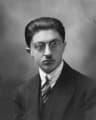
Născut
September 2, 1853
Riga, Latvia
Decedat
April 4, 1932
Großbothen, Germany
Cunoscut pentru
Baltic German chemist
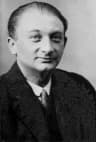
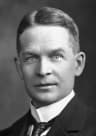
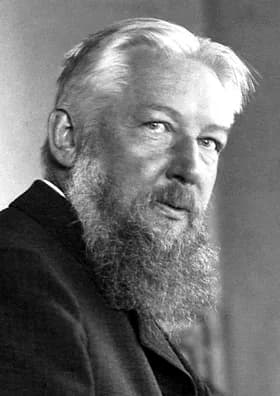
Wilhelm Ostwald (1853–1932) was Latvia best known for Baltic German chemist.
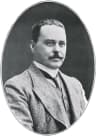
Wilhelm Friedrich Ostwald (September 2, 1853 – April 4, 1932) was a Baltic German chemist and philosopher. He received the Nobel Prize in Chemistry in 1909 for his foundational work on catalysis, chemical equilibria, and reaction rates, making him a key figure in physical chemistry. His scientific contributions continue to shape the field.
Capitolul
Capitolele vieții
Capitolul 1 · 1853· Capitolul 1 din 7
Early Life and Origins
Wilhelm Ostwald began his life in Riga, Latvia, on September 2, 1853, a vibrant city then part of the Russian Empire. This birthplace provided the initial setting for his intellectual development, fostering an environment where his early interests in the natural sciences could take root. His Baltic German heritage likely influenced his cultural and academic perspectives, contributing to the broad intellectual curiosity that would define his career.
Capitolul 2· Capitolul 2 din 7
Academic and Professional Journey
Ostwald's career trajectory saw him rise to prominence as a university teacher, a role through which he profoundly impacted countless students and colleagues. His professional identity was not confined to a single discipline; he was simultaneously a chemist, a physicist, and a philosopher, demonstrating a remarkable capacity for interdisciplinary thought. He also engaged with the world as a prolific writer and an ingenious inventor, consistently pushing the boundaries of knowledge and its practical application.
Capitolul 3· Capitolul 3 din 7
Founding Physical Chemistry
A cornerstone of Wilhelm Ostwald's enduring legacy is his foundational contribution to the field of physical chemistry. He is rightfully credited alongside eminent scientists Jacobus Henricus van 't Hoff, Walther Nernst, and Svante Arrhenius as a co-founder of this crucial scientific domain. Together, these pioneers established the theoretical frameworks and experimental methodologies that solidified physical chemistry as a distinct and vital branch of scientific inquiry, exploring the physical principles underlying chemical phenomena.
Capitolul 4 · 1909· Capitolul 4 din 7
Nobel Recognition and Key Contributions
Wilhelm Ostwald's profound impact on chemistry was formally recognized in 1909 when he was awarded the Nobel Prize in Chemistry. This prestigious accolade acknowledged his significant scientific work in catalysis, chemical equilibria, and reaction velocities. His rigorous investigations into these fundamental principles provided unprecedented clarity on how chemical reactions proceed and reach states of balance, forever changing the understanding of chemical dynamics.
His investigations into catalysis, for instance, illuminated how substances could accelerate chemical reactions without being consumed, a concept now central to industrial processes and biological systems. Furthermore, Ostwald's extensive studies on chemical equilibria provided the scientific community with a deeper comprehension of the conditions governing reversible reactions and their ultimate balance points. His precise measurements and theoretical explanations of reaction velocities offered vital insights into the speed at which chemical changes occur, a critical factor for both theoretical understanding and practical applications.
Capitolul 6· Capitolul 6 din 7
Later Life and Diverse Interests
In his later years, Wilhelm Ostwald continued to engage with a broad array of intellectual pursuits, extending beyond the traditional confines of chemistry. Notably, he was an enthusiastic Esperantist and Idist, embracing these constructed international auxiliary languages. His involvement with Esperanto and Ido highlights his belief in promoting global communication and understanding through a common linguistic framework, a testament to his progressive philosophical outlook.
Wilhelm Ostwald passed away on April 4, 1932, in Großbothen, Germany, concluding a life rich with scientific discovery, philosophical inquiry, and dedicated teaching. His final years were spent in a country where his academic career had flourished, leaving behind a profound intellectual and scientific inheritance. His passing marked the end of an era for a towering figure in scientific development, whose contributions continued to resonate.
Capitolul 7· Capitolul 7 din 7
Enduring Legacy
Wilhelm Ostwald's enduring legacy is intrinsically linked to his pioneering role in the establishment of physical chemistry. His systematic investigations into catalysis, chemical equilibria, and reaction velocities laid down foundational principles that remain indispensable to chemical research and industrial applications today. He did not merely advance a field; he helped create one, providing a new lens through which to understand the physical forces at play in chemical transformations.
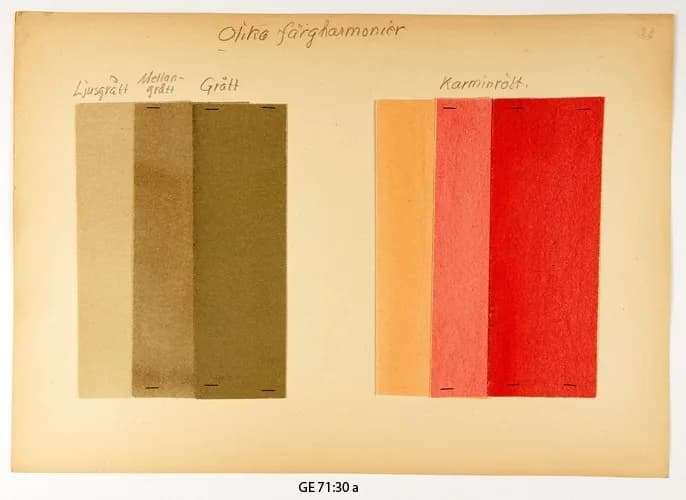
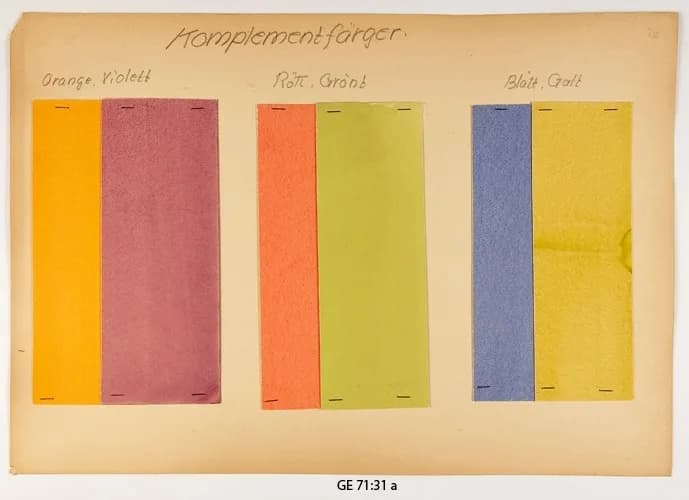
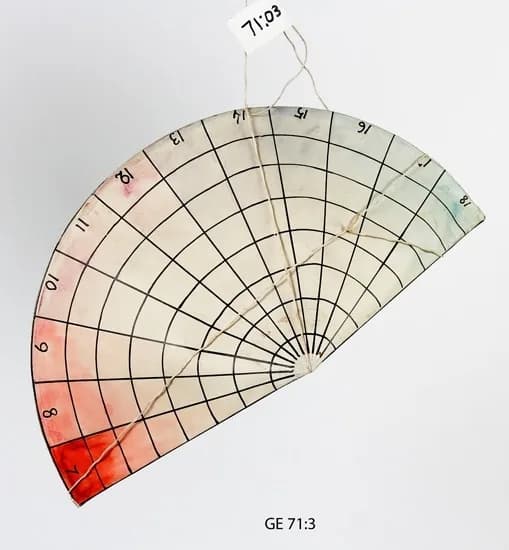
Beyond his scientific breakthroughs, Ostwald's influence as a dedicated writer, insightful teacher, and profound philosopher continues to shape various academic domains. His commitment to the logical organization of knowledge, evident in his color theory works and philosophical texts, demonstrates a lifelong pursuit of clarity and understanding. Wilhelm Ostwald's multifaceted contributions ensure his place as an intellectual giant whose ideas continue to inspire and inform future generations of scientists and thinkers.
O viață în momente
Momentele care au modelat o viață

Întrebări frecvente
Întrebări frecvente
Când a murit Wilhelm Ostwald?
Wilhelm Ostwald a murit pe 4 aprilie 1932 în Großbothen, Germany, la vârsta de 78 ani.
Unde s-a născut Wilhelm Ostwald?
Wilhelm Ostwald s-a născut în Riga, Latvia pe 2 septembrie 1853.
Pentru ce este cunoscut(ă) Wilhelm Ostwald?
Wilhelm Ostwald este cunoscut(ă) cel mai mult pentru Baltic German chemist.
Câți ani avea Wilhelm Ostwald la moarte?
Wilhelm Ostwald avea 78 ani la momentul morții.
Ce naționalitate avea Wilhelm Ostwald?
Wilhelm Ostwald era din Latvia.
Cronologie
O viață dintr-o privire
Galerie foto
O viață în imagini
Faceți clic pe orice polaroid pentru a-l mări · 13 fotografii
Cod QR
Distribuiți această biografie
Imprimați și distribuiți
Scanați pentru a vizita această pagină biografică. Imprimați pentru evenimente, expoziții sau materiale educaționale.