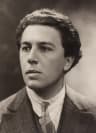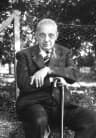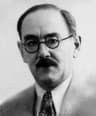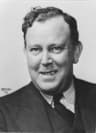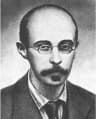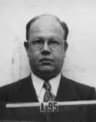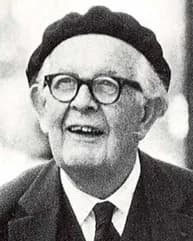
Nascimento
August 9, 1896
Neuchâtel, Switzerland
Falecimento
September 16, 1980
Geneva, Switzerland
Conhecido por
Swiss psychologist, biologist, logician, philosopher and academic
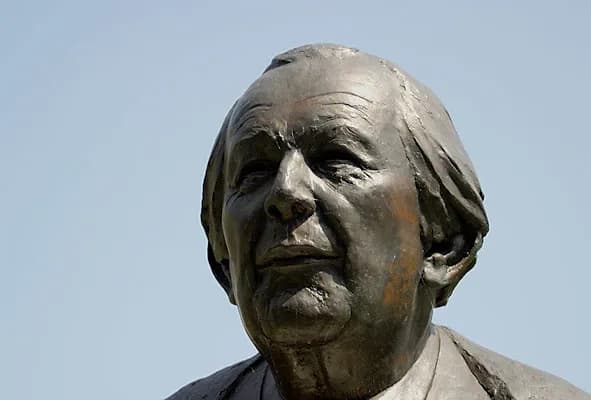
Jean Piaget (1896–1980) was Switzerland best known for Swiss psychologist, biologist, logician, philosopher and academic.
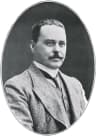
Jean Piaget (August 9, 1896 – September 16, 1980) was a Swiss psychologist, biologist, and philosopher. He is renowned for his theory of cognitive development and genetic epistemology, which transformed understanding of how children think. His work profoundly influenced child psychology and education worldwide.
Capítulo
Capítulos da vida
Capítulo 1 · 1896· Capítulo 1 de 6
Early Life and Origins
Born on August 9, 1896, in Neuchâtel, Switzerland, Jean Piaget's early life in this intellectually rich European country laid the foundation for his future scientific explorations. Growing up in Neuchâtel, he was exposed to diverse academic traditions that likely fostered his wide-ranging interests. These formative years in Switzerland undoubtedly contributed to the unique perspective he would later bring to his studies of development and knowledge.
Capítulo 2· Capítulo 2 de 6
Career Beginnings
Piaget's early career was marked by an extraordinary breadth of academic pursuits, encompassing roles as a psychologist, biologist, zoologist, pedagogue, university teacher, philosopher, logician, and malacologist. This diverse background provided him with a unique interdisciplinary lens through which to observe and analyze human development. His initial investigations were deeply rooted in a biological approach to understanding the growth of knowledge, setting the stage for his revolutionary ideas.
It was this multidisciplinary foundation that allowed Piaget to approach the study of children not just as psychologists traditionally had, but with the insights of a biologist observing adaptation and change. He became particularly fascinated with the origins and development of knowledge, moving from observing mollusks to meticulously studying the developing minds of children. This scientific curiosity ultimately led him to focus on child development, where he would make his most enduring contributions.
Capítulo 3· Capítulo 3 de 6
Major Achievements and Career Highlights
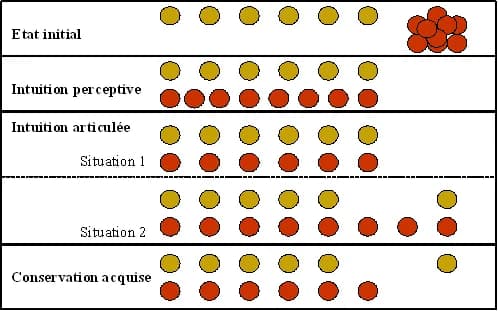
Among Jean Piaget's most significant achievements is the formulation of his theory of cognitive development, which describes how children construct a mental model of the world through distinct stages. This theory posited that children are not passive recipients of knowledge but actively build their understanding through interaction with their environment. His work fundamentally altered the prevailing views on childhood intelligence and learning processes.
Central to his legacy is the concept of genetic epistemology, an approach that combines his theory of cognitive development with an epistemological view, exploring the origins of knowledge. Piaget's meticulous observational studies and innovative experiments with children revealed systematic patterns in their thinking at different ages. His insights provided a powerful framework for educators and psychologists to comprehend the intellectual journey from infancy to adulthood.
Capítulo 4· Capítulo 4 de 6
Notable Works or Contributions
Jean Piaget was an incredibly prolific scholar, with an impressive h-index of 45, having authored 239 papers throughout his distinguished career. His extensive body of work includes numerous influential publications that continue to be studied and debated today. These works articulate his theories on cognitive development, moral reasoning, language acquisition, and the nature of knowledge itself.
One of his most significant works is La représentation du monde chez l'enfant, published in 2013 (with 61 citations from that edition), which delves into children's understanding of reality. This foundational text explores how young minds perceive and interpret the world around them, offering critical insights into their developing conceptual frameworks. Another notable contribution is La sémiotisation de l’espace : Esquisse d’une manière de faire, also published in 2013 (with 7 citations), showcasing his broad intellectual curiosity and methodical approach to spatial reasoning.
Piaget's expansive bibliography further includes titles such as Préface de la troisième édition (2020, 0 citations), L’animisme enfantin (2013, 0 citations), and Chapitre X. L’origine des arbres des montagnes et de la terre (2013, 0 citations). These works, though perhaps less cited in particular editions, represent the vast scope of his intellectual inquiries into various aspects of child psychology and the construction of knowledge. His dedication to empirical research and theoretical formulation left an unparalleled collection of scientific literature.
Capítulo 5 · 1980· Capítulo 5 de 6
Later Years
Jean Piaget continued his intellectual pursuits and dedicated research throughout his life, influencing generations of scholars and practitioners. He passed away on September 16, 1980, in Geneva, Switzerland, leaving behind an enormous and enduring academic legacy. His final years were characterized by a continuing engagement with the ideas he had spent decades developing and refining, consolidating his position as a central figure in 20th-century thought.
Capítulo 6· Capítulo 6 de 6
Legacy and Impact
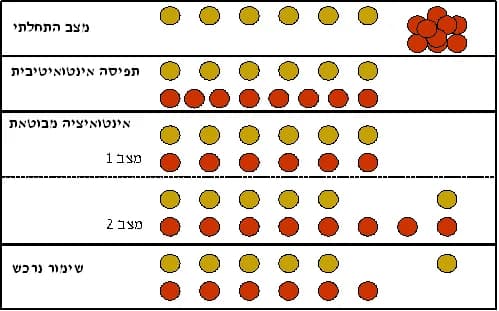
Jean Piaget's theories revolutionized the fields of developmental psychology and education, reshaping how we perceive children's intellectual growth. His stages of cognitive development—sensorimotor, preoperational, concrete operational, and formal operational—provide a framework that continues to inform curriculum design and teaching methodologies worldwide. Educators strive to create environments that facilitate active learning and cognitive growth, drawing directly from his principles.
His work on genetic epistemology remains a foundational contribution to philosophy, exploring the biological and historical origins of knowledge. Piaget’s emphasis on the child as an active agent in their own learning process challenged behaviorist views and paved the way for constructivist approaches in education. Today, his ideas are central to discussions about learning theory, artificial intelligence, and the very nature of human intelligence, ensuring his lasting influence on science and society.
Uma vida em momentos
Os momentos que moldaram uma vida
FAQ
Perguntas frequentes
Quando Jean Piaget morreu?
Jean Piaget morreu em 16 de setembro de 1980 em Geneva, Switzerland, aos 84 anos.
Onde Jean Piaget nasceu?
Jean Piaget nasceu em Neuchâtel, Switzerland em 9 de agosto de 1896.
Pelo que Jean Piaget é mais conhecido(a)?
Jean Piaget é mais conhecido(a) por Swiss psychologist, biologist, logician, philosopher and academic.
Quantos anos Jean Piaget tinha ao morrer?
Jean Piaget tinha 84 anos no momento da morte.
Qual era a nacionalidade de Jean Piaget?
Jean Piaget era de Switzerland.
Linha do tempo
A vida em resumo
Galeria de fotos
Uma vida em imagens
Clique em uma polaroid para ampliar · 43 fotos
Código QR
Compartilhar Esta Biografia
Imprimir e Compartilhar
Escaneie para visitar a página desta biografia. Imprima para eventos, exposições ou materiais educativos.