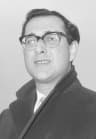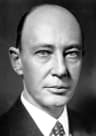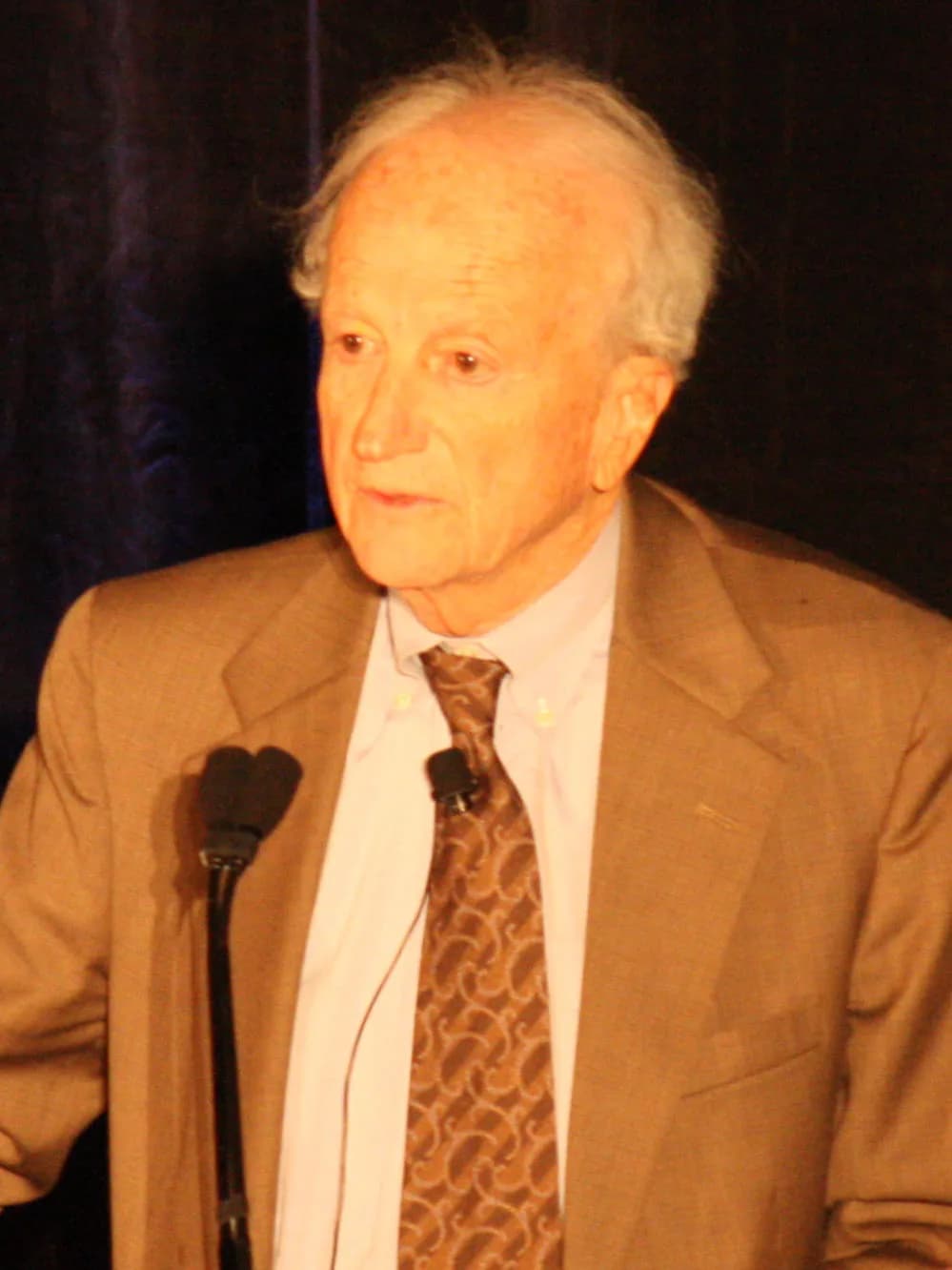
Nascimento
December 2, 1930
Pottsville, United States
Falecimento
May 3, 2014
Chicago, United States
Conhecido por
American economist
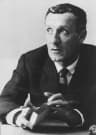
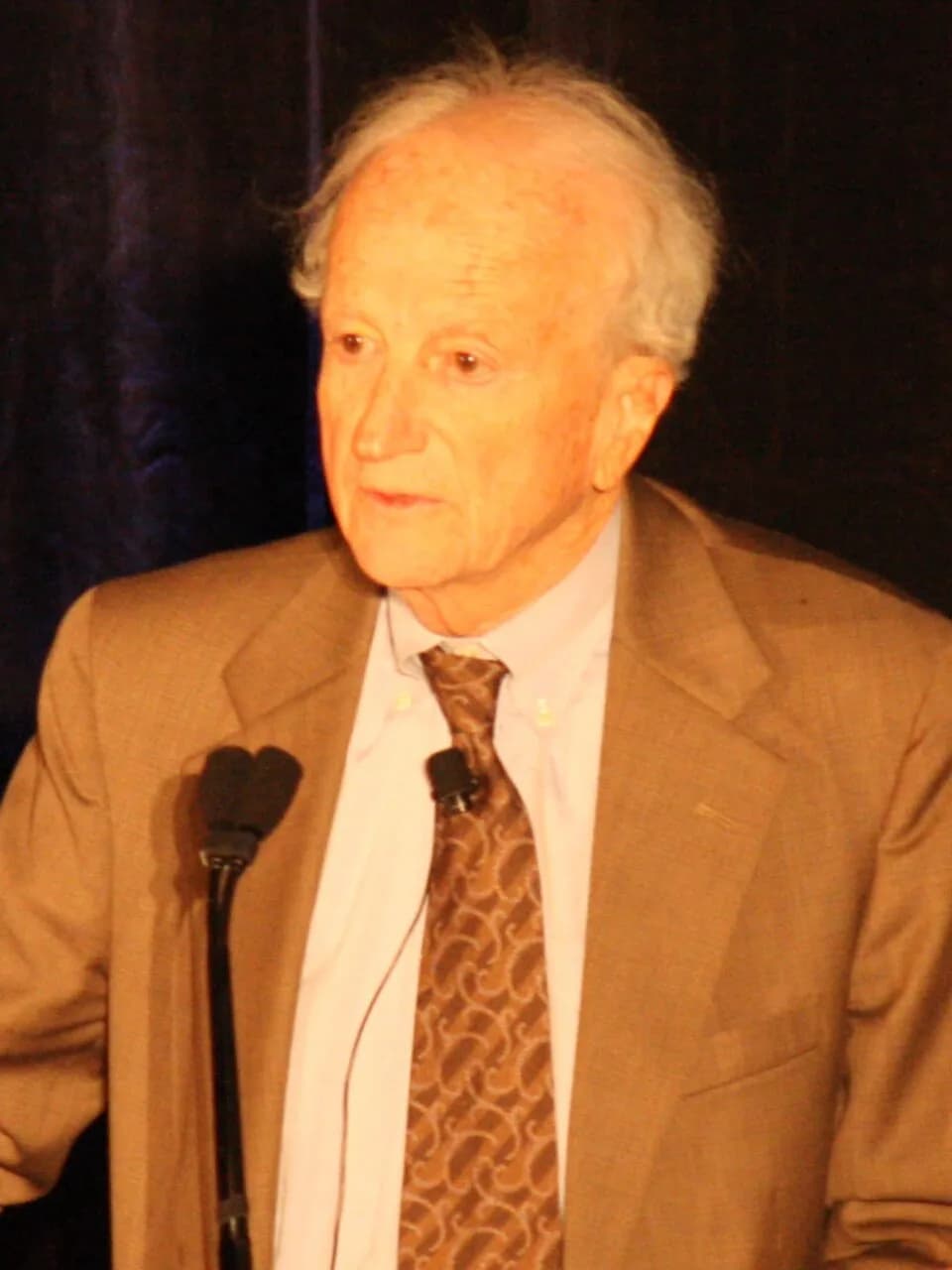
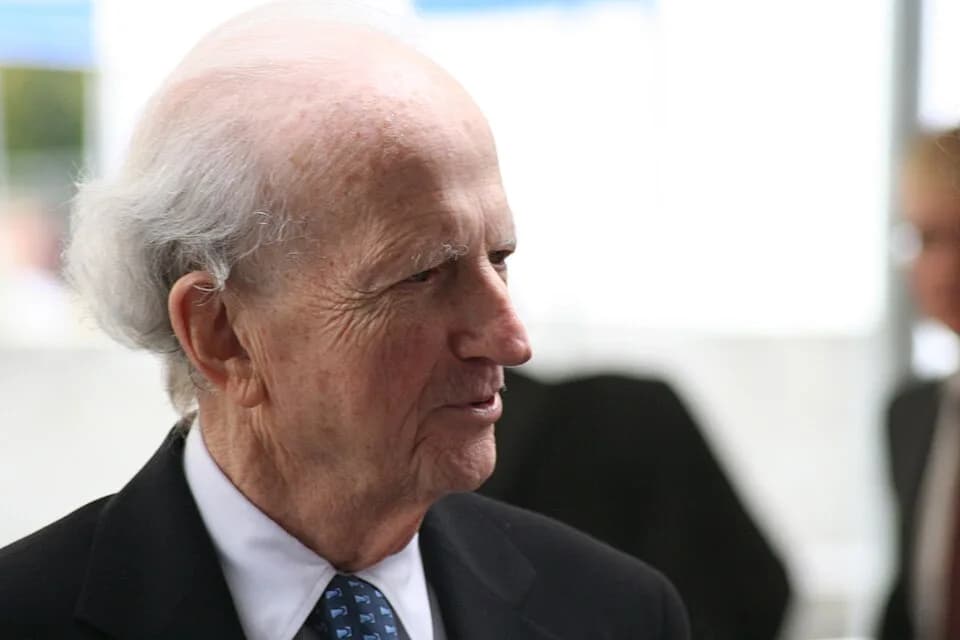
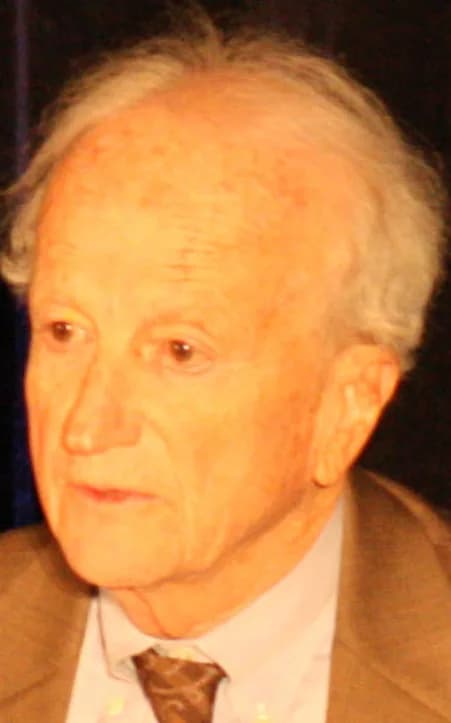
Gary S. Becker (1930–2014) was United States best known for American economist.
Gary S. Becker (December 2, 1930 – May 3, 2014) was an American economist from Pottsville, United States. He received the 1992 Nobel Memorial Prize in Economic Sciences for extending microeconomic analysis to a wide range of human behavior. His work significantly influenced the understanding of nonmarket interactions.
Capítulo
Capítulos da vida
Capítulo 1 · 1930· Capítulo 1 de 7
Remembering Gary S. Becker
Gary S. Becker, born on December 2, 1930, and passing on May 3, 2014, was a distinguished American economist whose intellectual contributions profoundly reshaped economic thought. He is widely remembered for his pioneering efforts in extending microeconomic analysis beyond its traditional boundaries. As a highly respected economist and educator, Becker's work at the University of Chicago cemented his place as a leader in his field.
Capítulo 2 · 1930· Capítulo 2 de 7
Early Life and Origins
Gary S. Becker began his life in Pottsville, United States. Born in 1930, his early years laid the foundation for a brilliant academic career that would eventually lead him to become a renowned figure in economics. While specific details of his upbringing are not provided, his journey from Pottsville to a professorship at a leading university signifies a dedication to intellectual pursuit from a young age.
Capítulo 3· Capítulo 3 de 7
Career Beginnings
Becker's academic journey led him to the University of Chicago, where he established himself as a prominent figure. He held a joint professorship, teaching both economics and sociology, demonstrating the interdisciplinary nature of his thinking. Here, he quickly became recognized as a leader within the third generation of the influential Chicago school of economics.
His early work began to challenge existing paradigms, setting the stage for his later, widely acclaimed research. He focused on applying economic principles to areas traditionally considered outside the scope of economics, thereby opening new avenues for understanding human behavior.
Capítulo 4 · 1992· Capítulo 4 de 7
Major Achievements and Career Highlights
A significant milestone in Gary S. Becker's career was the awarding of the 1992 Nobel Memorial Prize in Economic Sciences. This prestigious recognition honored his extraordinary contributions to the field. The Nobel Committee specifically cited his innovative work in extending the domain of microeconomic analysis.
His analytical approach encompassed a wide spectrum of human behavior and interaction, notably including nonmarket behavior. This expansion of economic inquiry allowed for a more comprehensive understanding of social phenomena, from family decisions to criminal activity, through an economic lens.
Capítulo 5 · 1975· Capítulo 5 de 7
Notable Works or Contributions
Among Gary S. Becker's most influential academic publications is "Human Capital: A Theoretical and Empirical Analysis, with Special Reference to Education," published in 1975. This work gained substantial recognition, evidenced by its 2678 citations, highlighting its impact on economic theory and empirical research. It provided a framework for understanding education and training as investments in human capital.
An earlier iteration of this seminal work, "Human Capital: A Theoretical and Empirical Analysis with Special Reference to Education, First Edition," was released in 1964 and accumulated 59 citations. This earlier edition showcased his developing theories on human capital. A selection from a published volume from the National Bureau of Economic Research in 2020 also bore the title "Human Capital: A Theoretical and Empirical Analysis with Special Reference to Education, First Edition," further demonstrating the lasting relevance of his core ideas. His academic output, including these key works, contributed to an h-index of 2.
Capítulo 6· Capítulo 6 de 7
Later Years
Gary S. Becker continued his dedicated work as an economist and educator well into his later years. He maintained his role as a university teacher at the University of Chicago, continuing to shape the minds of future economists and social scientists. His contributions as a criminologist and an economist remained significant.
He passed away on May 3, 2014, in Chicago, United States, at the age of 83. Even in his later career, Becker's presence in the academic community was felt, reinforcing his position as a thought leader until the end of his life.
Capítulo 7· Capítulo 7 de 7
Legacy and Impact
Gary S. Becker's legacy rests firmly on his innovative approach to economic analysis. He profoundly altered how economists perceive and analyze human decision-making by applying microeconomic tools to areas previously considered outside economics, such as crime, discrimination, and family choices. His groundbreaking methods provided a new perspective, revealing the rational underpinnings of seemingly irrational behaviors.
His contributions significantly broadened the scope of economic research, creating entirely new subfields of study and influencing generations of scholars. The concepts he developed, particularly concerning human capital and nonmarket behavior, continue to shape academic discourse and public policy discussions. Becker's influence endures, as his framework offers valuable insights into a wide array of social and individual actions.
Uma vida em momentos
Os momentos que moldaram uma vida



FAQ
Perguntas frequentes
Quando Gary S. Becker morreu?
Gary S. Becker morreu em 3 de maio de 2014 em Chicago, United States, aos 83 anos.
Onde Gary S. Becker nasceu?
Gary S. Becker nasceu em Pottsville, United States em 2 de dezembro de 1930.
Pelo que Gary S. Becker é mais conhecido(a)?
Gary S. Becker é mais conhecido(a) por American economist.
Quantos anos Gary S. Becker tinha ao morrer?
Gary S. Becker tinha 83 anos no momento da morte.
Qual era a nacionalidade de Gary S. Becker?
Gary S. Becker era de United States.
Linha do tempo
A vida em resumo
Galeria de fotos
Uma vida em imagens
Clique em uma polaroid para ampliar · 15 fotos
Código QR
Compartilhar Esta Biografia
Imprimir e Compartilhar
Escaneie para visitar a página desta biografia. Imprima para eventos, exposições ou materiais educativos.