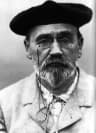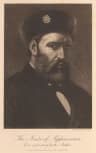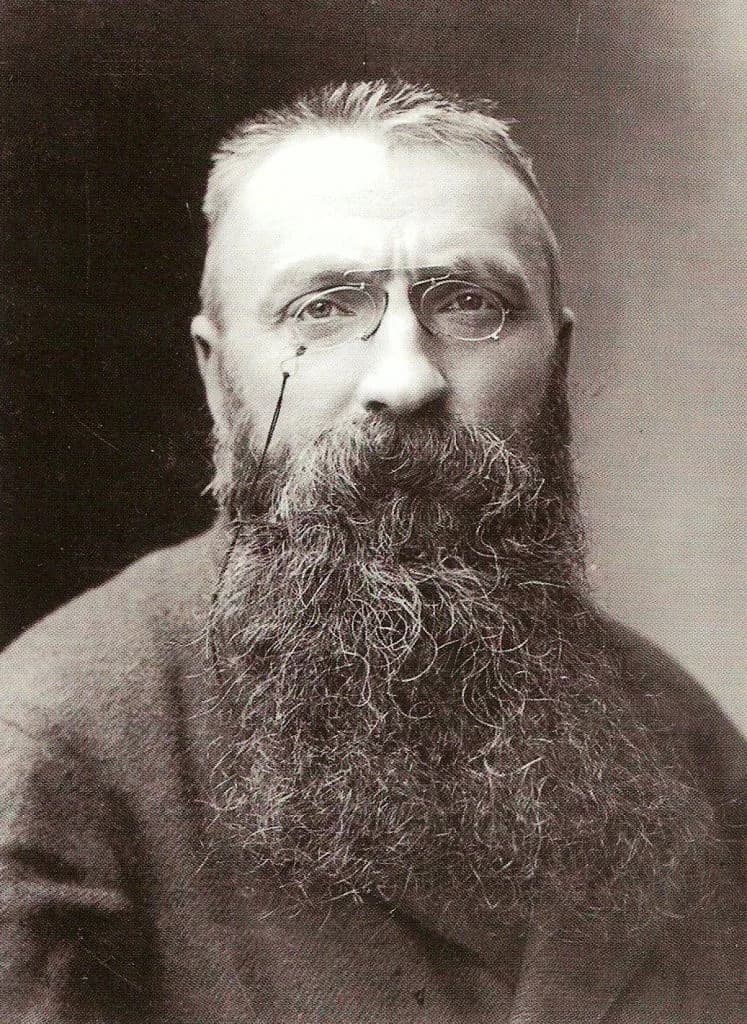
Nascimento
November 12, 1840
Paris, France
Falecimento
November 17, 1917
Meudon, France
Conhecido por
French sculptor
Auguste Rodin (1840–1917) was France best known for French sculptor.
François Auguste René Rodin (November 12, 1840 – November 17, 1917) was a French sculptor from Paris, France. He is widely considered the founder of modern sculpture, known for his ability to model complex, turbulent surfaces in clay. His legacy includes iconic works like The Thinker and The Burghers of Calais.
Capítulo
Capítulos da vida
Capítulo 1 · 1840· Capítulo 1 de 7
François Auguste René Rodin: A Legacy in Sculpture
François Auguste René Rodin, born on November 12, 1840, in Paris, France, and passing on November 17, 1917, in Meudon, France, stands as a towering figure in art history. This celebrated French sculptor is widely acknowledged as the founder of modern sculpture, leaving an indelible mark on the artistic world.
Capítulo 2· Capítulo 2 de 7
Early Life and Origins
Auguste Rodin began his life in the vibrant city of Paris, France, in the mid-19th century. His formative years in the heart of French culture undoubtedly shaped his artistic sensibilities and provided a rich backdrop for his later creative endeavors.
Beyond his primary identity as a sculptor, Rodin cultivated a diverse range of artistic professions. He was also an accomplished photographer, painter, printmaker, and draftsperson, demonstrating a broad engagement with visual arts throughout his life.
Capítulo 3· Capítulo 3 de 7
Career Beginnings
Rodin received traditional schooling in his youth, which laid a strong foundation for his artistic practice. He approached his work with a craftsman-like dedication, a methodical rigor that underscored his technical mastery.
This traditional training, combined with his innate talent, led to a unique ability to model complex, turbulent, and deeply pocketed surfaces in clay. This distinctive sculptural quality became a signature element of his powerful and emotionally charged figures.
Capítulo 4· Capítulo 4 de 7
Major Achievements and Career Highlights
Auguste Rodin is generally considered the founder of modern sculpture, a testament to his profound influence and innovation. He broke away from conventional academic styles, injecting his figures with raw emotion and psychological depth that resonated deeply with observers.
His distinctive approach to form and expression challenged established norms, paving the way for future generations of sculptors. Rodin's ability to capture the human spirit and its complexities in bronze and marble truly revolutionized the art form.
Capítulo 5· Capítulo 5 de 7
Notable Works and Contributions
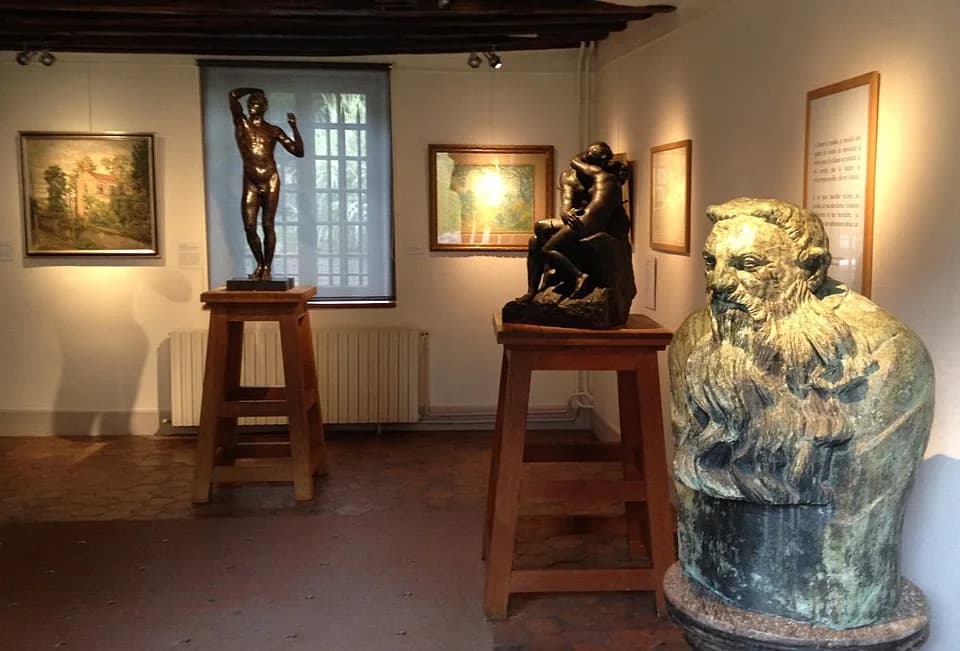
Rodin's extensive body of work includes several iconic sculptures that are recognized globally. Among his most celebrated pieces are The Thinker, the powerful Monument to Balzac, the tender and intimate The Kiss, the poignant The Burghers of Calais, and the monumental The Gates of Hell.
Many of his significant creations found homes in prestigious institutions, reflecting their artistic importance. His work titled Adam, for instance, was modeled between 1880 or 1881 and cast in 1910, now housed at the Metropolitan Museum of Art (Met Museum).
Other notable works at the Met Museum include Honoré de Balzac from 1891, The Burghers of Calais, modeled between 1884–95 and cast in 1985, and The Martyr, modeled in 1885. These pieces exemplify his exploration of human form and narrative.
The Art Institute of Chicago (AIC) also holds a substantial collection of Rodin's masterpieces. This includes A Burgher of Calais (Jean d'Aire), modeled in 1889, and another version of Adam, modeled in 1881 and cast around 1924, showcasing his recurring themes.
Further works at the AIC comprise Eve after the Fall, modeled in 1883 and carved around 1886, alongside a compelling Portrait of Balzac, modeled in 1893 and cast between 1926–33. His dedication to exploring the human condition is evident across these diverse creations.
The Walking Man, modeled between 1877–1900 and cast before 1917, is another significant piece at the AIC, demonstrating Rodin's innovative approach to movement. Also found there is The Fallen Caryatid Carrying Her Stone, modeled around 1881–82 and cast between 1902–24.
Additional works enriching the AIC's collection include Head of Pierre de Wissant, modeled around 1885–86 and cast around 1913/23, and Seated Female Nude with Arms Raised, for which a specific date is not provided. These works highlight his ongoing study of the human figure.
His profound exploration of the human form also encompasses pieces like Kneeling Nude Woman Arranging Her Hair, created around 1900, and Sorrow, modeled in 1882 and cast between 1913–23, both at the AIC. Each piece contributes to the vast story of Rodin's artistic evolution.
Capítulo 6· Capítulo 6 de 7
Later Years
Rodin's later years were marked by continued artistic productivity and a solidification of his towering reputation. His work continued to evolve, consistently pushing the boundaries of sculptural expression.
He passed away on November 17, 1917, in Meudon, France, just five days after his 77th birthday. His death brought an end to a prolific career that had fundamentally reshaped the course of art.
Capítulo 7· Capítulo 7 de 7
Legacy and Impact
Auguste Rodin's lasting legacy is primarily rooted in his pivotal role as the founder of modern sculpture. He challenged the classical ideals of beauty and stillness, opting instead for a dynamic portrayal of human emotion and physical form.
His innovative methods and emotional depth forever altered how sculptors approached their craft and how the public perceived sculpture. Rodin's influence continues to inspire artists and captivate audiences in museums and collections worldwide, securing his place as an enduring master of art.
Uma vida em momentos
Os momentos que moldaram uma vida
FAQ
Perguntas frequentes
Quando Auguste Rodin morreu?
Auguste Rodin morreu em 17 de novembro de 1917 em Meudon, France, aos 77 anos.
Onde Auguste Rodin nasceu?
Auguste Rodin nasceu em Paris, France em 12 de novembro de 1840.
Pelo que Auguste Rodin é mais conhecido(a)?
Auguste Rodin é mais conhecido(a) por French sculptor.
Quantos anos Auguste Rodin tinha ao morrer?
Auguste Rodin tinha 77 anos no momento da morte.
Qual era a nacionalidade de Auguste Rodin?
Auguste Rodin era de France.
Linha do tempo
A vida em resumo
Galeria de fotos
Uma vida em imagens
Clique em uma polaroid para ampliar · 49 fotos
Código QR
Compartilhar Esta Biografia
Imprimir e Compartilhar
Escaneie para visitar a página desta biografia. Imprima para eventos, exposições ou materiais educativos.