Geboren
April 26, 1933
Munich, Germany
Overleden
January 22, 2024
San Francisco, United States
Bekend om
German-born American physicist
Arno Allan Penzias (1933–2024) was Germany best known for German-born American physicist.
Arno Allan Penzias (April 26, 1933 – January 22, 2024) was a German-born American physicist and astronomer. He shared the 1978 Nobel Prize in Physics for his co-discovery of cosmic microwave background radiation. This pivotal finding provided crucial evidence supporting the Big Bang theory, profoundly advancing cosmology.
Hoofdstuk
Levenshoofdstukken
Hoofdstuk 1 · 1933· Hoofdstuk 1 van 7
Early Life and Origins
Arno Allan Penzias began his life in Munich, Germany, where he was born in 1933. His early years in Germany shaped his path before he later established himself in the United States. He eventually became a distinguished American physicist, contributing significantly to his adopted nation's scientific endeavors.
Hoofdstuk 2· Hoofdstuk 2 van 7
Career Beginnings
Penzias pursued his passion for the physical sciences, training as both a physicist and an astronomer. This dual expertise formed the foundation for his later innovative research. His foundational understanding of celestial mechanics and subatomic particles prepared him for pioneering work in radio astronomy.
Hoofdstuk 3 · 1978· Hoofdstuk 3 van 7
Major Achievements and Career Highlights
The defining moment of Arno Allan Penzias's career occurred with his co-discovery of the cosmic microwave background radiation (CMBR). Working alongside Robert Woodrow Wilson, they made this accidental yet monumental finding in the mid-1960s. Their work earned them half of the 1978 Nobel Prize in Physics, a testament to the discovery's universal scientific importance.
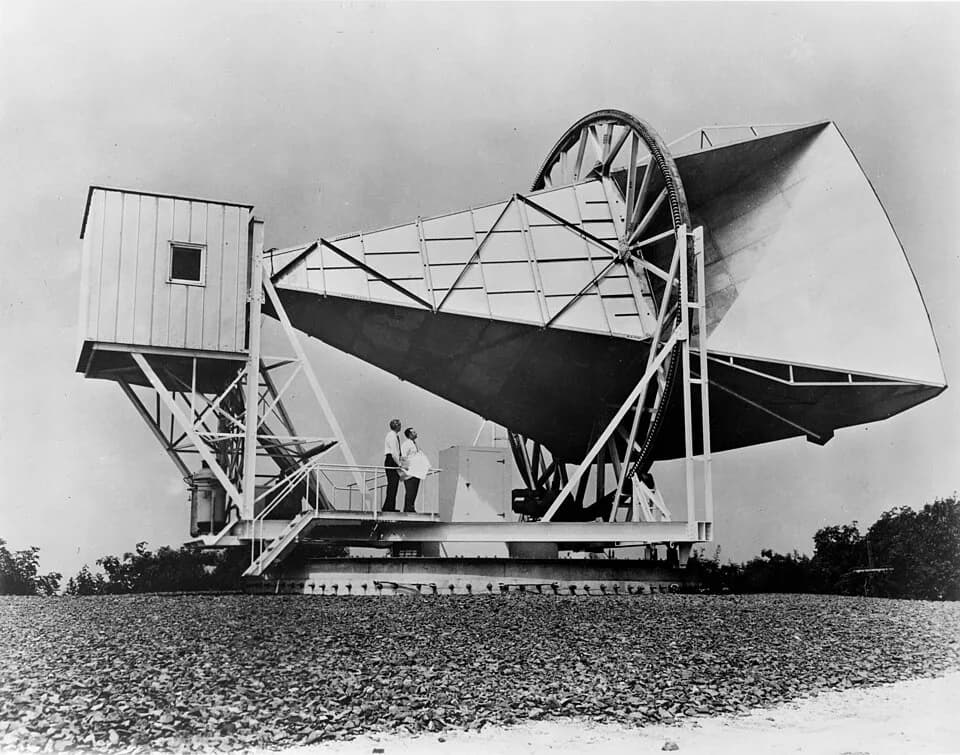
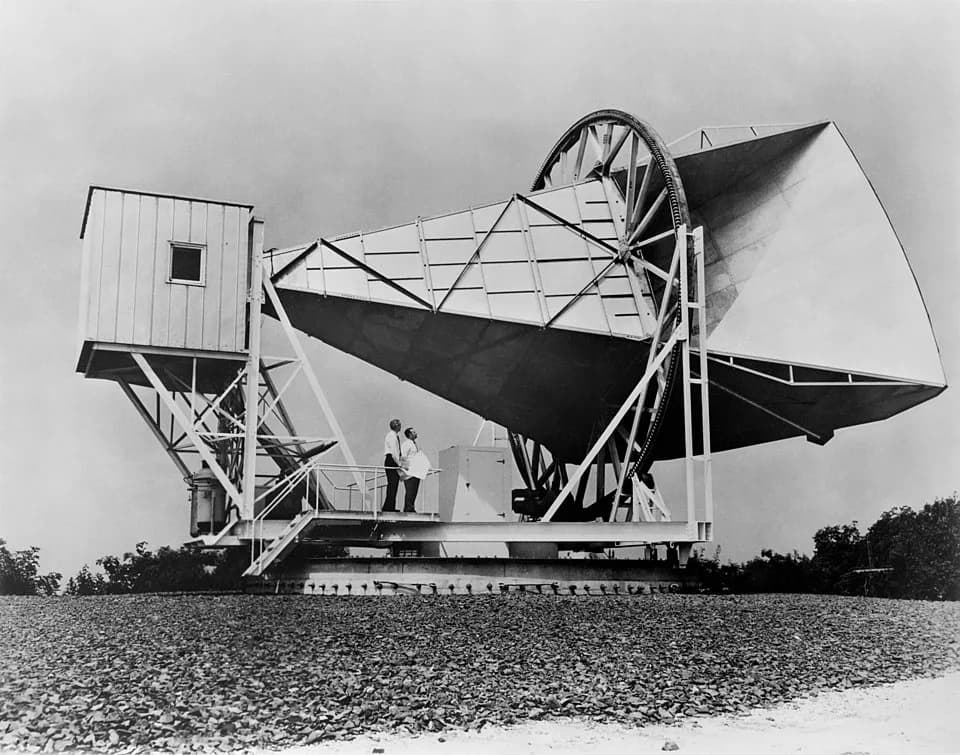
Penzias and Wilson were using a new horn antenna at Bell Labs to perform experiments in radio astronomy. They encountered persistent, unexplained noise that seemed to come from all directions in space. After meticulously ruling out terrestrial sources, equipment malfunction, and even pigeon droppings, they realized the noise was extraterrestrial and uniform.
This uniform, isotropic radiation was identified as the cosmic microwave background, a faint glow of electromagnetic radiation filling the universe. It represented the thermal echo of the Big Bang, a crucial piece of evidence for the universe's hot, dense early state. The discovery provided strong observational support for the Big Bang theory, solidifying its place as the prevailing cosmological model.
Hoofdstuk 4· Hoofdstuk 4 van 7
Personal Life
While specific details about Arno Allan Penzias's personal life are not widely disseminated, his professional dedication speaks volumes. He devoted his life to scientific inquiry, a pursuit that often demands immense personal commitment. His contributions were the result of sustained focus and collaborative spirit.
Hoofdstuk 5· Hoofdstuk 5 van 7
Notable Works or Contributions
Arno Allan Penzias's most significant contribution remains the co-discovery of cosmic microwave background radiation. This observation transformed theoretical cosmology into an empirically supported science. It provided a direct window into the early universe, allowing scientists to study conditions from billions of years ago.
Before this discovery, the Big Bang theory was one of several competing models for the universe's origin. The presence of the CMBR offered a tangible, measurable relic that aligned precisely with Big Bang predictions. His work thus became a cornerstone of modern astrophysics and cosmology, enabling future generations of scientists to build upon this foundational observation.
Hoofdstuk 6 · 2024· Hoofdstuk 6 van 7
Later Years
Arno Allan Penzias continued to engage with the scientific community throughout his life. He passed away on January 22, 2024, in San Francisco, United States. His passing marked the end of an era for a scientist who contributed profoundly to our collective understanding of the cosmos.
Hoofdstuk 7· Hoofdstuk 7 van 7
Legacy and Impact
The legacy of Arno Allan Penzias is intricately woven into the fabric of modern cosmology. His accidental discovery provided direct empirical evidence for the Big Bang theory, shifting it from a hypothesis to a widely accepted scientific model. The cosmic microwave background radiation remains one of the most studied phenomena in astronomy, continuing to yield insights into the universe's age, composition, and evolution.
Penzias's work stimulated further research, leading to missions like COBE, WMAP, and Planck, which have mapped the CMBR with increasing precision. These subsequent studies have refined our cosmological models, all stemming from the initial observation made by Penzias and Wilson. His contribution ensures his lasting recognition as a figure who profoundly expanded humanity's cosmic perspective.
Een leven in momenten
De momenten die een leven hebben gevormd

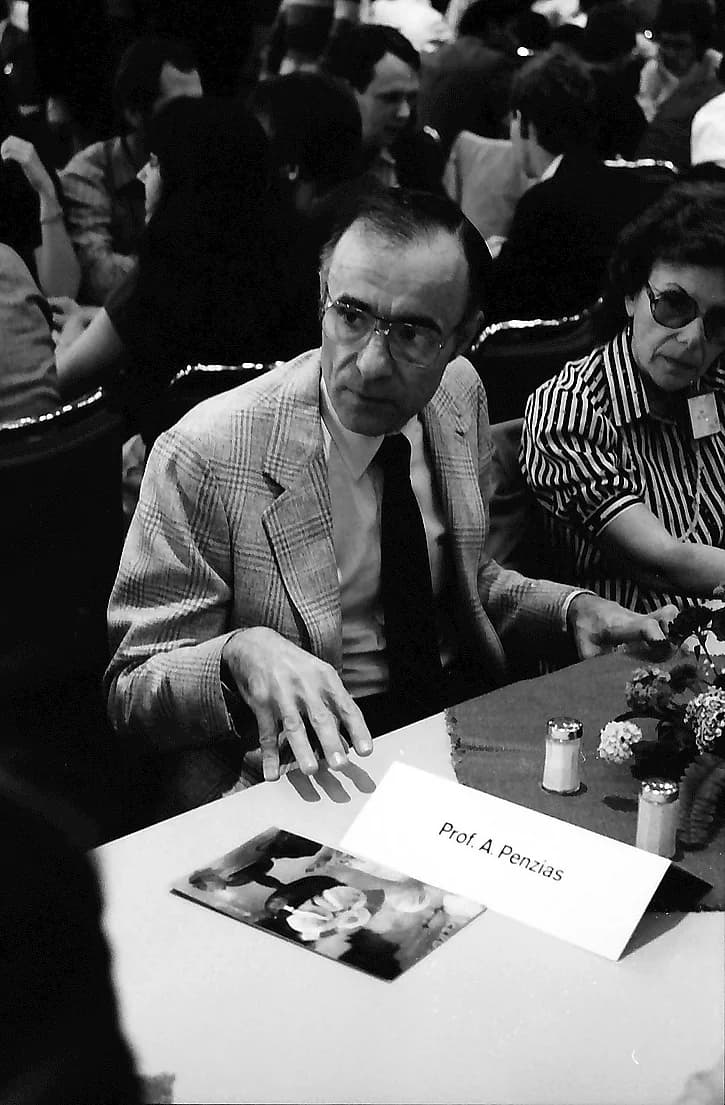
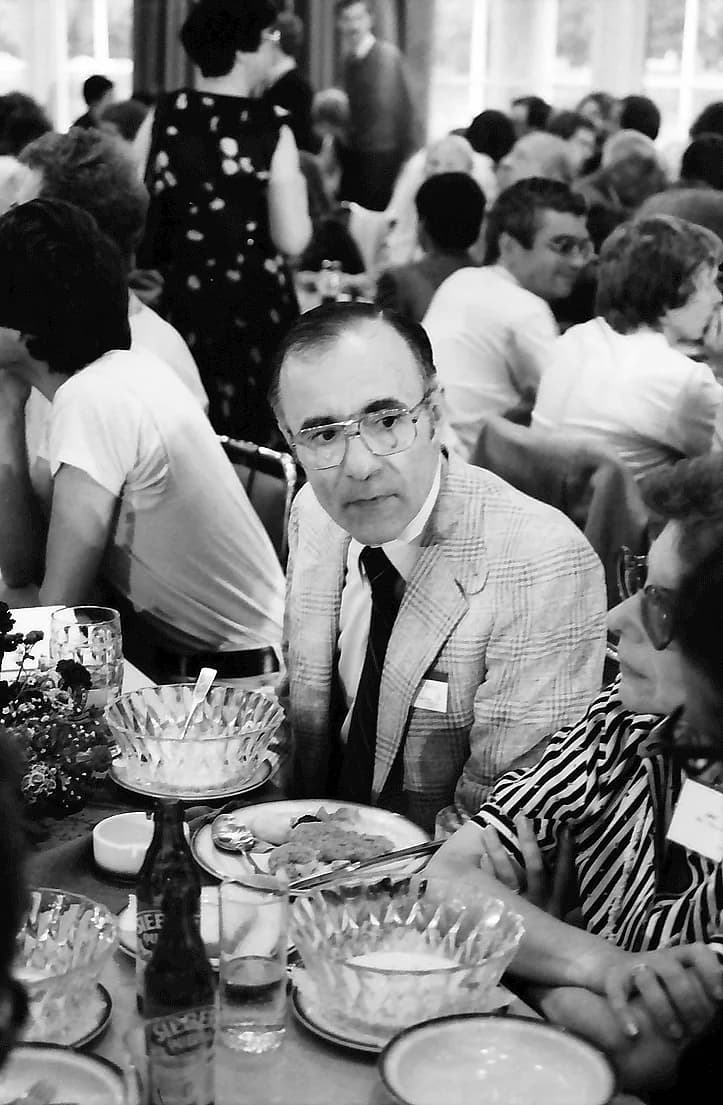

Veelgestelde vragen
Veelgestelde vragen
Wanneer is Arno Allan Penzias overleden?
Arno Allan Penzias overleed op 22 januari 2024 in San Francisco, United States op 90-jarige leeftijd.
Waar werd Arno Allan Penzias geboren?
Arno Allan Penzias werd geboren in Munich, Germany op 26 april 1933.
Waar is Arno Allan Penzias het meest bekend om?
Arno Allan Penzias is het meest bekend om German-born American physicist.
Hoe oud was Arno Allan Penzias bij overlijden?
Arno Allan Penzias was 90 jaar oud op het moment van overlijden.
Wat was de nationaliteit van Arno Allan Penzias?
Arno Allan Penzias kwam uit Germany.
Tijdlijn
Een leven in een oogopslag
Fotogalerij
Een leven in beelden
Klik op een polaroid om uit te vergroten · 23 foto's
QR-code
Deel deze biografie
Afdrukken en delen
Scan om deze biografiepagina te bezoeken. Druk af voor evenementen, tentoonstellingen of educatief materiaal.