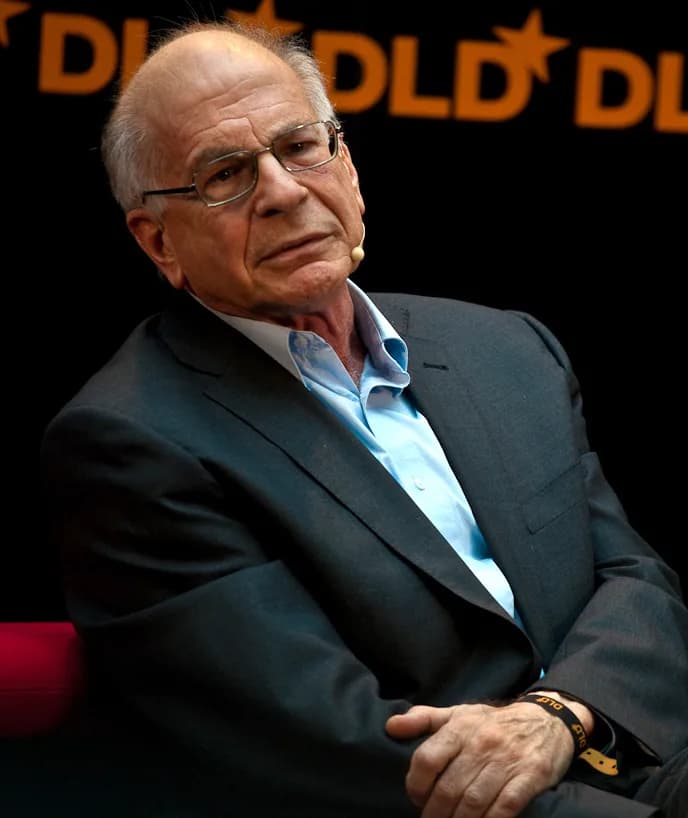
Geboren
March 5, 1934
Tel Aviv, Israel
Overleden
March 27, 2024
Nunningen, Switzerland
Bekend om
Israeli-American psychologist and economist
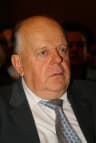
Daniel Kahneman (1934–2024) was Israel best known for Israeli-American psychologist and economist.
Daniel Kahneman (March 5, 1934 – March 27, 2024) was an Israeli-American psychologist and economist. He received the 2002 Nobel Memorial Prize in Economic Sciences for his work on judgment, decision-making, and behavioral economics. Kahneman's findings challenged human rationality, earning him the title 'grandfather of behavioral economics'.
Hoofdstuk
Levenshoofdstukken
Hoofdstuk 1 · 1934· Hoofdstuk 1 van 7
Early Life and Origins
Daniel Kahneman was born on March 5, 1934, in Tel Aviv, then part of Mandatory Palestine and now Israel. His early life experiences and background provided a unique perspective, contributing to his later inquiries into human cognition and decision processes.
His dual nationality as an Israeli-American reflected a life lived across different cultural and academic environments. This journey allowed him to contribute significantly to intellectual discourse on both sides of the Atlantic.
Hoofdstuk 2· Hoofdstuk 2 van 7
Intellectual Foundations and Career Start
Kahneman began his professional life as both a psychologist and an economist, bridging disciplines often considered separate. His early work immediately challenged prevailing assumptions within modern economic theory regarding human rationality.
He dedicated his career to empirically demonstrating how psychological factors influence economic choices. This foundational questioning of human rationality set the stage for a new field of study, integrating the complexities of the human mind into economic models.
Hoofdstuk 3 · 2002· Hoofdstuk 3 van 7
The Nobel Prize and Behavioral Economics
In 2002, Daniel Kahneman was awarded the Nobel Memorial Prize in Economic Sciences, an honor he shared with Vernon L. Smith. This prestigious award recognized his unique integration of psychological research insights into economic science.
His Nobel-winning contributions particularly focused on human judgment and decision-making under uncertainty, explaining deviations from rational choice theory. This work solidified his reputation and earned him the title of the "grandfather of behavioral economics," a field he was instrumental in establishing.
Hoofdstuk 4· Hoofdstuk 4 van 7
Key Publications and Academic Contributions
Among his most widely recognized contributions is the book "Thinking, fast and slow," which synthesizes much of his research for a broad audience. This work explores the two systems that drive the way we think, influencing countless readers and researchers alike.
His bibliography includes other impactful works such as "On Negotiation," "Hbr's 10 Must Reads 2018," and "HBR's 10 Must Reads on Making Smart Decisions." Academic publications like "Reference theory of choice and exchange" and "The causes of preference reversal" further illustrate the breadth and depth of his scientific contributions.
Kahneman's academic output also featured papers like "Mapas de racionalidad limitada: psicología para una economía conductual," a Nobel speech published in 2003, and "Teoría prospectiva: un análisis de la decisión bajo riesgo" from 1987. His impressive h-index and extensive body of work, including "Atención y esfuerzo" and "La falsa ilusión del éxito," highlight his prolific research career.
Hoofdstuk 5· Hoofdstuk 5 van 7
A Career of Teaching and Writing
Beyond his research and writing, Daniel Kahneman was also a dedicated university teacher, sharing his insights with generations of students. His roles as an economist, psychologist, and author were complemented by his contributions as an essayist.
This diverse range of professions allowed him to disseminate his ideas through various channels, making complex psychological and economic theories accessible. He inspired many to look beyond traditional models and embrace a more realistic view of human behavior.
Hoofdstuk 6· Hoofdstuk 6 van 7
Later Years and Passing
Daniel Kahneman continued to influence academic thought and public discourse through his later years. His work remained a cornerstone for researchers exploring the intricacies of human cognition.
He passed away on March 27, 2024, in Nunningen, Switzerland, leaving behind a legacy that will continue to shape numerous fields. His final contributions cemented his enduring place in the history of science.
Hoofdstuk 7· Hoofdstuk 7 van 7
Enduring Legacy
The legacy of Daniel Kahneman is profound, establishing behavioral economics as a legitimate and vital area of study. His empirical findings consistently challenged the assumption of human rationality, which was long prevalent in modern economic theory.
His insights continue to influence fields from finance to public policy, demonstrating the lasting importance of integrating psychological understanding into economic models. Daniel Kahneman's work permanently altered how we perceive and analyze human decision-making, ensuring his influence will persist for generations.
Een leven in momenten
De momenten die een leven hebben gevormd

Veelgestelde vragen
Veelgestelde vragen
Wanneer is Daniel Kahneman overleden?
Daniel Kahneman overleed op 27 maart 2024 in Nunningen, Switzerland op 90-jarige leeftijd.
Waar werd Daniel Kahneman geboren?
Daniel Kahneman werd geboren in Tel Aviv, Israel op 5 maart 1934.
Waar is Daniel Kahneman het meest bekend om?
Daniel Kahneman is het meest bekend om Israeli-American psychologist and economist.
Hoe oud was Daniel Kahneman bij overlijden?
Daniel Kahneman was 90 jaar oud op het moment van overlijden.
Wat was de nationaliteit van Daniel Kahneman?
Daniel Kahneman kwam uit Israel.
Tijdlijn
Een leven in een oogopslag
Fotogalerij
Een leven in beelden
Klik op een polaroid om uit te vergroten · 31 foto's
QR-code
Deel deze biografie
Afdrukken en delen
Scan om deze biografiepagina te bezoeken. Druk af voor evenementen, tentoonstellingen of educatief materiaal.