Nascita
January 23, 1876
Hamburg, Holy Roman Empire
Morte
March 7, 1954
Kiel, Germany
Conosciuto per
German chemist
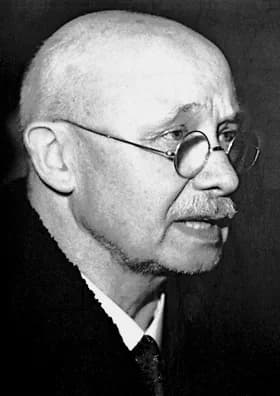
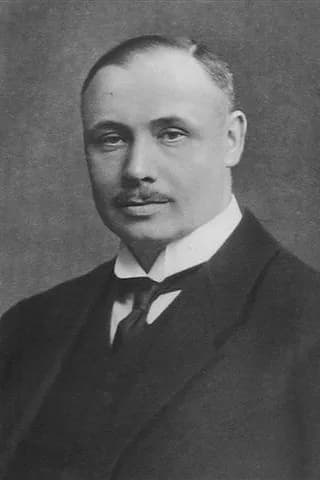
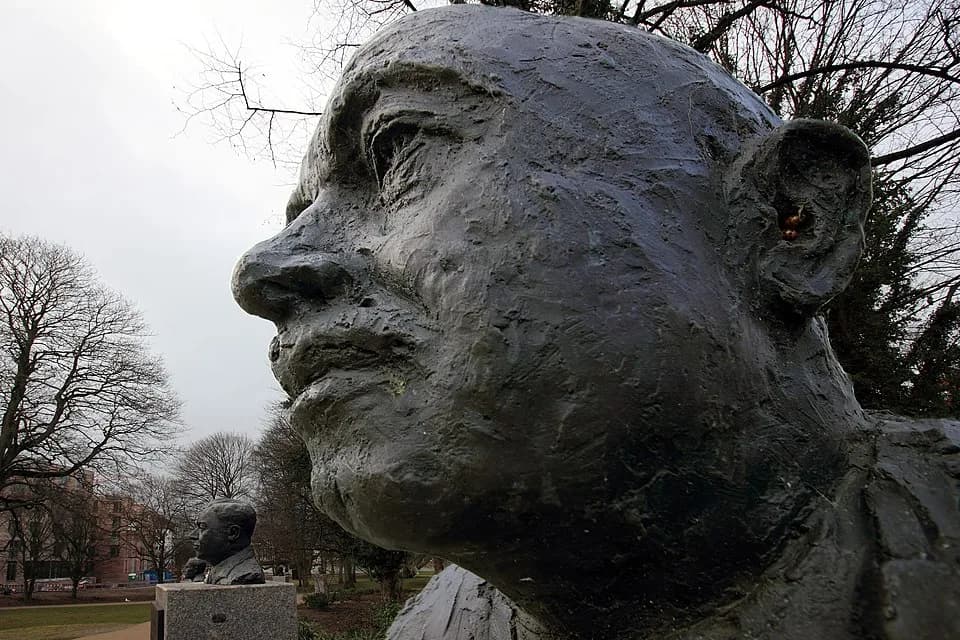
Otto Diels (1876–1954) was Holy Roman Empire best known for German chemist.
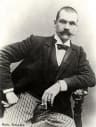
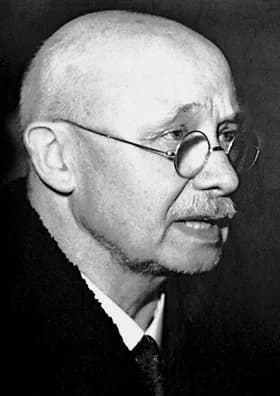
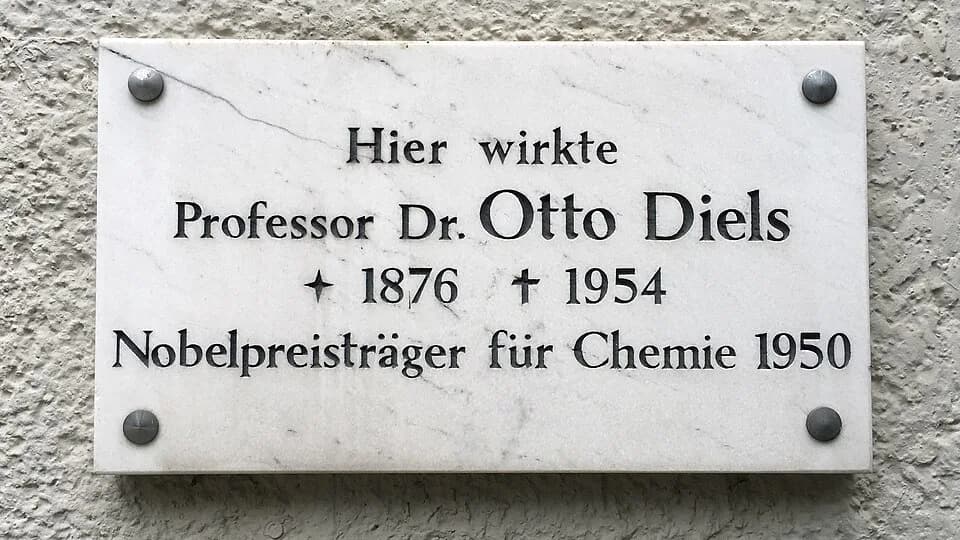
Otto Paul Hermann Diels (January 23, 1876 – March 7, 1954) was a German chemist. He shared the Nobel Prize in Chemistry in 1950 for the discovery and development of the Diels–Alder reaction. This method for synthesizing cyclic organic compounds proved vital for modern material production.
Capitolo
Capitoli di vita
Capitolo 1 · 1876· Capitolo 1 di 8
Remembering Otto Diels
Otto Paul Hermann Diels, who lived from January 23, 1876, to March 7, 1954, was a distinguished German chemist whose contributions significantly advanced the field of organic chemistry. He is primarily recognized for his collaborative work with Kurt Alder, which led to the discovery and development of the groundbreaking Diels–Alder reaction. This pivotal method revolutionized the synthesis of cyclohexene and other cyclic organic compounds, earning him and Alder the Nobel Prize in Chemistry in 1950.
Capitolo 2 · 1876· Capitolo 2 di 8
Early Life and Origins
Otto Diels began his life in Hamburg, a city that was part of the Holy Roman Empire at the time of his birth on January 23, 1876. His formative years in this historic region undoubtedly influenced his early academic pursuits. He later pursued his higher education at the University of Berlin, a prominent institution renowned for its scientific research.
It was at the University of Berlin that Diels immersed himself in the study of chemistry, laying the groundwork for his future breakthroughs. His diligent efforts during his educational tenure provided him with a robust theoretical foundation and practical skills. This period of intense learning was crucial for shaping his scientific methodology and approach to complex chemical problems.
Capitolo 3· Capitolo 3 di 8
Career Beginnings
Following the completion of his education, Otto Diels embarked on his professional career within the academic sphere. He commenced his work at the very institution where he had studied, the University of Berlin, initially contributing to its research and teaching endeavors. This early role allowed him to refine his experimental techniques and develop his pedagogical abilities.
His time at the University of Berlin provided a fertile environment for his initial explorations in organic chemistry. As a university teacher and chemist, he dedicated himself to both instruction and scientific inquiry. This foundational period set the stage for the significant discoveries that would later define his career and leave a lasting mark on chemical science.
Capitolo 4· Capitolo 4 di 8
Major Achievements and Career Highlights
Otto Diels's most celebrated achievement was undoubtedly his collaboration with Kurt Alder, which culminated in the discovery of the Diels–Alder reaction. This ingenious method provided a powerful tool for the synthesis of cyclohexene structures, representing a major leap forward in organic synthesis. Their shared ingenuity resulted in a fundamental reaction that is still widely used today.
The profound impact of their work was formally recognized when Otto Diels and Kurt Alder were jointly awarded the Nobel Prize in Chemistry in 1950. The Nobel Committee cited their "discovery and development of the diene synthesis," highlighting the immense practical and theoretical value of their contribution. This prestigious award underscored the revolutionary nature of their chemical innovation.
Diels was employed at the University of Kiel during the period when he completed this Nobel Prize-winning research. His dedicated work at Kiel established the university as a center for cutting-edge organic chemistry. He remained a distinguished figure at the institution until his retirement in 1945, having shaped generations of chemists through his teaching and research.
Capitolo 5· Capitolo 5 di 8
Personal Life
Beyond his prolific scientific career, Otto Diels maintained a personal life, finding companionship and family. He was married and shared his life with his wife and their five children. This aspect of his life suggests a balance between his demanding professional endeavors and his commitment to his family.
While specific details about his family life are not extensively documented in the available information, the presence of a spouse and five children indicates a rich personal sphere. This balance between scientific rigor and family responsibilities reflects the full scope of his human experience. His personal life provided a foundation amidst his public achievements.
Capitolo 6· Capitolo 6 di 8
Notable Works or Contributions
Otto Diels's scientific output was extensive, as evidenced by his h-index of 27 and a total of 160 published papers. His research consistently focused on the development and understanding of synthetic organic reactions, particularly those related to the diene synthesis. These numerous publications solidified his reputation as a meticulous and innovative experimental chemist.
One of his highly cited publications was "Zur Kenntnis des Mechanismus der Dien-Synthese, I. Mitteil.: Über den Reaktionsverlauf zwischen Malonestern sowie Cyanessigester und Acetylen-dicarbonsäureester bei Gegenwart von Pyridinacetat," published in 1942, which received 32 citations. This first communication on the mechanism of diene synthesis specifically investigated the reaction pathways involving malonic esters, cyanoacetic ester, and acetylenedicarboxylic ester in the presence of pyridine acetate. It offered crucial insights into the fundamental processes governing these complex organic transformations.
Another significant work, from 1940, was "Über synthetische Versuche in der Reihe des Cantharidins, Nor‐ und Isocantharidins. (XXXV. Mitteilung Über Diënsynthesen)," with 20 citations. This paper, representing the 35th communication on diene syntheses, explored synthetic endeavors related to cantharidin, norcantharidin, and isocantharidin. Such research demonstrated the broad applicability of diene synthesis in creating intricate natural product analogues.
In 1944, he published "Zur Kenntnis des Mechanismus der Dïen-Synthese. II. Mitteilung," accumulating 11 citations. This second communication continued his exploration into the detailed mechanism of the diene synthesis, further elucidating the intricacies of how these reactions proceed. Expanding upon his earlier work, this publication contributed to a deeper theoretical understanding of one of organic chemistry's most important reactions.
His 1940 paper, "Acridin und Acetylendicarbonsäureester. XXXIII. Mitteilung über Dien-Synthesen," garnered 6 citations. As the 33rd communication on diene syntheses, it focused on the reactions between acridine and acetylenedicarboxylic ester. This specific study showcased the versatility of the diene synthesis in constructing various heterocyclic systems, which are vital in medicinal chemistry.
Also from 1940, "Zur Kenntnis der durch Pyridin bewirkten Polymerisationsvorgänge. III. Zwischenprodukte bei der Polymerisation des p-Chinons," received 5 citations. This third communication contributed to the understanding of polymerization processes induced by pyridine, specifically identifying intermediate products formed during the polymerization of p-quinone. This research highlighted his interest in broader reaction mechanisms beyond just the diene synthesis.
Capitolo 7 · 1945· Capitolo 7 di 8
Later Years
Otto Diels continued his dedicated work at the University of Kiel for many years, where he had conducted his Nobel Prize-winning research. He remained an active and influential member of the faculty until his retirement in 1945. This lengthy tenure allowed him to mentor numerous students and continue his research pursuits.
After his retirement, Otto Diels lived in Kiel, Germany, the city that had been central to his later academic career. He passed away on March 7, 1954, at the age of 78. His life concluded in the same place where he had made such significant contributions to the scientific world.
Capitolo 8· Capitolo 8 di 8
Legacy and Impact
The legacy of Otto Diels is fundamentally linked to the Diels–Alder reaction, a chemical transformation that remains a cornerstone of synthetic organic chemistry. This diene synthesis method proved invaluable for creating cyclic organic compounds efficiently and selectively. Its widespread adoption transformed how chemists approached the construction of complex molecular architectures.
Beyond academic research, the practical applications of the Diels–Alder reaction have been far-reaching. It became a crucial method for the industrial manufacture of synthetic rubber and various types of plastic, materials that are ubiquitous in modern society. His work thus not only expanded scientific knowledge but also had tangible economic and societal benefits, shaping the material world around us. Otto Diels's ingenuity continues to inspire new generations of chemists.
Una vita in momenti
I momenti che hanno plasmato una vita
FAQ
Domande frequenti
Quando è morto/a Otto Diels?
Otto Diels è morto/a il 7 marzo 1954 a Kiel, Germany, all'età di 78 anni.
Dove è nato/a Otto Diels?
Otto Diels è nato/a a Hamburg, Holy Roman Empire il 23 gennaio 1876.
Per cosa è più conosciuto/a Otto Diels?
Otto Diels è più conosciuto/a per German chemist.
Quanti anni aveva Otto Diels al momento della morte?
Otto Diels aveva 78 anni al momento della morte.
Di che nazionalità era Otto Diels?
Otto Diels era originario/a di Holy Roman Empire.
Cronologia
La vita in sintesi
Galleria fotografica
Una vita in immagini
Clicca su una polaroid per ingrandirla · 11 foto
Codice QR
Condividi questa biografia
Stampa e Condividi
Scansiona per visitare questa pagina biografica. Stampa per eventi, mostre o materiali didattici.