Nascita
June 6, 1933
Buchs, Switzerland
Morte
May 16, 2013
Wollerau, Switzerland
Conosciuto per
Swiss physicist
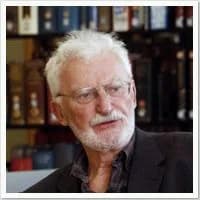
Heinrich Rohrer (1933-2013) was a Swiss physicist who shared the 1986 Nobel Prize in Physics for co-inventing the scanning tunneling microscope. His breakthrough enabled scientists to observe individual atoms for the first time. His work launched the field of nanotechnology.
Una vita in momenti
I momenti che hanno plasmato una vita



Capitolo
Capitoli di vita
Capitolo 1 · 1933· Capitolo 1 di 6
Early Life and Origins
Heinrich Rohrer was born on June 6, 1933, in Buchs, a small town in the Rhine Valley of eastern Switzerland. Growing up in the Swiss countryside during the 1930s and 1940s, Rohrer developed an early fascination with the natural world that would later drive his scientific pursuits. His formative years in Switzerland's tradition of scientific excellence provided the foundation for his future achievements in physics.
Capitolo 2· Capitolo 2 di 6
Career Beginnings
Rohrer began his professional journey in physics during the mid-20th century, a period of rapid advancement in scientific instrumentation. His early work focused on understanding the fundamental properties of materials at the atomic level. The precise details of his educational path and initial research positions laid the groundwork for his later collaboration with fellow physicist Gerd Binnig at IBM Research.
Capitolo 3 · 1986· Capitolo 3 di 6
Major Achievements and Career Highlights
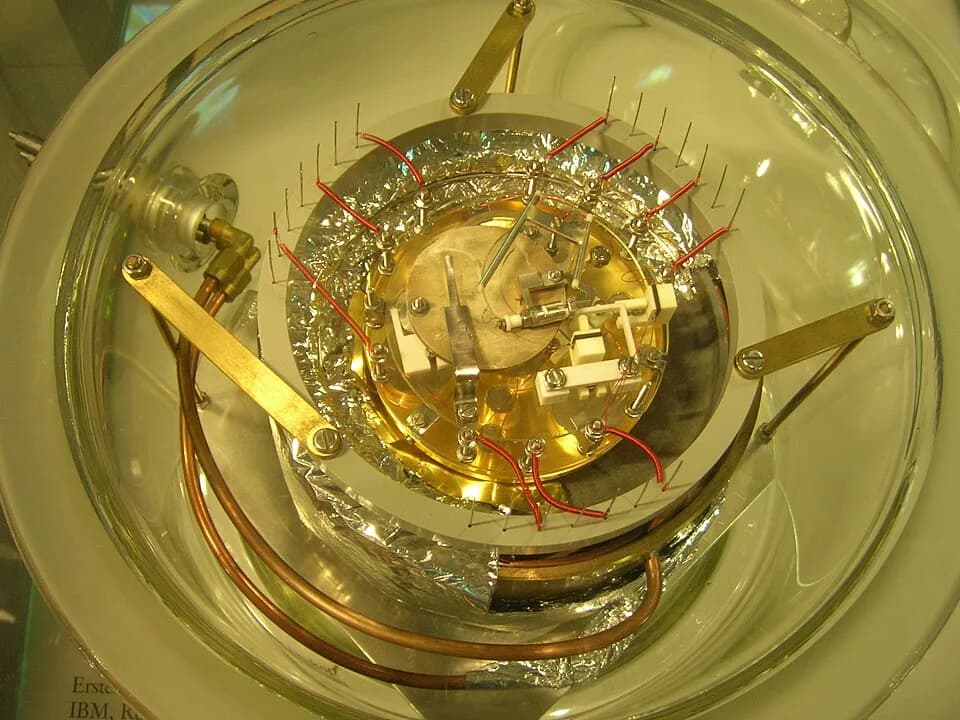
The defining moment of Rohrer's career came through his collaboration with Gerd Binnig on the development of the scanning tunneling microscope (STM). This revolutionary instrument, completed in the early 1980s, enabled scientists to visualize and manipulate individual atoms on surfaces for the first time in history. The significance of this achievement was recognized in 1986 when Rohrer and Binnig shared half of the Nobel Prize in Physics for their STM design, while Ernst Ruska received the other half for his work on electron microscopy.
The scanning tunneling microscope represented a quantum leap in scientific capability. Unlike previous microscopes that relied on light or electrons, the STM used quantum tunneling effects to achieve atomic-scale resolution. This breakthrough opened entirely new fields of research and laid the foundation for nanotechnology as we know it today.
Capitolo 4 · 1985· Capitolo 4 di 6
Notable Works and Contributions
Rohrer's academic contributions, while focused, were highly impactful. His 1985 paper "Determination of surface topography of biological specimens at high resolution by scanning tunnelling microscopy" became a cornerstone work in the field, accumulating 183 citations and demonstrating the biological applications of STM technology. This publication showed how the microscope could be applied beyond traditional materials science to explore biological systems at the molecular level.
Later in his career, Rohrer continued to push technological boundaries with work on data storage systems. His 1999 paper "VLSI-NEMS chip for AFM data storage" explored the intersection of nanotechnology and information storage, earning 32 citations and contributing to the development of next-generation storage technologies. He also contributed to optical nanolithography research, further expanding the applications of nanoscale science.
Capitolo 5 · 2013· Capitolo 5 di 6
Later Years
Throughout his later career, Rohrer continued his association with cutting-edge research while maintaining his connection to Switzerland. His work remained focused on the practical applications of nanotechnology and surface science. Rohrer spent his final years in Wollerau, Switzerland, where he passed away on May 16, 2013, at the age of 79.
Capitolo 6· Capitolo 6 di 6
Legacy and Impact
Heinrich Rohrer's impact on science extends far beyond his Nobel Prize achievement. The scanning tunneling microscope fundamentally changed how scientists study materials, enabling the birth of nanotechnology and single-atom manipulation. His work made possible countless advances in electronics, materials science, and biology that continue to shape our world today.
The scientific community has honored Rohrer's memory through the Heinrich Rohrer Medal, presented triennially by the Surface Science Society of Japan in collaboration with IBM Research – Zurich, the Swiss Embassy in Japan, and his family. This award recognizes outstanding achievements in surface science and nanotechnology, ensuring that Rohrer's pioneering spirit continues to inspire new generations of researchers.
From his humble beginnings in rural Switzerland to his position among history's most influential physicists, Heinrich Rohrer's life exemplifies the power of scientific curiosity and innovation. His legacy lives on in every nanotechnology application, from advanced computer processors to targeted medical treatments, all made possible by his ability to see and manipulate the atomic world.
FAQ
Domande frequenti
Quando è morto/a Heinrich Rohrer?
Heinrich Rohrer è morto/a il 16 maggio 2013 a Wollerau, Switzerland, all'età di 79 anni.
Dove è nato/a Heinrich Rohrer?
Heinrich Rohrer è nato/a a Buchs, Switzerland il 6 giugno 1933.
Per cosa è più conosciuto/a Heinrich Rohrer?
Heinrich Rohrer è più conosciuto/a per Swiss physicist.
Quanti anni aveva Heinrich Rohrer al momento della morte?
Heinrich Rohrer aveva 79 anni al momento della morte.
Di che nazionalità era Heinrich Rohrer?
Heinrich Rohrer era originario/a di Switzerland.
Cronologia
La vita in sintesi
Galleria fotografica
Una vita in immagini
Clicca su una polaroid per ingrandirla · 19 foto
Codice QR
Condividi questa biografia
Stampa e Condividi
Scansiona per visitare questa pagina biografica. Stampa per eventi, mostre o materiali didattici.