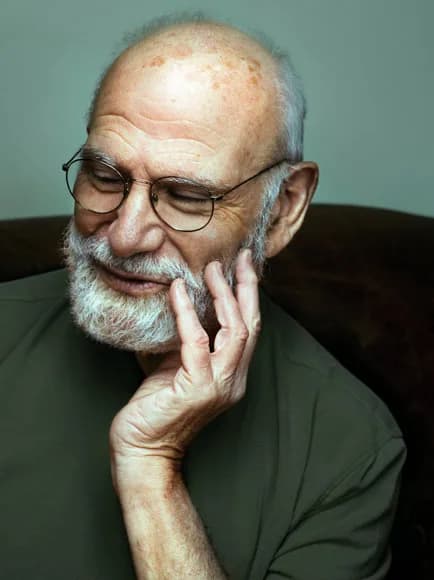
Né(e)
July 9, 1933
Willesden, United Kingdom
Décédé(e)
August 30, 2015
Greenwich Village, United States
Connu(e) pour
British neurologist and writer
Oliver Sacks (1933–2015) was United Kingdom best known for British neurologist and writer.
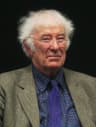
Oliver Sacks (July 9, 1933 – August 30, 2015) was a British neurologist and writer. He was known for his compelling case studies exploring neurological conditions, which he documented in popular books. His work made complex scientific concepts accessible, influencing both medical understanding and public perception of the human brain.
Chapitre
Chapitres de vie
Chapitre 1 · 1933· Chapitre 1 sur 7
Opening
Oliver Wolf Sacks (July 9, 1933 – August 30, 2015) was a British neurologist and writer whose work richly illuminated the complexities of the human brain. Known for his unique approach to clinical case studies, Sacks transformed the understanding of neurological conditions through accessible and empathetic narratives. He served as a physician, a university teacher, and a celebrated science communicator, bridging the gap between medical science and the general public. His writings explored the human experience of illness with a singular blend of scientific rigor and humanistic compassion.
Chapitre 2 · 1933· Chapitre 2 sur 7
Early Life and Origins
Born on July 9, 1933, in Willesden, United Kingdom, Oliver Sacks came from a family with a strong medical background. His parents were both physicians, which undoubtedly influenced his early interest in science and medicine. Growing up in a household steeped in intellectual curiosity and scientific inquiry, Sacks developed a deep fascination with the natural world and the workings of the human mind from a young age. This foundational period in Willesden shaped his formative years and set the stage for his distinguished career.
Chapitre 3· Chapitre 3 sur 7
Career Beginnings
Sacks pursued his medical education, eventually becoming a qualified physician and chemist. His early professional life involved working as a neurologist, where he encountered patients with extraordinary conditions that sparked his unique narrative approach. He also took on roles as a university teacher, sharing his knowledge and insights with future generations of medical professionals. His early experiences laid the groundwork for his eventual emergence as a physician writer and science communicator.
Chapitre 4 · 2004· Chapitre 4 sur 7
Major Achievements and Career Highlights
Oliver Sacks achieved widespread recognition for his ability to translate complex neurological phenomena into compelling human stories. He was known as a British neurologist and writer, publishing extensively on case histories throughout his career. His academic contributions are reflected in an h-index of 5 across 7 papers, with notable works including "Occurrence of β‐methylamino‐l‐alanine (BMAA) in ALS/PDC patients from Guam" (2004, 336 citations) and "Hereditary photomyoclonus associated with diabetes mellitus, deafness, nephropathy, and cerebral dysfunction" (1964, 32 citations). These academic insights often informed his more popular works, demonstrating his dual impact in both scientific and literary spheres.
Chapitre 5· Chapitre 5 sur 7
Notable Works or Contributions
Sacks authored numerous influential books that captivated readers worldwide, making him a respected figure. Among his most celebrated works are The Island of the Colorblind and Cycad Island, a vivid exploration of a remote community, and Musicophilia, which delved into the significant relationship between music and the brain. His Oliver Sacks Omnibus gathered several of his classic texts, including Awakenings, A Leg to Stand On, The Man Who Mistook His Wife for a Hat, and Seeing Voices, showcasing the breadth of his observations. These books, such as The Man Who Mistook His Wife for a Hat, brought complex neurological disorders to life with empathy and deep insight.
Chapitre 6 · 2015· Chapitre 6 sur 7
Later Years
Oliver Sacks continued his work as a physician and writer well into his later years. He passed away on August 30, 2015, in Greenwich Village, United States, leaving behind a substantial body of work. His dedication to understanding and communicating the human experience of neurological conditions remained steadfast throughout his life. Even towards his final days, Sacks continued to share his reflections and observations through works like Letters and Selected Letters, offering personal insights into his intellectual journey.
Chapitre 7· Chapitre 7 sur 7
Legacy and Impact
Oliver Sacks' legacy endures through his unique contributions as a neurologist and a science communicator. He reshaped public perception of neurological disorders, moving them from purely clinical descriptions to narratives that illuminated the subjective experiences of his patients. His ability to combine the rigor of a physician with the artistry of a writer created a distinctive genre of medical literature. Sacks' works continue to inspire curiosity and empathy, making him a lasting figure in both medicine and literature.
Une vie en moments
Les moments qui ont façonné une vie
FAQ
Questions fréquentes
Quand Oliver Sacks est-il/elle décédé(e) ?
Oliver Sacks est décédé(e) le 30 août 2015 à Greenwich Village, United States, à l'âge de 82 ans.
Où est né(e) Oliver Sacks ?
Oliver Sacks est né(e) à Willesden, United Kingdom le 9 juillet 1933.
Pour quoi Oliver Sacks est-il/elle le/la plus connu(e) ?
Oliver Sacks est surtout connu(e) pour British neurologist and writer.
Quel âge avait Oliver Sacks à sa mort ?
Oliver Sacks avait 82 ans au moment de son décès.
Quelle était la nationalité de Oliver Sacks ?
Oliver Sacks était originaire de United Kingdom.
Chronologie
La vie en un coup d'œil
Galerie photo
Une vie en images
Cliquez sur un polaroid pour l'agrandir · 25 photos
QR Code
Partager cette biographie
Imprimer et partager
Scannez pour visiter cette page biographique. Imprimez pour des événements, des expositions ou du matériel pédagogique.