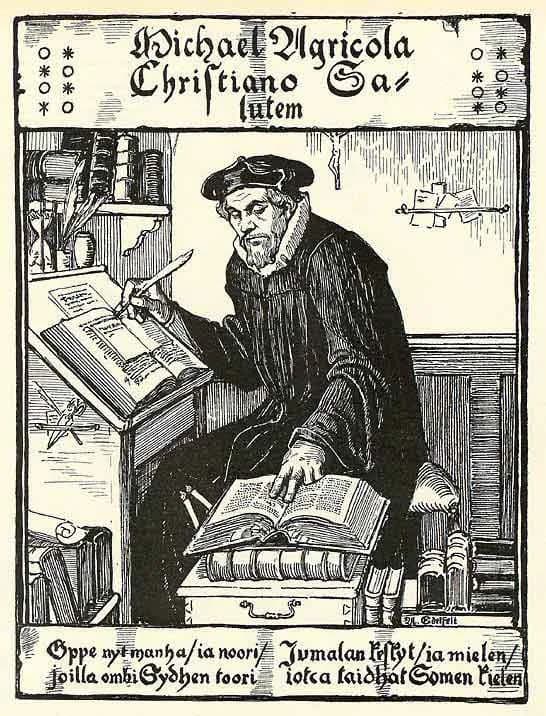
Né(e)
January 1, 1510
Pernå, Finland
Décédé(e)
April 9, 1557
Polyany, Russia
Connu(e) pour
Finnish clergyman and de facto founder of literary Finnish
Mikael Agricola (1510–1557) was Finland best known for Finnish clergyman and de facto founder of literary Finnish.
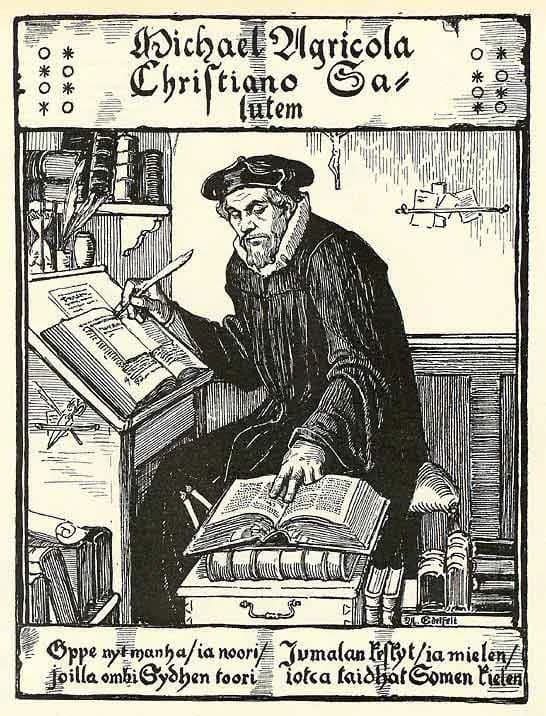
Mikael Agricola (January 1, 1510 – April 9, 1557) was a Finnish Lutheran clergyman. He is recognized as the de facto founder of literary Finnish and played a significant role in the Protestant Reformation. His linguistic work established the foundation for the modern Finnish language.
Chapitre
Chapitres de vie
Chapitre 1 · 1510· Chapitre 1 sur 6
Early Life and Origins
Mikael Agricola began his life on January 1, 1510, in the rural parish of Pernå, a historical region within what is now Finland, then a part of the expansive Kingdom of Sweden. Although detailed records of his early family life are scarce, his subsequent intellectual pursuits and scholarly accomplishments strongly suggest a nurturing environment that recognized and supported his innate curiosity and sharp intellect from a young age. He adopted the Latinized surname "Agricola," meaning "farmer," a customary practice among scholars of the era to signify their humble origins, while his birth name was likely Mikael Olavinpoika, reflecting his father's given name. This early background instilled in him a grounded understanding of the common people's needs, which would later fuel his drive to make religious texts accessible in their native tongue.
His formal education commenced locally, yet his exceptional academic promise quickly drew the attention of influential figures, most notably Martti Skytte, who served as the Bishop of Turku, the spiritual and administrative heart of Finland. Bishop Skytte, discerning Agricola's significant potential, played a crucial role in facilitating his advanced studies, ensuring he received the best available theological and humanistic training. This patronage allowed Agricola to matriculate at the University of Wittenberg in Germany, a central hub of Reformation thought, where he studied diligently from 1536 to 1539. This period abroad was absolutely formative, placing him directly under the tutelage of prominent reformers such as Martin Luther and Philipp Melanchthon, whose revolutionary ideas deeply impressed upon his developing theological framework.
While immersed in the vibrant intellectual atmosphere of Wittenberg, Agricola deepened his understanding of classical languages, theology, and the principles of the Protestant Reformation. He absorbed the critical importance of vernacular scripture and congregational participation, concepts that would become cornerstones of his life's work. This intensive academic experience not only equipped him with formidable linguistic and theological skills but also solidified his conviction in the necessity of translating the Bible and other religious materials into the native language of the people. His time in Germany provided the theoretical foundation and the practical inspiration for the monumental tasks he would undertake upon his return to Finland.
Chapitre 2 · 1539· Chapitre 2 sur 6
Career Beginnings
Upon his return to Finland in 1539, Mikael Agricola immediately assumed a significant role in the country's educational and religious reform as the rector of the prestigious cathedral school in Turku. This appointment was not merely an administrative position but a strategic placement that allowed him to instigate the profound educational and theological changes he had envisioned during his studies. He dedicated himself vigorously to revamping the school's curriculum, integrating the humanistic and reformed principles he had learned directly from Luther and Melanchthon. His leadership was instrumental in shaping a new generation of Finnish clergy, preparing them to guide their congregations through the theological shifts that were rapidly transforming northern Europe.
It was within this initial phase of his career in Turku that Agricola courageously embarked upon his colossal mission: the creation of a literary Finnish language and the translation of religious texts. Recognizing the absence of any standardized written form for Finnish, which existed primarily as a collection of spoken dialects, he began the painstaking process of compiling vocabulary, developing grammatical rules, and establishing orthographic conventions. This pioneering endeavor was far more than a simple translation; it was an act of linguistic foundationalism, constructing the very framework that would enable Finnish to function as a written language capable of conveying complex theological concepts. His early efforts were a clear indication of his vision, transforming an oral language into a structured, formalized literary instrument.
Agricola's work as a linguist and translator was deeply intertwined with his role as a Lutheran pastor, as he sought to make the tenets of the Protestant faith directly accessible to the Finnish populace. He understood that true religious reform required the common people to read and understand scripture in their own language, freeing them from reliance on Latin or foreign interpretations. This commitment led to the production of his earliest Finnish texts, which served dual purposes: both as educational tools for literacy and as vessels for the propagation of reformed doctrine. His steadfast dedication during these formative years laid the essential groundwork for his later, more extensive publications, which would solidify his status as the father of literary Finnish.
Chapitre 3 · 1554· Chapitre 3 sur 6
Major Achievements and Career Highlights
Mikael Agricola's tireless work and profound intellectual contributions were recognized through his appointment as Bishop of Turku in 1554, marking a significant milestone in both his personal career and Finland's religious history. This elevation positioned him as the very first Lutheran bishop in Finland, a role that formally cemented the transition from Catholicism to Protestantism across the land, reflecting broader changes throughout the Swedish realm. As bishop, he took on immense spiritual and administrative responsibilities, diligently working to reorganize the Finnish church in strict adherence to Lutheran doctrines and practices. He oversaw the establishment of new parishes and meticulously supervised the training of clergy, ensuring that the reformed faith was propagated consistently and effectively.
Central to his episcopal tenure was the energetic promotion of a new liturgical order and the fervent advocacy for services conducted entirely in the Finnish language throughout his diocese. Agricola championed the revolutionary idea that every Finnish person deserved the opportunity to comprehend the word of God directly, without the intermediaries of Latin or foreign tongues, a core principle of the Reformation movement. This vision was inextricably linked to his ongoing and extensive translation work, which he continued with unwavering resolve even amidst the demanding responsibilities of his ecclesiastical office. His time as bishop was thus characterized by a profound dedication to making religious practice meaningful and immediately accessible to the ordinary Finnish individual, thereby fostering a deeper, more personal connection to their faith.
His sustained commitment to vernacular religious texts not only solidified the Lutheran church's presence in Finland but also simultaneously advanced the development of the Finnish language itself. By integrating Finnish into the highest echelons of religious discourse and public worship, he granted it unprecedented legitimacy and solidified its role as a national language. This period of his life showcased his exceptional ability to blend theological leadership with linguistic innovation, demonstrating how deeply intertwined these two spheres were for him. Agricola's career highlights reflect a rare synergy of spiritual zeal, scholarly rigor, and an unwavering patriotic spirit, all serving to shape the future of his homeland.
Chapitre 4 · 1543· Chapitre 4 sur 6
Notable Works or Contributions
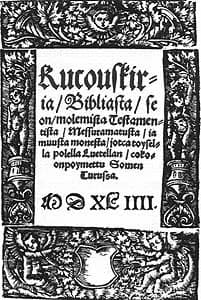
Mikael Agricola's comprehensive body of written works stands as an unparalleled contribution to Finnish culture and religious life, forming the absolute foundation of its literary tradition. His seminal publication, the "Abckiria," appearing around 1543, holds the distinction of being the first book ever printed in the Finnish language. This modest yet immensely significant work functioned as both an alphabet primer for basic literacy and a catechism for fundamental religious instruction, introducing a standardized orthography that was entirely new for Finnish. It served as an indispensable educational tool, providing foundational knowledge for countless Finnish readers and establishing the initial principles of the Lutheran faith in an accessible format.
Undoubtedly, his most ambitious and enduring literary achievement was the meticulous translation of the New Testament into Finnish, famously titled "Se Wsi Testamenti," which saw its publication in 1548. This colossal undertaking required not only exceptional linguistic skill in translating directly from the original Greek and Latin sources but also the innovative act of coining a vast array of new Finnish words and systematically developing a consistent grammatical structure where none had previously existed. "Se Wsi Testamenti" made the central narratives and teachings of Christianity directly comprehensible to the vast Finnish populace, profoundly altering patterns of religious education, communal worship, and personal spiritual devotion. It remains a work of immense philological and theological scholarship, powerfully illustrating Agricola's intellectual rigor and his deep mastery of both classical and emerging Finnish linguistic forms.
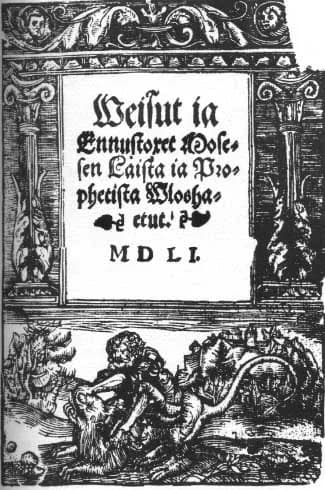
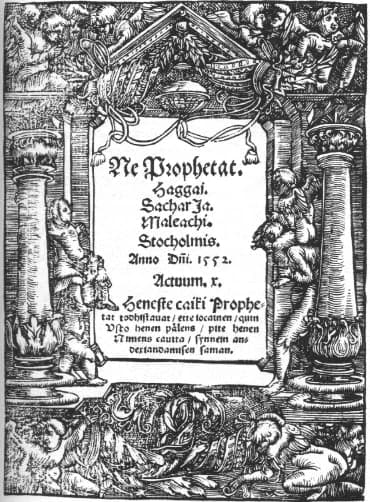
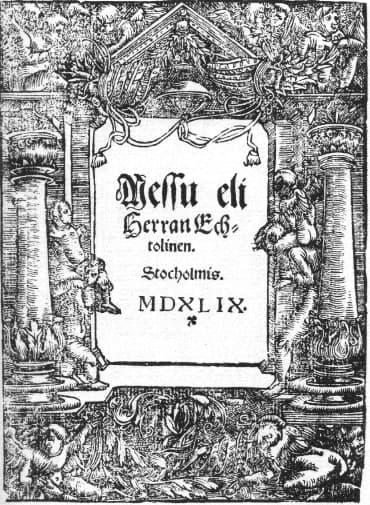
Agricola's prolific output extended beyond the New Testament, as he also translated substantial sections of the Old Testament, though these were eventually published posthumously. He produced other essential religious works, including a comprehensive prayer book, known as "Mikael Agricolan Rukouskirja ja sen lähteet," which provided structured devotional practices for the Finnish people. Additionally, his "Mikael Agricolan käsikirja 1549" functioned as a practical handbook for clergy and laypeople alike, guiding them through various aspects of reformed Christian life. His specific dedication to psalm translation is highlighted by the attribution "Mikael Agricola psalmien suomentajana," emphasizing his role in making these lyrical expressions of faith available in Finnish.
These publications, alongside other administrative records such as "Turun tuomiokirkon ja papiston tulot 1541-1542," and his broader "Mikael Agricolan teokset" (collected works), collectively demonstrate his relentless, singular dedication. He was committed to furnishing the Finnish people with a comprehensive and authoritative body of religious literature in their own language. Through these extraordinary literary and translational achievements, Mikael Agricola did not merely disseminate religious doctrine; he essentially crafted a literary language from nascent elements and simultaneously provided his people with the spiritual resources necessary to fully embrace the tenets and spirit of the Protestant Reformation, forever linking his name with the birth of Finnish literacy and nationhood.
Chapitre 5 · 1557· Chapitre 5 sur 6
Later Years
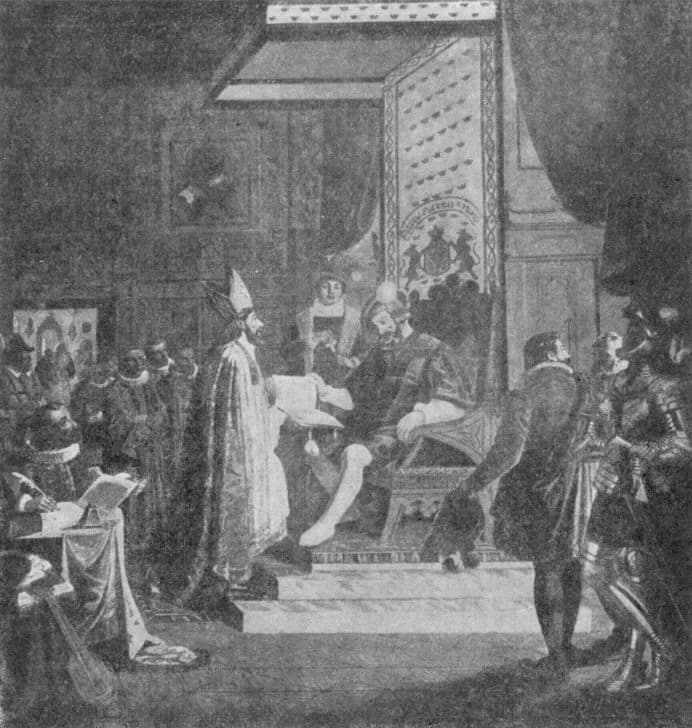
Mikael Agricola's final active engagement in public service mirrored the selfless dedication that characterized his entire illustrious career. In 1557, he was entrusted with a critically important diplomatic mission, tasked with representing the Kingdom of Sweden in complex peace negotiations with Russia in Moscow. This assignment was particularly demanding, requiring not only exceptional political acumen but also considerable physical endurance and resilience, given the often-strained relations and difficult travel conditions between the two powerful realms. Despite these challenges, he successfully concluded the arduous discussions, leading to the signing of the Treaty of Novgorod on April 9, 1557, which effectively brought peace and established crucial border delimitations.
Tragically, the exhaustive and challenging journey back from Russia proved to be a severe strain on his health. Mikael Agricola passed away on April 9, 1557, in Polyany, Russia, while making his return trip, remarkably on the very same day that the significant peace treaty he had negotiated was finalized. His death at a relatively young age, immediately following a triumph in international diplomacy, marked the premature end of a life consistently devoted to the spiritual, cultural, and civic advancement of his nation. He left behind a profound and multifaceted legacy that would continue to resonate and shape the development of Finland for many centuries to come.
Chapitre 6· Chapitre 6 sur 6
Legacy and Impact
The enduring influence of Mikael Agricola on the nation of Finland is truly immeasurable, solidifying his rightful veneration as the "father of literary Finnish." His systematic and pioneering approach to translating essential religious texts not only effectively propagated the Lutheran faith throughout the Finnish populace but also, concurrently, codified the Finnish language itself. He provided it with a standardized written form that, astonishingly, continues to serve as the bedrock of the modern Finnish language to this very day. Before Agricola's diligent efforts, Finnish existed primarily as a collection of diverse, regional oral dialects, entirely lacking a consistent, authoritative written standard for widespread communication.
His monumental works effectively bridged this significant linguistic chasm, offering a common, cohesive framework that united disparate dialects and established the fundamental groundwork for national literacy across Finland. Agricola's translations were instrumental in establishing a robust, rich vocabulary and a set of consistent grammatical conventions that became the undisputed basis for modern Finnish usage. The sheer scale of his linguistic innovation meant that he essentially created and introduced thousands of new words and expressions into the Finnish lexicon, many of which remain in active, everyday use by Finnish speakers today. By placing sacred texts directly into the hands and minds of the common people, he empowered them with a newfound spiritual autonomy and fostered an emergent sense of shared cultural identity that transcended regional loyalties.
Today, Mikael Agricola's foundational contributions are ceremoniously celebrated annually throughout Finland on the Day of the Finnish Language, a national observance that appropriately coincides with his death anniversary on April 9. His extensive body of work persists as a central cornerstone of Finnish literature, language education, and the deeply ingrained Finnish national consciousness. He is revered not merely as a religious reformer who transformed faith practices but also as an unparalleled cultural architect who gifted Finland its distinctive voice and its enduring written heritage. His extraordinary efforts continue to resonate powerfully, serving as a constant reminder of the profound, transformative power of language in shaping the destiny and identity of an entire people.
Une vie en moments
Les moments qui ont façonné une vie
FAQ
Questions fréquentes
Quand Mikael Agricola est-il/elle décédé(e) ?
Mikael Agricola est décédé(e) le 9 avril 1557 à Polyany, Russia, à l'âge de 47 ans.
Où est né(e) Mikael Agricola ?
Mikael Agricola est né(e) à Pernå, Finland le 1 janvier 1510.
Pour quoi Mikael Agricola est-il/elle le/la plus connu(e) ?
Mikael Agricola est surtout connu(e) pour Finnish clergyman and de facto founder of literary Finnish.
Quel âge avait Mikael Agricola à sa mort ?
Mikael Agricola avait 47 ans au moment de son décès.
Quelle était la nationalité de Mikael Agricola ?
Mikael Agricola était originaire de Finland.
Chronologie
La vie en un coup d'œil
Galerie photo
Une vie en images
Cliquez sur un polaroid pour l'agrandir · 20 photos
QR Code
Partager cette biographie
Imprimer et partager
Scannez pour visiter cette page biographique. Imprimez pour des événements, des expositions ou du matériel pédagogique.