Né(e)
October 31, 1920
Kaiserslautern, Germany
Décédé(e)
June 17, 2002
Enkenbach-Alsenborn, Germany
Connu(e) pour
German association football player
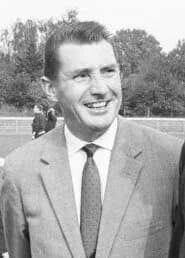
Fritz Walter (1920–2002) was Germany best known for German association football player.
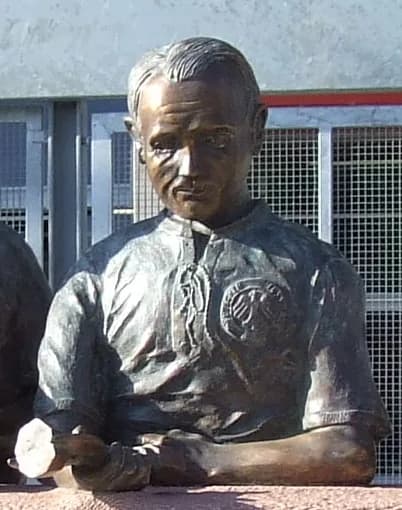
Friedrich "Fritz" Walter (1920-2002) was a German footballer who spent his entire career at 1. FC Kaiserslautern. He captained West Germany to victory in the 1954 FIFA World Cup and holds the record for most World Cup assists. His leadership and loyalty made him an icon of German football.
Chapitre
Chapitres de vie
Chapitre 1 · 1920· Chapitre 1 sur 6
Early Life and Origins
Fritz Walter was born on October 31, 1920, in Kaiserslautern, Germany, during a period when football was rapidly growing in popularity across the country. Growing up in this football-loving city, Walter developed his skills on local pitches where his natural talent for the game became evident from an early age. Kaiserslautern provided the perfect environment for a young footballer to flourish, with its strong sporting culture and passionate local support.
Chapitre 2· Chapitre 2 sur 6
Career Beginnings
Walter's professional journey began at his hometown club, 1. FC Kaiserslautern, where he would remain loyal throughout his entire senior career. This unprecedented dedication to a single club became one of the defining characteristics of his career. His early years at Kaiserslautern saw him develop into a versatile attacking midfielder and inside forward, positions that would showcase his technical skills and tactical intelligence throughout his playing days.
Chapitre 3 · 1954· Chapitre 3 sur 6
Major Achievements and Career Highlights
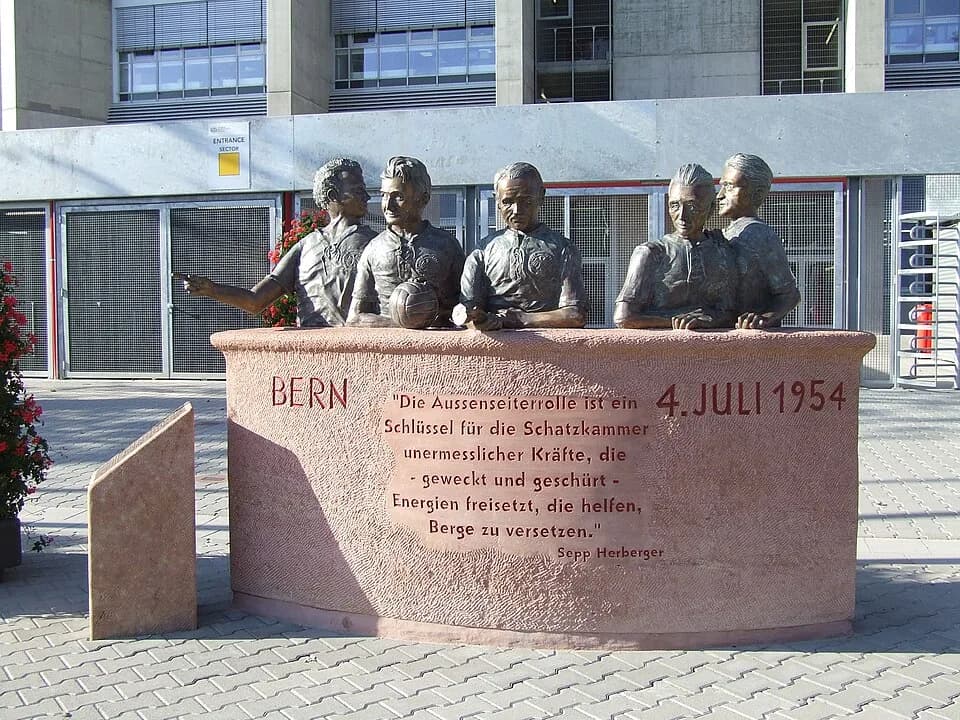
The pinnacle of Walter's career came in 1954 when he captained West Germany to their first FIFA World Cup victory. As team captain, he led his squad through one of football's most memorable tournaments, culminating in their triumph on the world's biggest stage. His international record of 61 appearances and 33 goals demonstrated his consistent excellence over many years, while his leadership qualities made him an ideal captain for both club and country.
Walter's World Cup legacy extends beyond just winning the tournament. He holds the remarkable record for the most assists provided in FIFA World Cup tournaments with 9 assists, showcasing his ability to create opportunities for teammates. This statistic highlights his unselfish playing style and tactical awareness, qualities that made him invaluable to every team he represented.
Chapitre 4· Chapitre 4 sur 6
Notable Contributions to Football
After his playing career ended, Walter's contributions to German football were formally recognized when he was named honorary captain of the Germany national team. This prestigious honor reflected his enduring impact on German football and his status as a role model for future generations. His playing style as an attacking midfielder and inside forward influenced tactical approaches and helped establish templates for similar players who followed.
Walter's record-setting assist tally in World Cup competitions demonstrated his exceptional vision and passing ability. These 9 assists across World Cup tournaments represent a standard of creative excellence that few players have matched. His ability to combine personal scoring prowess with creating chances for teammates made him a complete attacking player.
Chapitre 5· Chapitre 5 sur 6
Later Years
Following his retirement from playing, Walter transitioned into coaching, sharing his extensive knowledge and experience with new generations of footballers. His coaching career allowed him to pass on the tactical insights and leadership skills he had developed during his successful playing days. This transition from player to coach demonstrated his continued commitment to the sport that had defined his life.
Walter spent his final years in Enkenbach-Alsenborn, Germany, where he remained connected to the football community until his death on June 17, 2002. His later years were marked by continued recognition for his contributions to German football and his role in establishing Germany as a major force in international competition.
Chapitre 6 · 1954· Chapitre 6 sur 6
Legacy and Impact
Fritz Walter's influence on German football cannot be overstated. His captaincy of the 1954 World Cup-winning team marked the beginning of Germany's emergence as a football powerhouse. The victory he led provided a foundation for Germany's subsequent success in international tournaments and helped establish the country's reputation for tactical discipline and mental strength.
His loyalty to 1. FC Kaiserslautern throughout his entire career created a model of club dedication that became increasingly rare in professional football. Walter's example showed that great players could achieve international success while remaining committed to their hometown clubs. His record-setting assist tally in World Cup play continues to stand as evidence of his exceptional creative abilities and team-first mentality, inspiring attacking midfielders and playmakers worldwide.
Une vie en moments
Les moments qui ont façonné une vie
FAQ
Questions fréquentes
Quand Fritz Walter est-il/elle décédé(e) ?
Fritz Walter est décédé(e) le 17 juin 2002 à Enkenbach-Alsenborn, Germany, à l'âge de 81 ans.
Où est né(e) Fritz Walter ?
Fritz Walter est né(e) à Kaiserslautern, Germany le 31 octobre 1920.
Pour quoi Fritz Walter est-il/elle le/la plus connu(e) ?
Fritz Walter est surtout connu(e) pour German association football player.
Quel âge avait Fritz Walter à sa mort ?
Fritz Walter avait 81 ans au moment de son décès.
Quelle était la nationalité de Fritz Walter ?
Fritz Walter était originaire de Germany.
Chronologie
La vie en un coup d'œil
Galerie photo
Une vie en images
Cliquez sur un polaroid pour l'agrandir · 23 photos
QR Code
Partager cette biographie
Imprimer et partager
Scannez pour visiter cette page biographique. Imprimez pour des événements, des expositions ou du matériel pédagogique.