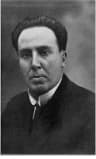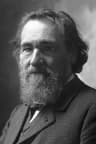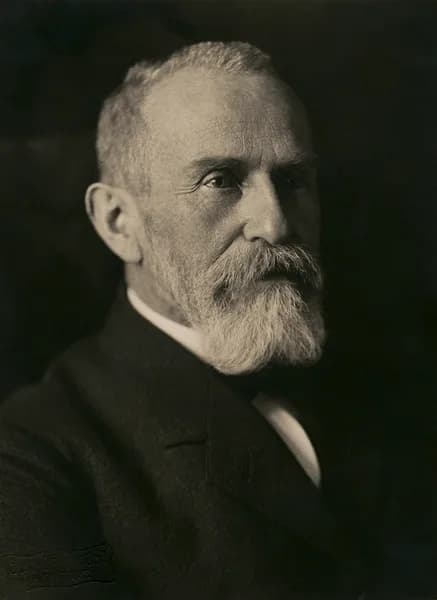
Né(e)
April 30, 1857
Zollikon, Switzerland
Décédé(e)
July 15, 1939
Zollikon, Switzerland
Connu(e) pour
Swiss psychiatrist
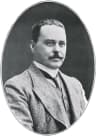
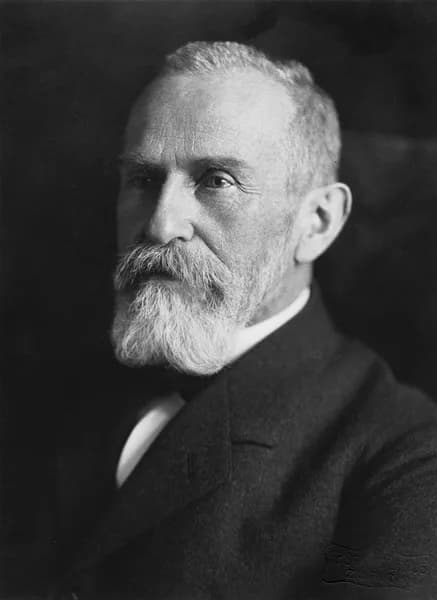
Eugen Bleuler (1857–1939) was Switzerland best known for Swiss psychiatrist.
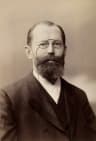
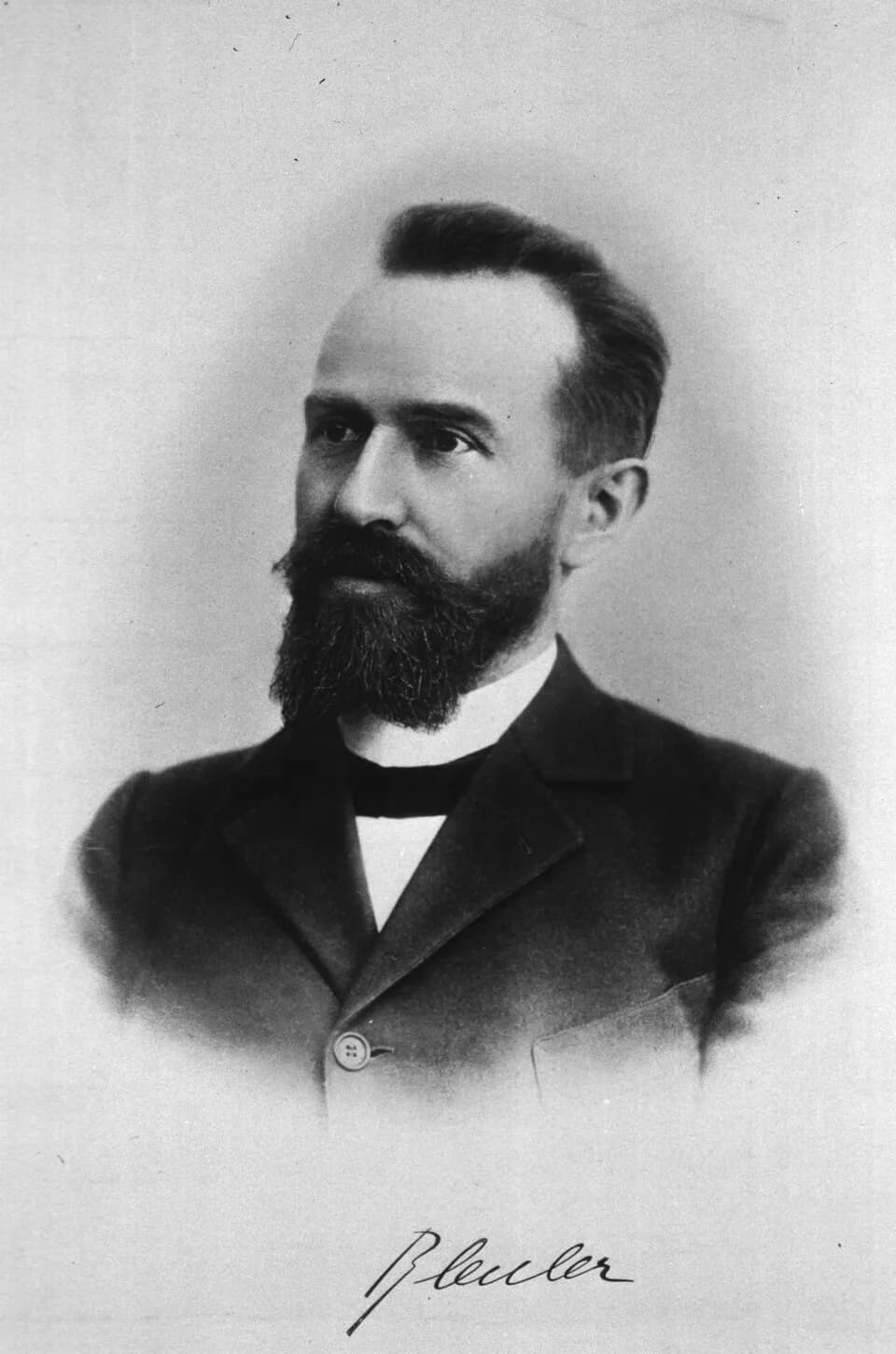
Paul Eugen Bleuler (April 30, 1857 – July 15, 1939) was a Swiss psychiatrist. He introduced terms like 'schizophrenia' and 'autism,' significantly influencing modern concepts of mental illness. His work remains a subject of study, encompassing both his contributions and controversial practices.
Chapitre
Chapitres de vie
Chapitre 1 · 1857· Chapitre 1 sur 6
Early Life and Origins
Paul Eugen Bleuler was born on April 30, 1857, in Zollikon, a municipality located in Switzerland. This tranquil Swiss setting was both his birthplace and, many decades later, the place where he would pass away.
Details about Bleuler's early family life and specific upbringing are not extensively documented in the provided information. However, his formative years in Switzerland undoubtedly set the stage for his eventual entry into the demanding field of medicine and psychiatry.
Chapitre 2· Chapitre 2 sur 6
Education and Career Beginnings
Bleuler pursued a career in medicine, becoming a physician before specializing in psychiatry. This dual foundation provided him with a broad understanding of human health, which he later applied to the complexities of mental states.
He rose to prominence not only as a practicing psychiatrist but also as a dedicated university teacher. In this role, he educated and influenced many aspiring medical professionals, disseminating his theories and clinical insights to future generations of practitioners.
Chapitre 3· Chapitre 3 sur 6
Defining Contributions to Psychiatry
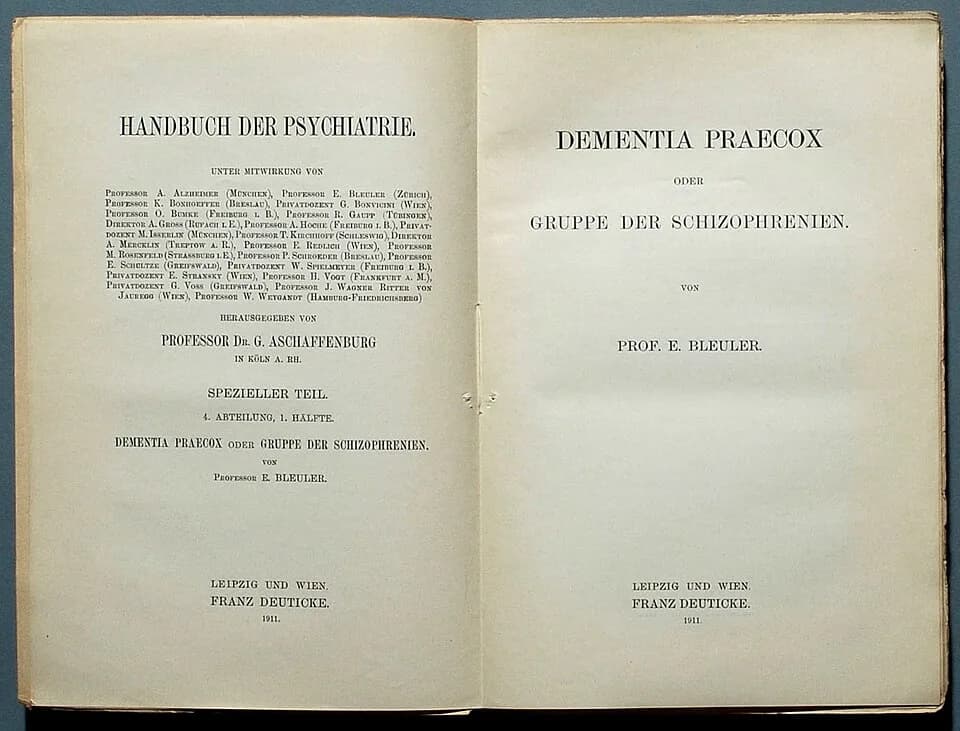
Eugen Bleuler is perhaps best known for introducing several fundamental terms to psychiatric vocabulary. He coined the term 'schizophrenia' to describe a group of severe mental disorders, replacing earlier, less precise classifications.
Beyond schizophrenia, Bleuler also introduced 'schizoid' to describe personality traits, and 'autism' to denote a spectrum of conditions affecting social interaction and communication. The concept of 'depth psychology' also emerged from his intellectual framework, emphasizing the influence of unconscious processes. Sigmund Freud himself acknowledged Bleuler's astute naming ability, referencing what he called "Bleuler's happily chosen term 'ambivalence'" which described conflicting emotions or attitudes.
Chapitre 4· Chapitre 4 sur 6
The Burghölzli Clinic and Controversies
A significant part of Bleuler's professional life was spent at the Burghölzli clinic in Zurich, Switzerland. It was here that he exerted considerable influence on psychiatric practices.
During his tenure, Bleuler implemented eugenic practices in psychiatry, rooted in beliefs that are now considered racist and ableist. These controversial applications of his theories at the Burghölzli clinic remain a stark reminder of the ethical challenges within historical psychiatric care.
Chapitre 5· Chapitre 5 sur 6
Later Years and End of Life
Eugen Bleuler continued his work and contributions to psychiatry throughout much of his life. He maintained an active role in the development and teaching of psychiatric concepts.
Bleuler passed away on July 15, 1939, in his birth town of Zollikon, Switzerland. His long and impactful career concluded in the same peaceful Swiss locale where it began.
Chapitre 6· Chapitre 6 sur 6
Enduring Legacy
Eugen Bleuler's influence on the lexicon of psychiatry is undeniable, with terms like 'schizophrenia' and 'autism' persisting as core components of modern diagnostic language. His conceptual work helped to reshape the understanding of various mental illnesses.
However, his legacy is complex and critically examined today. While his descriptive innovations endure, his association with eugenics and the implementation of racist and ableist beliefs are recognized as problematic aspects of his historical work. Bleuler's career serves as a historical case study, highlighting both significant intellectual contributions and profound ethical dilemmas within the history of psychiatric thought.
Une vie en moments
Les moments qui ont façonné une vie
FAQ
Questions fréquentes
Quand Eugen Bleuler est-il/elle décédé(e) ?
Eugen Bleuler est décédé(e) le 15 juillet 1939 à Zollikon, Switzerland, à l'âge de 82 ans.
Où est né(e) Eugen Bleuler ?
Eugen Bleuler est né(e) à Zollikon, Switzerland le 30 avril 1857.
Pour quoi Eugen Bleuler est-il/elle le/la plus connu(e) ?
Eugen Bleuler est surtout connu(e) pour Swiss psychiatrist.
Quel âge avait Eugen Bleuler à sa mort ?
Eugen Bleuler avait 82 ans au moment de son décès.
Quelle était la nationalité de Eugen Bleuler ?
Eugen Bleuler était originaire de Switzerland.
Chronologie
La vie en un coup d'œil
Galerie photo
Une vie en images
Cliquez sur un polaroid pour l'agrandir · 24 photos
QR Code
Partager cette biographie
Imprimer et partager
Scannez pour visiter cette page biographique. Imprimez pour des événements, des expositions ou du matériel pédagogique.