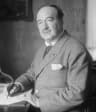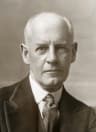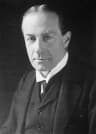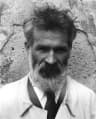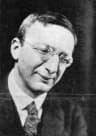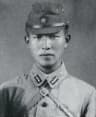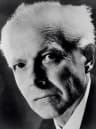
Né(e)
March 25, 1867
Parma, Italy
Décédé(e)
January 16, 1957
Manhattan, United States
Connu(e) pour
Italian conductor
Arturo Toscanini (1867–1957) was Italy best known for Italian conductor.
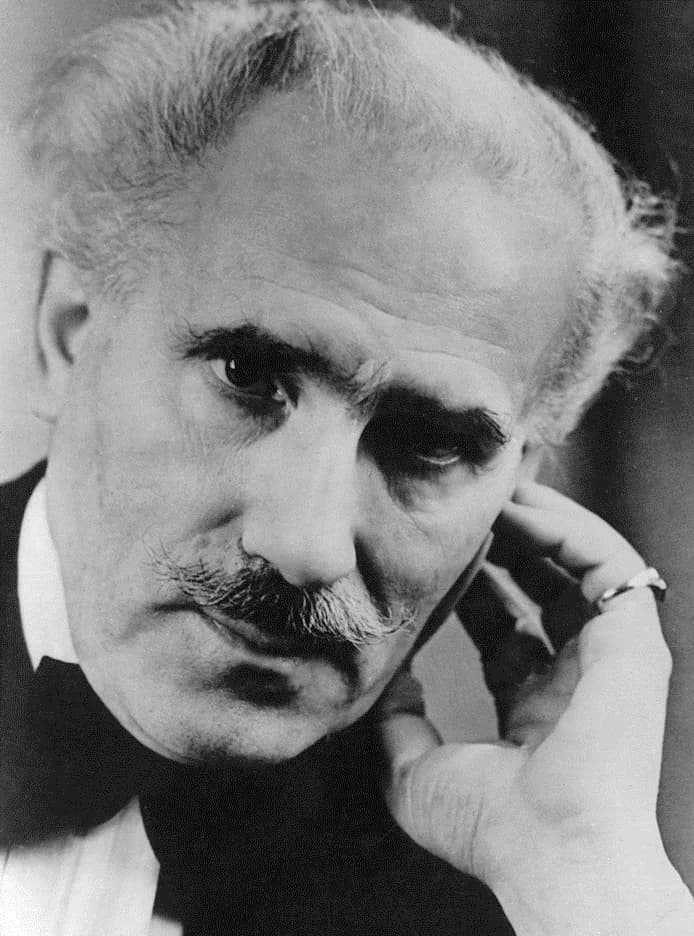
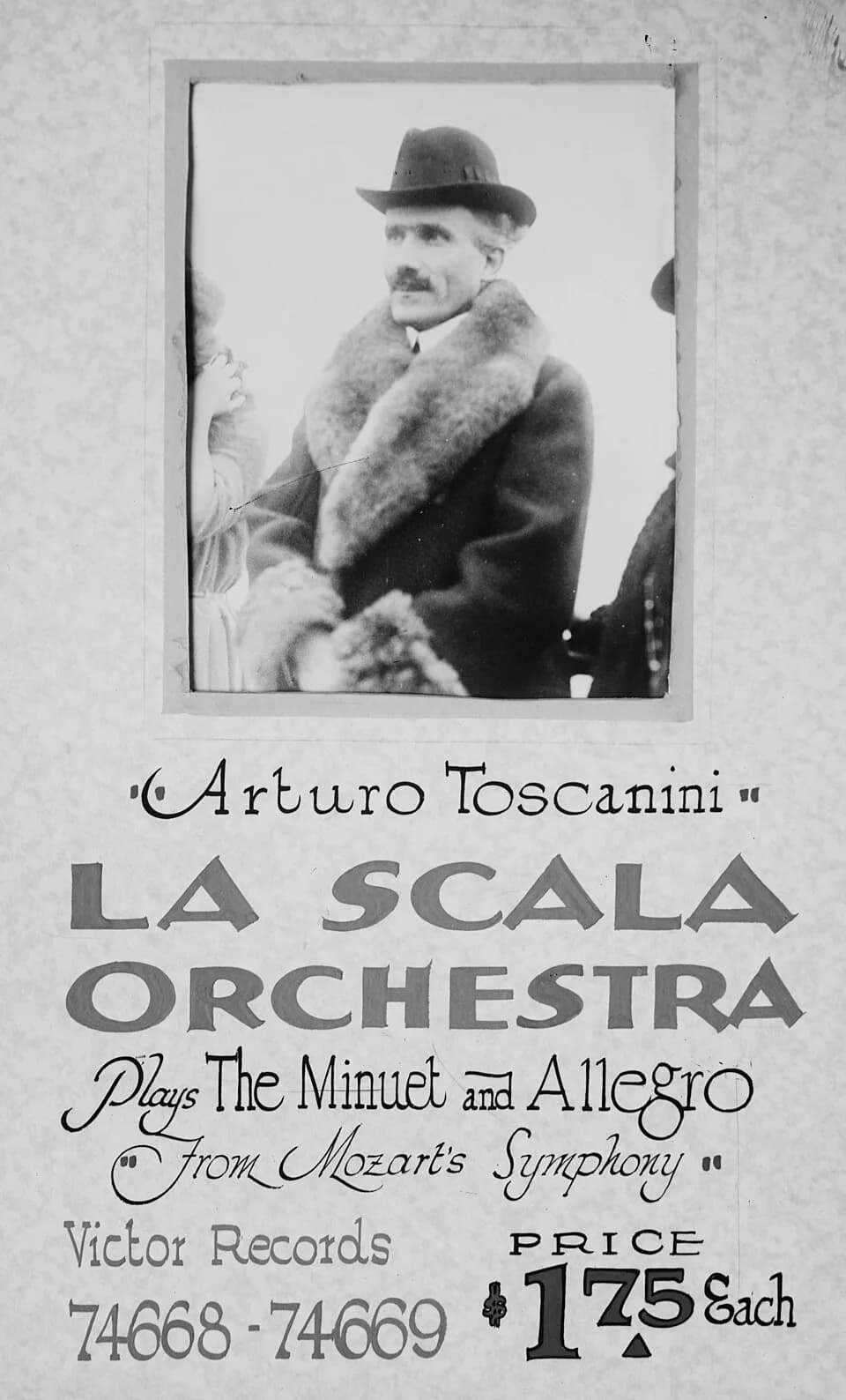
Arturo Toscanini (March 25, 1867 – January 16, 1957) was an Italian conductor. Renowned for his intensity and perfectionism, he directed institutions like La Scala and the NBC Symphony Orchestra, becoming a household name through his broadcasts. His legacy as a classical music titan endures.
Chapitre
Chapitres de vie
Chapitre 1 · 1867· Chapitre 1 sur 7
Early Life and Origins
Arturo Toscanini's journey into a life defined by music began in Parma, Italy, a city steeped in a rich operatic tradition, where he was born on March 25, 1867. While specific details about his immediate family or early upbringing are not extensively provided, his birth in such a culturally significant location undoubtedly fostered an early immersion in the arts that was crucial for his development. This foundational period in Italy cultivated his inherent musical gifts and set the trajectory for an extraordinary career that would eventually lead him to the world’s most prestigious concert halls and opera houses, impacting classical music globally.
Chapitre 2· Chapitre 2 sur 7
Career Beginnings
Arturo Toscanini's ascent as a conductor swiftly garnered international recognition, primarily due to his distinct and compelling approach to musical interpretation and performance. Early in his distinguished career, he took on the demanding role of music director for the esteemed La Scala in Milan, an institution renowned worldwide for its operatic magnificence, where he meticulously shaped its artistic direction with his exceptionally exacting standards. Subsequently, he brought his transformative talents across the Atlantic to the United States, becoming the influential music director of the New York Philharmonic, an appointment that further solidified his commanding reputation on the international stage and showcased his ability to inspire orchestras to new heights.
Chapitre 3 · 1937· Chapitre 3 sur 7
Major Achievements and Career Highlights
Arturo Toscanini's professional life was punctuated by a succession of monumental achievements that firmly established his enduring legacy as a preeminent figure in the classical music domain. His transformative leadership at the iconic La Scala in Milan and his influential tenure with the New York Philharmonic were instrumental in elevating both operatic and symphonic performances to unprecedented levels of precision, emotional depth, and technical brilliance. A truly defining moment in his career came with his historic appointment as the very first music director of the NBC Symphony Orchestra, a distinguished role he held with unwavering dedication from 1937 to 1954, which marked a new chapter in his public presence.
During his remarkable seventeen-year tenure leading the NBC Symphony Orchestra, Arturo Toscanini transcended the classical music niche to become a revered household name, particularly throughout the United States. This widespread and unprecedented recognition was primarily attributable to his groundbreaking and frequent radio and television broadcasts, which effectively brought the grandeur and intricacy of classical music directly into millions of American homes, fostering a new era of accessibility. His extensive and meticulous recordings of both the operatic and symphonic repertoire further disseminated his definitive interpretations globally, allowing countless audiences worldwide to directly experience his acclaimed intensity, unwavering perfectionism, and unparalleled musical vision.
Chapitre 4· Chapitre 4 sur 7
Personal Life
Beyond his widely celebrated contributions to the world of classical music, Arturo Toscanini also engaged in a diverse array of interests, which highlighted a broader and more complex personal sphere. He was notably listed among his varied professions as a politician, suggesting a distinct involvement in public life or significant civic affairs that extended beyond the concert hall, although specific details of this engagement are not explicitly provided. Furthermore, Toscanini cultivated a deep passion as an art collector, indicating a profound appreciation for visual arts that perfectly complemented his lifelong devotion to music, thereby enriching his personal world and intellectual pursuits beyond the boundaries of the orchestral podium.
Chapitre 5 · 1991· Chapitre 5 sur 7
Notable Works or Contributions
Arturo Toscanini’s profound legacy is meticulously preserved through an extensive and influential body of audio recordings and truly memorable live performances, each meticulously reflecting his unwavering dedication to the highest ideals of classical music. His expansive discography features definitive and historically significant interpretations of works by major composers, notably including the critically acclaimed 1991 release of "Beethoven: Symphony no. 7 / Haydn: Symphony no. 101 “Clock”," showcasing his command over both dramatic and nuanced symphonic forms. Other highly regarded recordings from his active conducting years include the precise rendition of "Concerto no. 2, in B-flat, op. 83" from 1951, his powerful interpretation of "Symphony no. 1" recorded in 1952, and the compelling performance of "Symphony no. 2" released in 1953.
The year 1954 witnessed the release of Arturo Toscanini's monumental interpretation of "Symphonie N° 9 en ré mineur Op.125 avec chœurs / Symphonie N° 1 en ut majeur Op.21," which further demonstrated his unparalleled mastery and profound understanding of large-scale symphonic compositions, captivating listeners with its emotional depth and structural clarity. Posthumous releases have consistently continued to celebrate and illuminate his enduring artistry, with significant works such as "Concerto for Violin and Cello In A Minor / Variations On a Theme By Haydn / Gesang Der Parzen" appearing in 1972, and memorable performances of "Symphony No. 40 / Symphony No. 8" released in 1982. Later recordings, including "Symphonies no. 4 "Italy" & No. 5 "Reformation"" in 1985 and "Symphonies Nos. 2, 7" in 1986, consistently highlighted his diverse repertoire and the lasting, impactful quality of his musical interpretations.
Beyond his extensive audio recordings, Arturo Toscanini also made a notable appearance in "Hymn of the Nations" in 1944, a significant film that effectively captured his dedication and profound work, successfully bringing his commanding presence and musical genius to wider visual audiences. His frequent and widely broadcast radio and television performances with the NBC Symphony Orchestra were absolutely crucial in transforming him into a beloved household name across the United States, effectively introducing countless individuals to the sublime beauty and inherent power of the classical operatic and symphonic repertoire. These broadcasts, coupled with his vast collection of recordings, stand collectively as a powerful testament to his artistic contributions and his unwavering, lifelong commitment to achieving musical excellence.
Chapitre 6 · 1937· Chapitre 6 sur 7
Later Years
The concluding chapter of Arturo Toscanini’s illustrious career was profoundly characterized and largely defined by his unparalleled leadership of the NBC Symphony Orchestra, a prestigious role he embraced with vigor in 1937 and maintained with distinction until 1954. This extensive period solidified his public image and widespread recognition through regular and highly anticipated radio and television broadcasts, which became eagerly awaited cultural events for millions of classical music enthusiasts throughout the United States. His final years were spent reflecting upon a monumental career that had spanned nearly seven decades, during which his profound artistry had touched and inspired the lives of countless individuals through his unwavering dedication to music and its highest forms.
Arturo Toscanini passed away peacefully on January 16, 1957, in Manhattan, United States, leaving behind an irreplaceable void in the global musical world. His departure undeniably marked the solemn end of an extraordinary era in classical conducting, yet his immeasurable influence continued to resonate deeply, perpetually shaped by the vast and accessible legacy of his meticulously recorded performances and enduring interpretations. He remained actively engaged and passionately involved in the world of music until his very later years, consistently demonstrating an unwavering, lifelong commitment to his cherished art form and its profound expressive capabilities.
Chapitre 7· Chapitre 7 sur 7
Legacy and Impact
Arturo Toscanini's legacy as a conductor is truly immeasurable, having profoundly shaped the interpretive and performance practices of classical music for countless future generations of musicians and audiences alike. His relentless insistence on absolute perfectionism, combined with his legendary eidetic memory, established groundbreaking new standards for orchestral precision, technical exactitude, and an unwavering fidelity to the original intentions of the composer. He effectively educated both musicians under his baton and audiences across the globe to listen with a heightened sense of detail, an acute awareness of sonority, and an appreciation for clarity, thus influencing an untold number of artists who subsequently followed in his formidable footsteps.
Through his seminal role as the first music director of the NBC Symphony Orchestra, which he led from 1937 to 1954, Arturo Toscanini significantly democratized classical music, thereby transforming it into a widely accessible and deeply appreciated art form for the general public. His groundbreaking radio and television broadcasts, alongside his extensive and revered discography, effectively brought the rich operatic and symphonic repertoire directly into the homes of ordinary people, particularly throughout the United States. This made him a widely recognized household name and played a crucial role in fostering a much broader and more profound appreciation for classical music across diverse demographics.
Even many decades after his peaceful passing in Manhattan, United States, on January 16, 1957, Arturo Toscanini’s meticulously preserved recordings continue to be rigorously studied, passionately admired, and frequently referenced, serving as definitive benchmarks for interpretative excellence and artistic integrity within the classical genre. He remains an unequivocally iconic figure in musical history, a visionary musician whose intense passion, uncompromising standards, and unwavering pursuit of the ideal sound continue to inspire and define what it truly means to be a master conductor in the rich and complex classical tradition, ensuring his influence endures for centuries.
Une vie en moments
Les moments qui ont façonné une vie
FAQ
Questions fréquentes
Quand Arturo Toscanini est-il/elle décédé(e) ?
Arturo Toscanini est décédé(e) le 16 janvier 1957 à Manhattan, United States, à l'âge de 89 ans.
Où est né(e) Arturo Toscanini ?
Arturo Toscanini est né(e) à Parma, Italy le 25 mars 1867.
Pour quoi Arturo Toscanini est-il/elle le/la plus connu(e) ?
Arturo Toscanini est surtout connu(e) pour Italian conductor.
Quel âge avait Arturo Toscanini à sa mort ?
Arturo Toscanini avait 89 ans au moment de son décès.
Quelle était la nationalité de Arturo Toscanini ?
Arturo Toscanini était originaire de Italy.
Chronologie
La vie en un coup d'œil
Galerie photo
Une vie en images
Cliquez sur un polaroid pour l'agrandir · 44 photos
QR Code
Partager cette biographie
Imprimer et partager
Scannez pour visiter cette page biographique. Imprimez pour des événements, des expositions ou du matériel pédagogique.