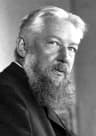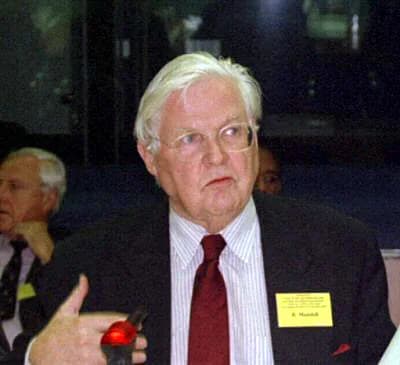
Nacido
October 24, 1932
Kingston, Canada
Fallecido
April 4, 2021
Monteriggioni, Italy
Conocido por
Canadian economist
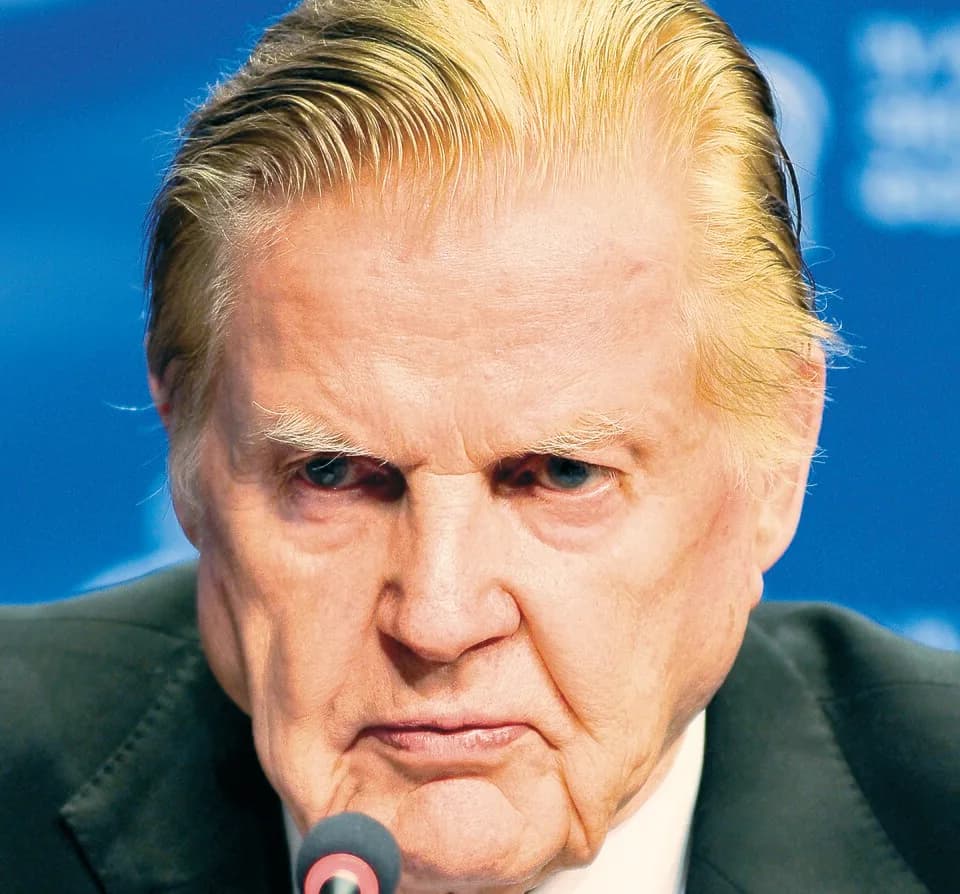
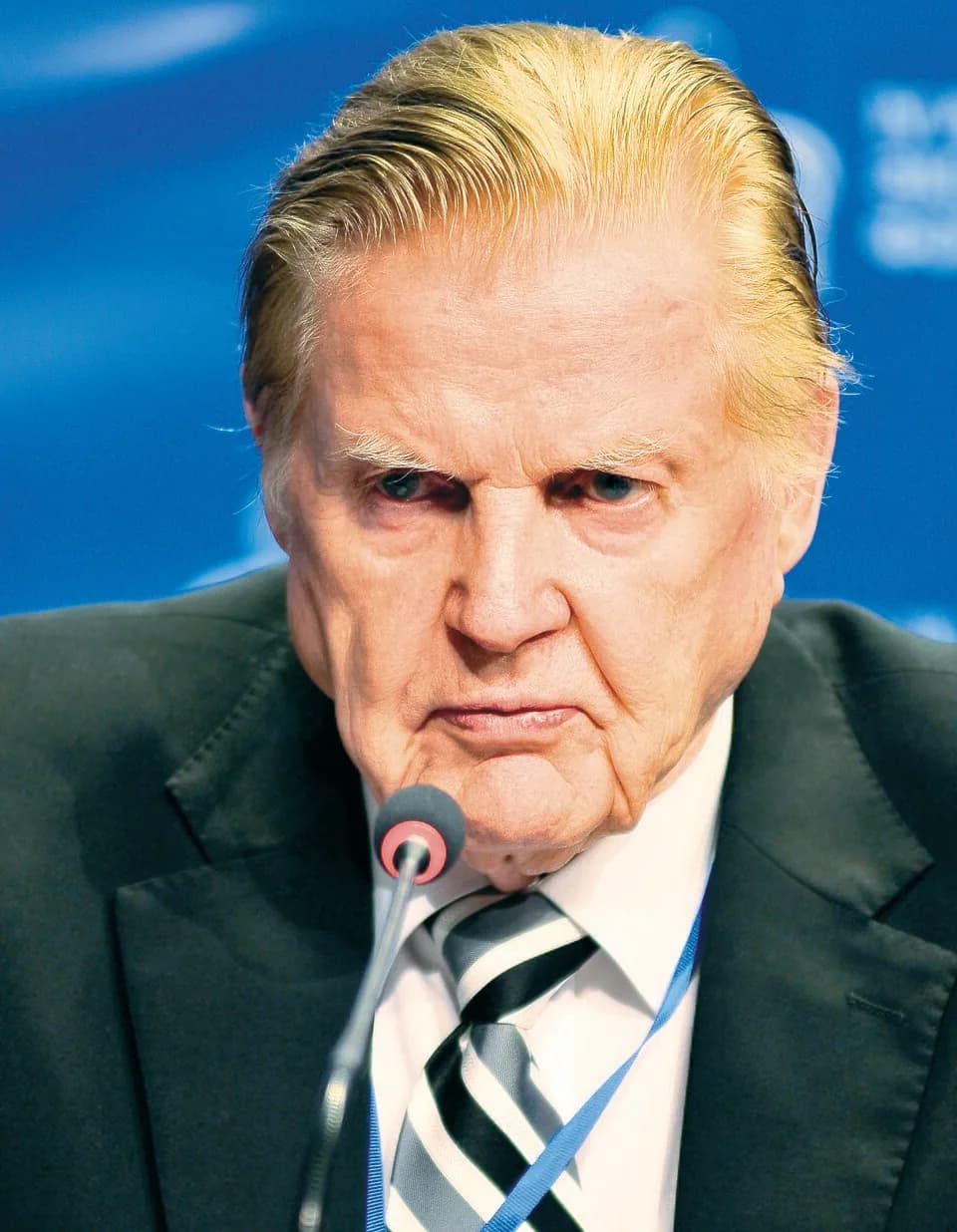
Robert Mundell (1932–2021) was Canada best known for Canadian economist.
Robert Alexander Mundell (October 24, 1932 – April 4, 2021) was a Canadian economist. He received the Nobel Memorial Prize in Economic Sciences in 1999 for his pioneering work in monetary dynamics and optimum currency areas. His legacy continues to influence global financial policy discussions.
Capítulo
Capítulos de vida
Capítulo 1 · 1932· Capítulo 1 de 7
Early Life and Canadian Roots
Robert Mundell began his life in Kingston, Canada, in 1932, a birthplace that grounded his early experiences and intellectual development within a North American context. The Canadian environment during his formative years undoubtedly played a role in shaping his worldview and the foundational economic questions he would later explore on a global stage. This early period provided the necessary launchpad for a career dedicated to rigorous inquiry into the complexities of international economic systems and their functioning.
Capítulo 2· Capítulo 2 de 7
Academic Career and Global Influence
Mundell’s academic journey saw him hold esteemed professorships at several world-renowned institutions, highlighting his widespread influence as an intellectual leader across different cultures. He served with distinction as a professor of economics at Columbia University in New York, McGill University in his native Canada, and later extended his reach to the Chinese University of Hong Kong. These significant appointments allowed him to impart his deep expertise in international economics to a diverse student body and engage with fellow scholars across continents, enriching academic discourse.
His presence at these prestigious universities solidified his reputation as a key figure in economic education and research on a truly international scale. Through his extensive teaching and dedicated mentorship, Mundell fostered critical thinking about complex global economic challenges, inspiring future generations of economists to pursue similar lines of inquiry. His global academic footprint clearly demonstrated the universal applicability and importance of his economic theories, transcending geographical boundaries.
Capítulo 3· Capítulo 3 de 7
Pioneering Economic Theories: Monetary and Fiscal Policy Analysis
One of Robert Mundell’s most celebrated achievements was his detailed analysis of monetary and fiscal policy under different exchange rate regimes, a contribution that fundamentally reshaped macroeconomic theory. This work meticulously examined how national governments could effectively utilize their primary economic tools—monetary policy, such as setting interest rates and controlling money supply, and fiscal policy, involving government spending and taxation—in a world where currencies either float freely or are fixed against others. He provided critical clarity on the effectiveness of these policies, demonstrating how their impact varied significantly depending on the prevailing international exchange rate system.
His insights fundamentally altered how economists and policymakers understood the intricate interaction between domestic economic policy decisions and international capital flows. Mundell's models offered a sophisticated framework for predicting the outcomes of various policy choices, particularly within open economies where cross-border financial movements play a crucial role. This analytical rigor helped to disentangle complex economic relationships, offering practical guidance for managing national economies efficiently within an increasingly interconnected global context.
Capítulo 4· Capítulo 4 de 7
Pioneering Economic Theories: Optimum Currency Areas
Equally significant was Mundell’s innovative development of the theory of optimum currency areas, a concept that explores the precise conditions under which a group of countries would optimally benefit from adopting a single, common currency. He identified crucial economic factors such as high labor mobility, significant openness to trade, and diversification of economic shocks across regions as essential for such an area to function effectively and sustainably. His rigorous theoretical work provided the intellectual scaffolding for major currency integration projects across the globe.
This theoretical innovation was particularly prescient, laying the groundwork for widespread academic debates and, eventually, real-world initiatives, most notably the creation of the Eurozone in Europe. Mundell's framework allowed for a systematic and informed evaluation of the inherent costs and potential benefits associated with abandoning national currencies in favor of a shared one. His contributions offered a vital lens through which to assess the feasibility, stability, and long-term viability of monetary unions, profoundly influencing global economic policy discussions for decades to come.
Capítulo 5 · 1999· Capítulo 5 de 7
The Nobel Recognition and Its Enduring Significance
In 1999, Robert Mundell's exceptional and far-reaching contributions to economic science were formally acknowledged with the prestigious Nobel Memorial Prize in Economic Sciences. The Royal Swedish Academy of Sciences specifically cited his pioneering work in monetary dynamics and his theoretical advancements in optimum currency areas as the basis for the award. This esteemed recognition highlighted the transformative nature of his research and its enduring relevance to global economic thought and practice.
The Nobel Committee further emphasized how Mundell’s analytical frameworks provided crucial and sophisticated tools for understanding and navigating the complexities of the international financial system. His remarkable ability to distill complex economic interdependencies into comprehensible and applicable models made his work invaluable for both theoretical development and practical policy application in real-world scenarios. The prize unequivocally underscored his singular role in shaping the field of international macroeconomics and influencing how policymakers worldwide approach global economic integration challenges.
Capítulo 6· Capítulo 6 de 7
Key Publications and Extensive Scholarly Output
Throughout his extensive and productive career, Robert Mundell was a prolific scholar, producing a vast body of influential work reflected in an impressive h-index of 31 and more than 150 published papers. These numerous scholarly contributions illustrate his sustained engagement with critical economic issues and his unwavering commitment to advancing fundamental knowledge in his field. His rigorous output consistently pushed the boundaries of economic understanding and stimulated further research.
His impactful research included seminal works like "Demand for Money and Exchange Rate: Evidence for Wealth Effect in India," published in 2015, which demonstrated its continued relevance and significant academic interest by garnering 15 citations. Another notable contribution, "The shift from G7 to G20 increased swings in major exchange rates and worsened their options," from 2013, received 6 citations, showcasing his acute insights into evolving global governance structures and their effects on currency volatility. Further significant papers, each cited 3 times, included "International policy coordination and transmission" (2013), which explored collaborative economic strategies, and "Global Problems, Smart Solutions: Expert Panel Ranking" (2013), addressing pressing worldwide issues. His 2014 paper, "On the selection of a program of economic policy with an application to the current situation in the United States," also contributed thoughtfully to contemporary policy debates by applying theoretical insights to pressing national challenges.
Capítulo 7 · 2021· Capítulo 7 de 7
Later Life and Enduring Legacy
In his later years, Robert Mundell remained a vibrant and respected figure in the economics community, continuing to share his insights and expertise until his passing. He died on April 4, 2021, in Monteriggioni, Italy, a place that marked the conclusion of a life dedicated to intellectual pursuit, leaving behind a significant intellectual heritage that continues to shape economic discourse. His unwavering commitment to rigorous analysis and theoretical innovation never waned, inspiring colleagues and students alike.
Mundell's legacy is defined by his lasting impact on international macroeconomics, particularly his foundational frameworks concerning exchange rates, monetary policy effectiveness, and the feasibility of monetary unions. His theories provide an enduring foundation for understanding the complexities of global finance and continue to inform critical debates among economists and policymakers worldwide. Robert Mundell's analytical brilliance and forward-thinking ideas ensure that his contributions will resonate for generations, guiding efforts toward greater global economic stability, cooperation, and integration.
Una vida en momentos
Los momentos que dieron forma a una vida


FAQ
Preguntas frecuentes
¿Cuándo murió Robert Mundell?
Robert Mundell murió el 4 de abril de 2021 en Monteriggioni, Italy, a la edad de 88 años.
¿Dónde nació Robert Mundell?
Robert Mundell nació en Kingston, Canada el 24 de octubre de 1932.
¿Por qué es más conocido(a) Robert Mundell?
Robert Mundell es más conocido(a) por Canadian economist.
¿Qué edad tenía Robert Mundell cuando murió?
Robert Mundell tenía 88 años en el momento de su muerte.
¿Cuál era la nacionalidad de Robert Mundell?
Robert Mundell era de Canada.
Cronología
La vida de un vistazo
Galería fotográfica
Una vida en imágenes
Haz clic en una polaroid para ampliar · 14 fotos
Código QR
Compartir esta biografía
Imprimir y compartir
Escanee para visitar esta página de biografía. Imprima para eventos, exposiciones o materiales educativos.