Nacido
November 5, 1921
Ras el-Tin Palace, Egypt
Fallecido
July 2, 2013
Alexandria, Egypt
Conocido por
queen consort of Iran from 1941 to 1948
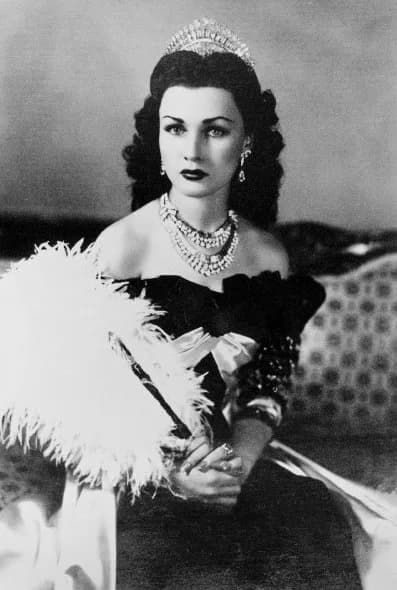
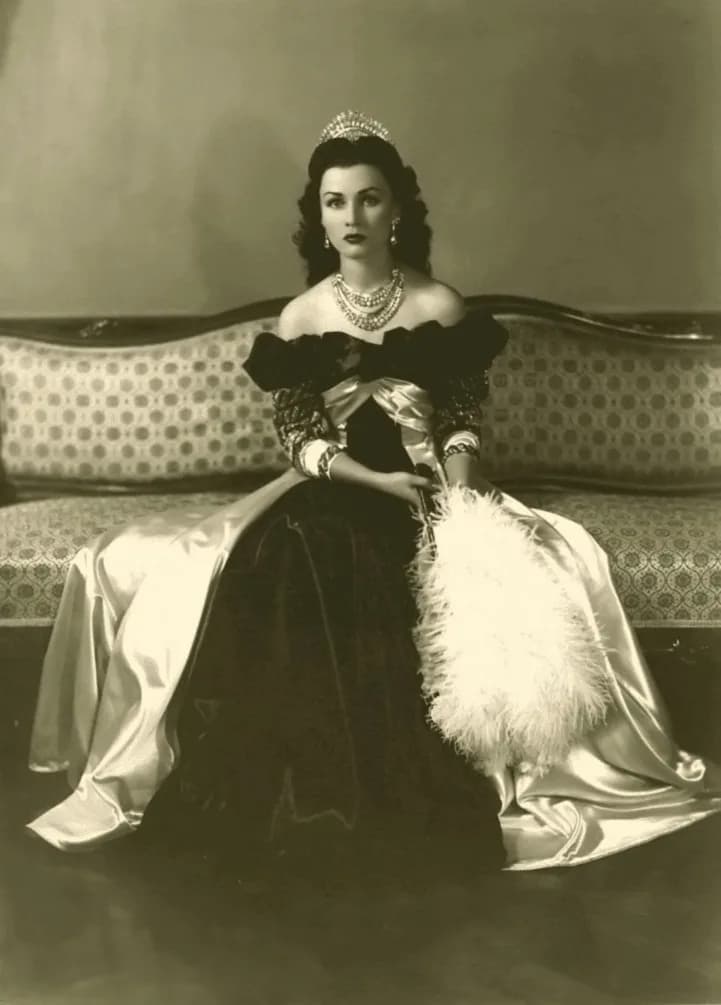
Princess Fawzia Fuad of Egypt (1921–2013) was Egypt best known for queen consort of Iran from 1941 to 1948.
Princess Fawzia Fuad of Egypt (November 5, 1921 – July 2, 2013) was a royal consort from Egypt. She was queen consort of Iran from 1941 to 1948 as the first wife of Mohammad Reza Pahlavi. Her life connected two significant Middle Eastern royal houses.
Capítulo
Capítulos de vida
Capítulo 1 · 1921· Capítulo 1 de 7
Early Life and Origins
Fawzia was born on November 5, 1921, within the grandeur of Ras el-Tin Palace in Egypt. She was the daughter of Fuad I, who was the seventh son of Ismail the Magnificent. This placed her firmly within the royal family of Egypt.
Her upbringing as an Egyptian princess provided her with a privileged and cultured start in life. Details of her specific education are not provided, but her royal status ensured a life steeped in tradition and expectations suitable for a monarch's daughter.
Capítulo 2· Capítulo 2 de 7
Career Beginnings
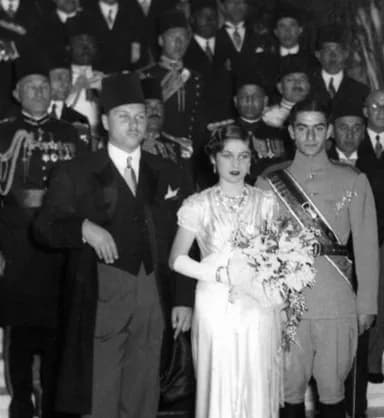
Princess Fawzia's public life began formally with her marriage, which positioned her on the international stage. She became the first wife of Mohammad Reza Pahlavi, who would later become the Shah of Iran. This union was a significant political and social event of its time.
Upon her marriage, she assumed the title of Shahbanu of Iran, serving as the queen consort. Her new role required her to navigate the complexities of court life and royal duties in a foreign land, fulfilling the responsibilities associated with her elevated status.
Capítulo 3 · 1941· Capítulo 3 de 7
Major Achievements and Career Highlights
Her primary and most visible role was as the queen consort of Iran, a position she held from 1941 to 1948. During these years, she stood alongside the Shah as a symbol of the monarchy. Her presence contributed to diplomatic and ceremonial engagements.
As Shahbanu, Fawzia represented Iran in various capacities, embodying a connection between two prominent Middle Eastern royal houses. Her time as queen was a distinct chapter in the history of both Egyptian and Iranian royalty, marking a period of her life dedicated to public service.
Capítulo 4· Capítulo 4 de 7
Personal Life
Beyond her royal duties, Fawzia's personal life was intertwined with her marriage to Mohammad Reza Pahlavi. She was known to be a woman of elegance and grace, traits often highlighted in public appearances.
After her time as queen consort, she was also known by other names, including Fawzia Pahlavi and Fawzia Chirine. This indicates subsequent personal developments, though specific details of her private interests or family beyond her initial marriage are not provided.
Capítulo 5· Capítulo 5 de 7
Notable Works or Contributions
Princess Fawzia's contribution was primarily her role as queen consort and the symbolism she carried. Her presence as the first wife of Mohammad Reza Pahlavi helped shape the early years of his reign. She played a part in establishing the public image of the Iranian monarchy during a transitional period.
Her life itself, as a bridge between the Egyptian and Iranian royal families, was a significant historical contribution. While not a creator of specific 'works' in the artistic or scientific sense, her very existence and position served a diplomatic and cultural purpose.
Capítulo 6 · 1948· Capítulo 6 de 7
Later Years
After her tenure as queen consort concluded in 1948, Princess Fawzia continued to live a life connected to her royal lineage. She passed away on July 2, 2013, in Alexandria, Egypt. Her death marked the end of a life lived across different eras and royal courts.
Her final years were spent in Egypt, the country of her birth, bringing her story full circle. She remained a figure of historical interest due to her unique position in both Egyptian and Iranian royal history.
Capítulo 7· Capítulo 7 de 7
Legacy and Impact
Princess Fawzia Fuad's legacy rests firmly on her distinguished royal background and her period as queen consort of Iran. She is remembered as an Egyptian princess who ascended to the throne of another nation. Her life served as a testament to the intricate connections between royal families in the 20th century.
Her unique position as Shahbanu of Iran, linking the Egyptian and Iranian monarchies, ensures her place in historical narratives. She remains a notable figure in the study of royal history and the dynamics of political marriages among global dynasties.
Una vida en momentos
Los momentos que dieron forma a una vida

FAQ
Preguntas frecuentes
¿Cuándo murió Princess Fawzia Fuad of Egypt?
Princess Fawzia Fuad of Egypt murió el 2 de julio de 2013 en Alexandria, Egypt, a la edad de 91 años.
¿Dónde nació Princess Fawzia Fuad of Egypt?
Princess Fawzia Fuad of Egypt nació en Ras el-Tin Palace, Egypt el 5 de noviembre de 1921.
¿Por qué es más conocido(a) Princess Fawzia Fuad of Egypt?
Princess Fawzia Fuad of Egypt es más conocido(a) por queen consort of Iran from 1941 to 1948.
¿Qué edad tenía Princess Fawzia Fuad of Egypt cuando murió?
Princess Fawzia Fuad of Egypt tenía 91 años en el momento de su muerte.
¿Cuál era la nacionalidad de Princess Fawzia Fuad of Egypt?
Princess Fawzia Fuad of Egypt era de Egypt.
Cronología
La vida de un vistazo
Galería fotográfica
Una vida en imágenes
Haz clic en una polaroid para ampliar · 24 fotos
Código QR
Compartir esta biografía
Imprimir y compartir
Escanee para visitar esta página de biografía. Imprima para eventos, exposiciones o materiales educativos.