Nacido
January 1, 1093
Bamberg, Holy Roman Empire
Fallecido
February 22, 1152
Bamberg, Holy Roman Empire
Conocido por
Hohenstaufen dynasty king (r. 1138–1152)
Conrad III of Germany (1093–1152) was Holy Roman Empire best known for Hohenstaufen dynasty king (r. 1138–1152).
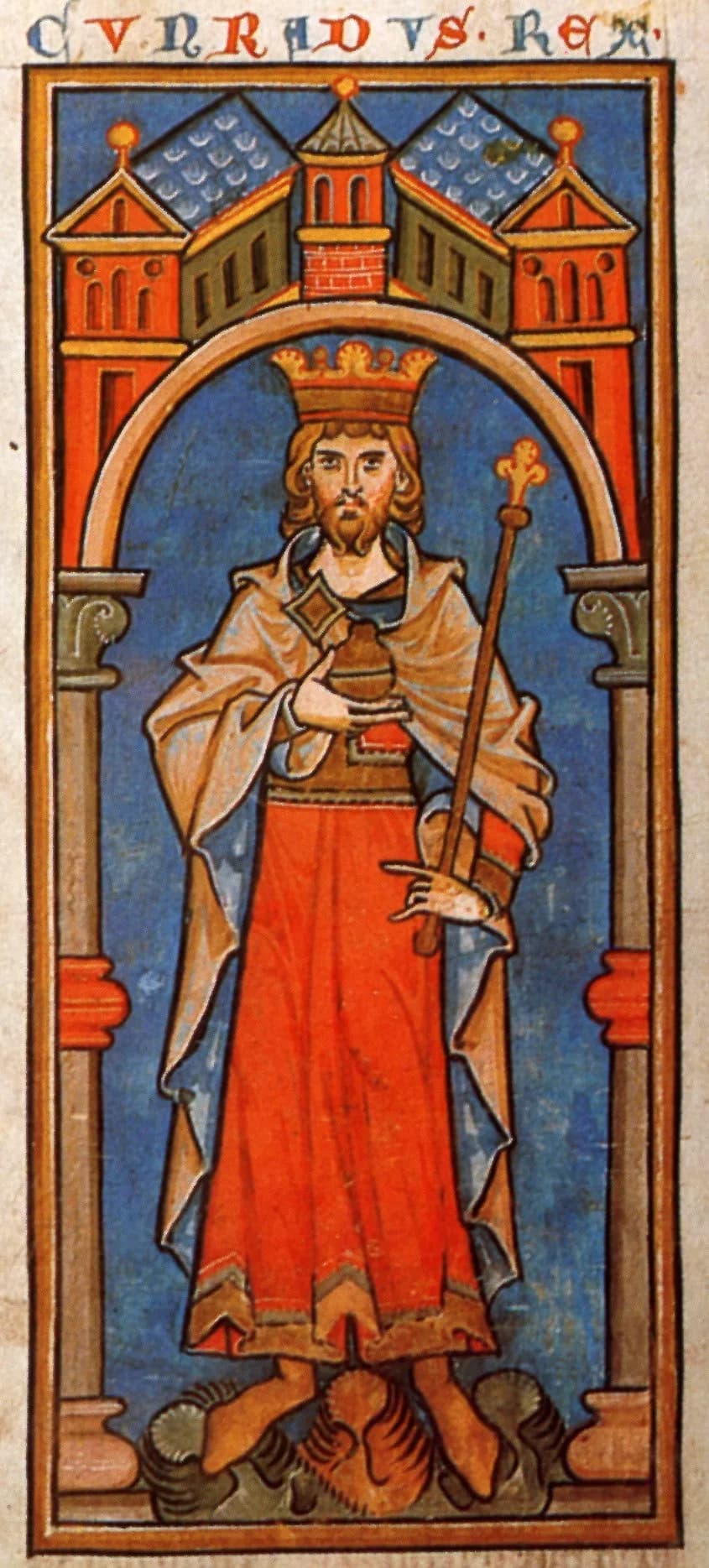
Conrad III of Germany (January 1, 1093 – February 22, 1152) was a monarch in the Holy Roman Empire. He was known for establishing the Hohenstaufen dynasty as King of the Romans from 1138 to 1152. His rule significantly shaped medieval European history.
Una vida en momentos
Los momentos que dieron forma a una vida
Capítulo
Capítulos de vida
Capítulo 1 · 1093· Capítulo 1 de 8
Opening
Conrad III of Germany (1093–1152), a monarch, held a significant place in the Holy Roman Empire's history. Born on January 1, 1093, and passing on February 22, 1152, he was known for establishing the Hohenstaufen dynasty. His reign as King of the Romans from 1138 until his death marked a crucial period for the empire.
Capítulo 2 · 1093· Capítulo 2 de 8
Early Life and Origins
Conrad was born on January 1, 1093, in Bamberg, a city within the Holy Roman Empire. His birth in this important imperial city set the stage for his future. He descended from an influential lineage, being the son of Duke Frederick I of Swabia.
His family connections were strong; his mother was Agnes, a daughter of Emperor Henry IV. This imperial link provided him with a direct claim to power and a significant dynastic background. His upbringing within such a prominent family undoubtedly shaped his early ambitions and political awareness.
Capítulo 3 · 1116· Capítulo 3 de 8
Career Beginnings
Conrad's initial foray into public service saw him appointed Duke of Franconia. He served in this capacity from 1116 to 1120, gaining valuable experience in regional governance. This early role allowed him to manage territories and interact with local nobility.
His ambition became clear when he challenged the incumbent, Lothair III. Conrad served as an anti-king from 1127 to 1135, directly opposing his predecessor's authority. This period demonstrated his readiness to assert his claims through conflict and political maneuvering.
Capítulo 4 · 1138· Capítulo 4 de 8
Major Achievements and Career Highlights
The zenith of Conrad's career arrived in 1138, when he was elected King of the Romans in the Holy Roman Empire. This coronation solidified his position and marked the beginning of his formal rule. He was instrumental in establishing the powerful Hohenstaufen dynasty, a family that would wield considerable influence in Central Europe for generations.
His reign, which lasted from 1138 until his passing in 1152, was characterized by efforts to consolidate royal power. He managed the complex political environment of the empire during his time. His success in securing the throne for his family line demonstrates his political acumen.
Capítulo 5· Capítulo 5 de 8
Personal Life
Information about Conrad III's personal life, beyond his noble parentage, is not extensively detailed in historical records. His lineage as the son of Duke Frederick I of Swabia and Agnes, daughter of Emperor Henry IV, highlights his strong imperial and ducal background. These family ties were foundational to his political identity and claims.
While specific personal interests or relationships are not provided, his life was undoubtedly immersed in the duties and expectations of a medieval monarch. His primary focus remained on matters of state and dynastic succession. The influence of his royal relatives was a constant throughout his early life and career.
Capítulo 6· Capítulo 6 de 8
Notable Works or Contributions
As a monarch, Conrad III's principal contributions lay in his governance and the establishment of a lasting dynasty. His active rule as King of the Romans set a crucial precedent for future imperial succession. He worked to strengthen the authority of the crown within the Holy Roman Empire.
He laid the groundwork for his family's enduring legacy, shaping the political structure of the empire. His ability to navigate the challenges of his era and maintain his position contributed to the stability of the crown. His reign served as a foundational period for the Hohenstaufen's subsequent prominence.
Capítulo 7 · 1152· Capítulo 7 de 8
Later Years
Conrad III continued his rule as King of the Romans until his death on February 22, 1152. His final years were spent upholding the authority of the Hohenstaufen dynasty. He passed away in Bamberg, the same city where he had been born decades earlier.
His death in Bamberg closed a chapter in the history of the Holy Roman Empire. He had dedicated his life to service as a monarch. His reign ended after fourteen years, leaving behind a solidified dynastic claim.
Capítulo 8 · 1138· Capítulo 8 de 8
Legacy and Impact
Conrad III's most significant and enduring legacy is his role in establishing the Hohenstaufen dynasty. His ascension to the throne in 1138 ensured his family's rise to imperial power. This family would go on to play a major role in shaping European history for the next century.
His rule as King of the Romans had a significant influence on the political structure of the Holy Roman Empire. He cemented his family's position and influenced the course of imperial succession. Conrad III's actions left a lasting mark on medieval Central Europe.
FAQ
Preguntas frecuentes
¿Cuándo murió Conrad III of Germany?
Conrad III of Germany murió el 22 de febrero de 1152 en Bamberg, Holy Roman Empire, a la edad de 59 años.
¿Dónde nació Conrad III of Germany?
Conrad III of Germany nació en Bamberg, Holy Roman Empire el 1 de enero de 1093.
¿Por qué es más conocido(a) Conrad III of Germany?
Conrad III of Germany es más conocido(a) por Hohenstaufen dynasty king (r. 1138–1152).
¿Qué edad tenía Conrad III of Germany cuando murió?
Conrad III of Germany tenía 59 años en el momento de su muerte.
¿Cuál era la nacionalidad de Conrad III of Germany?
Conrad III of Germany era de Holy Roman Empire.
Cronología
La vida de un vistazo
Galería fotográfica
Una vida en imágenes
Haz clic en una polaroid para ampliar · 24 fotos
Código QR
Compartir esta biografía
Imprimir y compartir
Escanee para visitar esta página de biografía. Imprima para eventos, exposiciones o materiales educativos.