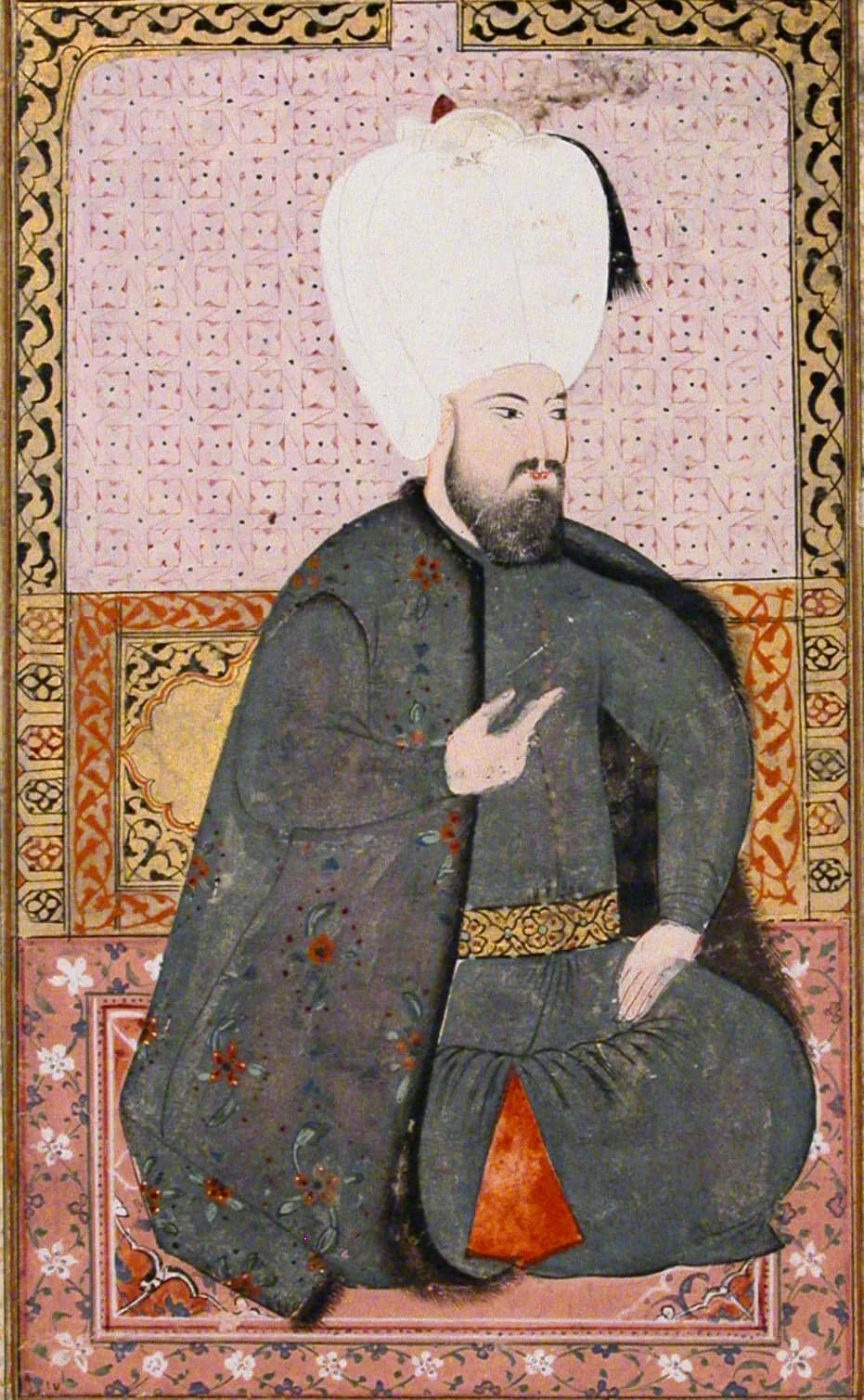
Nacido
April 18, 1590
Manisa, Turkey
Fallecido
November 22, 1617
Istanbul, Turkey
Conocido por
14th Sultan of the Ottoman Empire
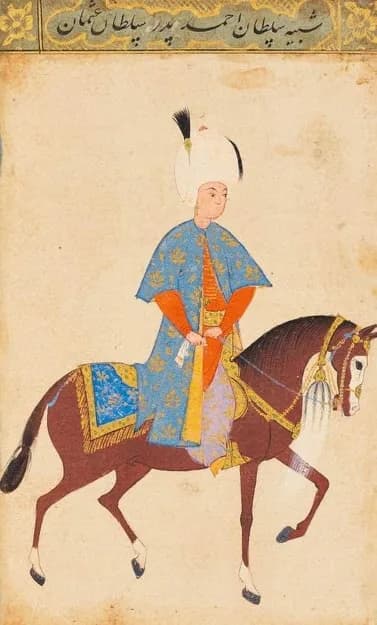
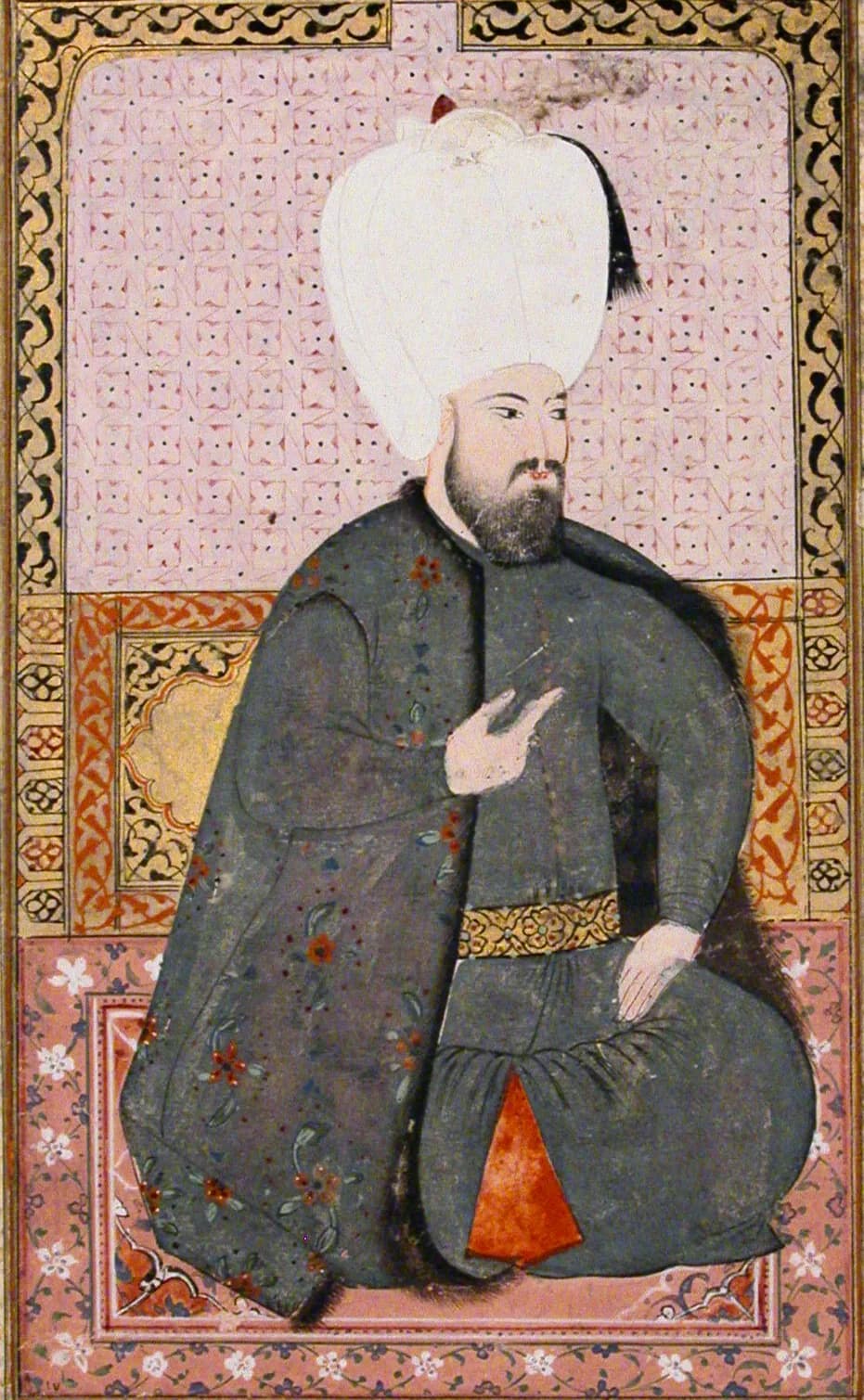
Ahmed I (1590–1617) was Turkey best known for 14th Sultan of the Ottoman Empire.
Ahmed I (April 18, 1590 – November 22, 1617) was a Sultan, author, and poet from Manisa, Turkey. He famously ended the tradition of royal fratricide and commissioned the construction of the iconic Blue Mosque in Istanbul. His reign left a lasting impact on Ottoman succession and architectural heritage.
Capítulo
Capítulos de vida
Capítulo 1 · 1590· Capítulo 1 de 8
Opening
Ahmed I (April 18, 1590 – November 22, 1617) was a distinguished figure in Ottoman history, serving as the 14th Sultan of the Ottoman Empire. Known for his multifaceted roles as an author, poet, and ruler, he left a distinct mark during his reign. His tenure is recognized for significant policy changes and architectural endeavors that continue to resonate today. He oversaw a period of both political adjustment and cultural flourishing.
Capítulo 2 · 1590· Capítulo 2 de 8
Early Life and Origins
Born on April 18, 1590, Ahmed I entered the world in Manisa, a historic city in Turkey. His early life unfolded within the royal traditions of the Ottoman dynasty, preparing him for future leadership. While specific details of his upbringing and formal education are not extensively documented in available records, his eventual accession to the throne indicated a strong preparation for imperial responsibilities from a young age.
Capítulo 3 · 1603· Capítulo 3 de 8
Career Beginnings
Ahmed I ascended to the sultanate in 1603, taking the reins of the vast Ottoman Empire at a remarkably young age. His enthronement marked a notable departure from previous Ottoman royal traditions. This early decision set a new precedent for the empire's future direction, specifically regarding the treatment of royal siblings.
Capítulo 4 · 1603· Capítulo 4 de 8
Major Achievements and Career Highlights
His reign as Sultan of the Ottoman Empire spanned from 1603 to 1617, a period defined by significant developments and reforms. Ahmed I is primarily remembered for initiating the first breach in the deeply ingrained Ottoman tradition of royal fratricide. Rather than executing his brothers upon accession, he chose a policy of imprisonment, fundamentally altering the succession protocol for subsequent rulers and establishing a more stable, albeit confined, system for imperial princes.
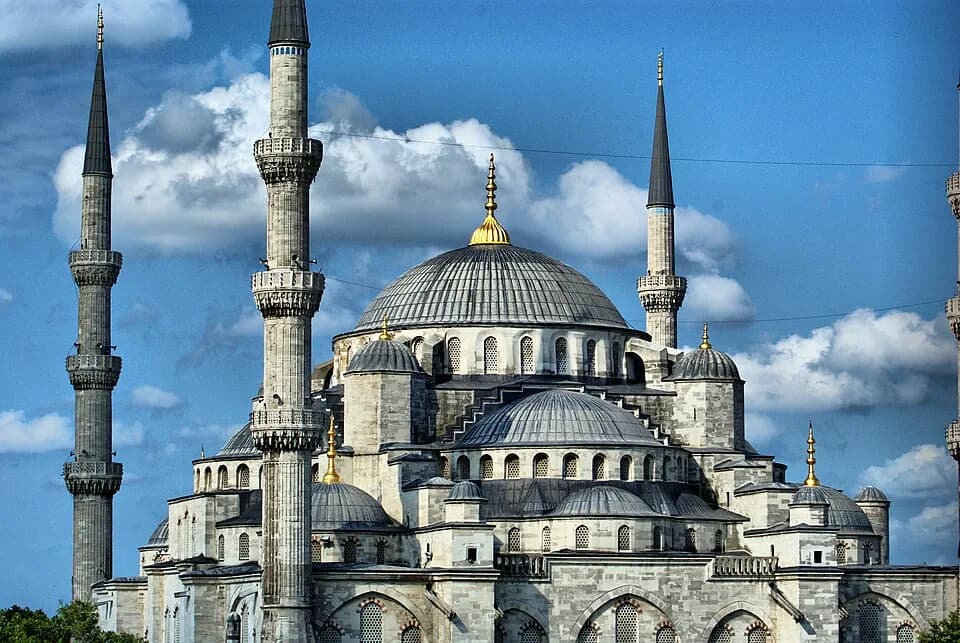
Beyond this pivotal policy shift, Ahmed I also commissioned the construction of the iconic Sultan Ahmed Mosque, universally known as the Blue Mosque. Completed in 1616, this architectural masterpiece in Istanbul stands as one of Turkey's most famous and breathtaking religious structures. Its intricate design, six minarets, and imposing presence continue to draw admiration from around the globe, symbolizing his era.
Capítulo 5· Capítulo 5 de 8
Personal Life
While historical accounts illuminate Ahmed I's public life and political actions, specific details concerning his personal family relationships beyond the immediate imperial lineage, or his private interests and daily routines, are not extensively documented in the provided information. His recognized roles as an author and poet, however, suggest a contemplative and artistic side to his personality, indicating a deep engagement with intellectual and creative pursuits.
Capítulo 6· Capítulo 6 de 8
Notable Works or Contributions
As a figure recognized not only as a sultan but also as an author and poet, Ahmed I engaged in literary pursuits. His attributed bibliography encompasses a range of subjects, reflecting a broad scope of interests. These works include titles such as "Somalia," "African studies and the undergraduate curriculum," "The African state," "Prometheus's bequest," "Nature, people and globalization," "The body," "Socialist Somalia," "Socialist Somalia Rhetoric and Reality," and "The Somali Challenge."
Capítulo 7 · 1617· Capítulo 7 de 8
Later Years
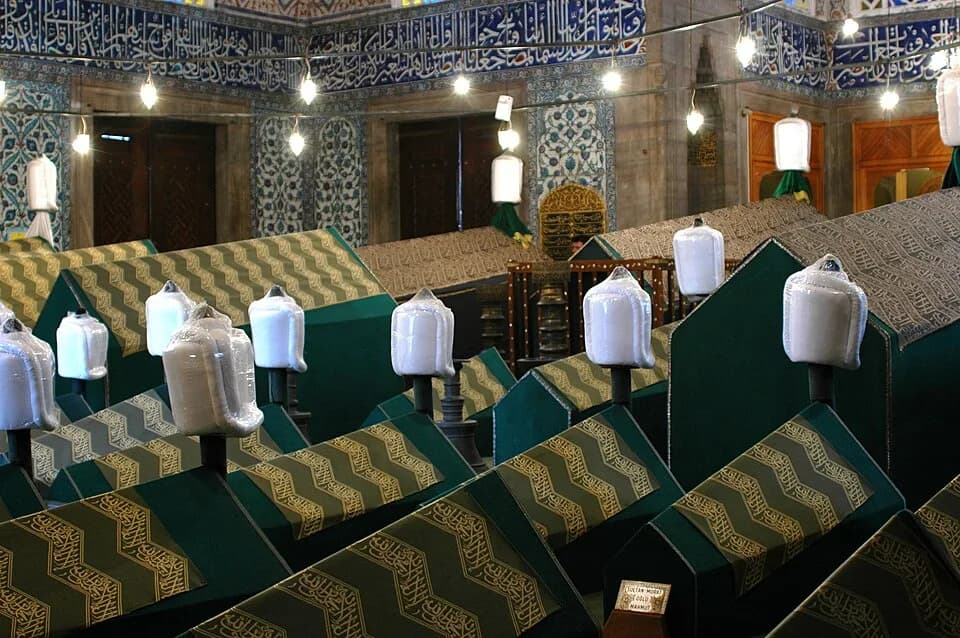
Ahmed I's reign concluded prematurely with his passing on November 22, 1617. He died in Istanbul, Turkey, at the relatively young age of 27. His death brought an end to his eventful 14-year tenure as sultan, leaving behind a profound legacy of reform and architectural marvels.
Capítulo 8· Capítulo 8 de 8
Legacy and Impact
The legacy of Ahmed I is multifaceted, rooted deeply in both political reform and cultural patronage. His courageous decision to end the centuries-old tradition of royal fratricide had a lasting influence, fundamentally reshaping the dynamics of power and succession within the Ottoman dynasty for generations. This change established a new standard for imperial transitions, favoring confinement over execution.
Furthermore, the enduring beauty and architectural grandeur of the Blue Mosque serve as a tangible and permanent reminder of his reign, a building that continues to be a central feature of Istanbul's skyline and a symbol of Ottoman artistry. His leadership, though brief, left a distinct and identifiable imprint on the empire's trajectory, impacting both political practices and the cultural landscape.
Una vida en momentos
Los momentos que dieron forma a una vida
FAQ
Preguntas frecuentes
¿Cuándo murió Ahmed I?
Ahmed I murió el 22 de noviembre de 1617 en Istanbul, Turkey, a la edad de 27 años.
¿Dónde nació Ahmed I?
Ahmed I nació en Manisa, Turkey el 18 de abril de 1590.
¿Por qué es más conocido(a) Ahmed I?
Ahmed I es más conocido(a) por 14th Sultan of the Ottoman Empire.
¿Qué edad tenía Ahmed I cuando murió?
Ahmed I tenía 27 años en el momento de su muerte.
¿Cuál era la nacionalidad de Ahmed I?
Ahmed I era de Turkey.
Cronología
La vida de un vistazo
Galería fotográfica
Una vida en imágenes
Haz clic en una polaroid para ampliar · 25 fotos
Código QR
Compartir esta biografía
Imprimir y compartir
Escanee para visitar esta página de biografía. Imprima para eventos, exposiciones o materiales educativos.