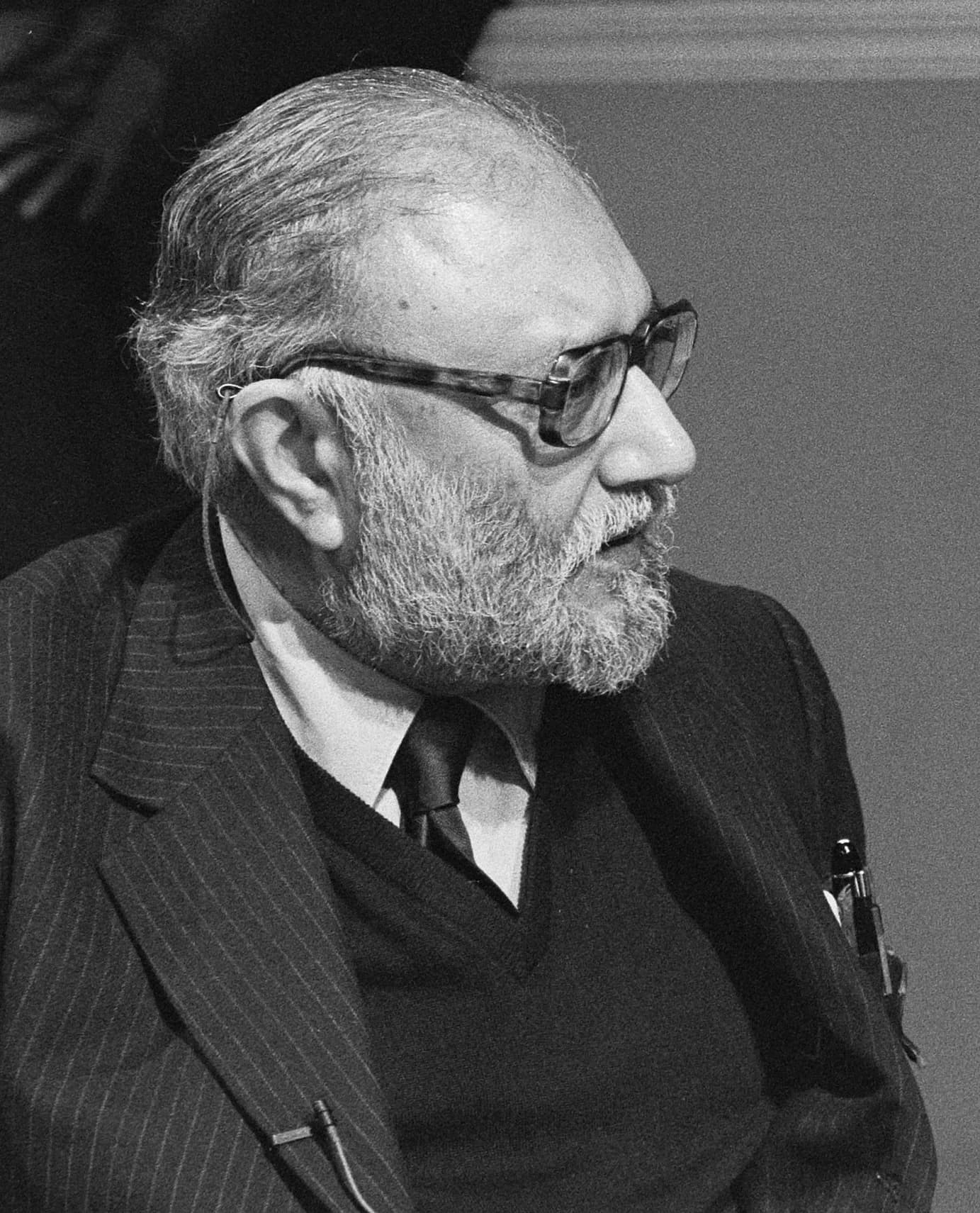
Nacido
January 29, 1926
Jhang, Pakistan
Fallecido
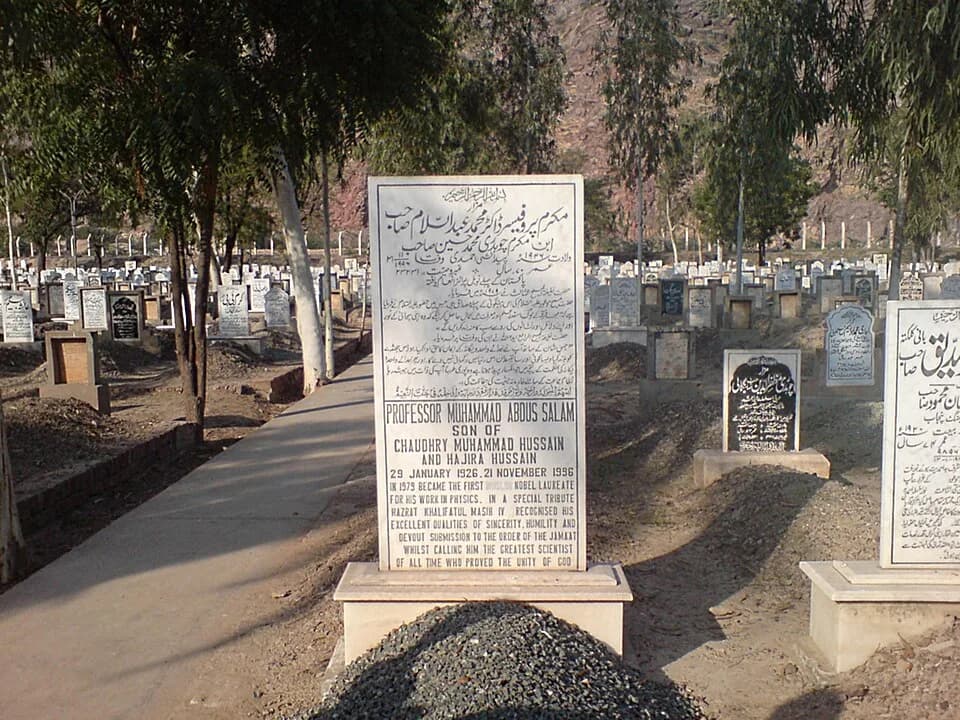
November 21, 1996
Oxford, United Kingdom
Conocido por
theoretical physicist, and Nobel Prize in Physics recipient
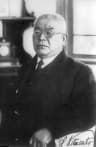
Abdus Salam (1926–1996) was Pakistan best known for theoretical physicist, and Nobel Prize in Physics recipient.
Abdus Salam (January 29, 1926 – November 21, 1996) was a theoretical physicist from Pakistan. He shared the 1979 Nobel Prize in Physics for his contributions to the unified weak and electromagnetic interaction. His work on elementary particles solidified his legacy in modern physics.
Capítulo
Capítulos de vida
Capítulo 1 · 1926· Capítulo 1 de 6
Early Life and Origins
Abdus Salam began his remarkable journey in Jhang, Pakistan, where he was born on January 29, 1926. This birth city and date mark the commencement of a life that would span significant historical developments and scientific breakthroughs. His early years in Pakistan cultivated a strong connection to his home country, a heritage that remained with him throughout his global scientific career.
Capítulo 2· Capítulo 2 de 6
Career Beginnings
Early in his professional trajectory, Abdus Salam dedicated himself to the intertwined roles of a physicist and a university teacher. These foundational professions were instrumental in shaping his approach to scientific inquiry and dissemination of knowledge. His initial contributions to the academic and scientific communities laid the groundwork for the more advanced theoretical explorations that would later define his celebrated career.
Capítulo 3 · 1979· Capítulo 3 de 6
Major Achievements and Career Highlights
The crowning achievement of Abdus Salam's illustrious career was undoubtedly the Nobel Prize in Physics, which he was awarded in 1979. This prestigious accolade was shared with two other eminent scientists, Steven Weinberg and Sheldon Glashow, recognizing their independent yet convergent efforts. The collective honor highlighted the collaborative spirit and intellectual rigor required to advance the frontiers of theoretical physics during that era.
The Nobel Committee specifically cited their "contributions to the theory of the unified weak and electromagnetic interaction between elementary particles" as the basis for the award. This monumental theoretical framework aimed to reconcile two of the four fundamental forces of nature: the weak nuclear force and the electromagnetic force. Abdus Salam's conceptual insights were crucial in demonstrating how these seemingly distinct forces could be understood as different manifestations of a single, more fundamental interaction at high energies, thus simplifying our view of the universe's basic operations.
A particularly significant aspect of their Nobel-winning work was "including, inter alia, the prediction of the weak neutral current." This prediction was not merely an abstract concept but a concrete, testable consequence of their unified theory. The subsequent experimental verification of the weak neutral current provided compelling evidence for the validity of the theoretical framework developed by Abdus Salam, Steven Weinberg, and Sheldon Glashow, solidifying its place in the Standard Model of particle physics.
Beyond the scientific triumph, Abdus Salam's receipt of the Nobel Prize carried profound historical and cultural significance, especially for his home region. He achieved the distinction of becoming the first Pakistani to ever receive a Nobel Prize, an event that brought immense pride to his nation and marked a pivotal moment in its scientific history. Moreover, he was celebrated as the first Muslim scientist to win this esteemed international award, and notably, the second person from any Muslim country to achieve such a high honor, underscoring his trail-blazing role for a wider cultural and religious community.
Capítulo 4· Capítulo 4 de 6
Notable Works or Contributions
Abdus Salam's intellectual output was primarily focused on fundamental theoretical physics, with his work on the unified weak and electromagnetic interaction standing as his defining academic and scientific contribution. His keen insights into the behavior and interactions of elementary particles led directly to the formulation of this elegant and powerful theory. This body of work, particularly the prediction of the weak neutral current, revolutionized particle physics and remains a foundational pillar of modern physical understanding.
It is important to emphasize that the scientific contributions for which Abdus Salam is renowned are specifically tied to the Nobel Prize-winning theory and its elements. While his career involved extensive academic engagement, his most impactful and recognized scientific output revolved around this unification effort. The provided academic publications data regarding epilepsy prevalence or vaccination in Bangladesh, dating to after his death, are not attributable to him and should not be considered part of his personal academic bibliography.
Capítulo 5 · 1996· Capítulo 5 de 6
Later Years
Abdus Salam remained an active and influential figure in the scientific world until his passing on November 21, 1996. His death occurred in Oxford, United Kingdom, bringing to a close a life characterized by unwavering dedication to scientific discovery, education, and international collaboration. Throughout his later years, he continued to contribute to the global scientific discourse, building on the legacy established by his earlier Nobel-winning work.
Capítulo 6· Capítulo 6 de 6
Legacy and Impact
The scientific legacy of Abdus Salam is deeply embedded in the fabric of theoretical physics, particularly through his pioneering work on the electroweak unification theory. This conceptual framework fundamentally reshaped how physicists conceptualize the forces that govern the very smallest constituents of matter, known as elementary particles. His theoretical models continue to serve as essential guides for contemporary research in high-energy physics, influencing ongoing experiments and theoretical developments.
Beyond his direct scientific contributions, Abdus Salam's status as the first Pakistani and first Muslim scientist Nobel laureate had a resonant and inspiring impact far beyond academic circles. He became a powerful symbol of intellectual achievement and scientific capability for countless individuals and aspiring scientists in Pakistan and across the broader Muslim world. His accomplishments fostered a sense of pride and demonstrated that scientific excellence could emerge from diverse global backgrounds.
Abdus Salam's vision for a unified understanding of fundamental forces continues to shape the trajectory of particle physics research for subsequent generations of scientists. The specific prediction of the weak neutral current, in particular, offered critical empirical direction that propelled experimental physics forward. Abdus Salam's enduring contributions secured his place as a towering figure in 20th-century science, profoundly influencing future theories and discoveries about the fundamental nature of the universe.
Una vida en momentos
Los momentos que dieron forma a una vida

FAQ
Preguntas frecuentes
¿Cuándo murió Abdus Salam?
Abdus Salam murió el 21 de noviembre de 1996 en Oxford, United Kingdom, a la edad de 70 años.
¿Dónde nació Abdus Salam?
Abdus Salam nació en Jhang, Pakistan el 29 de enero de 1926.
¿Por qué es más conocido(a) Abdus Salam?
Abdus Salam es más conocido(a) por theoretical physicist, and Nobel Prize in Physics recipient.
¿Qué edad tenía Abdus Salam cuando murió?
Abdus Salam tenía 70 años en el momento de su muerte.
¿Cuál era la nacionalidad de Abdus Salam?
Abdus Salam era de Pakistan.
Cronología
La vida de un vistazo
Galería fotográfica
Una vida en imágenes
Haz clic en una polaroid para ampliar · 47 fotos
Código QR
Compartir esta biografía
Imprimir y compartir
Escanee para visitar esta página de biografía. Imprima para eventos, exposiciones o materiales educativos.