Geboren
August 26, 1936
Kunming, People's Republic of China
Verstorben
December 13, 2015
Batu, Indonesia
Bekannt für
American political scientist
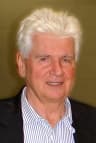
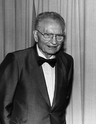
Benedict Anderson (1936–2015) was People's Republic of China best known for American political scientist.
Benedict Anderson (August 26, 1936 – December 13, 2015) was an American political scientist and historian from Kunming, China. He is best known for his 1983 book <em>Imagined Communities</em>, which explored the origins of nationalism. His theories continue to shape discussions on identity and political thought.
Kapitel
Lebenskapitel
Kapitel 1 · 2015· Kapitel 1 von 8
Opening
Benedict Richard O'Gorman Anderson, an American political scientist and historian, passed away on December 13, 2015, at the age of 79, having been born on August 26, 1936. Known for his groundbreaking theories on nationalism, Anderson's scholarship shaped understanding across various academic fields. His work, particularly his seminal book Imagined Communities, established him as a leading voice in political science and Southeast Asian studies.
Kapitel 2 · 1936· Kapitel 2 von 8
Early Life and Origins
Benedict Anderson was born in Kunming, People's Republic of China, on August 26, 1936, into an Anglo-Irish family. His early life in China provided him with a distinctive perspective on global cultures and political dynamics. He was the elder brother of renowned historian Perry Anderson, suggesting an intellectual environment that fostered deep inquiry and critical thought from a young age.
His Anglo-Irish heritage and diverse upbringing likely contributed to his later interest in the origins and nature of national identity. While details of his specific education are not provided beyond his teaching in the United States, his intellectual foundations were clearly established early in his life. This background set the stage for his significant academic contributions.
Kapitel 3· Kapitel 3 von 8
Career Beginnings
Anderson dedicated his career to the study of politics and history, living and teaching primarily in the United States. He became a distinguished scholar at Cornell University, where he served as the Aaron L. Binenkorb Professor of International Studies, Government & Asian Studies. His academic journey began with a strong focus on Southeast Asia, an area where he developed deep expertise.
His early work involved immersing himself in the political and cultural intricacies of the region, cultivating a profound understanding of its diverse societies. This specialization would later inform many of his influential publications and analyses. His position at Cornell allowed him to research and teach, nurturing future generations of scholars interested in global affairs.
Kapitel 4 · 1983· Kapitel 4 von 8
Major Achievements and Career Highlights
Benedict Anderson is best known for his 1983 book, Imagined Communities: Reflections on the Origins and Spread of Nationalism, which offered a transformative perspective on the concept of nationalism. In this work, he theorized that nations are socially constructed communities, imagined by the people who perceive themselves as part of that group. This idea profoundly influenced political science, sociology, and history, becoming a foundational text in these disciplines.
Another significant achievement was his involvement in the "Cornell Paper," a critical analysis disputing the official narrative of Indonesia's 30 September Movement and the subsequent anti-Communist purges of 1965–1966. This courageous academic stand led to his expulsion from Indonesia, underscoring his commitment to independent scholarship. His fluency as a polyglot also greatly aided his extensive research in various linguistic and cultural contexts, particularly in Southeast Asia.
His extensive academic output included diverse studies, further establishing his authority in international studies and Asian history. He consistently challenged conventional wisdom, encouraging deeper examinations of power structures and cultural formations. Anderson's refusal to accept official narratives shaped a generation of scholars committed to rigorous, independent inquiry.
Kapitel 5· Kapitel 5 von 8
Personal Life
While the provided details on Benedict Anderson's personal life are limited, his deep connection to his family, particularly his elder brother, historian Perry Anderson, is evident. His Anglo-Irish background and birth in China suggest a childhood immersed in international perspectives. Anderson's profound interest in Southeast Asia was not merely academic but a deep personal engagement with the region's cultures and languages, as demonstrated by his polyglot abilities.
His dedication to his work often involved extensive travel and engagement with local communities, particularly in Indonesia and other parts of Southeast Asia. This engagement went beyond mere observation, informing his nuanced understanding of nationalism and political movements. Anderson's life was closely intertwined with his intellectual pursuits, reflecting a scholar deeply committed to understanding the world.
Kapitel 6 · 1983· Kapitel 6 von 8
Notable Works or Contributions
Benedict Anderson's bibliography features a range of influential publications that have left a lasting mark on academia. His most celebrated work, Imagined Communities: Reflections on the Origins and Spread of Nationalism, originally published in 1983, explores the social construction of national identity. This book remains a cornerstone for anyone studying nationalism, offering enduring insights into its cultural and historical roots.
Beyond this landmark book, Anderson authored other significant contributions, including A Preliminary Analysis of the October 1, 1965 Coup in Indonesia, which critically examined a pivotal moment in Indonesian history. His works also include Some Aspects of Indonesian Politics Under the Japanese Occupation, providing a historical lens on a complex period. He wrote in multiple languages, including works like Pramoedya Ananta Toer, politik & sastra and Sukarno, Marxisme, dan Bahaya Pemfosilan, reflecting his specialized regional expertise.
His academic contributions extended to numerous papers, with an h-index of 3 across 7 papers. Notable academic works include The anthropology of politics : a reader in ethnography, theory, and critique from 2002, cited 76 times, and Western Nationalism and Eastern Nationalism: Is There a Difference that Matters? from 2013, with 48 citations. These varied publications demonstrate his broad intellectual scope, encompassing politics, history, and anthropology.
Kapitel 7· Kapitel 7 von 8
Later Years
Benedict Anderson continued his scholarly activities and teaching at Cornell University for many years, remaining an active voice in international studies. His later career involved refining his theories and contributing to ongoing discussions about nationalism and global politics. He maintained his focus on Southeast Asia, a region that remained central to his research and intellectual curiosity.
His life concluded on December 13, 2015, when he passed away in Batu, Indonesia, the very country where much of his fieldwork and political engagement had taken place. His death in Indonesia underscores his deep connection to the region he spent a lifetime studying and analyzing. He leaves behind a legacy of rigorous scholarship and intellectual courage.
Kapitel 8· Kapitel 8 von 8
Legacy and Impact
Benedict Anderson's legacy endures through his profound influence on the study of nationalism, making Imagined Communities a required text in many university courses globally. His concept of nations as "imagined communities" provided a powerful framework for understanding collective identity beyond physical boundaries or shared languages. Scholars across disciplines continue to engage with and build upon his theoretical insights.
His courageous stance on Indonesian politics, particularly the "Cornell Paper," cemented his reputation as an independent and critical scholar willing to challenge official narratives. This commitment to truth-seeking continues to inspire researchers in area studies and political science. Anderson's polyglot abilities and deep engagement with Southeast Asia also left an enduring mark on the field, fostering greater nuance and understanding of the region's complex histories and societies.
Through his writings and his teaching at Cornell University, Benedict Anderson shaped academic discourse and influenced generations of students and scholars. His work remains vital for understanding modern political phenomena and the ongoing formation of national identities. He is remembered not only for his intellectual contributions but also for his unwavering dedication to scholarly integrity.
Ein Leben in Momenten
Die Momente, die ein Leben prägten






FAQ
Häufig gefragt
Wann starb Benedict Anderson?
Benedict Anderson starb am 13. Dezember 2015 in Batu, Indonesia im Alter von 79 Jahren.
Wo wurde Benedict Anderson geboren?
Benedict Anderson wurde in Kunming, People's Republic of China am 26. August 1936 geboren.
Wofür ist Benedict Anderson am bekanntesten?
Benedict Anderson ist am bekanntesten für American political scientist.
Wie alt war Benedict Anderson beim Tod?
Benedict Anderson war zum Zeitpunkt des Todes 79 Jahre alt.
Welche Nationalität hatte Benedict Anderson?
Benedict Anderson stammte aus People's Republic of China.
Zeitlinie
Leben im Überblick
Fotogalerie
Ein Leben in Bildern
Klicken Sie ein Polaroid an, um es zu vergrößern · 14 Fotos
QR-Code
Diese Biografie teilen
Drucken & Teilen
Scannen Sie, um diese Biografieseite zu besuchen. Drucken Sie sie für Veranstaltungen, Ausstellungen oder Lehrmaterialien.