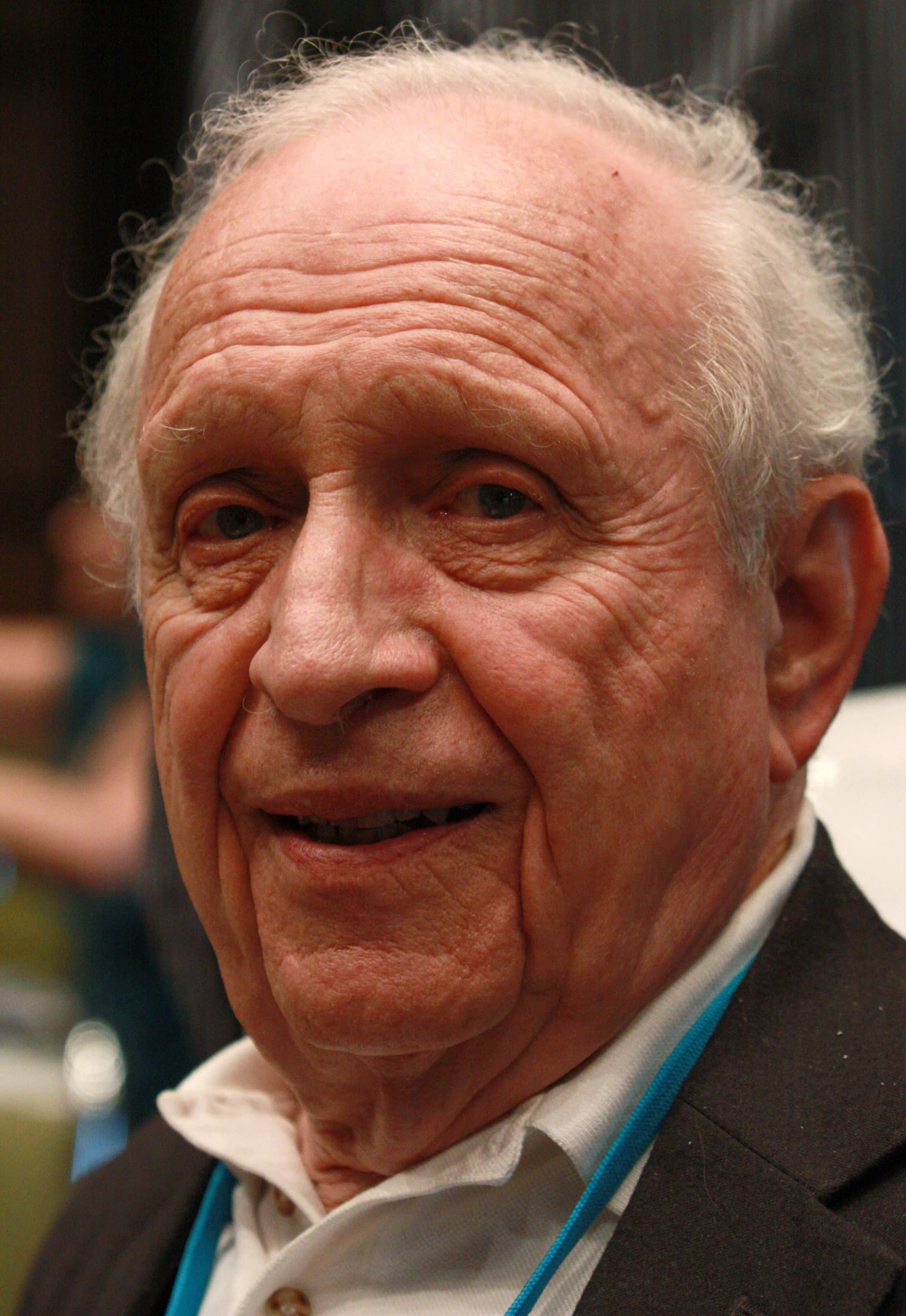
Born
September 1, 1925
New York City, United States
Died
December 26, 2018
Newton, United States
Known for
American theoretical physicist
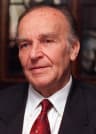
Roy J. Glauber (1925–2018) was United States best known for American theoretical physicist.
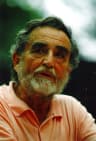
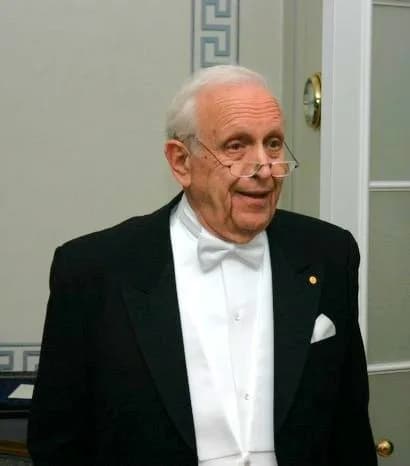
Roy J. Glauber (September 1, 1925 – December 26, 2018) was an American theoretical physicist from New York City. He was awarded half of the 2005 Nobel Prize in Physics for his quantum theory of optical coherence. His work explained fundamental light characteristics and remains central to quantum optics.
Chapter
Life chapters
Chapter 1 · 1925· Chapter 1 of 8
Opening
Roy J. Glauber (1925 – 2018) was an esteemed American theoretical physicist whose work significantly advanced our understanding of light. He was recognized with a share of the 2005 Nobel Prize in Physics for his foundational contributions to the quantum theory of optical coherence. Throughout his distinguished career, he served as the Mallinckrodt Professor of Physics at Harvard University and an Adjunct Professor of Optical Sciences at the University of Arizona, shaping generations of scientists.
Chapter 2 · 1925· Chapter 2 of 8
Early Life and Origins
Born on September 1, 1925, in the vibrant metropolis of New York City, United States, Roy J. Glauber's early life was spent amidst an environment that fostered intellectual curiosity. The scientific community he would later join often draws its bright minds from such diverse urban centers. His formative years in New York City laid the groundwork for his future academic pursuits and eventual scientific achievements.
Chapter 3· Chapter 3 of 8
Career Beginnings
Roy J. Glauber's academic path led him to prestigious institutions where he developed his expertise in theoretical physics. He established a long and distinguished tenure as the Mallinckrodt Professor of Physics at Harvard University, becoming a central figure in its physics department. Additionally, his knowledge extended to the University of Arizona, where he held the position of Adjunct Professor of Optical Sciences, demonstrating his broad engagement with the scientific community.
These affiliations provided the platforms for his innovative research and teaching. His early work began to lay the groundwork for his later, highly influential theories concerning the nature of light and its quantum properties. He dedicated himself to exploring complex physical phenomena, setting the stage for his most celebrated contributions.
Chapter 4 · 2005· Chapter 4 of 8
Major Achievements and Career Highlights
A crowning achievement in Roy J. Glauber's career was the recognition of his work with one half of the 2005 Nobel Prize in Physics. This prestigious award acknowledged his critical "contribution to the quantum theory of optical coherence," a theoretical framework that reshaped the understanding of light. The other half of the prize was jointly awarded to John L. Hall and Theodor W. Hänsch for their related advancements.
Glauber's Nobel-winning work, published in 1963, provided a crucial model for photodetection, which explains how light is detected and measured at the quantum level. Furthermore, his theories elucidated the fundamental characteristics of various types of light, differentiating between phenomena such as highly ordered laser light and the more chaotic emissions from traditional light bulbs. His insights offered a rigorous description of how light behaves quantum mechanically.
Beyond quantum optics, Roy J. Glauber also made significant contributions to statistical physics. He pioneered the study of the dynamics of first-order phase transitions, a fundamental area of research in materials science and condensed matter physics. In a paper also published in 1963, he first defined and investigated the stochastic dynamics of an Ising model, providing new tools for understanding complex systems.
Chapter 5· Chapter 5 of 8
Personal Life
Information regarding Roy J. Glauber's personal life, including details about his family or private interests, is not extensively detailed in available records. His professional career as a physicist and university teacher primarily defined his public persona. His dedication to scientific inquiry and education was evident through his long and distinguished service at leading academic institutions.
Chapter 6 · 1963· Chapter 6 of 8
Notable Works or Contributions
Roy J. Glauber's extensive academic output is reflected in his impressive publication record, boasting an h-index of 43 across 119 papers. His 1963 paper on the quantum theory of optical coherence stands as a cornerstone publication, fundamentally altering the scientific discourse around light. This work laid the theoretical groundwork for the entire field of quantum optics, providing essential concepts still used today.
Among his significant contributions are several well-regarded works, including "Dimension of quantum phase space measured by photon correlations" published in 2015, which garnered 9 citations. Other notable papers include "Asymptotic Diffraction Theory and Nuclear Scattering" from 2019 with 5 citations, and "Coherent scattering by a spherical medium of resonant atoms," published in 2011, also receiving 5 citations. These publications demonstrate his consistent engagement with complex physics problems across several decades.
His research also encompassed "Intensity–intensity correlations determined by dimension of quantum state in phase space: P-distribution" (2015, 4 citations) and "Elastic proton-proton scattering from ISR to LHC energies, focusing on the dip region" (2013, 3 citations). These varied topics highlight his broad expertise and continuing involvement in theoretical physics research, even in his later years. The influence of his concepts on quantum optics and statistical mechanics remains a key part of modern physics education and research.
Chapter 7· Chapter 7 of 8
Later Years
Roy J. Glauber continued his academic and research work well into his later years, maintaining his roles at Harvard University and the University of Arizona. His commitment to teaching and scientific exploration remained steadfast, even after receiving the Nobel Prize. He continued to publish papers and contribute to the scientific community, demonstrating a lifelong passion for physics.
He passed away on December 26, 2018, in Newton, United States, bringing an end to a long and distinguished career that spanned decades. His contributions continued to shape the discourse in theoretical physics and quantum optics up until his passing. His legacy endures through the ongoing application of his theories by scientists worldwide.
Chapter 8 · 1963· Chapter 8 of 8
Legacy and Impact
Roy J. Glauber's legacy is deeply embedded in the field of quantum optics, where his 1963 work provided the essential theoretical framework for understanding optical coherence. His models for photodetection and explanations of different light types remain fundamental to the discipline. Scientists and engineers continue to utilize his theories in a wide array of applications involving light and quantum phenomena.
Beyond optics, his pioneering work in statistical physics, specifically his investigation into the stochastic dynamics of the Ising model, also left a lasting mark. This contribution provided valuable tools for analyzing phase transitions, influencing research in condensed matter physics and statistical mechanics. Roy J. Glauber's detailed and rigorous theoretical insights continue to guide contemporary research and inspire future generations of physicists.
A life in moments
The moments that shaped a life



FAQ
Frequently asked
When did Roy J. Glauber die?
Roy J. Glauber died on December 26, 2018 in Newton, United States, at the age of 93.
Where was Roy J. Glauber born?
Roy J. Glauber was born in New York City, United States on September 1, 1925.
What is Roy J. Glauber best known for?
Roy J. Glauber is best known for American theoretical physicist.
How old was Roy J. Glauber when they died?
Roy J. Glauber was 93 years old at the time of death.
What nationality was Roy J. Glauber?
Roy J. Glauber was from United States.
Timeline
Life at a glance
Photo gallery
A life in pictures
Click any polaroid to expand · 19 photos
QR Code
Share This Biography
Print & Share
Scan to visit this biography page. Print for events, exhibitions, or educational materials.