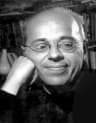
Born
August 23, 1921
New York City, United States
Died
February 21, 2017
Palo Alto, United States
Known for
American economist
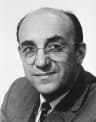
Kenneth Arrow (1921–2017) was United States best known for American economist.
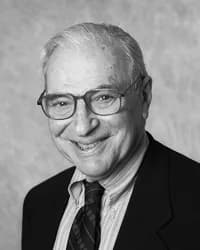
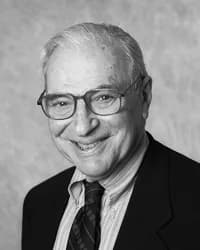
Kenneth Joseph Arrow (August 23, 1921 – February 21, 2017) was an American economist from New York City. He received the John Bates Clark Medal in 1957 and the Nobel Memorial Prize in Economic Sciences in 1972. His contributions significantly advanced the fields of economics and social choice theory.
Chapter
Life chapters
Chapter 1 · 1921· Chapter 1 of 7
Early Life and Origins
Kenneth Arrow was born on August 23, 1921, in the bustling metropolis of New York City, United States. While specific details of his early family life are not extensively documented, his eventual path as an economist, mathematician, and political theorist indicates a strong intellectual curiosity cultivated from a young age. This foundational period in one of the world's intellectual hubs likely fueled his diverse academic pursuits.
Chapter 2· Chapter 2 of 7
Career Beginnings
Arrow's professional journey began with a breadth of roles, reflecting his wide-ranging expertise as a writer, teacher, university professor, statistician, and political scientist. This interdisciplinary foundation prepared him for his later theoretical advancements in economics. His early work quickly garnered significant attention within academic circles, highlighting the originality and rigor of his thought.
A significant early recognition of his burgeoning talent came in 1957 when he was awarded the esteemed John Bates Clark Medal. This prize is presented to American economists under the age of forty who have made substantial contributions to economic thought and knowledge, signaling Arrow's rising prominence in the field.
Chapter 3 · 1972· Chapter 3 of 7
Major Achievements and Career Highlights
The pinnacle of Kenneth Arrow's distinguished career arrived in 1972 when he was jointly honored with the Nobel Memorial Prize in Economic Sciences alongside John Hicks. This high accolade was a testament to his profound influence on the fundamentals of economic theory. His theoretical frameworks provided crucial insights into how markets operate and how societies make collective decisions.
The Nobel committee specifically cited his pioneering contributions to general equilibrium theory and welfare economics, areas that revolutionized economists' understanding of market efficiency and social choice. These advancements remain cornerstone concepts in contemporary economic analysis. His work established rigorous mathematical foundations for understanding complex economic systems.
Chapter 4· Chapter 4 of 7
Notable Works or Contributions
Kenneth Arrow was a prolific author, leaving behind a significant body of influential works that spanned various facets of economic and social theory. His notable bibliography includes introspective titles such as "Worlds Hidden in Plain Sight," which likely explored unseen structures of societal organization. He also addressed pressing contemporary issues through works like "Are we consuming too much?" and "Evaluating projects and assessing sustainable development in imperfect economies," underscoring his concern for resource management and long-term societal well-being.
His contributions extended to examining societal fairness with "Meritocracy and economic inequality," a work that delved into the distribution of opportunities and wealth. He further enriched economic discourse through his involvement in "Frontiers of Economics" and his analytical piece, "Les limites de l'organisation." These works collectively demonstrate his breadth of interest and intellectual depth.
Chapter 5 · 2003· Chapter 5 of 7
Academic Publications and Impact
Beyond his major books, Arrow maintained an active presence in academic publishing throughout his long career. His highly cited academic works include "The predictive power of zero intelligence in financial markets" from 2003, which received 476 citations, indicating its substantial impact on understanding financial market dynamics. He also contributed to interdisciplinary research with "Some Perspectives on Linked Ecosystems and Socio-Economic Systems" in 2013, showcasing his enduring engagement with complex systems.
Further academic contributions include "Lionel W. McKenzie and the Existence of a Competitive Equilibrium, Redux" (2009) and "AMERICAN FINANCE ASSOCIATION" (2007). His meticulous approach to economic theory is also evident in "On the Existence of a Competitive Equilibrium: 1930-1954 By" (2007), which revisits historical debates with fresh insights. These publications, marked by an h-index of 2 and 5 specific papers mentioned, cemented his standing as a meticulous and influential scholar.
Chapter 6 · 2013· Chapter 6 of 7
Later Years
Kenneth Arrow remained intellectually vibrant and actively involved in the academic community well into his later years. His continued publication of scholarly articles, such as the 2013 paper on linked ecosystems, exemplified his unwavering commitment to research and the advancement of economic thought. He consistently pushed the boundaries of theoretical economics, maintaining a scholarly presence for decades.
He passed away on February 21, 2017, in Palo Alto, United States. His passing marked the end of an era for a scholar who dedicated his life to rigorous inquiry and who left an enduring legacy of intellectual contribution that continues to inform and inspire.
Chapter 7· Chapter 7 of 7
Legacy and Impact
Kenneth Arrow's legacy is characterized by his profound and lasting influence across the disciplines of economics, mathematics, and political science. As an American economist, his theoretical frameworks remain fundamental to the study of social choice, general equilibrium, and welfare economics. His groundbreaking insights, recognized by both the John Bates Clark Medal and the Nobel Memorial Prize, fundamentally reshaped the academic discipline.
His work continues to inform public policy decisions and economic analysis globally. He provided an enduring intellectual foundation that has inspired generations of scholars to explore the complexities of economic systems and human decision-making. Arrow's contributions ensure his place as one of the most significant thinkers in 20th-century economics.
A life in moments
The moments that shaped a life




FAQ
Frequently asked
When did Kenneth Arrow die?
Kenneth Arrow died on February 21, 2017 in Palo Alto, United States, at the age of 95.
Where was Kenneth Arrow born?
Kenneth Arrow was born in New York City, United States on August 23, 1921.
What is Kenneth Arrow best known for?
Kenneth Arrow is best known for American economist.
How old was Kenneth Arrow when they died?
Kenneth Arrow was 95 years old at the time of death.
What nationality was Kenneth Arrow?
Kenneth Arrow was from United States.
Timeline
Life at a glance
Photo gallery
A life in pictures
Click any polaroid to expand · 17 photos
QR Code
Share This Biography
Print & Share
Scan to visit this biography page. Print for events, exhibitions, or educational materials.