Born
November 15, 1479
Toledo, Spain
Died
April 22, 1555
Tordesillas, Spain
Known for
Queen of Castile from 1504 and of Aragon from 1516
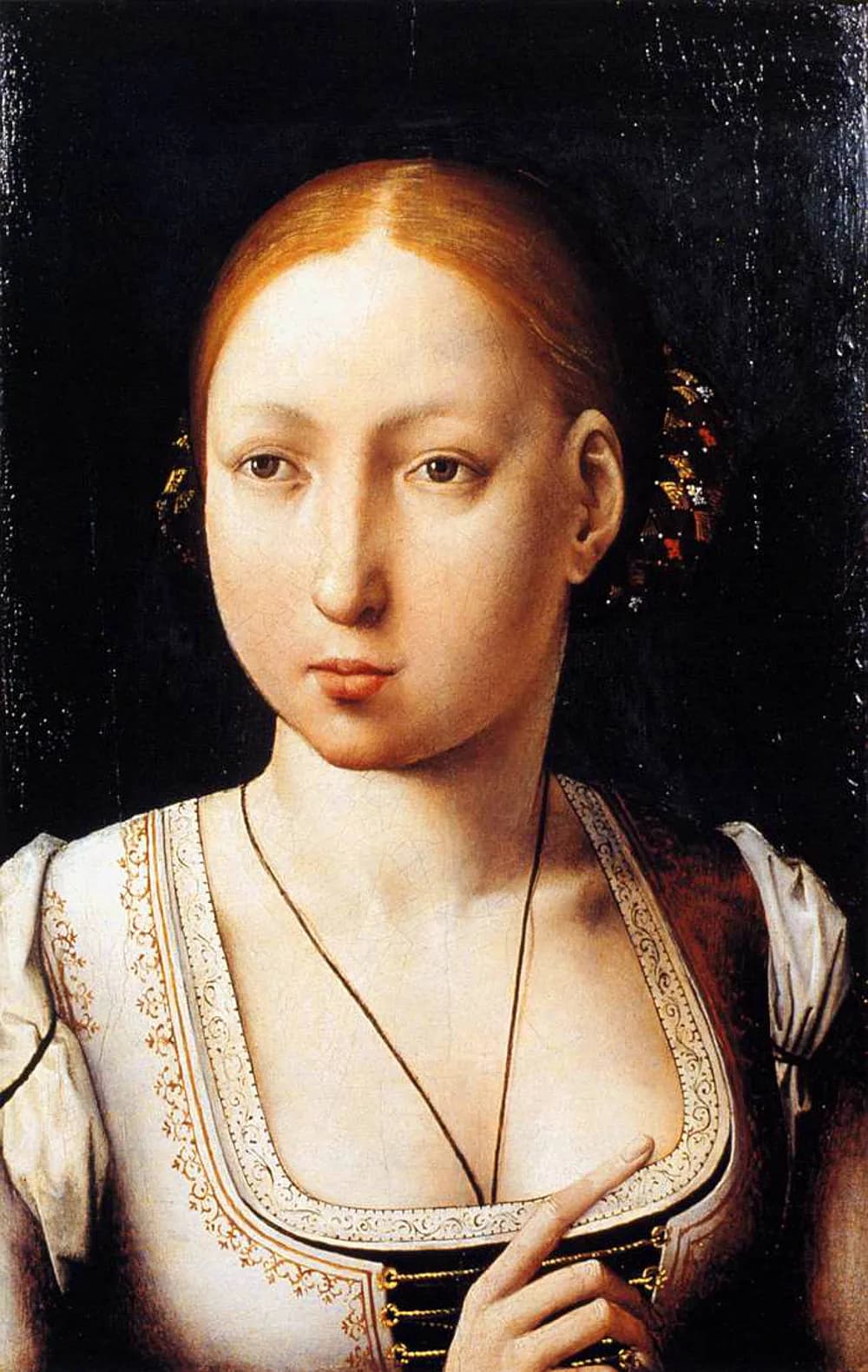
Juana I of Castile (1479–1555) was Spain best known for Queen of Castile from 1504 and of Aragon from 1516.
Juana I of Castile (November 15, 1479 – April 22, 1555) was a monarch from Spain. She became Queen of Castile in 1504 and Queen of Aragon in 1516, a position she held until her death. Her queenship facilitated the crucial dynastic transition of Spain to the Habsburgs.
Chapter
Life chapters
Chapter 1 · 1479· Chapter 1 of 7
Early Life and Origins
Juana I of Castile was born on November 15, 1479, in the ancient city of Toledo, Spain. Her birth occurred into one of Europe's most influential royal families. She was the daughter of two formidable monarchs, Queen Isabella I of Castile and King Ferdinand II of Aragon, whose marriage had significantly advanced the unification of the Iberian Peninsula. This royal lineage positioned Juana at the very heart of European power and politics from her earliest days.
Her childhood in the royal court would have provided her with an upbringing typical of a princess of her era, focused on religious instruction, languages, and the social graces expected of her station. As a child, she was not initially expected to inherit the crowns of Castile and Aragon. This would only change due to a series of unforeseen and tragic events within her family, dramatically altering the course of her life and destiny. Her early life, spent under the watchful eyes of her powerful parents, laid the groundwork for the extraordinary path she would later follow.
Chapter 2 · 1496· Chapter 2 of 7
Career Beginnings
Juana's path to becoming a monarch was primarily determined by strategic dynastic alliances and unexpected family tragedy. In a common practice for royal families of the time, she was married by arrangement to the Austrian archduke Philip the Handsome. This union took place on October 20, 1496, forging an important connection between the Spanish and Habsburg dynasties, a relationship that would profoundly influence European history for centuries to come. This marriage was intended to strengthen political ties and secure alliances for her parents' kingdoms.
However, it was a series of unfortunate deaths that truly propelled Juana into direct line for the thrones of Castile and Aragon. Her elder brother John, Prince of Asturias, died in 1497, eliminating the primary male heir. Subsequently, her elder sister Isabella, Queen of Portugal, passed away, followed by Isabella's young son, her nephew Miguel, between 1497 and 1500. These successive losses left Juana as the direct heir presumptive to the immensely important crowns of both Castile and Aragon. This dramatic shift meant that she, who was once a secondary figure, was now destined to rule.
Chapter 3 · 1504· Chapter 3 of 7
Major Achievements and Career Highlights
Juana I's most significant achievement was her ascension to the throne and her enduring status as Queen of Castile and later Aragon. When her revered mother, Queen Isabella I of Castile, passed away in 1504, Juana formally became Queen of Castile. This moment marked the official beginning of her reign over one of the most powerful kingdoms in Europe. Her father, King Ferdinand II of Aragon, acknowledged her new status while also proclaiming himself as the governor and administrator of Castile, indicating the complex political dynamics at play.
Her position as monarch extended to Aragon as well, following her father's death. From 1516, Juana was recognized as Queen of Aragon, uniting both major Spanish crowns under her name, a symbolic and factual continuity that solidified the burgeoning Spanish state. This made her the titular head of a vast and influential European power, a role she maintained until her own death in 1555. The duration of her reign, spanning over five decades for Castile and nearly four decades for Aragon, underscores her continuous presence as the sovereign queen throughout a transformative period for Spain and the wider world.
Chapter 4 · 1496· Chapter 4 of 7
Personal Life
Juana's personal life was largely shaped by her arranged marriage to Philip the Handsome. Their union on October 20, 1496, was a significant political event, uniting the houses of Trastámara and Habsburg. This marriage brought together two prominent European royal families, creating a lineage that would have vast implications for future generations and the geopolitical map of Europe. While the immediate political benefits were clear, the personal dynamics of their marriage were complex.
As a royal couple, Juana and Philip embarked on a life that combined royal duties with personal experiences. Their marriage resulted in the birth of several children, who would go on to play pivotal roles in European history. The family they established continued the powerful lines of both Spanish and Austrian royalty, ensuring the continuation of their respective dynasties. Juana's role as a wife and mother, alongside her royal status, formed an integral part of her identity within the historical record.
Chapter 5 · 1504· Chapter 5 of 7
Notable Works or Contributions
As a monarch, Juana I's primary contributions stemmed from her very existence and her position as the rightful sovereign. Her most notable 'work' was her role as the legitimate Queen of Castile from 1504 and Queen of Aragon from 1516. During this period, she represented the continuity of the royal line and the unification of the Spanish kingdoms. Her succession ensured that the crowns remained within the established dynastic framework, preventing potential conflicts over inheritance.
Her queenship, spanning many decades, provided a consistent legal and traditional basis for governance, even as her father, Ferdinand II, and later others, exercised administrative powers. Her continued reign through her death in 1555 cemented a critical period in Spanish history. Through her, the crowns of Castile and Aragon passed to her Habsburg heirs, thereby integrating Spain into the larger Habsburg empire, a development that would shape the geopolitical landscape for centuries. Her presence as queen, despite the complexities of her rule, provided an essential link in the chain of Spanish monarchy.
Chapter 6 · 1504· Chapter 6 of 7
Later Years
Juana I continued as Queen of Castile from 1504 and of Aragon from 1516, until her passing on April 22, 1555. Her final years were spent in Tordesillas, Spain, the same location where she ultimately died. The town of Tordesillas thus holds a significant place in the narrative of her life, marking the conclusion of her long existence as a monarch. Her reign was one of the longest in Spanish history, enduring for over half a century in Castile.
Even though her reign was lengthy, her personal involvement in day-to-day governance became limited after a certain point. Her status as queen, however, remained undisputed. She represented the legitimate claim to the thrones of Castile and Aragon, a critical factor for the stability and succession of the unified Spanish kingdoms. Her death in 1555 marked the end of an era, solidifying the transition of the Spanish monarchy into the hands of the Habsburg dynasty, through her lineage.
Chapter 7 · 1504· Chapter 7 of 7
Legacy and Impact
Juana I of Castile holds a unique and lasting place in the annals of Spanish and European history. As Queen of Castile from 1504 and of Aragon from 1516 until her death in 1555, she was the pivotal figure through whom the crowns of unified Spain transitioned from the Trastámara dynasty to the powerful House of Habsburg. This dynastic shift had an immense and enduring impact, linking Spain to one of the most dominant royal houses in Europe for centuries to come. Her children and grandchildren would inherit vast territories, shaping the political map of the continent.
Her story is a testament to the complex nature of royal succession and the power dynamics of early modern Europe. Her existence ensured the legal continuity of the Spanish monarchy during a critical period of expansion and consolidation. Even after her death, her legacy continued to resonate through the reigns of her descendants, who ruled an empire upon which the sun never set. Juana I remains a figure whose life profoundly influenced the trajectory of Spain's imperial destiny and its role on the global stage.
A life in moments
The moments that shaped a life
FAQ
Frequently asked
When did Juana I of Castile die?
Juana I of Castile died on April 22, 1555 in Tordesillas, Spain, at the age of 75.
Where was Juana I of Castile born?
Juana I of Castile was born in Toledo, Spain on November 15, 1479.
What is Juana I of Castile best known for?
Juana I of Castile is best known for Queen of Castile from 1504 and of Aragon from 1516.
How old was Juana I of Castile when they died?
Juana I of Castile was 75 years old at the time of death.
What nationality was Juana I of Castile?
Juana I of Castile was from Spain.
Timeline
Life at a glance
Photo gallery
A life in pictures
Click any polaroid to expand · 48 photos
QR Code
Share This Biography
Print & Share
Scan to visit this biography page. Print for events, exhibitions, or educational materials.