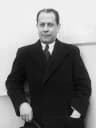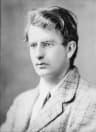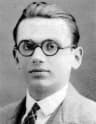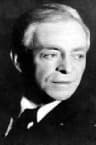
Born
July 10, 1888
Volos, Greece
Died
November 20, 1978
Rome, Italy
Known for
Italian artist
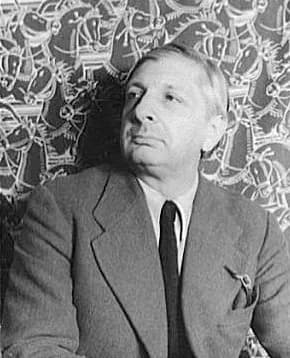
Giorgio de Chirico (1888–1978) was Greece best known for Italian artist.
Giuseppe Maria Alberto Giorgio de Chirico (July 10, 1888 – November 20, 1978) was a Greek-Italian artist known for founding the scuola metafisica art movement. His unique style, featuring Roman arcades and long shadows, profoundly influenced the surrealists. His works continue to inspire with their philosophical depth.
Chapter
Life chapters
Chapter 1· Chapter 1 of 7
Early Life and Origins
Born into a Greek family residing in Volos, Greece, Giorgio de Chirico's early life was steeped in a rich cultural environment. His familial background provided a foundation for his later artistic pursuits, exposing him to both Greek heritage and Italian cultural influences. This dual identity played a role in the formation of his unique artistic sensibility, blending different traditions within his creative output.
De Chirico developed an early affinity for the philosophies of Arthur Schopenhauer and Friedrich Nietzsche, thinkers whose ideas about reality, dreams, and the subconscious resonated deeply with him. He also held a strong connection to the mythology of his birthplace, Volos. These intellectual and cultural currents served as catalysts, shaping the thematic and symbolic content of his future artistic creations.
Chapter 2· Chapter 2 of 7
Career Beginnings
In the years leading up to World War I, Giorgio de Chirico emerged as the founder of the scuola metafisica art movement, a style he pioneered that quickly distinguished itself from contemporary trends. This movement, characterized by its enigmatic and dreamlike qualities, became a precursor to surrealism. His foundational work during this period established a new visual language that challenged conventional perceptions of space and reality.
His early metaphysical paintings often featured specific recurring elements that would become synonymous with his style. Roman arcades stretched into infinite horizons, casting long, dramatic shadows. Isolated mannequins, trains, and structures with illogical perspectives created a sense of silent mystery and introspection. These compositions aimed to evoke a sense of unease and wonder, inviting viewers to ponder the hidden meanings beneath the visible world.
Chapter 3· Chapter 3 of 7
Major Achievements and Career Highlights
The establishment of the scuola metafisica stands as Giorgio de Chirico's most significant achievement, altering the trajectory of modern art. His inventive approach to painting offered a powerful alternative to the then-dominant cubist and futurist movements. This novel artistic philosophy captivated many, laying essential groundwork for future artistic explorations.
Beyond painting, de Chirico's creative output was remarkably broad. He worked as a writer, crafting texts that often complemented the enigmatic atmosphere of his paintings. He was also an accomplished illustrator, sculptor, and jewelry designer, demonstrating a versatile command of various media. His contributions as a scenographer, printmaker, and draftsperson further highlight his wide-ranging talents and his commitment to exploring artistic expression across many forms.
Chapter 4· Chapter 4 of 7
Personal Life
While specific details about Giorgio de Chirico's family and intimate relationships are not provided, his work reveals much about his intellectual and emotional landscape. His deep engagement with the philosophies of Arthur Schopenhauer and Friedrich Nietzsche indicates a contemplative and introspective personality. These philosophical interests directly informed the mood and themes prevalent in his art, suggesting a life rich in thought and intellectual pursuit.
His connection to the mythology of Volos, Greece, his birthplace, also speaks to a personal affinity for history, legend, and the foundational stories that shape human culture. This dedication to his cultural origins and intellectual passions shows through in the unique visual vocabulary he developed. His art became a vehicle for these deeply personal explorations of existence, time, and memory.
Chapter 5 · 1900· Chapter 5 of 7
Notable Works or Contributions
Giorgio de Chirico's influence is evident in his extensive body of literary and artistic works, which continue to be studied and admired worldwide. As a writer, he authored several publications that reveal his intellectual depth and artistic theories. These include titles like Memorie della mia vita, Hebdomeros, and La casa del poeta, alongside collections such as Nudi, sculture e disegni italiani, 1900-1946 and G. de Chirico, 12 opere di Giorgio de Chirico.
His published works also include detailed studies of his own creations, such as Giorgio de Chirico, carte, Giorgio de Chirico, 1888-1978, and Giorgio De Chirico, i cavalli. These texts provide valuable insights into his artistic process and his ongoing engagement with specific themes, including equine imagery as seen in I De Chirico di Sacerdoti alla Medusa.
Among his most recognizable paintings and artworks, many are housed in prestigious institutions. The Metropolitan Museum of Art holds several important pieces, including Self-Portrait (1912–13), Ariadne (1913), and The Jewish Angel (1916). Also at the Met are GLI Archeologi II (1927) and Horse (ca. 1937), showcasing his enduring fascination with classical and equestrian themes throughout his career.
The Art Institute of Chicago also boasts a significant collection of de Chirico's works, highlighting his metaphysical period and later developments. Key pieces there include The Philosopher's Conquest (1913–14), a quintessential example of his early style, and Piazza (1914), another work that exemplifies his distinctive urban landscapes. These works often feature the striking elements of Roman arcades, long shadows, and a sense of profound stillness.
Further examples at the Art Institute of Chicago include Autumnal Still Life (1917) and The Pharaoh (1918), which continue to explore his unique approach to composition and symbolism. His later works, like Untitled (c. 1926) and The Eventuality of Destiny (1927), show a consistent visual language. The institute also houses Gladiators (1928), alongside a series of equine subjects like Horses (n.d.), which connect to his enduring interest in mythology and classical forms.
De Chirico's printmaking endeavors are also well-represented, with works such as The Archaeologists IV, Plate three from Metamorposis (1929) and The Return of the Prodigal Son, Plate one from Metamorposis (1929) at the Art Institute of Chicago. These prints reflect his exploration of mythological narratives through his distinctive metaphysical lens, providing a different dimension to his artistic output.
Chapter 6 · 1978· Chapter 6 of 7
Later Years
Giorgio de Chirico continued his extensive creative output well into his later years, remaining a dedicated artist until his passing. He died in Rome, Italy, on November 20, 1978, at the age of 90. His sustained artistic practice spanned decades, allowing him to explore and refine his unique visual vocabulary across numerous mediums.
Even as styles in art evolved, de Chirico maintained his artistic individuality, frequently revisiting and reinterpreting the themes and motifs that had defined his early metaphysical period. He cemented his position as a central figure in 20th-century art. His later works continued to engage with the symbolic power of Roman arcades, philosophical figures, and the evocative mystery of familiar objects placed in unfamiliar contexts.
Chapter 7· Chapter 7 of 7
Legacy and Impact
The legacy of Giorgio de Chirico is immense, primarily through his pioneering of the scuola metafisica, which profoundly influenced subsequent art movements. His unique vision of still, often deserted, urban spaces filled with enigmatic symbols directly paved the way for surrealism, providing a visual language for the subconscious and the dreamlike. Artists like Salvador Dalí and René Magritte acknowledged his early influence.
His distinct imagery, featuring Roman arcades, long shadows, mannequins, trains, and illogical perspectives, established a visual grammar that continues to resonate in contemporary art and culture. The blend of philosophical depth from Schopenhauer and Nietzsche with the rich mythology of his Greek birthplace created a truly original voice. De Chirico's works are essential components of major museum collections worldwide, ensuring that future generations can encounter and engage with his captivating and thought-provoking art.
A life in moments
The moments that shaped a life
FAQ
Frequently asked
When did Giorgio de Chirico die?
Giorgio de Chirico died on November 20, 1978 in Rome, Italy, at the age of 90.
Where was Giorgio de Chirico born?
Giorgio de Chirico was born in Volos, Greece on July 10, 1888.
What is Giorgio de Chirico best known for?
Giorgio de Chirico is best known for Italian artist.
How old was Giorgio de Chirico when they died?
Giorgio de Chirico was 90 years old at the time of death.
What nationality was Giorgio de Chirico?
Giorgio de Chirico was from Greece.
Timeline
Life at a glance
Photo gallery
A life in pictures
Click any polaroid to expand · 49 photos
QR Code
Share This Biography
Print & Share
Scan to visit this biography page. Print for events, exhibitions, or educational materials.