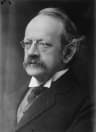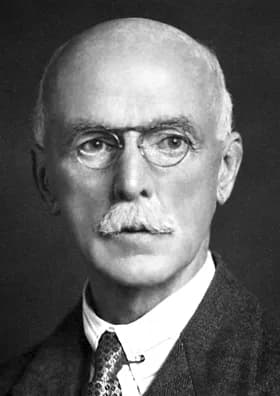
Born
October 12, 1865
Manchester, United Kingdom
Died
June 17, 1940
Bourne End, United Kingdom
Known for
British biochemist
Arthur Harden (1865–1940) was United Kingdom best known for British biochemist.
Sir Arthur Harden (October 12, 1865 – June 17, 1940) was a British biochemist. He shared the 1929 Nobel Prize in Chemistry for his investigations into sugar fermentation and enzymes. His work profoundly advanced the understanding of metabolic processes.
Chapter
Life chapters
Chapter 1 · 1865· Chapter 1 of 6
Early Life and Origins
Arthur Harden was born on October 12, 1865, in the vibrant industrial city of Manchester, located in the United Kingdom. His upbringing in this historically significant English city likely exposed him to an environment rich with scientific and industrial innovation. While specific details of his early family life are not provided, his birth in Manchester roots him firmly in a nation with a strong tradition of scientific inquiry and advancement.
Growing up in the late 19th century, Harden witnessed a period of immense scientific discovery and technological progress across Britain and the world. This era laid the groundwork for the specialized scientific fields he would later help to define. His origins in Manchester undoubtedly contributed to the foundation of his intellectual curiosity and analytical approach that would characterize his extensive scientific career.
Chapter 2· Chapter 2 of 6
Career Beginnings
Arthur Harden embarked on his scientific career initially as a chemist, a foundational discipline that provided him with the rigorous analytical skills necessary for his future biochemical research. The transition from chemistry to biochemistry was a natural progression for many scientists during this period, as the understanding of life's processes increasingly required a detailed chemical perspective. His early work would have involved mastering the principles of chemical reactions and analysis, preparing him for the complex investigations that lay ahead.
His academic journey then led him to become a university teacher, a role that allowed him to contribute to the education of future generations of scientists. This position also provided him with a platform for conducting independent research, a crucial step in building his reputation and expertise within the scientific community. It was through this blend of teaching and active research that Harden began to establish his significant presence in the nascent field of biochemistry.
Chapter 3 · 1929· Chapter 3 of 6
Major Achievements and Career Highlights
Sir Arthur Harden's career was distinguished by several remarkable achievements, with the most prominent being the Nobel Prize in Chemistry in 1929. This prestigious award recognized his profound contributions to the understanding of vital biological processes. He shared this honor with Hans Karl August Simon von Euler-Chelpin, acknowledging their collaborative and complementary investigations into complex biochemical mechanisms.
Beyond his Nobel-winning research, Harden played a crucial role in establishing the infrastructure for the burgeoning field of biochemistry in Britain. He was a founding member of the Biochemical Society, an organization dedicated to advancing the science of biochemistry through research and communication. His commitment to the discipline was further exemplified by his 25-year tenure as editor of the Biochemical Journal, a period during which he significantly influenced the dissemination and quality of biochemical research worldwide.
Chapter 4· Chapter 4 of 6
Notable Works or Contributions
The core of Arthur Harden's scientific legacy resides in his investigations into the fermentation of sugar and fermentative enzymes, the work for which he received the Nobel Prize. Fermentation, a process vital to biology and industry, involves the conversion of sugar into alcohol or acids by microorganisms. Before Harden's work, the exact chemical and enzymatic mechanisms driving this process were not fully understood.
Harden and Euler-Chelpin meticulously explored how various components interact within the cell to facilitate fermentation. They discovered that the fermentation of sugar requires not only enzymes but also other non-protein factors, which they termed co-enzymes (later identified as co-factors like ATP and NAD+). Their research provided critical insights into the complex, multi-step nature of metabolic pathways and the essential role of these co-factors in enzyme function. This discovery revolutionized the understanding of cellular energy production and the intricate regulation of biochemical reactions, demonstrating that biological processes are governed by precise chemical principles.
His work on these fermentative enzymes helped establish the concept of enzyme kinetics and the detailed chemical steps involved in glycolysis, the pathway by which glucose is broken down. These foundational discoveries were not merely academic; they provided a clearer understanding of processes critical for human health, disease, and industrial applications such as brewing and baking. His findings laid the groundwork for much of modern enzymology and metabolic biochemistry.
Chapter 5· Chapter 5 of 6
Later Years
In his later years, Sir Arthur Harden continued to contribute actively to the scientific community, even as his seminal research gained global acclaim. His sustained role as editor of the Biochemical Journal for a quarter of a century speaks volumes about his enduring dedication to fostering scientific communication and maintaining high standards in biochemical research. This long-standing commitment ensured that the journal remained a vital platform for new discoveries and a cornerstone for the field's development.
Sir Arthur Harden passed away on June 17, 1940, in Bourne End, United Kingdom. His death marked the end of a prolific career that spanned several decades of significant scientific advancement. Despite the changing world events during his final years, his focus on fundamental biochemical inquiry remained constant, leaving behind a rich body of work that would continue to inspire and inform future generations of scientists.
Chapter 6· Chapter 6 of 6
Legacy and Impact
The legacy of Sir Arthur Harden is indelibly etched in the foundations of modern biochemistry. His Nobel Prize-winning investigations into sugar fermentation and fermentative enzymes provided indispensable insights into cellular metabolism, revealing the intricate chemical machinery that drives life. This work was crucial in shifting biochemistry from a descriptive field to one based on precise chemical mechanisms, catalyzing countless subsequent discoveries.
Beyond his specific research contributions, Harden's influence extends to the institutionalization and professionalization of biochemistry. As a founding member of the Biochemical Society and a long-serving editor of the Biochemical Journal, he helped create the platforms necessary for the field to thrive, share knowledge, and foster collaboration. His dedication to these roles ensured the vitality and growth of biochemistry as a distinct and vital scientific discipline. His unwavering commitment to rigorous scientific inquiry and his leadership in establishing scientific communities continue to inspire, affirming his enduring impact on the understanding of life itself.
A life in moments
The moments that shaped a life


FAQ
Frequently asked
When did Arthur Harden die?
Arthur Harden died on June 17, 1940 in Bourne End, United Kingdom, at the age of 74.
Where was Arthur Harden born?
Arthur Harden was born in Manchester, United Kingdom on October 12, 1865.
What is Arthur Harden best known for?
Arthur Harden is best known for British biochemist.
How old was Arthur Harden when they died?
Arthur Harden was 74 years old at the time of death.
What nationality was Arthur Harden?
Arthur Harden was from United Kingdom.
Timeline
Life at a glance
Photo gallery
A life in pictures
Click any polaroid to expand · 41 photos
QR Code
Share This Biography
Print & Share
Scan to visit this biography page. Print for events, exhibitions, or educational materials.