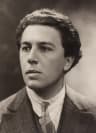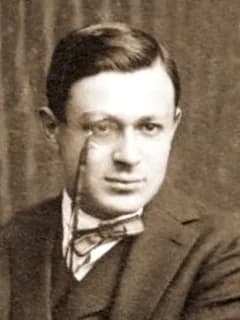
Народився(лася)
April 16, 1896
Moinești, Romania
Помер(ла)
December 24, 1963
7th arrondissement of Paris, France
Відомий(а) завдяки
Romanian-French poet
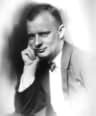
Tristan Tzara (1896–1963) was Romania best known for Romanian-French poet.
Tristan Tzara (April 16, 1896 – December 24, 1963) was a Romanian-French poet, essayist, and performance artist. As a central founder of the anti-establishment Dada movement, he profoundly influenced 20th-century avant-garde art and literature. His diverse works challenged conventional artistic and societal norms.
Розділ
Розділи життя
Розділ 1 · 1896· Розділ 1 з 7
Early Life and Origins
Born in Moinești, Romania, on April 16, 1896, Tzara's early life laid the foundation for his future avant-garde endeavors. During his adolescence, he became deeply interested in Symbolism, a key artistic and literary movement of the time.
This early fascination was significantly influenced by Adrian Maniu, a figure who helped shape Tzara’s developing artistic sensibilities. Building on these influences, he co-founded the influential magazine Simbolul alongside Ion Vinea and the painter Marcel Janco, establishing his presence in the literary world.
Розділ 2· Розділ 2 з 7
Career Beginnings
Tzara's career truly began to flourish as he moved towards the burgeoning avant-garde scene in Europe. He quickly emerged as a foundational voice in what would become the Dada movement, challenging conventional artistic norms.
His early work reflected a commitment to anti-establishment ideals, pushing against traditional art, culture, and societal structures. This rebellious spirit became a defining characteristic of his contributions to the Dada movement and beyond.
Розділ 3· Розділ 3 з 7
Major Achievements and Career Highlights
Tristan Tzara's major achievements are inextricably linked to his pivotal role in creating and championing Dada. He was not only a poet but also an essayist and performance artist, continually expanding the scope of artistic expression.
His professional life was incredibly diverse, encompassing roles as a journalist, playwright, literary critic, art critic, composer, and film director. Beyond his artistic pursuits, Tzara also served as a diplomat, translator, art collector, essayist, and draftsperson, demonstrating a wide range of talents and engagements.
Notably, Tzara was also a French Resistance fighter, showing his commitment to social and political causes during a critical period in history. His ability to blend artistic innovation with political activism highlights his complex and engaged persona.
Розділ 4· Розділ 4 з 7
Personal Life
While specific details about Tristan Tzara's immediate family are not extensively provided, his personal and professional life was deeply intertwined with key figures of the avant-garde. His collaborations with Adrian Maniu, Ion Vinea, and Marcel Janco were central to his artistic development and the formation of seminal publications like Simbolul.
Living and working in France, Tzara developed a strong Romanian-French identity, bridging cultures through his art and activism. He spent his final years in Paris, dying in the 7th arrondissement of Paris, France, on December 24, 1963.
Розділ 5· Розділ 5 з 7
Notable Works or Contributions
Tristan Tzara's bibliography includes significant poetic works such as À la gloire de la main, Juste présent, Le fruit permis, and Entre-temps. His literary output often pushed the boundaries of language and form, reflecting his avant-garde sensibilities.
He also published works like Le groupe surréaliste, Planches de salut, and De mémoire d'homme, contributing to both poetry and literary criticism. His work Man Ray suggests an engagement with other prominent artists of his era, perhaps an essay or critical piece.
Tzara's contributions extended into visual and performance art, including publications and artworks like The First Celestial Adventure of Mr. Antipyrine from 1916. Other notable pieces include Twenty-Five Poems (1918) and the visually striking Cinema Calendar of the Abstract Heart, Houses (1920).
His involvement in the Dada movement is further exemplified by works like Excursions & visites Dada: 1ère visite, Eglise Saint Julien le Pauvre, jeudi 14 Avril (1921) and Dada soulève tout (1921), both embodying the movement's radical spirit. The iconic Le cœur à barbe (1922), held in the Met Museum and AIC, remains a key Dada artwork.
Later works continued his distinctive style, with pieces such as Speaking Alone (1948–50) and The Anti-Head: The Despairing One (1949). Another iteration, The Anti-Head: Mister Aa the Anti-Philosopher (1949), showcases his ongoing conceptual explorations and critical engagement with philosophy through art.
Розділ 6· Розділ 6 з 7
Later Years
In his later life, Tristan Tzara continued to be an active force in intellectual and artistic circles. His involvement as a French Resistance fighter during World War II demonstrated his enduring commitment to justice and human rights, aligning his activism with his artistic anti-establishment principles.
Tristan Tzara remained a vital figure until his passing on December 24, 1963, in the 7th arrondissement of Paris, France. His final years were spent in the city that became a second home, a hub for his avant-garde explorations and lasting contributions.
Розділ 7· Розділ 7 з 7
Legacy and Impact
Tristan Tzara's legacy is vast, primarily defined by his instrumental role in co-founding Dada, one of the most significant and radical art movements of the 20th century. He challenged established artistic and societal conventions, opening new pathways for creative expression.
His influence as a poet, essayist, and performance artist reverberates through subsequent avant-garde movements, including Surrealism, which drew heavily from Dada's revolutionary spirit. Tzara's tireless work as a writer, critic, and activist helped shape modern literature and art.
Through his diverse professions and unwavering commitment to challenging the status quo, Tristan Tzara's life and work continue to inspire artists and thinkers to question, create, and innovate. His vision forever altered the trajectory of contemporary art and culture, solidifying his place as an unforgettable figure.
Життя в моментах
Моменти, що сформували життя
FAQ
Часті запитання
Коли помер(ла) Tristan Tzara?
Tristan Tzara помер(ла) 24 грудня 1963 р. у 7th arrondissement of Paris, France у віці 67 років.
Де народився(лася) Tristan Tzara?
Tristan Tzara народився(лася) у Moinești, Romania 16 квітня 1896 р..
Чим найбільше відомий(а) Tristan Tzara?
Tristan Tzara найбільше відомий(а) за Romanian-French poet.
Скільки років було Tristan Tzara на момент смерті?
Tristan Tzara було 67 років на момент смерті.
Якої національності був(ла) Tristan Tzara?
Tristan Tzara був(ла) з Romania.
Хронологія
Життя стисло
Фотогалерея
Життя у світлинах
Натисніть на будь-яке полароїдне фото, щоб збільшити · 38 фотографій
QR-код
Поділитися цією біографією
Друк і поширення
Скануйте, щоб відвідати цю біографічну сторінку. Друкуйте для подій, виставок або освітніх матеріалів.