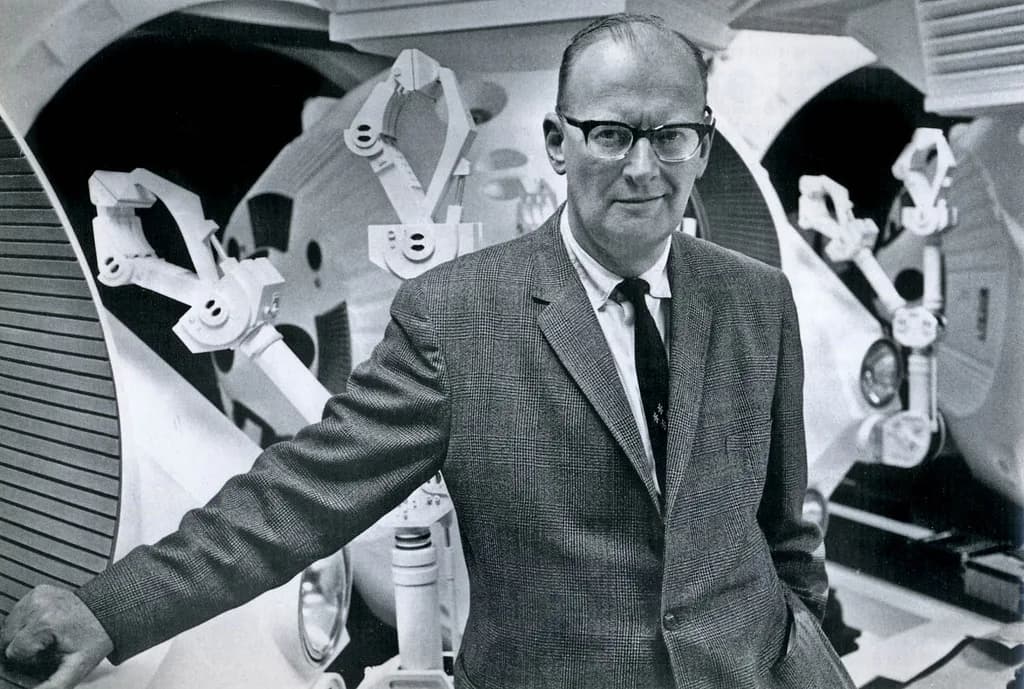
Народився(лася)
December 16, 1917
Minehead, United Kingdom
Помер(ла)
March 19, 2008
Colombo, Sri Lanka
Відомий(а) завдяки
British science fiction writer, inventor, and futurist
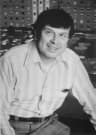
Arthur C. Clarke (1917–2008) was United Kingdom best known for British science fiction writer, inventor, and futurist.
Sir Arthur Charles Clarke (December 16, 1917 – March 19, 2008) was a British science fiction writer, inventor, and futurist from Minehead, United Kingdom. Best known for co-creating "2001: A Space Odyssey" and works like "The Nine Billion Names of God," he bridged science and imagination. His scientifically grounded fiction influenced generations of readers, scientists, and filmmakers.
Розділ
Розділи життя
Розділ 1 · 1917· Розділ 1 з 7
Early Life and Origins
Arthur Charles Clarke was born on December 16, 1917, in the coastal town of Minehead in Somerset, England. Growing up in rural England, young Clarke developed an early fascination with astronomy and science that would define his entire career. His childhood was marked by an insatiable curiosity about the natural world and the cosmos beyond, traits that would later fuel his scientific writing and speculative fiction.
Clarke's formative years coincided with rapid technological advancement, including the early days of radio and aviation. These emerging technologies captured his imagination and planted the seeds for his later work as both a science fiction author and a serious commentator on technological progress. His education laid the foundation for his dual career as both a creative writer and a technical expert.
Розділ 2· Розділ 2 з 7
Career Beginnings
Clarke began his professional journey as both a scientist and writer, establishing himself in the world of science fiction during the genre's golden age. His early works demonstrated a unique ability to combine rigorous scientific knowledge with compelling storytelling. Unlike many of his contemporaries, Clarke grounded his fiction in real scientific principles, making his speculative elements feel achievable rather than fantastical.
His background in physics and his work as an inventor informed his writing from the very beginning. Clarke understood that the best science fiction wasn't just about imagining impossible worlds, but about extrapolating current scientific knowledge into plausible futures. This approach set him apart in the field and established his reputation as a writer who took science seriously.
Розділ 3 · 2001· Розділ 3 з 7
Major Achievements and Career Highlights
Clarke's most famous achievement came with his collaboration on Stanley Kubrick's film "2001: A Space Odyssey" (1968), which he both wrote and helped develop from his short story "The Sentinel." The film became a landmark of cinema and science fiction, presenting a realistic vision of space travel and artificial intelligence that influenced generations of filmmakers and scientists. Clarke's novel version of "2001: A Space Odyssey" expanded on the film's themes and became one of the most celebrated works in science fiction literature.
Beyond "2001," Clarke produced numerous influential works including "The Nine Billion Names of God," "The Wind from the Sun," and "The Other Side of the Sky." His writing consistently explored themes of space exploration, artificial intelligence, and humanity's place in the universe. Clarke's work appeared in prestigious collections and educational materials, including "Prentice Hall Literature," demonstrating his acceptance in both popular and academic circles.
Розділ 4· Розділ 4 з 7
Personal Life and Interests
Clarke's personal interests extended far beyond writing, encompassing undersea exploration and television hosting. He spent his later years in Sri Lanka, where he pursued his passion for diving and marine exploration. This move to Sri Lanka reflected his adventurous spirit and his desire to explore not just the cosmos through his imagination, but the depths of Earth's oceans through direct experience.
His work as a television series host allowed him to share his enthusiasm for science and exploration with broader audiences. Clarke understood that science communication was as important as scientific research itself, and he used various media to make complex scientific concepts accessible to the general public.
Розділ 5 · 2001· Розділ 5 з 7
Notable Works and Contributions
Clarke's bibliography includes both fiction and non-fiction works that have shaped public understanding of science and technology. "The Lost Worlds of 2001" provided readers with insights into the creative process behind his most famous work, while "Those Amazing Electronic Thinking Machines!" demonstrated his ability to explain complex technology to general audiences. His collection "The End of the World -- Stories of the Apocalypse" showcased his range as a writer willing to explore darker themes.
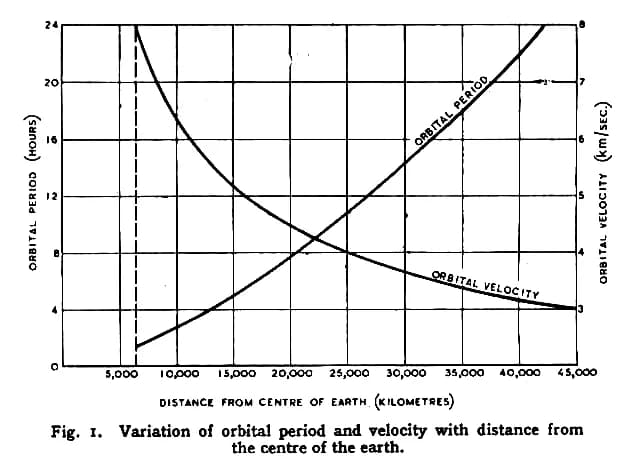
His academic contributions, while more limited with 11 papers and an h-index of 1, included works on space exploration and communications technology. Publications such as "Las aplicaciones de la Luna" (The Applications of the Moon) and his writings on communications and global federation reflected his serious engagement with scientific and political speculation beyond pure fiction.
Розділ 6 · 2001· Розділ 6 з 7
Later Years
In his later years, Clarke continued writing and remained active in scientific speculation from his home in Colombo, Sri Lanka. He witnessed many of his earlier predictions come true, from satellite communications to space stations, validating his reputation as a prescient futurist. His later works, including continuations of the "2001" series, maintained his commitment to scientifically grounded speculation.
Clarke's later career also involved adaptations and translations of his works, bringing his vision to international audiences. Works like "2061: odisea tres" and "Los nueve mil millones de nomes de dios" extended his influence to Spanish-speaking readers, demonstrating the universal appeal of his scientific imagination.
Розділ 7 · 2008· Розділ 7 з 7
Legacy and Impact
Arthur C. Clarke's death on March 19, 2008, in Colombo, Sri Lanka, marked the end of an era in science fiction and futurism. His influence extends far beyond literature, affecting how we think about space exploration, artificial intelligence, and humanity's technological future. Scientists, writers, and filmmakers continue to draw inspiration from his works, and many of his predictions about satellite communications, space travel, and computing have become reality.
Clarke's approach to science fiction—combining rigorous scientific knowledge with imaginative storytelling—established a template that continues to influence the genre today. His work demonstrated that science fiction could be both entertaining and educational, inspiring readers to pursue careers in science and technology while providing a framework for thinking about the ethical implications of technological advancement.
Життя в моментах
Моменти, що сформували життя
FAQ
Часті запитання
Коли помер(ла) Arthur C. Clarke?
Arthur C. Clarke помер(ла) 19 березня 2008 р. у Colombo, Sri Lanka у віці 90 років.
Де народився(лася) Arthur C. Clarke?
Arthur C. Clarke народився(лася) у Minehead, United Kingdom 16 грудня 1917 р..
Чим найбільше відомий(а) Arthur C. Clarke?
Arthur C. Clarke найбільше відомий(а) за British science fiction writer, inventor, and futurist.
Скільки років було Arthur C. Clarke на момент смерті?
Arthur C. Clarke було 90 років на момент смерті.
Якої національності був(ла) Arthur C. Clarke?
Arthur C. Clarke був(ла) з United Kingdom.
Хронологія
Життя стисло
Фотогалерея
Життя у світлинах
Натисніть на будь-яке полароїдне фото, щоб збільшити · 45 фотографій
QR-код
Поділитися цією біографією
Друк і поширення
Скануйте, щоб відвідати цю біографічну сторінку. Друкуйте для подій, виставок або освітніх матеріалів.