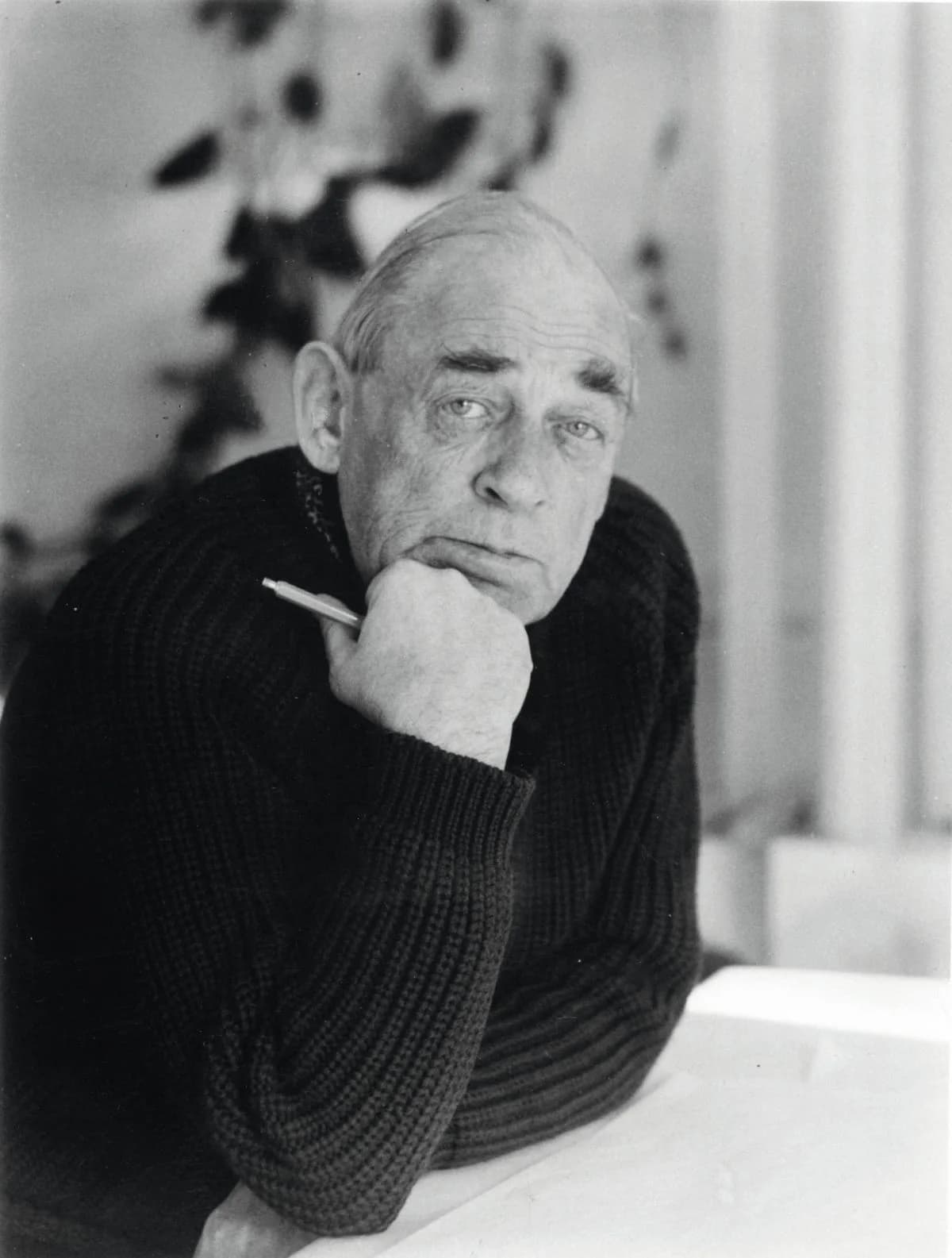
Doğum
February 3, 1898
Kuortane, Finland
Vefat
May 11, 1976
Helsinki, Finland
Tanındığı şey
Finnish architect and designer
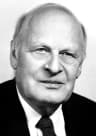
Alvar Aalto (1898–1976) was Finland best known for Finnish architect and designer.
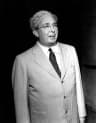
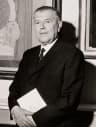
Hugo Alvar Henrik Aalto (February 3, 1898 – May 11, 1976) was a Finnish architect and designer. He was renowned for his innovative contributions across architecture, furniture, textiles, and glassware, evolving through Nordic Classicism and organic modernism. His integrated approach shaped modern design significantly.
Bölüm
Yaşam bölümleri
Bölüm 1 · 1898· Bölüm 1 / 7
Early Life and Origins
Alvar Aalto was born on February 3, 1898, in Kuortane, Finland, a period that would see his homeland undergo rapid industrialization and economic development. His early life unfolded against the backdrop of a changing Finland, which inevitably influenced his architectural perspective and practical approach to design. While specific details of his family and upbringing are not provided in the available information, his subsequent work demonstrated a deep connection to Finnish materials and landscapes. This foundational context set the stage for a career deeply intertwined with his nation's modern progression.
Bölüm 2· Bölüm 2 / 7
Career Beginnings
Aalto's professional journey began to flourish in parallel with Finland's accelerated industrial growth during the first half of the 20th century, providing a rich environment for his innovative ideas. Many of his initial clients were prominent industrialists, recognizing the value of his emerging talent in shaping modern environments. Among these vital early relationships was his connection with the Ahlström-Gullichsen family, who became significant patrons and supporters of his developing architectural practice. This early patronage allowed him the freedom to experiment and refine his distinct approach to design.
Bölüm 3· Bölüm 3 / 7
Major Achievements and Career Highlights
Alvar Aalto’s illustrious career spanned an impressive period from the 1920s to the 1970s, showcasing a distinct evolution in his design philosophy and stylistic approach. His work is categorized by distinct phases, moving from the refined Nordic Classicism that characterized his early projects to a more streamlined, rational International Style Modernism during the 1930s. Later in his career, from the 1940s onwards, Aalto developed a distinctive organic modernist style, often integrating natural forms and materials into his buildings and designs. He never limited his creative output strictly to architecture; instead, he encompassed furniture, textiles, glassware, as well as sculptures and paintings within his broader artistic vision. Aalto himself famously stated that he never regarded himself as an artist in the traditional sense, seeing painting and sculpture merely as "branches of the tree whose trunk is architecture."
Bölüm 4· Bölüm 4 / 7
Personal Life
While specific details regarding Alvar Aalto’s personal life, including family relationships or hobbies beyond his professional pursuits, are not provided in the available information, it is evident that his creative spirit infused many aspects of his existence. His dedication to his craft defined his public persona and the enduring legacy he left behind. The focus of the available biographical summary remains firmly on his professional achievements and artistic output, underscoring his commitment to his work.
Bölüm 5 · 1931· Bölüm 5 / 7
Notable Works or Contributions
Alvar Aalto's extensive design portfolio includes numerous iconic pieces that remain highly influential today, many of which are housed in prestigious museum collections. His furniture designs include the "Model No. 41" Lounge Chair, created between 1931 and 1932, and the "#400" Armchair from 1935–36, both recognized by the Met Museum. Further examples are the "39" Chaise Longue (1936–37) and the "31" Armchair (1931–32), also part of the Met Museum's collections, demonstrating his consistent innovation in seating. Beyond individual pieces, Aalto designed the famous Savoy vase in 1936, with manufacturing continuing into 1960–61, representing his enduring contribution to glassware.
His textile work is exemplified by pieces such as a Bathmat (Furnishing Fabric) from approximately the 1950s and a Panel (Intended as a Bathmat) (Furnishing Fabric) from the same decade, both held by the Art Institute of Chicago (AIC). The Paimio Armchair 41, designed between 1930 and 1933 and produced between 1930 and 1939, further highlights his early innovative approach to furniture, also found at the AIC. Even his lighting designs continue to be recognized, as seen with the A808 Floor Lamp, produced in 2011, and a Side Table, designed around 1940, both contributing to his comprehensive design heritage at the AIC. These diverse works collectively showcase his exceptional ability to integrate form, function, and artistic expression across multiple mediums.
Bölüm 6 · 1976· Bölüm 6 / 7
Later Years
Alvar Aalto continued his prolific career well into the 1970s, maintaining his creative output and influence across the architectural and design worlds. His later work further refined the organic modernist style he had embraced since the 1940s, cementing his reputation as a leading figure in contemporary design. He passed away on May 11, 1976, in Helsinki, Finland, leaving behind a vast body of work that continued to be celebrated and studied globally. His death marked the end of an era for Finnish modernism, but his designs and architectural principles lived on, inspiring generations.
Bölüm 7· Bölüm 7 / 7
Legacy and Impact
Alvar Aalto’s legacy is profound, establishing him as one of the most significant figures in 20th-century architecture and design, particularly within the context of Finnish modernism. His unique ability to synthesize Nordic Classicism, International Style Modernism, and an organic approach created a distinctive aesthetic that remains highly influential. Aalto redefined the boundaries of his profession by integrating architecture seamlessly with furniture, textiles, and various art forms, advocating for a unified design vision. His work continues to inspire designers and architects worldwide, demonstrating a timeless commitment to human-centered design, natural materials, and contextual sensitivity.
Anlardaki bir yaşam
Bir yaşamı şekillendiren anlar

SSS
Sıkça sorulanlar
Alvar Aalto ne zaman öldü?
Alvar Aalto, 11 Mayıs 1976 tarihinde Helsinki, Finland'da öldü, 78 yaşındaydı.
Alvar Aalto nerede doğdu?
Alvar Aalto, Kuortane, Finland'da 3 Şubat 1898 tarihinde doğdu.
Alvar Aalto en çok ne ile tanınıyor?
Alvar Aalto en çok Finnish architect and designer ile tanınmaktadır.
Alvar Aalto öldüğünde kaç yaşındaydı?
Alvar Aalto öldüğünde 78 yaşındaydı.
Alvar Aalto'in milliyeti neydi?
Alvar Aalto Finland'denddi.
Zaman çizelgesi
Bir bakışta yaşam
Fotoğraf galerisi
Resimlerle bir yaşam
Genişletmek için herhangi bir polaroide tıklayın · 47 fotoğraf
QR Kodu
Bu Biyografiyi Paylaş
Yazdır ve Paylaş
Bu biyografi sayfasını ziyaret etmek için tarayın. Etkinlikler, sergiler veya eğitim materyalleri için yazdırın.