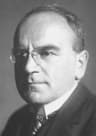
Narodený(á)
June 4, 1916
Charleston, United States
Zomrel(a)
May 19, 2009
Seattle, United States
Známy(a) ako
American biochemist
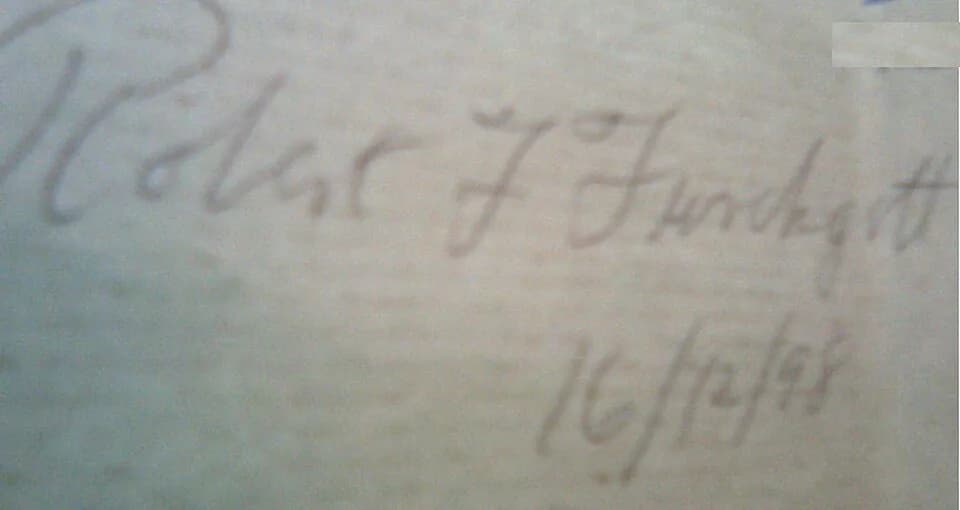
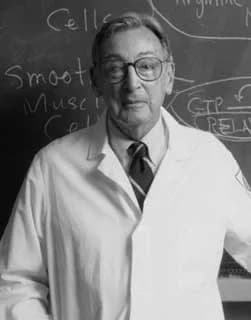
Robert F. Furchgott (1916–2009) was United States best known for American biochemist.
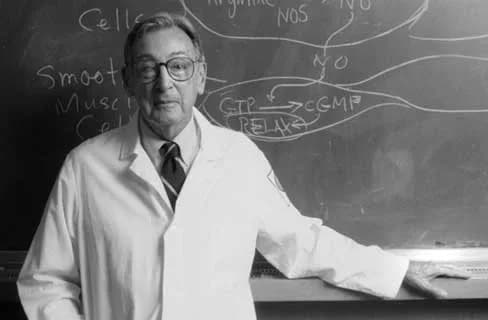
Robert F. Furchgott (June 4, 1916 – May 19, 2009) was an American biochemist, physician, and pharmacologist. He won the Nobel Prize in Physiology or Medicine in 1998 for his vital contributions to the discovery of nitric oxide as a key signaling molecule. His work significantly advanced cardiovascular system understanding.
Kapitola
Životné kapitoly
Kapitola 1 · 1916· Kapitola 1 z 7
Early Life and Origins
Robert Francis Furchgott began his journey in Charleston, United States, where he was born on June 4, 1916. Growing up in this environment, he developed an early affinity for the sciences, which would eventually guide his extensive academic and professional pursuits. His initial studies laid the groundwork for a multidisciplinary career, allowing him to explore various facets of the biological and chemical worlds.
This early foundation provided Furchgott with a broad and robust understanding of human biology and chemistry, distinguishing him as a scientist with varied expertise. The diverse academic training he received proved invaluable, equipping him with the perspectives needed to approach complex biological problems from multiple angles. It was this wide-ranging education that prepared him for the critical scientific investigations he would undertake later in his career, ultimately leading to significant breakthroughs in understanding cellular communication.
Kapitola 2· Kapitola 2 z 7
Career Beginnings
Furchgott’s career path was characterized by its breadth, encompassing roles that ranged from a practicing physician to a dedicated university teacher. This varied professional background, including his work as a pharmacist, chemist, and pharmacologist, demonstrated a deep and persistent commitment to health sciences and research. Each of these professions contributed to his unique perspective on physiological processes and the mechanisms of drug action.
His early work in these different capacities allowed him to gain practical experience and theoretical knowledge across several disciplines, which is relatively uncommon in specialized scientific fields. This exposure to diverse scientific and medical environments was crucial in developing his ability to identify novel areas of research. It was through this interdisciplinary lens that he began to investigate the intricate ways that cells communicate and respond to internal and external stimuli, setting the stage for his most famous discovery.
Kapitola 3 · 1998· Kapitola 3 z 7
Major Achievements and Career Highlights
The zenith of Robert F. Furchgott’s career arrived in 1998 when he was awarded the Nobel Prize in Physiology or Medicine. This esteemed recognition was granted for his discoveries concerning nitric oxide as a signaling molecule within the cardiovascular system, an insight that profoundly changed medical understanding. His work revealed that nitric oxide, a simple gas, acts as a crucial messenger in the body, mediating a wide range of physiological functions.
Prior to Furchgott’s findings, the specific mechanisms by which blood vessels relax and regulate blood flow were not fully understood. He identified a substance released by endothelial cells, which line blood vessels, that caused smooth muscle relaxation. This mysterious substance was eventually identified as nitric oxide, demonstrating its essential role in maintaining cardiovascular health and regulating blood pressure. The clarity he brought to this biological process opened new avenues for treating heart disease and other circulatory conditions.
Furchgott's contribution was particularly significant in highlighting nitric oxide as a transient cellular signal. This meant that the gas was produced, acted quickly, and then disappeared, making its detection and study especially challenging. Overcoming these experimental difficulties, his meticulous research conclusively showed how nitric oxide modulates blood vessel dilation. This discovery not only earned him the highest scientific honor but also laid the scientific groundwork for developing new classes of drugs aimed at improving cardiovascular function, affecting millions of lives globally.
Kapitola 4· Kapitola 4 z 7
Personal Life
Details regarding Robert F. Furchgott's personal life, beyond his professional endeavors, are not extensively documented in available records. His life was predominantly characterized by an unwavering dedication to scientific research and the pursuit of knowledge. This focus on his work underscores the immense passion he held for understanding the complexities of human biology.
His commitment to the laboratory and his relentless pursuit of answers to fundamental biological questions speak volumes about his character. While public accounts may not detail intimate personal aspects, his scientific legacy stands as a testament to a life fully devoted to advancing human health through rigorous inquiry and discovery. This singular focus allowed him to make contributions that reshaped an entire field of medicine.
Kapitola 5 · 1999· Kapitola 5 z 7
Notable Works or Contributions
Robert F. Furchgott's extensive publication record includes 121 papers and an h-index of 48, indicating the significant influence of his scholarly output. Among his most impactful works is the 1999 paper titled "Endothelium-Derived Relaxing Factor: Discovery, Early Studies, and Identification as Nitric Oxide," which has garnered 298 citations. This publication summarized decades of his research, detailing the journey from identifying a mysterious relaxing factor to confirming its identity as nitric oxide, solidifying his central role in this field.
Another important contribution from the same year was his "Endothelium‐Derived Relaxing Factor: Discovery, Early Studies, and Identification as Nitric Oxide (Nobel Lecture)," with 31 citations. This lecture provided a comprehensive overview of his Nobel Prize-winning work, explaining the intricate experimental path and conceptual breakthroughs that led to his discovery to a global scientific audience. It offered a unique insight into the scientific process behind his achievements.
Furchgott continued to contribute to scientific discourse in later years, co-authoring the "Nobel laureates' letter to President Bush" in 2001, which received 3 citations. This demonstrated his ongoing engagement with broader scientific and societal issues, extending his influence beyond the laboratory. His commitment to advocating for science even late in his career highlights his enduring dedication to the scientific community and its role in public life.
Further demonstrating his sustained involvement in research, he contributed to "Endothelium-derived relaxing and contracting" in 2007, cited 2 times. This later work indicated his continued interest in the subtle mechanisms governing vascular function and his willingness to explore new aspects of established theories. Additionally, a paper titled "Robert F. Furchgott: a pharmacologist's pharmacologist" from 2004, also with 2 citations, reflects the respect and admiration he commanded within his professional community, acknowledging his deep expertise and influence on fellow pharmacologists.
Kapitola 6 · 2007· Kapitola 6 z 7
Later Years
Even in his later years, Robert F. Furchgott remained actively involved in the scientific community, as evidenced by his publications and participation in significant scientific communications. His contributions extended well into the 21st century, with papers like "Endothelium-derived relaxing and contracting" appearing in 2007, showcasing his enduring intellectual curiosity and commitment to his research area. He maintained a connection to the ongoing developments in his field, always ready to contribute his expert insights.
Furchgott’s life of scientific inquiry concluded on May 19, 2009, when he passed away in Seattle, United States, at the age of 92. His passing marked the end of an era for a scientist whose work had already become a foundational pillar in cardiovascular pharmacology. He continued to inspire and contribute to scientific dialogue until relatively late in life, leaving a rich archive of research and thought for future generations to build upon.
Kapitola 7· Kapitola 7 z 7
Legacy and Impact
The legacy of Robert F. Furchgott is etched into the very fabric of modern pharmacology and cardiovascular medicine. His discovery of nitric oxide as an endothelial-derived relaxing factor fundamentally reshaped our understanding of how blood vessels regulate themselves. This insight provided a new conceptual framework for numerous physiological processes, moving beyond older, less precise models of vascular control.
His work has had wide-ranging practical applications, leading to the development of new treatments for conditions such as hypertension, angina, and erectile dysfunction. The ability to manipulate the nitric oxide pathway has provided clinicians with novel therapeutic strategies, directly improving patient outcomes worldwide. Furchgott's meticulous research and persistence in identifying this elusive signaling molecule opened up entirely new fields of research, prompting countless studies into its roles beyond the cardiovascular system, including in the immune and nervous systems.
Beyond his specific discovery, Furchgott stands as an exemplar of scientific rigor and the value of interdisciplinary thinking. His career, spanning multiple scientific professions, showed how diverse knowledge can lead to singular breakthroughs. He leaves behind not only a body of scientific work but also an inspiring example of intellectual curiosity and dedication that continues to influence biochemists, pharmacologists, and medical researchers globally, ensuring his impact will resonate for generations.
Život v okamihoch
Okamihy, ktoré formovali život

Časté otázky
Často sa pýtajú
Kedy zomrel(a) Robert F. Furchgott?
Robert F. Furchgott zomrel(a) 19. mája 2009 v Seattle, United States vo veku 92 rokov.
Kde sa narodil(a) Robert F. Furchgott?
Robert F. Furchgott sa narodil(a) v Charleston, United States 4. júna 1916.
Čím je Robert F. Furchgott najznámejší(ia)?
Robert F. Furchgott je najznámejší(ia) vďaka American biochemist.
Koľko mal(a) Robert F. Furchgott v čase smrti?
Robert F. Furchgott mal(a) v čase smrti 92 rokov.
Akú národnosť mal(a) Robert F. Furchgott?
Robert F. Furchgott pochádzal(a) z United States.
Časová os
Život v skratke
Fotogaléria
Život v obrazoch
Kliknite na ľubovoľný polaroid pre zväčšenie · 15 fotografií
QR kód
Zdieľať tento životopis
Vytlačiť a zdieľať
Naskenujte pre návštevu tejto stránky životopisu. Vytlačte si pre podujatia, výstavy alebo vzdelávacie materiály.