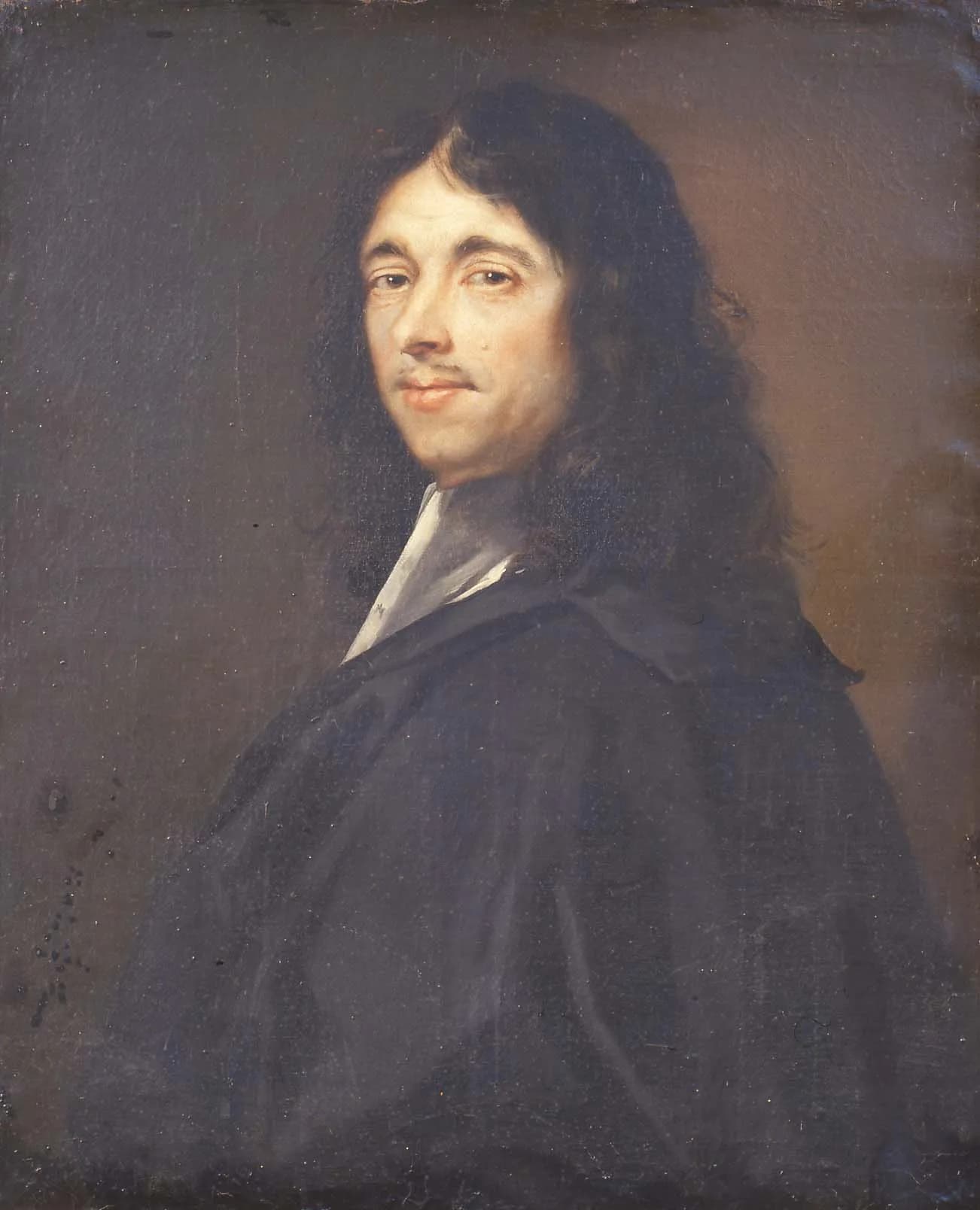
Родился(ась)
January 1, 1607
Beaumont-de-Lomagne, France
Ушёл(ла)
January 12, 1665
Castres, France
Известен(на)
French mathematician and lawyer
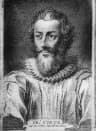
Pierre de Fermat (1607–1665) was France best known for French mathematician and lawyer.
Pierre de Fermat (January 1, 1607 – January 12, 1665) was a French mathematician and lawyer. He made significant contributions to number theory, calculus, and analytic geometry, famously proposing Fermat's Last Theorem. His work greatly influenced the development of modern mathematics.
Глава
Главы жизни
Глава 1 · 1607· Глава 1 из 7
Early Life and Origins
Pierre de Fermat was born on January 1, 1607, in the charming town of Beaumont-de-Lomagne, France. His early years were spent in a region that would ultimately see him rise through the ranks of the French legal system. While details of his family life and formal education remain somewhat sparse, his later achievements strongly suggest a childhood marked by intellectual curiosity and development.
Глава 2· Глава 2 из 7
Career Beginnings
Fermat established his professional life as a jurist, committing himself to a career in law. He served diligently as a judge and a lawyer at the parlement of Toulouse, France, a position of considerable responsibility. This demanding role as a magistrate provided him with both a livelihood and a structured environment, allowing him the intellectual freedom to pursue his passion for mathematics in his spare time.
Глава 3· Глава 3 из 7
Major Achievements and Career Highlights
Fermat's mathematical genius spanned several critical areas, marking him as a truly original thinker. He is widely credited for making early developments that contributed significantly to infinitesimal calculus, particularly through his innovative technique of adequality. One of his remarkable achievements included the discovery of an original method for finding the greatest and smallest ordinates of curved lines, a technique strikingly similar to differential calculus, which was then entirely unknown.
His deep dive into number theory was particularly impactful, leading to several groundbreaking discoveries and conjectures. Fermat also made notable contributions to analytic geometry, building upon existing frameworks to advance the field. Furthermore, his work extended to the realm of probability, where he engaged in pioneering discussions, and to optics, where his Fermat's principle for light propagation became a fundamental concept. Beyond his scientific pursuits, he was a polyglot, a skilled Latinist, a Hellenist, and a poet, demonstrating an extraordinary breadth of intellect.
Глава 4· Глава 4 из 7
Personal Life and Broader Interests
Beyond his formidable legal career and his intense mathematical investigations, Pierre de Fermat nurtured a rich intellectual life that extended into the humanities. He was recognized as a skilled Latinist and a Hellenist, possessing a deep command of classical languages and their literatures. His aptitude for languages made him a polyglot, capable of engaging with scholarly works across various traditions.
Fermat also expressed his creativity as a poet, showcasing a versatility that truly defined him as a polymath. These artistic and linguistic interests offered a counterpoint to the logical rigor of his legal and mathematical endeavors, illustrating a mind that found beauty and order in many forms.
Глава 5 · 1994· Глава 5 из 7
Notable Works or Contributions
Among Pierre de Fermat's most enduring legacies is his Fermat's Last Theorem, a famous conjecture in number theory. He famously penned this theorem, along with a tantalizing note about a "truly marvelous proof" that his book's margin was too small to contain, within his copy of Diophantus' Arithmetica. This theorem challenged mathematicians for over 350 years, inspiring generations of research until its eventual proof in 1994.
While much of his mathematical output was communicated through correspondence, various compilations of his works have been published, ensuring his ideas reached a wider audience. Notable among these are different editions of "Oeuvres de Fermat," including "Oeuvres de Fermat / publiées par les soins de MM. Paul Tannery et Charles Henry sous les auspices du Ministère de l'instruction publique," which stands with 15 citations. Other significant works include "Précis des œuvres mathématiques" (1989, 3 citations), and supplementary volumes such as "Oeuvres de Fermat / publiées par... Paul Tannery et Charles Henry.... T. V.. Supplément aux tomes I-IV. Documents inédits publiés avec notes sur les nouveaux manuscrits, par C. de Waard." His impactful research is reflected in an h-index of 3 across 9 documented papers.
Глава 6 · 1665· Глава 6 из 7
Later Years
Pierre de Fermat concluded his distinguished life on January 12, 1665, in Castres, France. His passing marked the end of an era for a mind that seamlessly blended legal scholarship with profound mathematical innovation. Though many of his mathematical findings were disseminated through letters to fellow scholars, their collective weight and influence continued to grow in the decades following his death.
Глава 7· Глава 7 из 7
Legacy and Impact
The legacy of Pierre de Fermat in mathematics is undeniably profound and far-reaching. His challenges in number theory, particularly Fermat's Last Theorem, ignited centuries of mathematical inquiry and spurred significant advancements in theoretical mathematics. His ingenious methods for tackling problems related to tangents and maxima/minima were critical precursors to the formal development of differential calculus, directly influencing luminaries like Isaac Newton and Gottfried Wilhelm Leibniz.
Furthermore, his foundational contributions to probability theory, developed in correspondence with Blaise Pascal, established new fields of study. His work in analytic geometry and optics also provided crucial insights that shaped future scientific thought. Fermat is celebrated as a visionary, whose intellectual curiosity and rigorous methods continue to inspire mathematicians and scientists globally, cementing his place as one of history's most important thinkers.
Жизнь в моментах
Моменты, что определили жизнь
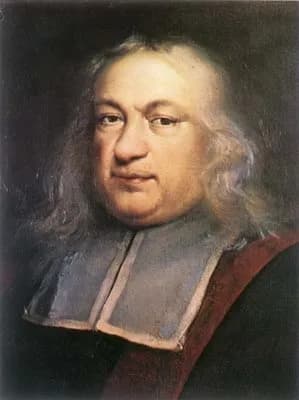
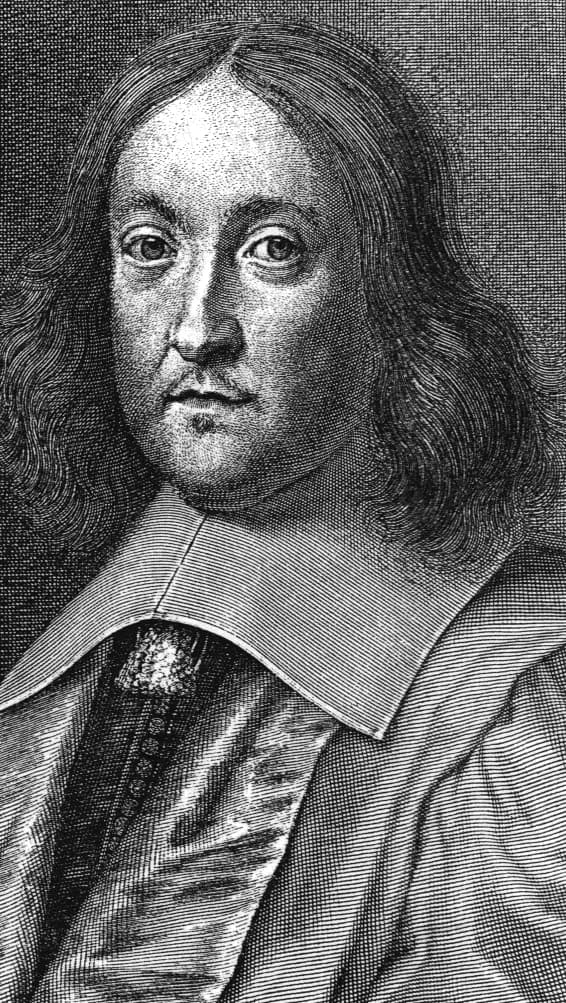
FAQ
Часто спрашивают
Когда умер(ла) Pierre de Fermat?
Pierre de Fermat умер(ла) 12 января 1665 г. в Castres, France в возрасте 58 лет.
Где родился(ась) Pierre de Fermat?
Pierre de Fermat родился(ась) в Beaumont-de-Lomagne, France 1 января 1607 г..
Чем больше всего известен(на) Pierre de Fermat?
Pierre de Fermat наиболее известен(на) за French mathematician and lawyer.
Сколько лет было Pierre de Fermat на момент смерти?
Pierre de Fermat было 58 лет на момент смерти.
Какой национальности был(а) Pierre de Fermat?
Pierre de Fermat был(а) из France.
Хронология
Жизнь кратко
Фотогалерея
Жизнь в фотографиях
Нажмите на любой снимок, чтобы развернуть · 45 фотографий
QR-код
Поделиться биографией
Печать и поделиться
Отсканируйте, чтобы открыть страницу биографии. Распечатайте для мероприятий, выставок или образовательных материалов.