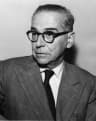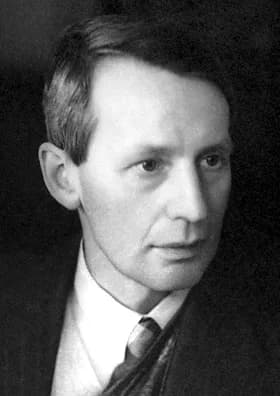
Родился(ась)
May 3, 1892
Cambridge, United Kingdom
Ушёл(ла)
September 10, 1975
Cambridge, United Kingdom
Известен(на)
English physicist
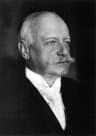
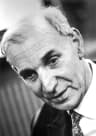
George Paget Thomson (1892–1975) was United Kingdom best known for English physicist.
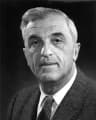
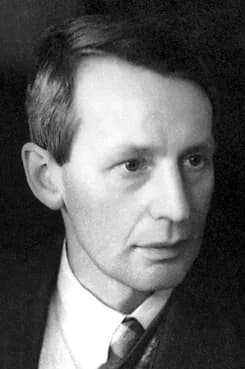
Sir George Paget Thomson (May 3, 1892 – September 10, 1975) was an English physicist from Cambridge, United Kingdom. He shared the 1937 Nobel Prize in Physics for his experimental discovery of electron diffraction by crystals, proving the electron's wave-like nature. His work profoundly impacted the understanding of quantum mechanics.
Глава
Главы жизни
Глава 1 · 1892· Глава 1 из 7
Early Life and Origins
Born on May 3, 1892, in the historically significant academic city of Cambridge, United Kingdom, George Paget Thomson was immersed in a world of profound scientific inquiry from birth. He was the son of the eminent J. J. Thomson, a towering figure in physics who had himself been awarded the Nobel Prize in Physics in 1906 for his own seminal work. Growing up in such an intellectually vibrant and scientifically focused household undoubtedly shaped George's early curiosities and steered him towards a path of deep exploration into the physical sciences. This unique environment provided an unparalleled foundation for his future scientific endeavors.
Глава 2· Глава 2 из 7
Career Beginnings
Although specific details of his initial professional steps are not extensively provided, George Paget Thomson dedicated his life to a distinguished career as a physicist. His professional roles also extended to becoming a nuclear physicist, a specialization that speaks to his involvement in advanced areas of research, and a respected university teacher. These dual commitments to cutting-edge research and the education of future generations of scientists underscore his comprehensive engagement with the scientific community. His foundational work during these early years prepared him for the significant experimental discoveries that would later define his international reputation.
Глава 3 · 1937· Глава 3 из 7
Major Achievements and Career Highlights
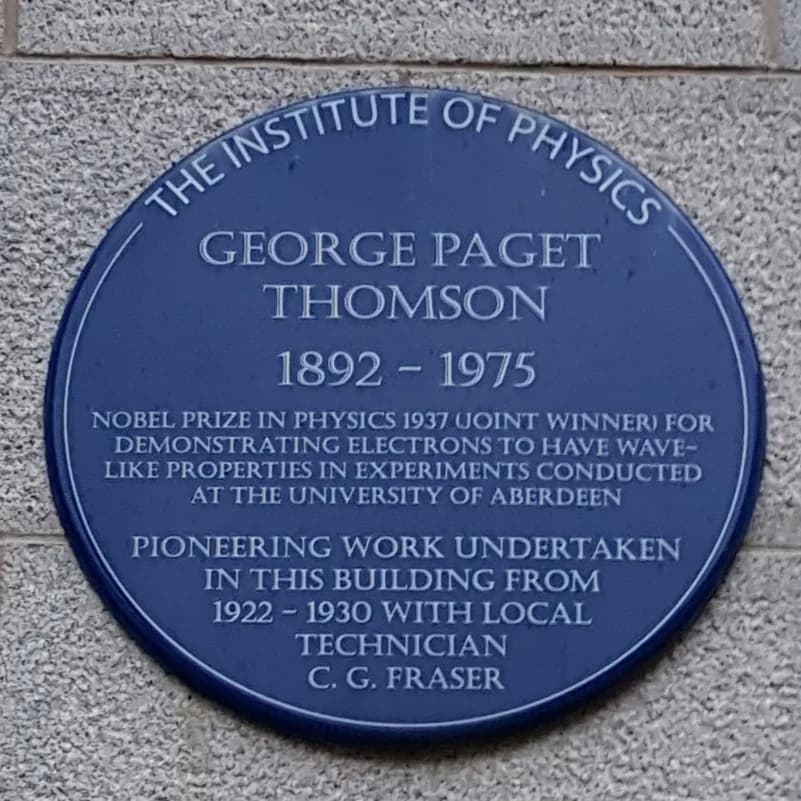
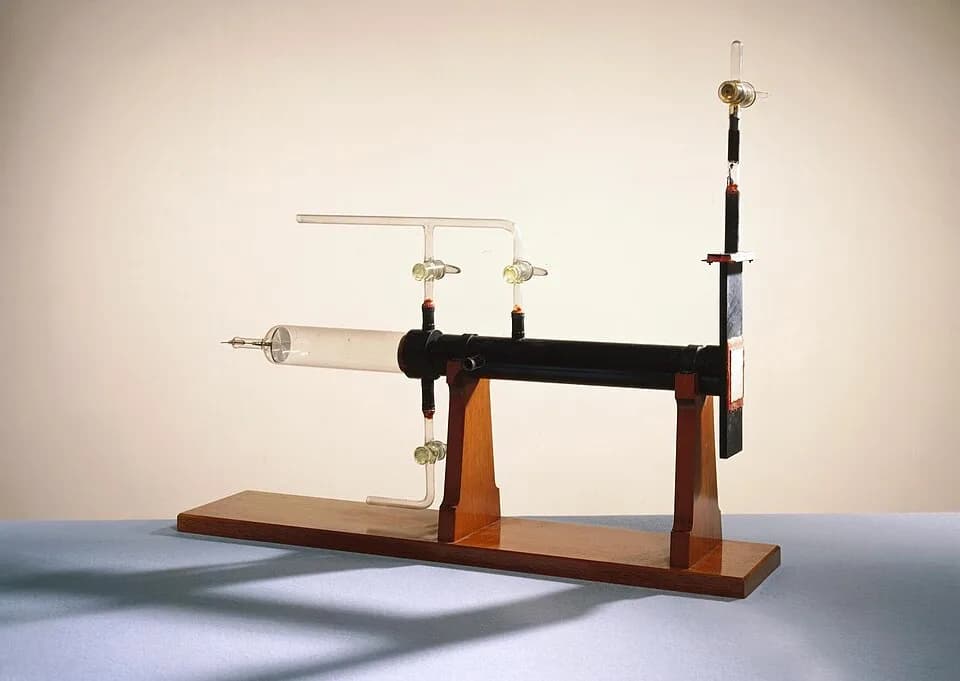
Sir George Paget Thomson's most celebrated achievement remains his experimental discovery of the diffraction of electrons by crystals, a monumental finding that earned him the 1937 Nobel Prize in Physics. This prestigious award was shared with Clinton Davisson, whose independent and complementary experimental work further solidified the evidence for these wave-like properties. This groundbreaking research provided irrefutable proof for the wave-particle duality, a cornerstone concept within the nascent field of quantum mechanics, forever altering the understanding of matter at its most fundamental level.
The significance of this discovery was amplified by a remarkable family connection: his father, J. J. Thomson, had been awarded the Nobel Prize in 1906 for demonstrating that the electron was a particle. Strikingly, the younger Thomson's work experimentally revealed the electron's wave-like characteristics, creating a fascinating historical echo where father and son received the highest scientific honor for showcasing seemingly opposite aspects of the same fundamental entity. This scientific confluence brilliantly illustrated how fundamental particles, such as the electron, can simultaneously exhibit properties typically associated with both waves and particles, marking a profound leap in scientific thought.
Глава 4· Глава 4 из 7
Personal Life
While extensive details about his personal life beyond his scientific pursuits are not readily available, the unique scientific lineage connecting George Paget Thomson with his father, J. J. Thomson, certainly stands out. This shared Nobel legacy, particularly around the dual nature of the electron, represented an extraordinary familial and intellectual experience. His enduring connection to Cambridge, United Kingdom, serving as both his birthplace and his final resting place, suggests a deep-rooted affinity for his home and its rich academic environment. His life was, in many ways, intertwined with the scientific spirit of this historic university city.
Глава 5· Глава 5 из 7
Notable Works or Contributions
Beyond his monumental Nobel-winning experiment, George Paget Thomson made valuable contributions to the academic and scientific record through a series of publications. His h-index of 2, accumulated across 9 documented papers, reflects his engagement in scholarly communication and his commitment to sharing scientific knowledge. A significant portion of his published works provided historical insights and tributes dedicated to the scientific legacy and profound contributions of his illustrious father, J. J. Thomson.
Prominent among these scholarly contributions is "J. J. Thomson and the Cavendish Laboratory in his Day," published in 1965, which has been cited 24 times, indicating its continued relevance as a historical account. Other notable works include "J. J. THOMSON and the discovery of the Electron," released in 1956, and "J. J. Thomson as we remember him," published in 1957. These works collectively serve as essential resources, offering valuable perspectives on the pioneering efforts and scientific environment surrounding his father's groundbreaking discoveries.
Глава 6 · 1975· Глава 6 из 7
Later Years
Throughout his long and productive career, George Paget Thomson continued his dedicated work as both a physicist and a university teacher, playing an instrumental role in shaping the minds of future scientists. His commitment to scientific advancement and education spanned many decades, leaving an enduring impact on countless students and colleagues. He remained deeply connected to his birthplace, Cambridge, United Kingdom, where his life's journey concluded on September 10, 1975. His later years were marked by continued engagement with the scientific community and a lasting influence on his field.
Глава 7· Глава 7 из 7
Legacy and Impact
The enduring legacy of Sir George Paget Thomson is firmly etched into the fundamental principles of quantum physics, where his work remains foundational. His pivotal experimental confirmation of electron diffraction provided the first direct evidence for the wave nature of electrons, a concept that now underpins much of modern physics, chemistry, and technology. This profound discovery was absolutely vital for the subsequent development of advanced tools such as the electron microscope and numerous other applications that critically rely on a precise understanding of electron behavior.
Thomson's remarkable work, particularly when viewed alongside that of his father, offered a compelling and unique illustration of the wave-particle duality, a concept that continues to both challenge and inspire physicists around the globe. His contributions forever transformed our scientific perception of the electron, transitioning it from a simple, singular particle to an entity possessing complex, dualistic wave-like properties. This enrichment of our comprehension of the universe's most fundamental building blocks stands as his lasting gift to science, ensuring his life's work continues to be studied and profoundly admired by scientists worldwide for generations to come.
Жизнь в моментах
Моменты, что определили жизнь


FAQ
Часто спрашивают
Когда умер(ла) George Paget Thomson?
George Paget Thomson умер(ла) 10 сентября 1975 г. в Cambridge, United Kingdom в возрасте 83 лет.
Где родился(ась) George Paget Thomson?
George Paget Thomson родился(ась) в Cambridge, United Kingdom 3 мая 1892 г..
Чем больше всего известен(на) George Paget Thomson?
George Paget Thomson наиболее известен(на) за English physicist.
Сколько лет было George Paget Thomson на момент смерти?
George Paget Thomson было 83 лет на момент смерти.
Какой национальности был(а) George Paget Thomson?
George Paget Thomson был(а) из United Kingdom.
Хронология
Жизнь кратко
Фотогалерея
Жизнь в фотографиях
Нажмите на любой снимок, чтобы развернуть · 20 фотографий
QR-код
Поделиться биографией
Печать и поделиться
Отсканируйте, чтобы открыть страницу биографии. Распечатайте для мероприятий, выставок или образовательных материалов.