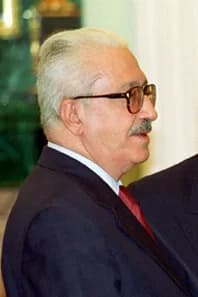
Născut
April 28, 1936
Tel Keppe, Iraq
Decedat
June 5, 2015
Nasiriyah, Iraq
Cunoscut pentru
Iraqi Foreign Minister under Saddam Hussein
Tariq Aziz (1936–2015) was Iraq best known for Iraqi Foreign Minister under Saddam Hussein.
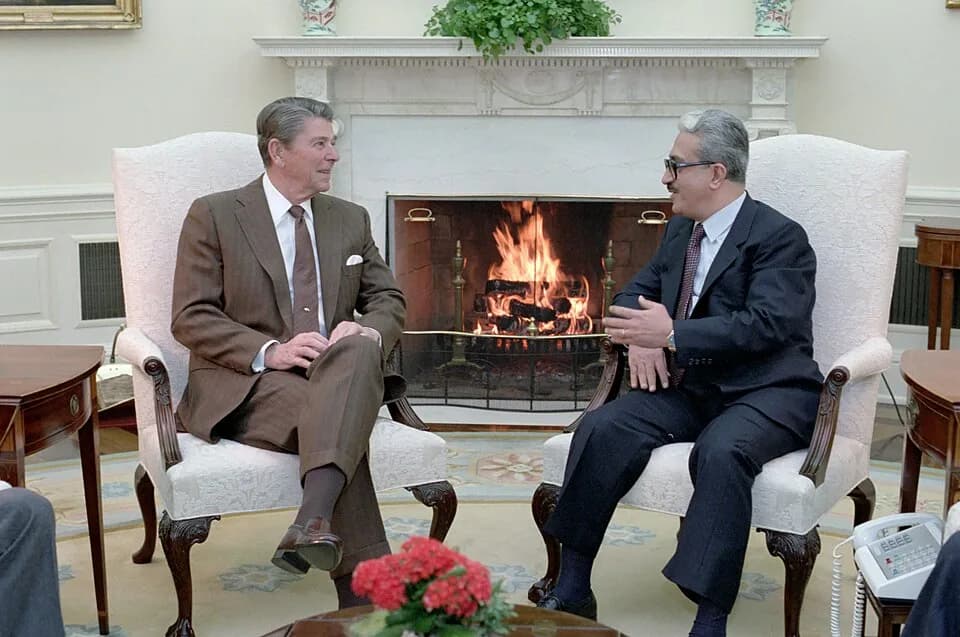
Tariq Aziz (April 28, 1936 – June 5, 2015) was an Iraqi politician, diplomat, statesperson, and journalist. He served as Foreign Minister and Deputy Prime Minister under Saddam Hussein, becoming a key advisor. His career impacted Iraq's international relations for decades.
Capitolul
Capitolele vieții
Capitolul 1 · 1936· Capitolul 1 din 7
Early Life and Origins
Born on April 28, 1936, in Tel Keppe, Iraq, Tariq Aziz entered a world rich with cultural diversity and historical depth. His birthplace, located in northern Iraq, provided him with a foundational understanding of the nation's complex social fabric from an early age. This environment fostered a perspective that would later influence his political outlook and diplomatic engagements.
Tariq Aziz identified as ethnically Assyrian and was a Chaldean Catholic, a significant aspect of his personal and public identity. This background positioned him as a prominent figure who bridged cultural and religious divides within Iraqi society and beyond. Despite his Chaldean Catholic faith, he was also a staunch Arab nationalist, demonstrating a unique combination of loyalties that defined much of his public persona.
Capitolul 2· Capitolul 2 din 7
Career Beginnings
Before his prominent political roles, Tariq Aziz established himself as a journalist, a profession that equipped him with invaluable skills in communication, analysis, and public articulation. This early career path provided him with a deep understanding of information dissemination and public opinion formation, assets that proved crucial in his later governmental positions. His journalistic acumen allowed him to craft compelling arguments and represent Iraq's viewpoints effectively on the international stage.
The experience gained as a journalist laid the groundwork for his transition into politics, offering him insights into the mechanisms of public persuasion and policy explanation. This professional foundation was instrumental in developing his ability to serve as a diplomat and a statesperson, roles demanding clear and forceful communication. He utilized these skills to navigate complex political narratives and diplomatic challenges throughout his distinguished career.
Capitolul 3 · 1979· Capitolul 3 din 7
Major Achievements and Career Highlights
Tariq Aziz's political career saw him ascend to some of the highest offices in Iraq, most notably serving as the Deputy Prime Minister of Iraq from 1979 to 2003. This extended tenure spanned over two decades, during which he was deeply involved in the strategic planning and governance of the nation. As Deputy Prime Minister, he played a central role in implementing government policies and overseeing critical national initiatives.
He further solidified his international reputation as Minister of Foreign Affairs from 1983 to 1991, a period marked by intense regional conflicts and global scrutiny. In this capacity, he acted as Iraq's chief diplomat, representing the country in numerous international forums and negotiations. His articulate defense of Iraq's policies made him a recognizable and often formidable figure in global diplomacy during the late 20th century.
Aziz was also a trusted and close advisor of President Saddam Hussein, a relationship that highlighted his influence within the Iraqi political hierarchy. His insights and counsel were highly valued, placing him at the center of critical decision-making processes during a tumultuous era for Iraq. This advisory role extended his impact beyond formal ministerial duties, solidifying his status as a key architect of the nation's direction.
His involvement was not limited to ministerial positions; Tariq Aziz was also a significant member of the Revolutionary Command Council, the primary decision-making body in Ba'athist Iraq. Furthermore, he served on the Regional Command of the Iraqi Branch of the Ba'ath Party, demonstrating his deep integration into the party's ideological and organizational structure. These roles illustrate his comprehensive involvement in both the administrative and political dimensions of the Iraqi state.
Capitolul 4· Capitolul 4 din 7
Personal Life
While detailed narratives of Tariq Aziz's private life are not extensively documented in the public record, his identity as an ethnically Assyrian Chaldean Catholic provides a window into his personal background and cultural heritage. This unique blend of identities, embracing both his Christian faith and his Arab nationalist sentiments, suggests a complex internal world. These personal dimensions likely influenced his public persona and his approach to representing Iraq's diverse population.
Capitolul 5· Capitolul 5 din 7
Notable Works or Contributions
Beyond his extensive political and diplomatic service, Tariq Aziz also made contributions to written works. Among his notable bibliography are titles such as "Precious Illustrated English Book One," suggesting an interest in educational materials or language instruction. This work indicates a dedication to cultural or intellectual pursuits outside the immediate demands of governance.
Another credited work, "Nitrogen Assessment," points towards an engagement with more technical or scientific subject matter. This demonstrates a broader intellectual capacity and an interest in diverse fields of knowledge beyond politics and international relations. Such contributions highlight an individual whose impact extended into literary and potentially scientific spheres.
Capitolul 6 · 2003· Capitolul 6 din 7
Later Years
Tariq Aziz's active political career continued until 2003, concluding with the significant geopolitical changes that reshaped Iraq. Following the invasion of Iraq, his long period of governmental service came to an end. He then faced legal challenges related to his involvement in the former regime, marking a dramatic shift in his life post-2003.
His final years were spent in Iraq, concluding with his passing on June 5, 2015, in Nasiriyah, Iraq. This marked the end of a long and often controversial public life, spanning from his birth in Tel Keppe in 1936 to his death nearly eight decades later. His journey encapsulated a significant period of modern Iraqi history, from his rise as a journalist to his role as a prominent international diplomat.
Capitolul 7· Capitolul 7 din 7
Legacy and Impact
The legacy of Tariq Aziz is deeply entwined with the history of modern Iraq and its interactions with the world during a period of immense global change. As Iraqi Foreign Minister and Deputy Prime Minister, he was instrumental in shaping and communicating Iraq's policies on the world stage for over two decades. His articulate and often defiant presentations in diplomatic circles solidified his image as a shrewd and loyal representative of his country.
His career offers a significant case study in statesmanship and diplomacy under challenging conditions, reflecting the complexities of Arab nationalism and regional politics in the late 20th and early 21st centuries. Tariq Aziz's life and work continue to be subjects of historical inquiry, serving as a reminder of the intricate political narratives that define nation-states and their leaders.
O viață în momente
Momentele care au modelat o viață

Întrebări frecvente
Întrebări frecvente
Când a murit Tariq Aziz?
Tariq Aziz a murit pe 5 iunie 2015 în Nasiriyah, Iraq, la vârsta de 79 ani.
Unde s-a născut Tariq Aziz?
Tariq Aziz s-a născut în Tel Keppe, Iraq pe 28 aprilie 1936.
Pentru ce este cunoscut(ă) Tariq Aziz?
Tariq Aziz este cunoscut(ă) cel mai mult pentru Iraqi Foreign Minister under Saddam Hussein.
Câți ani avea Tariq Aziz la moarte?
Tariq Aziz avea 79 ani la momentul morții.
Ce naționalitate avea Tariq Aziz?
Tariq Aziz era din Iraq.
Cronologie
O viață dintr-o privire
Galerie foto
O viață în imagini
Faceți clic pe orice polaroid pentru a-l mări · 20 fotografii
Cod QR
Distribuiți această biografie
Imprimați și distribuiți
Scanați pentru a vizita această pagină biografică. Imprimați pentru evenimente, expoziții sau materiale educaționale.