Născut
December 28, 1903
Budapest, Hungary
Decedat
February 8, 1957
Washington, D.C., United States
Cunoscut pentru
Hungarian and American mathematician and physicist
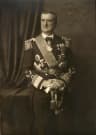
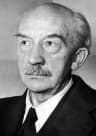
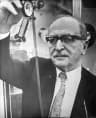
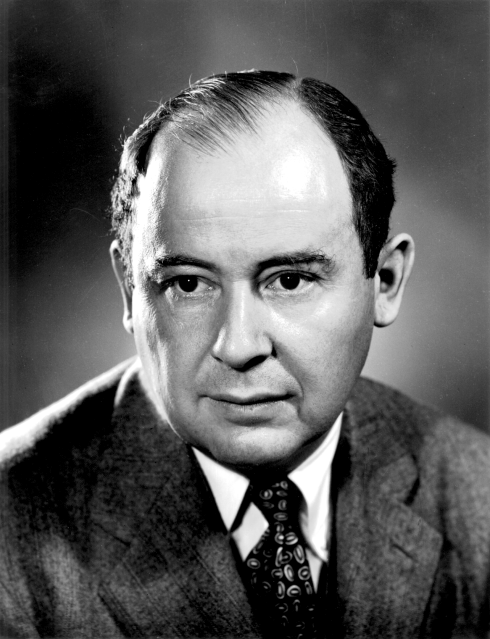
John von Neumann (1903–1957) was Hungary best known for Hungarian and American mathematician and physicist.
John von Neumann (December 28, 1903 – February 8, 1957) was a Hungarian and American mathematician and physicist. He made fundamental contributions to quantum physics, game theory, and the architecture of digital computers. His work continues to shape numerous scientific and technological fields today.
Capitolul
Capitolele vieții
Capitolul 1 · 1903· Capitolul 1 din 8
Opening Tribute
John von Neumann, born on December 28, 1903, and who passed away on February 8, 1957, was a Hungarian and American mathematician, physicist, and computer scientist whose intellectual contributions left a lasting mark across numerous scientific disciplines. His unparalleled ability to integrate pure and applied sciences made him one of the most widely influential mathematicians of his era. Von Neumann’s genius helped lay foundational principles in fields ranging from quantum mechanics to the architecture of modern digital computers, exhibiting remarkable foresight in many areas.
Capitolul 2· Capitolul 2 din 8
Early Life and Origins
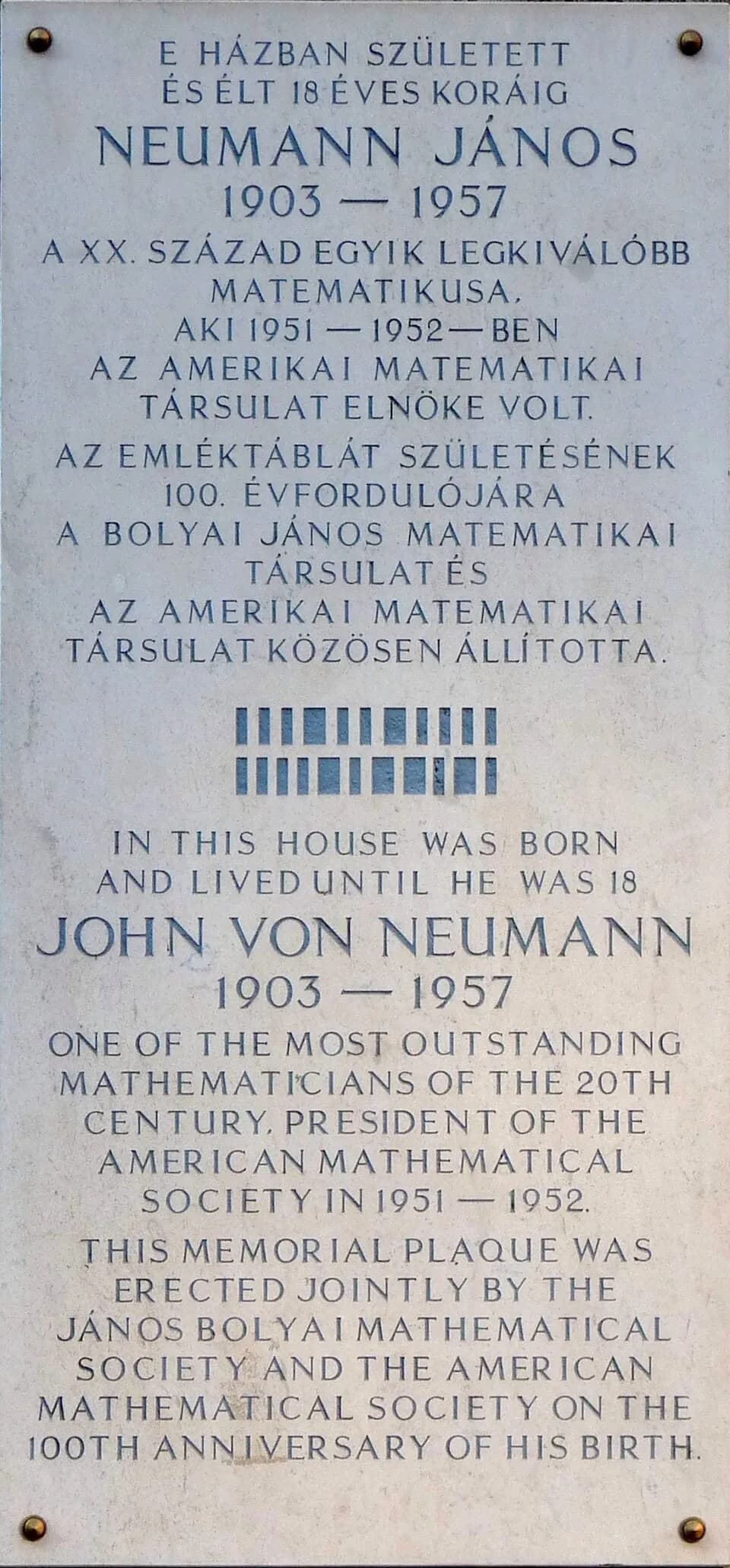
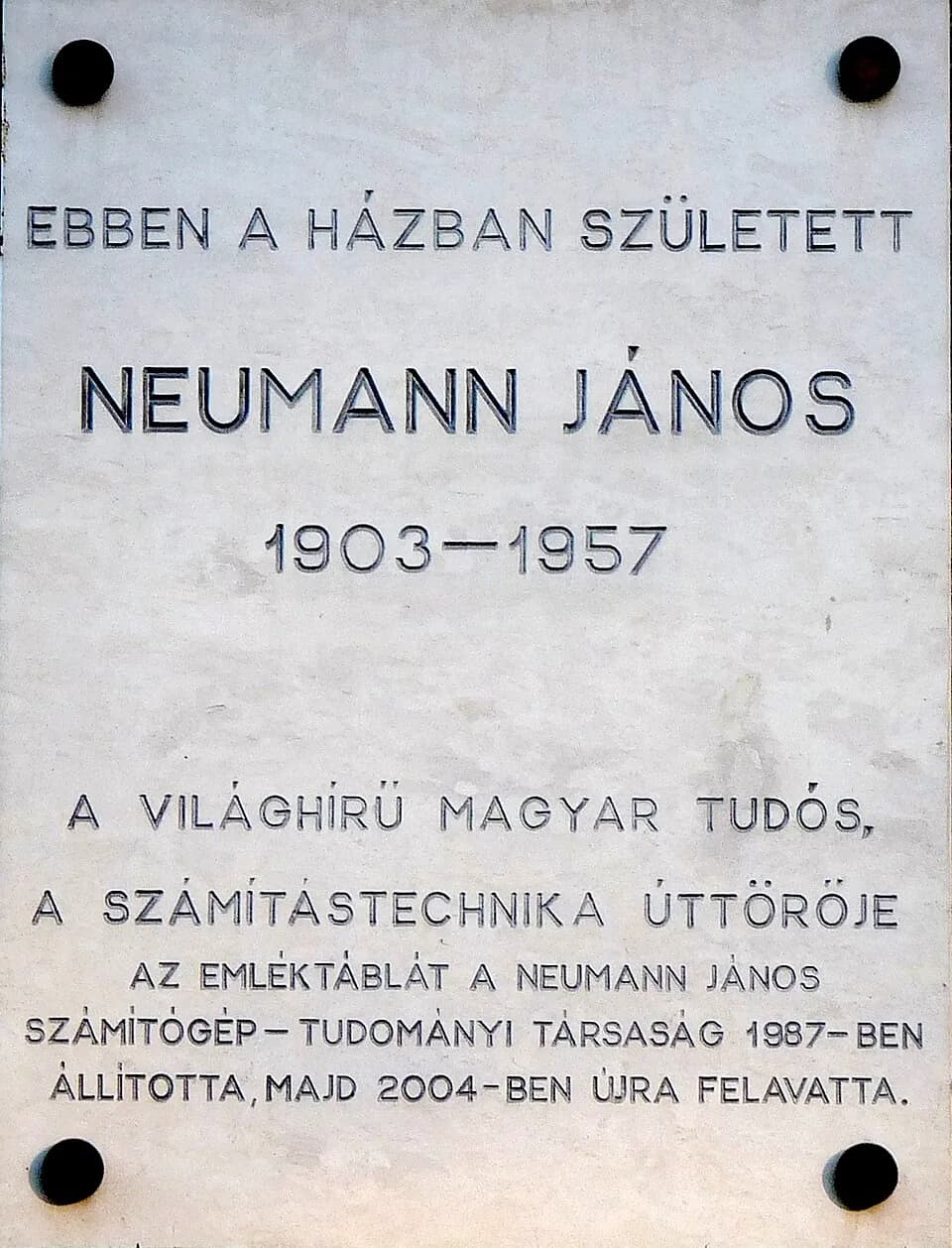
Born in Budapest, Hungary, John von Neumann displayed extraordinary intellectual gifts from a very young age, quickly demonstrating a precocious talent for mathematics. His early brilliance was recognized and nurtured, providing him with an environment conducive to intellectual growth and rigorous study. This exceptional upbringing fostered a mind capable of comprehensive scientific inquiry and groundbreaking innovation across diverse fields.
Capitolul 3· Capitolul 3 din 8
Career Beginnings
Von Neumann's academic journey quickly led him to make significant early contributions that reshaped established fields. He became a pioneer in developing the mathematical framework of quantum physics, providing the rigorous underpinnings for this revolutionary theory. His early efforts also established core concepts in functional analysis, a branch of mathematics essential for addressing complex problems in physics and engineering disciplines.
Capitolul 4· Capitolul 4 din 8
Major Achievements and Career Highlights
Throughout his career, John von Neumann made major contributions to an astonishing array of fields, including mathematics, physics, economics, computing, and statistics. He played a central role in the Manhattan Project, applying his profound mathematical prowess to critical wartime research. His collaborative work in game theory, notably on "Teori͡ia igr i ėkonomicheskoe povedenie," introduced concepts that fundamentally altered economic thought and strategic analysis, still widely applied today.
Von Neumann was instrumental in the development of the digital computer, pioneering or codifying concepts such as cellular automata, the universal constructor, and the fundamental architecture of the digital computer itself. His analytical work on the structure of self-replication, detailed in "Theory of self-reproducing automata," remarkably preceded the discovery of the structure of DNA. This work showcased his visionary capacity to understand complex systems before their biological mechanisms were fully known.
Capitolul 5· Capitolul 5 din 8
Personal Life
While John von Neumann’s professional achievements are extensively documented and celebrated, specific details regarding his personal life are less publicly known. Colleagues frequently recounted his extraordinary intellect, sharp wit, and engaging personality, which made him a compelling figure in academic circles. His life was largely defined by his relentless dedication to scientific pursuits and the advancement of knowledge across a vast spectrum of disciplines.
Capitolul 6· Capitolul 6 din 8
Notable Works and Contributions
John von Neumann authored numerous highly influential works that continue to be studied and applied by scholars today. His extensive bibliography includes "Izbrannye trudy po funkt︠s︡ionalʹnomu analizu," a collection of selected works that solidified his foundational contributions to functional analysis. He also co-authored "Teori͡ia igr i ėkonomicheskoe povedenie," a landmark publication in game theory and economic behavior that revolutionized understanding in those fields.
Other significant publications by von Neumann include "The computer and the brain," which explored the profound analogies between computing machines and the human nervous system. His abstract mathematical work, "Continuous Geometry," showcased his depth in pure mathematics. Additionally, his conceptualization of self-replicating systems was formalized in "Theory of self-reproducing automata," alongside detailed volumes like "Functional Operators, Volume 1" and "Functional Operators, Volume 2," all underscoring his vast intellectual output.
Capitolul 7 · 1957· Capitolul 7 din 8
Later Years
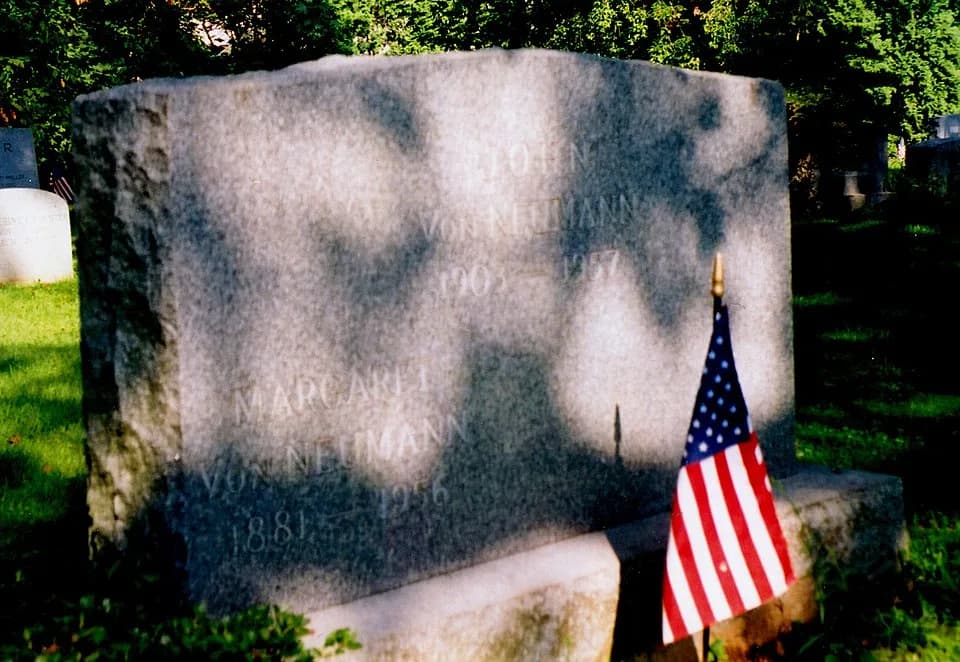
In his later years, John von Neumann continued to serve actively as a consultant and non-fiction writer, applying his expertise to various governmental and scientific endeavors. He remained deeply involved in complex scientific problems until his passing in Washington, D.C., on February 8, 1957. His dedication to advancing scientific understanding and technological innovation persisted throughout his life, influencing both theoretical research and practical applications until his final days.
Capitolul 8· Capitolul 8 din 8
Legacy and Impact
John von Neumann's legacy is immense, permeating nearly every aspect of modern science and technology. His conceptualization of the digital computer architecture is still known as the 'von Neumann architecture,' forming the fundamental basis of virtually all modern computers. His insights into self-replication continue to inform fields like artificial life, robotics, and molecular biology, demonstrating their enduring relevance far beyond their initial mathematical context.
The mathematical tools and theories he developed, particularly in quantum physics, functional analysis, and game theory, remain indispensable to researchers worldwide. His unique ability to integrate disparate scientific fields and his visionary thinking solidified his place as one of the most important intellectual figures of the 20th century. John von Neumann's extensive contributions continue to inspire new generations of scientists and engineers across the globe.
O viață în momente
Momentele care au modelat o viață
Întrebări frecvente
Întrebări frecvente
Când a murit John von Neumann?
John von Neumann a murit pe 8 februarie 1957 în Washington, D.C., United States, la vârsta de 53 ani.
Unde s-a născut John von Neumann?
John von Neumann s-a născut în Budapest, Hungary pe 28 decembrie 1903.
Pentru ce este cunoscut(ă) John von Neumann?
John von Neumann este cunoscut(ă) cel mai mult pentru Hungarian and American mathematician and physicist.
Câți ani avea John von Neumann la moarte?
John von Neumann avea 53 ani la momentul morții.
Ce naționalitate avea John von Neumann?
John von Neumann era din Hungary.
Cronologie
O viață dintr-o privire
- 1903
Opening Tribute
- 1957
Later Years
Galerie foto
O viață în imagini
Faceți clic pe orice polaroid pentru a-l mări · 41 fotografii
Cod QR
Distribuiți această biografie
Imprimați și distribuiți
Scanați pentru a vizita această pagină biografică. Imprimați pentru evenimente, expoziții sau materiale educaționale.