Născut
December 24, 1924
Gwalior, India
Decedat
August 16, 2018
All India Institute of Medical Sciences, New Delhi, India
Cunoscut pentru
Prime Minister of India (1996, 1988-2004)
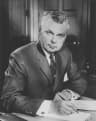
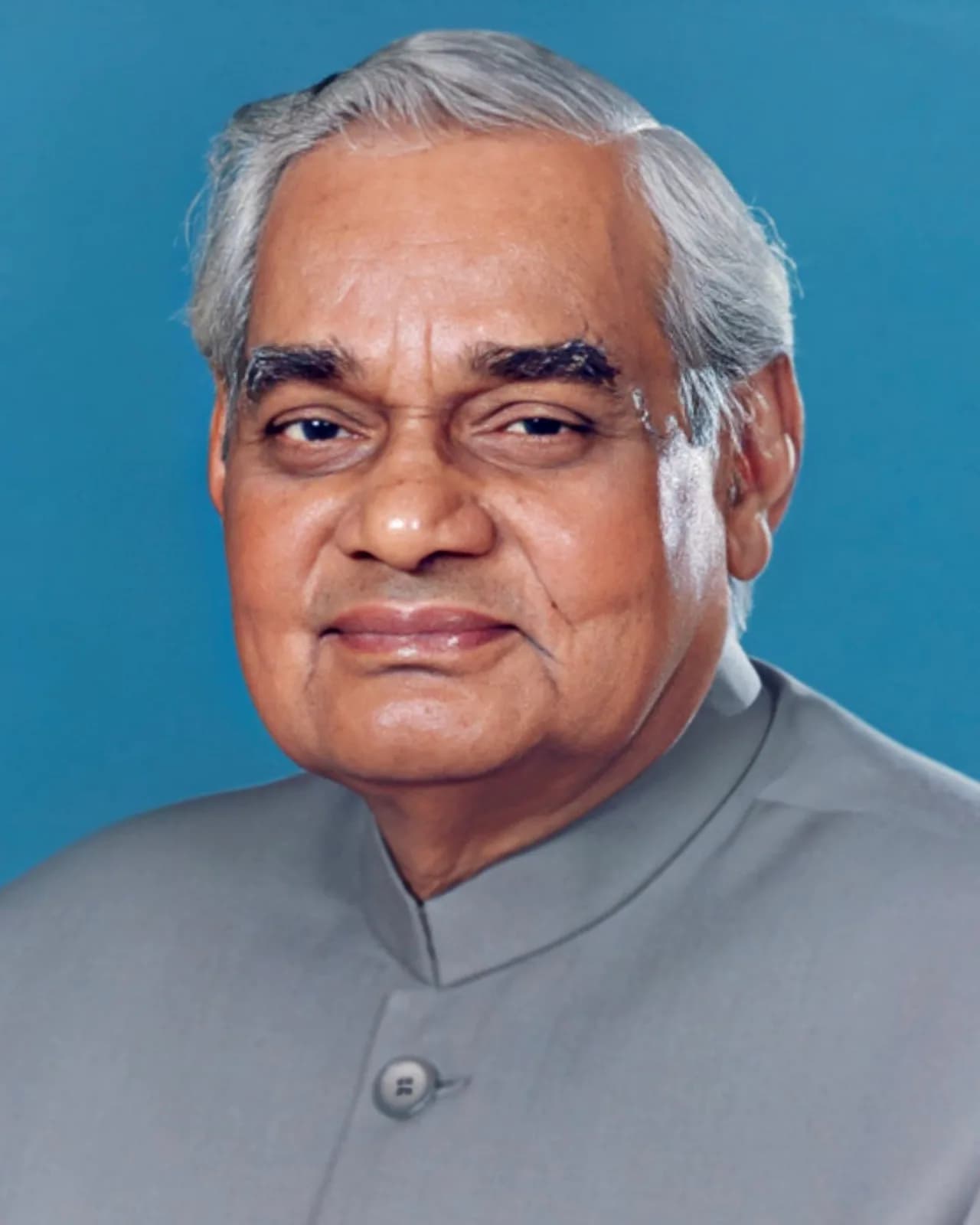
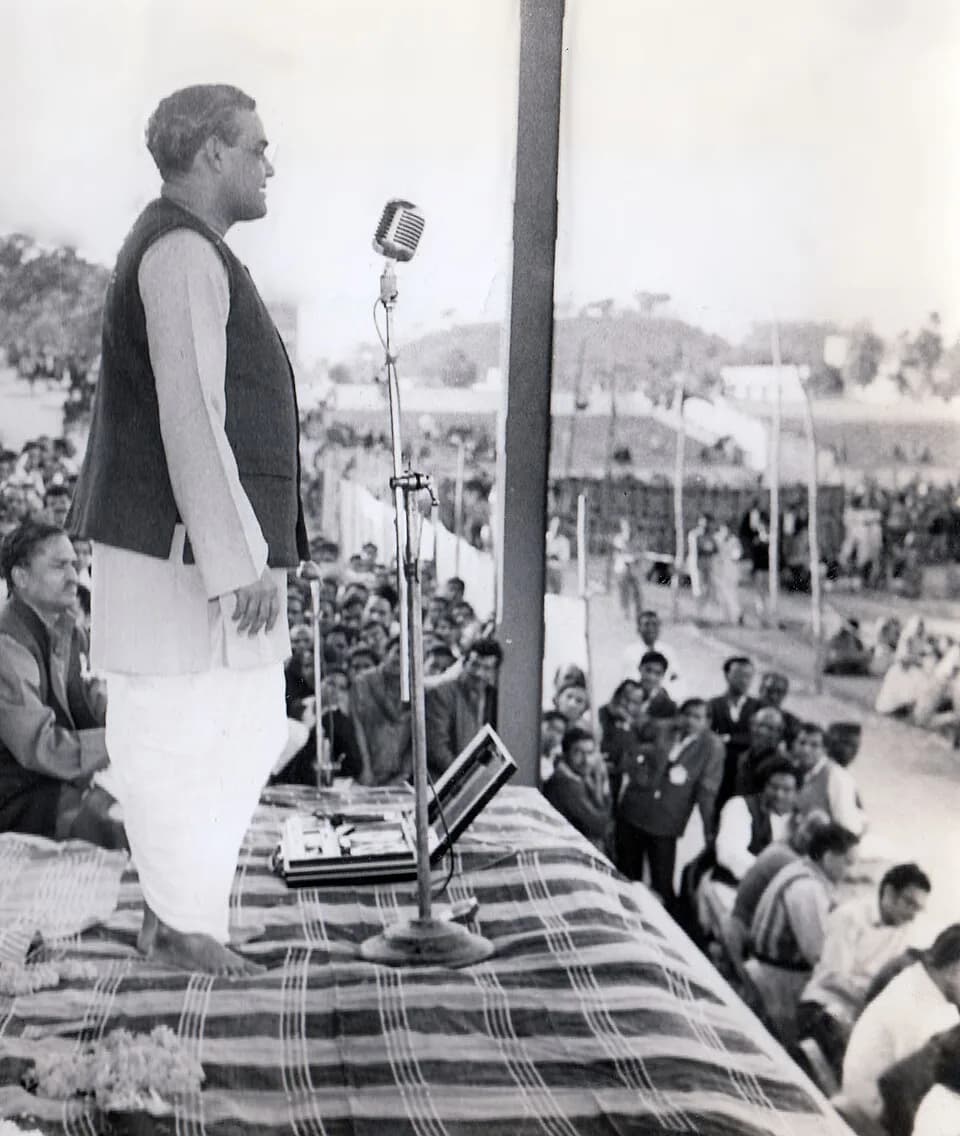
Atal Bihari Vajpayee (1924-2018) was a politician, poet, and journalist from Gwalior, India. He served as Prime Minister from 1998-2004, becoming the first non-Congress leader to complete a full term. His moderate approach bridged Hindu nationalism with democratic pluralism.
Capitolul
Capitolele vieții
Capitolul 1· Capitolul 1 din 6
Early Life and Origins
Vajpayee was born in Gwalior, a historic city in central India known for its cultural heritage. His early years in Gwalior shaped his deep appreciation for Indian literature and poetry, interests that would remain central to his identity throughout his political career. The cultural richness of his birthplace influenced his later approach to politics, where he sought to blend traditional Indian values with modern governance.
Capitolul 2· Capitolul 2 din 6
Career Beginnings
Vajpayee began his career as a journalist before entering politics through the Rashtriya Swayamsevak Sangh (RSS), where he served as a full-time functionary or pracharak. His work with the RSS, a right-wing Hindutva organization, provided him with organizational skills and ideological grounding that would define his political trajectory. He later became one of the co-founders of the Bharatiya Janata Party (BJP), helping establish what would become India's dominant political force in the late 20th and early 21st centuries.
Capitolul 3 · 1998· Capitolul 3 din 6
Major Achievements and Career Highlights
Vajpayee's most significant achievement was his tenure as Prime Minister from 1998 to 2004, following a brief 16-day stint in 1996. During his full term, he led India through critical periods including nuclear tests in 1998 and the Kargil conflict with Pakistan. His administration focused on infrastructure development, economic reforms, and maintaining India's position as a regional power while navigating complex international relationships.
As a senior leader of the BJP, Vajpayee helped transform the party from a marginal political force into a major national party. His moderate approach within the Hindu nationalist movement allowed the BJP to appeal to a broader electorate beyond its traditional base. Scholars noted his ability to harmonize cultural identity with democratic pluralism, creating a distinctive form of Indian conservatism rooted in civilizational identity.
Capitolul 4· Capitolul 4 din 6
Notable Works and Contributions
Vajpayee authored numerous works that reflected his dual identity as politician and poet. His literary contributions included "Kāvya-yātrā ke yāyāvara" and "Cunī huī kavitāem̐," which showcased his poetic sensibilities. His political writings included "National Integration," "Face the Facts," and "Heal the Wounds," addressing key issues facing India during his era.
His work "Prime Minister Shri Atal Bihari Vajpayee on the communal violence in Gujarat" demonstrated his engagement with sensitive social issues. Other publications like "Hindus Betrayed" and "Assam Problem" revealed his perspectives on regional and communal challenges facing the Indian nation.
Capitolul 5 · 2004· Capitolul 5 din 6
Later Years
After leaving office in 2004, Vajpayee gradually withdrew from active politics due to declining health. His final years were marked by reduced public appearances, though he remained a respected elder statesman within the BJP and broader Indian political landscape. He spent his last years in New Delhi, where he received medical care at the All India Institute of Medical Sciences until his death in 2018.
Capitolul 6· Capitolul 6 din 6
Legacy and Impact
Vajpayee's political legacy lies in demonstrating that Hindu nationalism could coexist with democratic governance and pluralistic values. His moderate approach within the RSS and BJP framework showed how cultural nationalism could be channeled through constitutional democracy rather than authoritarian means. His success as the first non-Congress Prime Minister to serve a full term broke the political monopoly that had dominated India since independence.
His dual identity as poet and politician created a unique political persona in Indian public life. Vajpayee proved that intellectual and artistic pursuits could enhance rather than hinder political effectiveness, inspiring future generations of Indian politicians to embrace broader cultural engagement alongside their political careers.
O viață în momente
Momentele care au modelat o viață
Întrebări frecvente
Întrebări frecvente
Când a murit Atal Bihari Vajpayee?
Atal Bihari Vajpayee a murit pe 16 august 2018 în All India Institute of Medical Sciences, New Delhi, India, la vârsta de 93 ani.
Unde s-a născut Atal Bihari Vajpayee?
Atal Bihari Vajpayee s-a născut în Gwalior, India pe 24 decembrie 1924.
Pentru ce este cunoscut(ă) Atal Bihari Vajpayee?
Atal Bihari Vajpayee este cunoscut(ă) cel mai mult pentru Prime Minister of India (1996, 1988-2004).
Câți ani avea Atal Bihari Vajpayee la moarte?
Atal Bihari Vajpayee avea 93 ani la momentul morții.
Ce naționalitate avea Atal Bihari Vajpayee?
Atal Bihari Vajpayee era din India.
Cronologie
O viață dintr-o privire
Galerie foto
O viață în imagini
Faceți clic pe orice polaroid pentru a-l mări · 48 fotografii
Cod QR
Distribuiți această biografie
Imprimați și distribuiți
Scanați pentru a vizita această pagină biografică. Imprimați pentru evenimente, expoziții sau materiale educaționale.