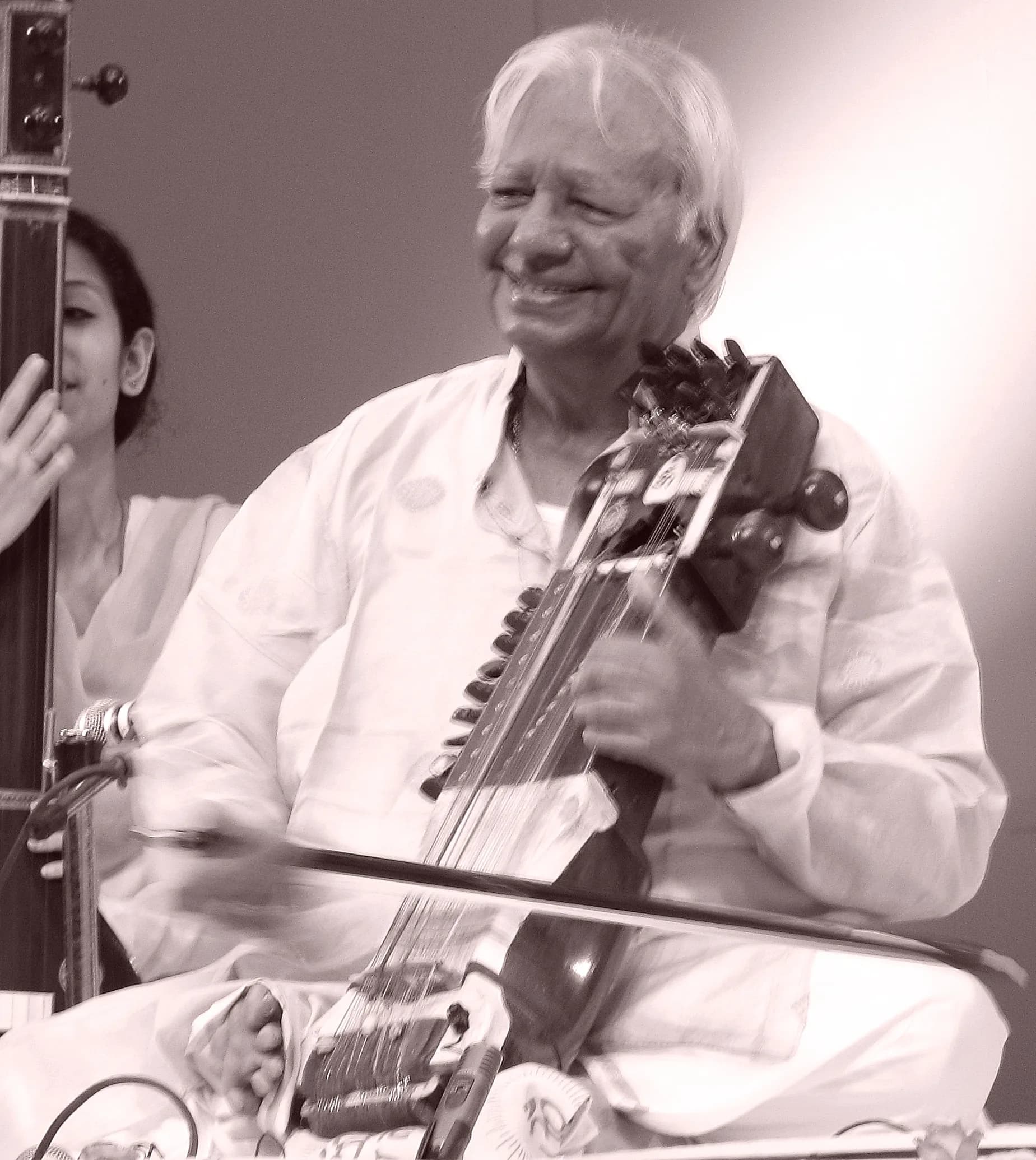
Geboren
December 25, 1927
Udaipur, India
Overleden
November 9, 2024
Bandra, India
Bekend om
Indian classical sarangi player
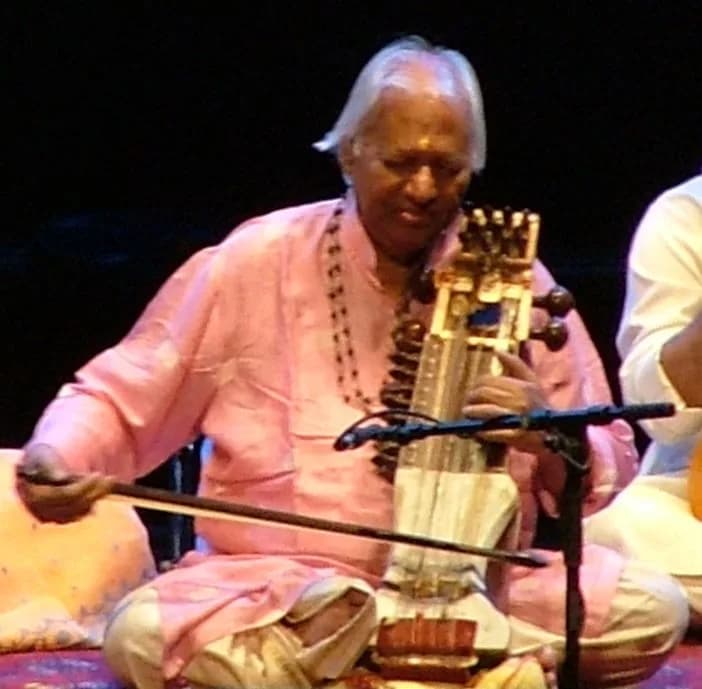
Ram Narayan (1927–2024) was India best known for Indian classical sarangi player.
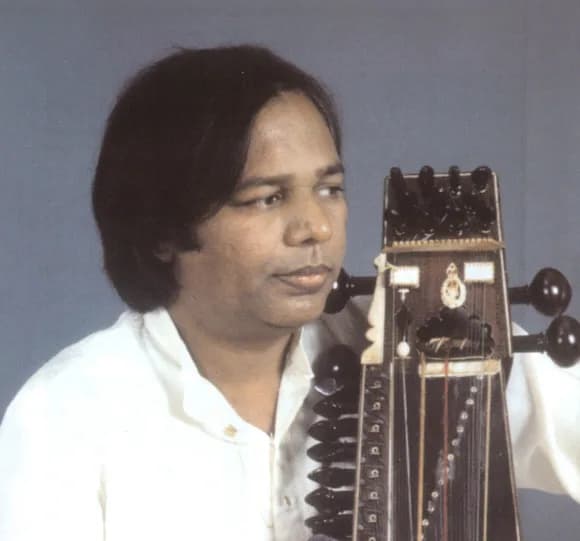
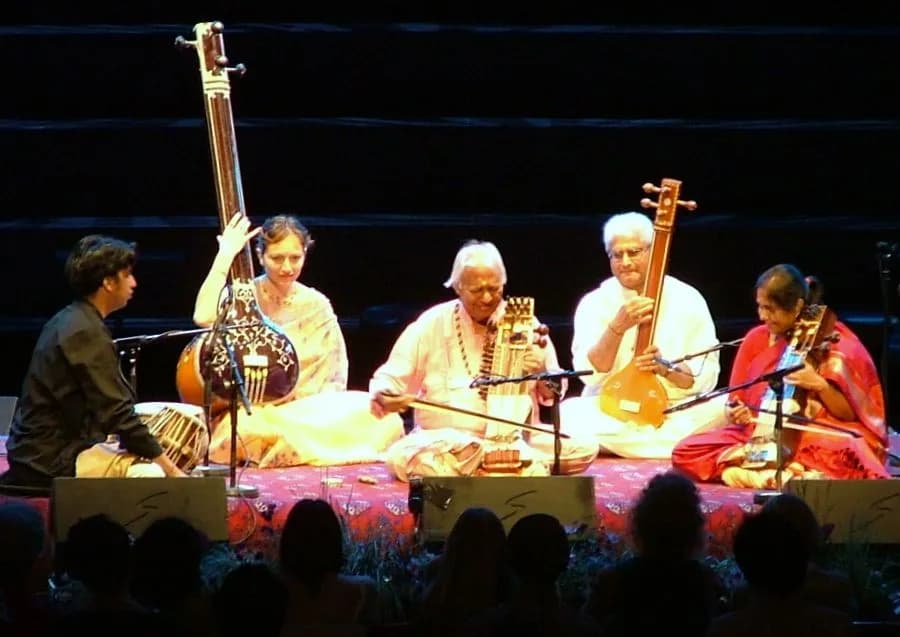
Ram Narayan (December 25, 1927 – November 9, 2024) was an Indian classical sarangi player from Udaipur, India. He revolutionized the sarangi's role, popularizing it as a solo concert instrument and becoming the first internationally successful sarangi player. His dedication secured the instrument's place in Hindustani classical music for future generations.
Hoofdstuk
Levenshoofdstukken
Hoofdstuk 1 · 1927· Hoofdstuk 1 van 7
Early Life and Origins
Ram Narayan's journey began in Udaipur, India, where he was born on December 25, 1927. Growing up in this culturally rich region, he was exposed to the deep traditions of Indian classical music. These early years in Udaipur laid the foundation for his extraordinary musical career, shaping his connection to the rich heritage he would later champion.
Hoofdstuk 2· Hoofdstuk 2 van 7
Career Beginnings
As a musician, Ram Narayan embarked on a mission that would redefine the sarangi's place in the classical music world. At the time, the bowed instrument was primarily used for accompanying vocalists, not as a standalone concert instrument. Ram Narayan's early career was dedicated to demonstrating the sarangi's capabilities as a solo voice, challenging conventional perceptions within Hindustani classical music.
Hoofdstuk 3· Hoofdstuk 3 van 7
Major Achievements and Career Highlights
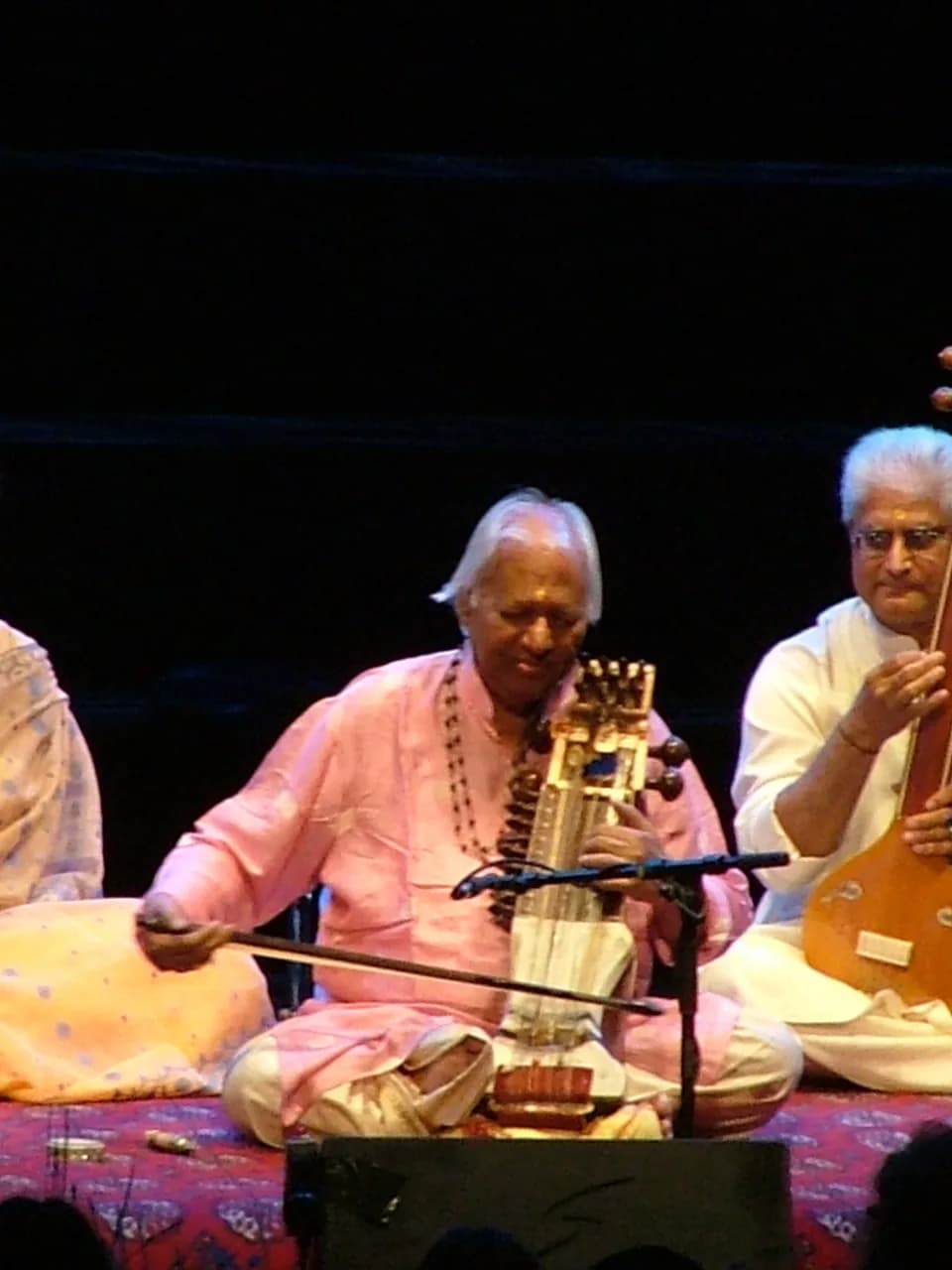
Ram Narayan achieved what many thought impossible: he successfully popularized the sarangi as a solo concert instrument. This monumental effort earned him the respectful title of 'Pandit,' signifying his mastery and wisdom in the field. He became the first internationally successful sarangi player, breaking cultural and musical barriers to introduce the instrument to audiences around the globe.
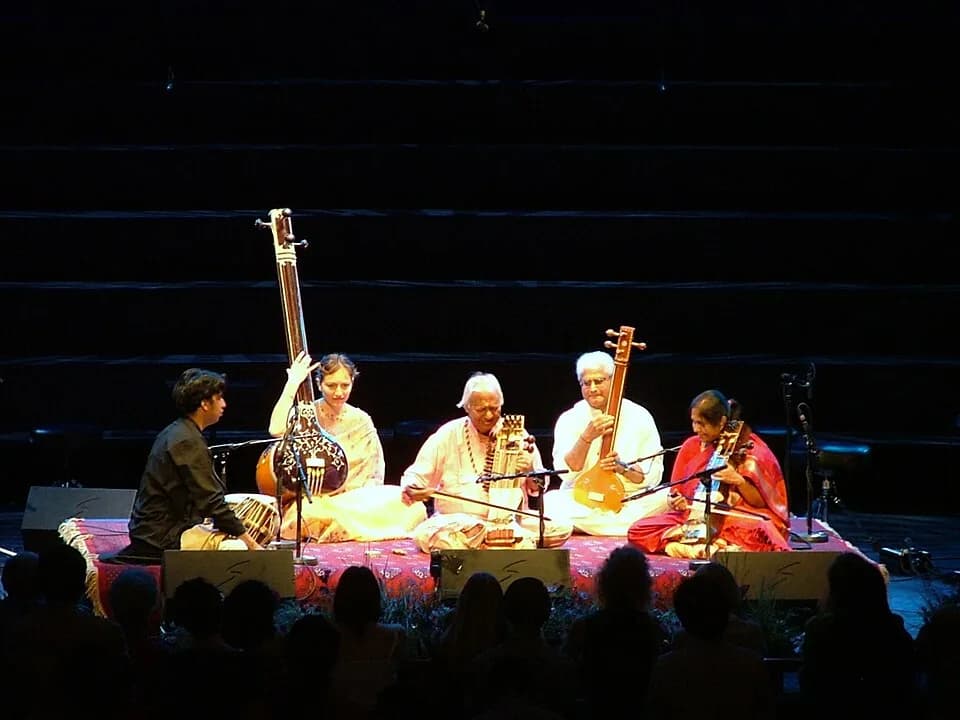
His dedication not only transformed the sarangi's status but also opened new avenues for other sarangi artists. His performances showcased the instrument's expressive range and versatility, proving its capacity for intricate melodic exploration. Through his artistry, Ram Narayan established a new benchmark for sarangi performance and recognition.
Hoofdstuk 4· Hoofdstuk 4 van 7
Personal Life
While Ram Narayan's professional life was widely celebrated for its significant contributions to music, specific details regarding his personal and family life beyond his musical endeavors are not widely documented. His primary public identity remained deeply intertwined with his dedication to the sarangi and Hindustani classical music.
Hoofdstuk 5· Hoofdstuk 5 van 7
Notable Works and Contributions
Ram Narayan's extensive discography showcases his mastery across various ragas within Hindustani classical and Indian classical genres. His recordings introduced the nuanced beauty of the sarangi to countless listeners worldwide. From the late 1960s through the late 1980s, he produced a wealth of acclaimed albums.
Some of his notable works include Pandit Ram Narain - Sarangi (1968), followed by Sarangi / The Voice of a Hundred Colors (1969). The 1970s saw releases like Raga Puria Kalyan (1975), further cementing his reputation. Later recordings such as Ram Narayan en concert (1984), Stil's Sunday Solo (1984), and Rag Bhupal Tori, Rag Patdip (1987) continued to expand his celebrated catalog. His contributions in the late 1980s and early 1990s, including Rāg Lalit (1989), Volume 1 (1989), and Rāg Shankara / Rāg Mala in Jogia (1990), demonstrated his enduring artistry and exploration of classical forms.
Hoofdstuk 6 · 2024· Hoofdstuk 6 van 7
Later Years
Ram Narayan lived a long and impactful life, with a career spanning many decades until his passing on November 9, 2024, in Bandra, India. Even in his later years, his legacy continued to resonate through his recordings and the generations of musicians he inspired. His final years were spent in the city that had witnessed much of his later life and musical journey.
Hoofdstuk 7· Hoofdstuk 7 van 7
Legacy and Impact
Ram Narayan's greatest legacy is undeniably the transformation of the sarangi from an accompanying instrument to a revered solo voice. He single-handedly elevated its standing in Hindustani classical music and brought it international acclaim. His pioneering efforts ensured that the sarangi would be recognized for its rich emotive qualities and its intricate melodic potential.
His influence extends far beyond his own performances; he inspired numerous musicians to take up the sarangi, solidifying its future within the classical tradition. Through his unwavering dedication, Pandit Ram Narayan ensured that the voice of the sarangi would be heard, cherished, and continued for generations to come, securing his place as an icon in Indian classical music history.
Een leven in momenten
De momenten die een leven hebben gevormd
Veelgestelde vragen
Veelgestelde vragen
Wanneer is Ram Narayan overleden?
Ram Narayan overleed op 9 november 2024 in Bandra, India op 96-jarige leeftijd.
Waar werd Ram Narayan geboren?
Ram Narayan werd geboren in Udaipur, India op 25 december 1927.
Waar is Ram Narayan het meest bekend om?
Ram Narayan is het meest bekend om Indian classical sarangi player.
Hoe oud was Ram Narayan bij overlijden?
Ram Narayan was 96 jaar oud op het moment van overlijden.
Wat was de nationaliteit van Ram Narayan?
Ram Narayan kwam uit India.
Tijdlijn
Een leven in een oogopslag
Fotogalerij
Een leven in beelden
Klik op een polaroid om uit te vergroten · 44 foto's
QR-code
Deel deze biografie
Afdrukken en delen
Scan om deze biografiepagina te bezoeken. Druk af voor evenementen, tentoonstellingen of educatief materiaal.