Geboren
January 21, 1829
Stockholm, Sweden
Overleden
December 8, 1907
Stockholm, Sweden
Bekend om
King of Sweden from 1872 to 1907 and Norway from 1872 to 1905
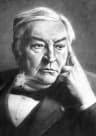
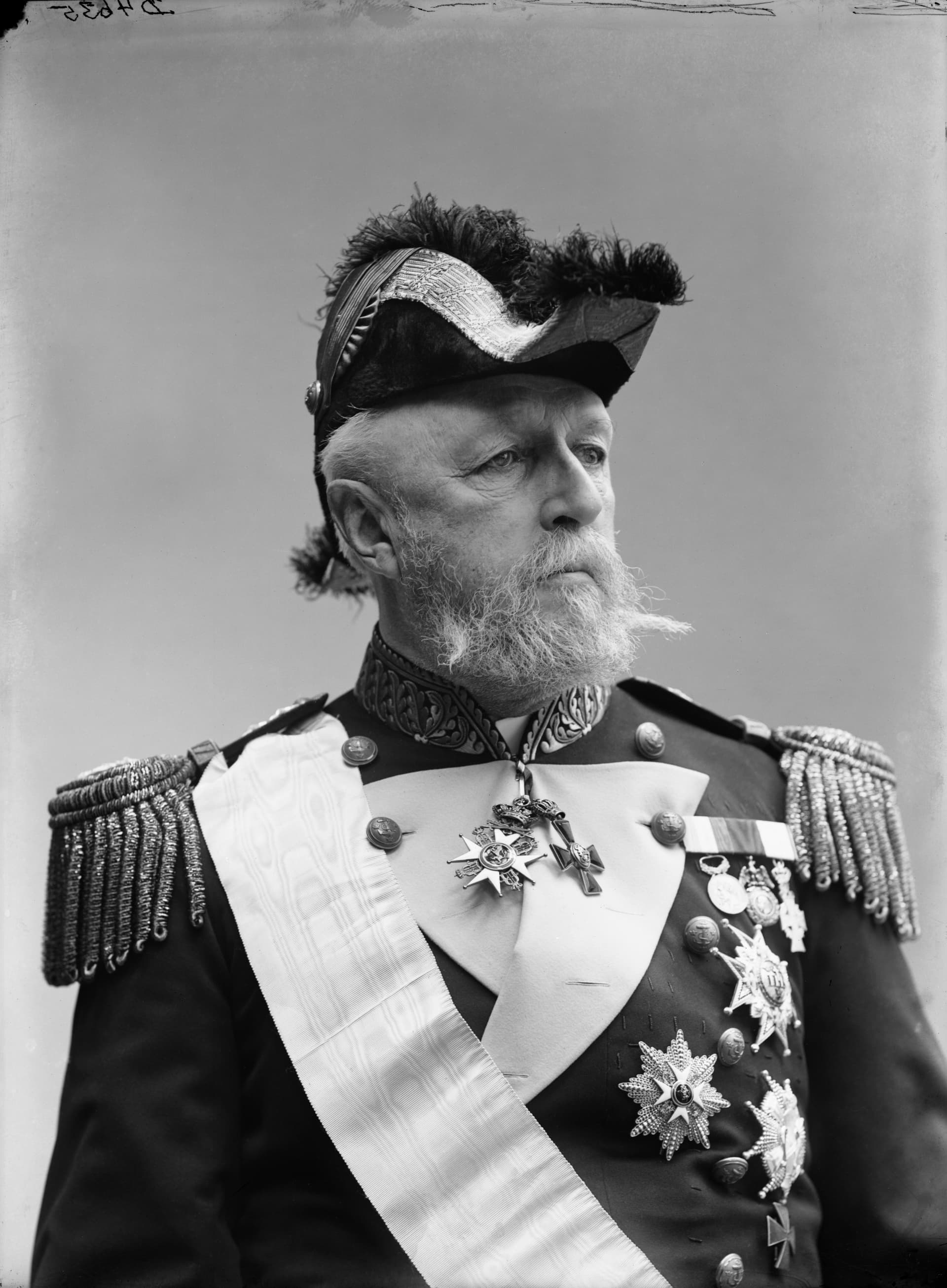
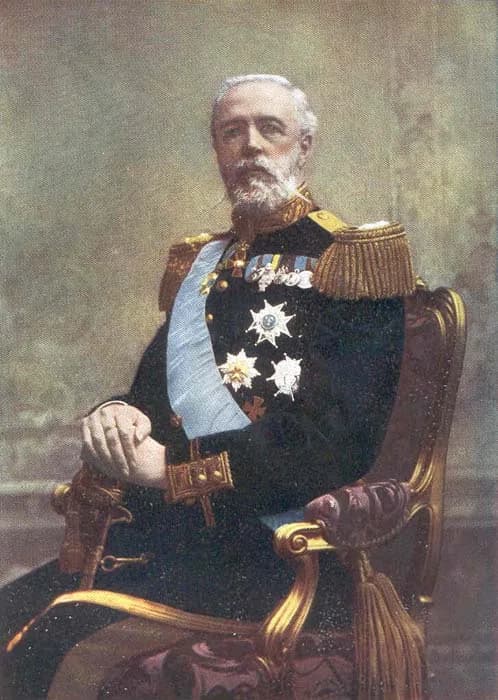
Oscar II of Sweden (1829–1907) was Sweden best known for King of Sweden from 1872 to 1907 and Norway from 1872 to 1905.
Oscar II (January 21, 1829 – December 8, 1907) was a monarch who served as King of Sweden and Norway. His reign saw industrialization, the dissolution of the Sweden-Norway union, and significant contributions to science and arts. He fostered exploration and promoted education, leaving a lasting impact.
Hoofdstuk
Levenshoofdstukken
Hoofdstuk 1· Hoofdstuk 1 van 3
A Patron of Minds and Explorers
Beyond the throne, Oscar II was a man of profound intellectual curiosity. He had excelled in mathematics at Uppsala University and, as an honorary member of the Royal Swedish Academy of Sciences, deeply encouraged education across his realms. He was himself a distinguished writer, publishing collections of lyrical poems, historical essays, and even translations of literary works by figures like Herder and Goethe. His Memorials of the Swedish Fleet earned recognition from the Swedish Academy.
His love for culture extended to commissioning the grand new opera house for the Royal Swedish Opera in 1898, a building that stands as its home to this day. Not just a patron, he was also a participant, once candidly telling playwright Henrik Ibsen that his play Ghosts was “not a good play.”
Oscar’s scientific interests were equally wide-ranging. In 1887, to mark his 60th birthday, he sponsored a mathematics contest focused on higher analysis, including the formidable n-body problem. This competition famously led to Henri Poincaré's groundbreaking work that laid the foundations for chaos theory. The King was also a passionate supporter of Arctic exploration. Along with private benefactors, he personally sponsored Adolf Erik Nordenskiöld’s pioneering journey through the Northeast Passage on the Vega Expedition, and Fridtjof Nansen’s audacious polar journey on the Fram.
Hoofdstuk 3 · 1902· Hoofdstuk 3 van 3
A Legacy Beyond the Crown
The name of Oscar II resonates even today, not only in history books but in everyday life. His image graces packages of King Oscar sardines, a brand that uniquely obtained his royal permission in 1902. He also lent his name to gingerbread cookies and other bakery items from Göteborgs Kex. The culinary world even created “Veal Oscar” in his honor, a dish supposedly reflecting his fondness for its rich ingredients. Oscar II died in Stockholm on December 8, 1907, a monarch who guided his nations through a pivotal era with intellect, diplomacy, and a deep appreciation for human achievement.
Een leven in momenten
De momenten die een leven hebben gevormd
Veelgestelde vragen
Veelgestelde vragen
Wanneer is Oscar II of Sweden overleden?
Oscar II of Sweden overleed op 8 december 1907 in Stockholm, Sweden op 78-jarige leeftijd.
Waar werd Oscar II of Sweden geboren?
Oscar II of Sweden werd geboren in Stockholm, Sweden op 21 januari 1829.
Waar is Oscar II of Sweden het meest bekend om?
Oscar II of Sweden is het meest bekend om King of Sweden from 1872 to 1907 and Norway from 1872 to 1905.
Hoe oud was Oscar II of Sweden bij overlijden?
Oscar II of Sweden was 78 jaar oud op het moment van overlijden.
Wat was de nationaliteit van Oscar II of Sweden?
Oscar II of Sweden kwam uit Sweden.
Tijdlijn
Een leven in een oogopslag
Fotogalerij
Een leven in beelden
Klik op een polaroid om uit te vergroten · 45 foto's
QR-code
Deel deze biografie
Afdrukken en delen
Scan om deze biografiepagina te bezoeken. Druk af voor evenementen, tentoonstellingen of educatief materiaal.