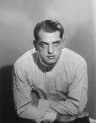
Geboren
January 14, 1901
Warsaw, Poland
Overleden
October 26, 1983
Berkeley, United States
Bekend om
Polish-American logician
Alfred Tarski (1901–1983) was Poland best known for Polish-American logician.
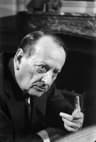
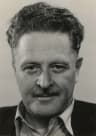
Alfred Tarski (January 14, 1901 – October 26, 1983) was a Polish-American logician and mathematician. He was widely recognized for his extensive contributions to model theory, metamathematics, and algebraic logic. His work fundamentally shaped modern mathematical logic and set theory.
Hoofdstuk
Levenshoofdstukken
Hoofdstuk 1 · 1901· Hoofdstuk 1 van 6
Early Life and Origins
Alfred Tarski was born on January 14, 1901, in Warsaw, which was then part of the Russian Empire, now Poland. His early life unfolded in a vibrant intellectual environment, laying the groundwork for his future academic pursuits. The educational system in Warsaw during his formative years undoubtedly fostered his exceptional talents in logic and mathematics, guiding him towards a path of scholarly excellence.
Hoofdstuk 2· Hoofdstuk 2 van 6
Career Beginnings
Tarski's professional journey began in his native Poland, where he quickly emerged as a formidable intellectual figure. As a budding mathematician and philosopher, his initial work set the stage for a career defined by rigorous inquiry and innovative thought. He embarked on research that explored the fundamental principles of logic, a discipline he would significantly advance throughout his lifetime. His early contributions established him as a rising star in the global mathematical community.
Hoofdstuk 3· Hoofdstuk 3 van 6
Major Achievements and Career Highlights
Alfred Tarski became renowned as a prolific author, leaving an enduring mark on numerous mathematical disciplines. He is best known for his pioneering work in model theory, metamathematics, and algebraic logic, areas where his insights were truly transformative. Beyond these core fields, Tarski also made significant contributions to abstract algebra, topology, geometry, measure theory, mathematical logic, set theory, type theory, and analytic philosophy, showcasing his expansive intellectual reach. His transition to become a Polish-American logician marked a significant phase in his career, expanding his influence internationally.
Hoofdstuk 4 · 1931· Hoofdstuk 4 van 6
Notable Works or Contributions
Tarski's academic output included several highly influential papers that continue to be studied and referenced today. Among his most cited works is "Sur la décomposition des ensembles de points en parties respectivement congruentes," a paper that garnered 349 citations and exemplified his rigorous approach to set theory. Another key publication, "Sur les ensembles définissables de nombres réels," published in 1931, received 149 citations, demonstrating his detailed work on definability in real numbers.
He further contributed to the theory of measure with "Une contribution à la théorie de la mesure," which accumulated 84 citations. Tarski also explored fundamental concepts in transfinite arithmetic through "Quelques théorèmes sur les alephs," cited 35 times. His paper "Les opérations logiques et les ensembles projectifs," also published in 1931, received 27 citations, highlighting his contributions to descriptive set theory and logical operations. These 14 papers, contributing to an h-index of 10, underscore the consistent quality and influence of his scholarship.
Hoofdstuk 5 · 1983· Hoofdstuk 5 van 6
Later Years
In his later years, Alfred Tarski established himself in the United States, cementing his status as a Polish-American logician. His continued research and teaching at Berkeley, United States, where he passed away on October 26, 1983, allowed him to mentor new generations of mathematicians and philosophers. Even as his career neared its end, his intellectual curiosity and dedication to advancing logical and mathematical understanding remained steadfast.
Hoofdstuk 6· Hoofdstuk 6 van 6
Legacy and Impact
Alfred Tarski's legacy is immense, characterized by his rigorous analytical methods and the breadth of his contributions to mathematical logic and its applications. His work fundamentally shaped modern understandings of model theory, providing tools for analyzing the relationship between formal languages and mathematical structures. Tarski's insights into metamathematics and algebraic logic continue to inform contemporary research, making him a central figure in the history of 20th-century mathematics.
He is remembered not only for his specific theorems and definitions but also for establishing new directions in mathematical thought. His unique ability to bridge various mathematical disciplines, from abstract algebra to set theory, ensured his lasting influence across the scientific community. Alfred Tarski's unwavering commitment to clarity and precision left an enduring framework for future generations of logicians and mathematicians to build upon.
Een leven in momenten
De momenten die een leven hebben gevormd


Veelgestelde vragen
Veelgestelde vragen
Wanneer is Alfred Tarski overleden?
Alfred Tarski overleed op 26 oktober 1983 in Berkeley, United States op 82-jarige leeftijd.
Waar werd Alfred Tarski geboren?
Alfred Tarski werd geboren in Warsaw, Poland op 14 januari 1901.
Waar is Alfred Tarski het meest bekend om?
Alfred Tarski is het meest bekend om Polish-American logician.
Hoe oud was Alfred Tarski bij overlijden?
Alfred Tarski was 82 jaar oud op het moment van overlijden.
Wat was de nationaliteit van Alfred Tarski?
Alfred Tarski kwam uit Poland.
Tijdlijn
Een leven in een oogopslag
Fotogalerij
Een leven in beelden
Klik op een polaroid om uit te vergroten · 18 foto's
QR-code
Deel deze biografie
Afdrukken en delen
Scan om deze biografiepagina te bezoeken. Druk af voor evenementen, tentoonstellingen of educatief materiaal.