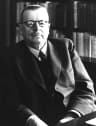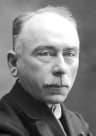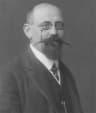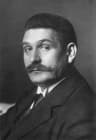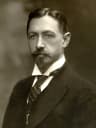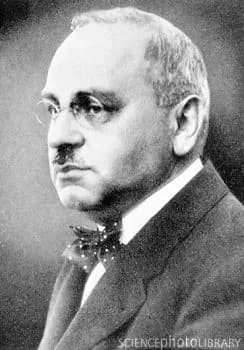
Geboren
February 7, 1870
Rudolfsheim, Austria
Overleden
May 28, 1937
Aberdeen, United Kingdom
Bekend om
Austrian psychotherapist
Alfred Adler (1870–1937) was Austria best known for Austrian psychotherapist.
Alfred Adler (February 7, 1870 – May 28, 1937) was an Austrian psychotherapist, and the founder of the school of individual psychology. He coined the term "inferiority complex" and emphasized the importance of social belonging and contributing to others for a sense of worth. His holistic view of individuals profoundly influenced modern psychological thought.
Hoofdstuk
Levenshoofdstukken
Hoofdstuk 1 · 1870· Hoofdstuk 1 van 6
Early Life and Origins
Alfred Adler was born on February 7, 1870, in Rudolfsheim, Austria, a suburb of Vienna. Growing up in a diverse and intellectually vibrant environment, his early experiences undoubtedly contributed to his deep understanding of human social dynamics. This foundational period in Austria set the stage for his subsequent pursuit of medical knowledge and his eventual dedication to the study of the human mind.
His academic journey began with studies in medicine at the University of Vienna, where he earned his medical degree in 1895. These formative years provided him with a robust medical background, which he initially applied in general practice before specializing. His comprehensive medical education offered a broad perspective on human health, which would later inform his psychological theories, viewing the individual as an integrated whole rather than a collection of separate parts.
Hoofdstuk 2· Hoofdstuk 2 van 6
Career Beginnings
Adler initially pursued a career as an ophthalmologist, a highly specialized field focused on the human eye. This early professional path demonstrates his meticulous approach to understanding intricate biological systems. However, his interests soon broadened, leading him towards the burgeoning field of psychiatry and psychotherapy, where he found his true calling in exploring the complexities of the human psyche.
His significant engagement with the early psychoanalytic movement began when he became part of a prominent intellectual circle in Vienna, often referred to as 'Freud's Wednesday Society.' For a period, he collaborated closely with Sigmund Freud and other pioneering thinkers, contributing to the initial discourse that was shaping modern psychoanalysis. This collaboration was crucial for Adler's intellectual development, even as his distinct theories began to emerge, eventually leading him to forge his own path.
Hoofdstuk 3 · 1912· Hoofdstuk 3 van 6
Major Achievements and Career Highlights
Alfred Adler is most widely recognized as the founder of the school of Individual Psychology, a system of thought that fundamentally diverged from the Freudian psychoanalysis dominant at the time. He officially established this distinct school in 1912, marking a significant milestone in the history of psychology. This establishment signified his commitment to an approach that emphasized social determinants of personality alongside individual strivings.
A central tenet of Adler's work was his emphasis on the importance of feelings of belonging, asserting that humans are inherently social beings driven by a need for connection. He highlighted the critical role of relationships within the family unit and proposed that birth order significantly influences personality development. These ideas offered a fresh perspective, distinguishing his theories from the more instinct-driven models prevalent in his common circle.
Adler also proposed a powerful idea about human motivation: that contributing to others is how individuals attain a profound sense of worth and belonging within their family and society. This concept, often termed 'social interest,' underscored his belief that individual well-being is intrinsically linked to community engagement and concern for the welfare of others. His insights broadened the scope of psychological inquiry to include societal and familial contexts.
Hoofdstuk 4· Hoofdstuk 4 van 6
Notable Works or Contributions
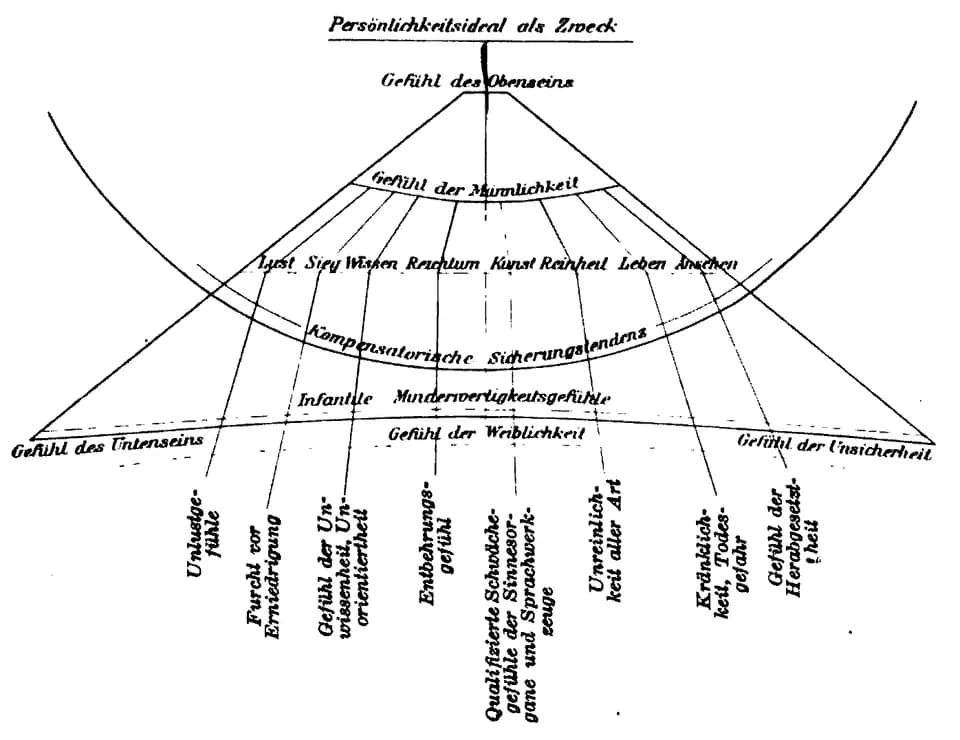
Among Adler's most enduring contributions is his earlier work focusing on feelings of inferiority, where he famously coined the term "inferiority complex." He theorized that this complex represents an isolating element, an overwhelming sense of inadequacy, which he argued plays a key role in personality development. This concept explains how individuals strive to overcome perceived weaknesses, often driving ambition and growth.
His exploration of the inferiority complex revealed how these feelings can motivate individuals to compensate or strive for superiority, shaping their life goals and interactions. This profound insight offered a new lens through which to understand human behavior and motivation, moving beyond purely sexual or aggressive drives. It highlighted the powerful psychological forces stemming from our perceptions of ourselves in relation to others.
The very name of his psychological school, Individual Psychology, was chosen by Adler to reflect his core belief that a human being must be considered as an individual whole. He advocated for a holistic understanding of personality, emphasizing the unity and self-consistency of the individual. This perspective viewed people as integrated beings whose thoughts, feelings, and actions are all directed towards a specific goal, reflecting a unified life-style and purpose.
Hoofdstuk 5· Hoofdstuk 5 van 6
Later Years
Throughout his later years, Alfred Adler dedicated himself to disseminating the principles of Individual Psychology through teaching, lecturing, and writing. His work gained international recognition, leading him to travel extensively, particularly to the United States, where his ideas were widely embraced and taught. He continued to refine his theories and apply them to various fields, including education and child guidance.
Alfred Adler passed away on May 28, 1937, while on a lecture tour in Aberdeen, United Kingdom. His death marked the end of a prolific career dedicated to understanding and improving the human condition. His commitment to psychological education and the advancement of his theories continued right up until his final days, leaving behind a rich body of work for future generations.
Hoofdstuk 6· Hoofdstuk 6 van 6
Legacy and Impact
Alfred Adler's legacy is profound and far-reaching, having significantly influenced the trajectory of psychotherapy and our understanding of human nature. His school of Individual Psychology continues to offer a valuable framework for therapeutic practice, focusing on holism, social embeddedness, and goal-directed behavior. Concepts he introduced, such as the inferiority complex and social interest, are now firmly embedded in psychological discourse and popular culture.
His emphasis on the individual's striving for significance, the role of social context, and the impact of early family dynamics provided a critical departure from purely reductionist models. Adler's insights paved the way for humanistic and cognitive-behavioral approaches in psychology, stressing the importance of conscious choice and the individual's capacity for growth. He demonstrated how feelings of inadequacy can be channeled into productive endeavors and contribute to personal and societal good.
Today, Adlerian psychology is applied in diverse fields, including counseling, education, and family therapy. His work continues to inspire practitioners and researchers who seek to understand individuals within their social environments and empower them to find belonging and purpose. Alfred Adler's vision of a psychology that honors the whole person and their connections to others remains a powerful force in modern psychological thought, solidifying his place as a true pioneer.
Een leven in momenten
De momenten die een leven hebben gevormd





Veelgestelde vragen
Veelgestelde vragen
Wanneer is Alfred Adler overleden?
Alfred Adler overleed op 28 mei 1937 in Aberdeen, United Kingdom op 67-jarige leeftijd.
Waar werd Alfred Adler geboren?
Alfred Adler werd geboren in Rudolfsheim, Austria op 7 februari 1870.
Waar is Alfred Adler het meest bekend om?
Alfred Adler is het meest bekend om Austrian psychotherapist.
Hoe oud was Alfred Adler bij overlijden?
Alfred Adler was 67 jaar oud op het moment van overlijden.
Wat was de nationaliteit van Alfred Adler?
Alfred Adler kwam uit Austria.
Tijdlijn
Een leven in een oogopslag
Fotogalerij
Een leven in beelden
Klik op een polaroid om uit te vergroten · 48 foto's
QR-code
Deel deze biografie
Afdrukken en delen
Scan om deze biografiepagina te bezoeken. Druk af voor evenementen, tentoonstellingen of educatief materiaal.