Geboren
November 24, 1898
Ningxiang City, People's Republic of China
Verstorben
November 12, 1969
Kaifeng, People's Republic of China
Bekannt für
2nd President of the People's Republic of China
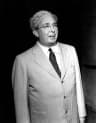
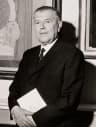
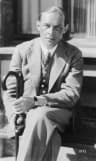
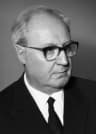
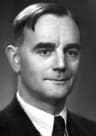
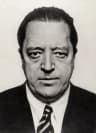
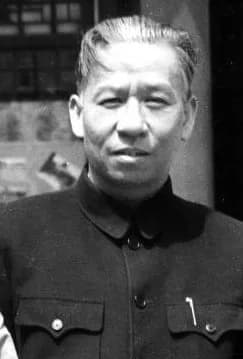
Liu Shaoqi (1898–1969) was People's Republic of China best known for 2nd President of the People's Republic of China.
Liu Shaoqi (November 24, 1898 – November 12, 1969) was a Chinese politician and trade unionist from Ningxiang City. He served as the 2nd President of the People's Republic of China and was a key leader in the Chinese Communist Party. His legacy reflects both his significant contributions and his purge during the Cultural Revolution.
Kapitel
Lebenskapitel
Kapitel 1 · 1898· Kapitel 1 von 5
Early Life and Origins
Liu Shaoqi's birth in Ningxiang City on November 24, 1898, placed him at a critical juncture in Chinese history. This era was characterized by widespread social and political change, fostering an environment ripe for revolutionary thought. Although details of his childhood remain sparse, his early environment undoubtedly contributed to his awakening political consciousness.
Kapitel 2· Kapitel 2 von 5
Career Beginnings
Liu Shaoqi's dedication to China's transformation began early, marking him as a committed Chinese revolutionary and politician from his initial involvement. He distinguished himself not only in political organizing but also as a dedicated trade unionist. His efforts in advocating for the working class provided a practical dimension to his revolutionary ideals.
These early roles established him as a key figure in the nascent communist movement within China. His foundational work as a trade unionist demonstrated a direct engagement with the socio-economic issues facing the nation's populace. This practical experience would prove invaluable in his later, higher-level leadership positions.
Kapitel 3 · 1954· Kapitel 3 von 5
Major Achievements and Career Highlights
Liu Shaoqi's career was characterized by a series of high-profile and influential appointments within the People's Republic of China. From 1954 to 1959, he served with distinction as the chairman of the Standing Committee of the National People's Congress, a crucial legislative body. This role placed him at the center of the legislative process, overseeing crucial governmental decisions.
His stature within the Chinese Communist Party (CCP) steadily grew, leading to his elevation as the first-ranking vice chairman of the CCP. He held this powerful position from 1956 to 1966, indicating his central role in party leadership and policy formulation. During this decade, he was instrumental in guiding the party's direction.
One of his most significant achievements was his tenure as the 2nd President of the People's Republic of China. Assuming this esteemed office in 1959, he served until 1968, working to implement policies and strengthen the new nation. His presidency marked a period of considerable administrative and developmental efforts within the country.
Kapitel 4· Kapitel 4 von 5
Later Years
Despite his decades of dedicated service and high political standing, Liu Shaoqi's later years were tragically overshadowed by intense political upheaval. He was widely regarded as a potential successor to Chairman Mao Zedong, a testament to his influence and perceived capabilities. This perception, however, also placed him in a precarious position during a volatile time.
During the tumultuous period of the Cultural Revolution, Liu Shaoqi became a prominent target for criticism and political purging. He was stripped of his offices and subjected to severe public denunciation, marking a dramatic and swift fall from power. This episode represents a stark reminder of the era's political intensity and the vulnerability of even high-ranking officials.
Liu Shaoqi's life came to an end on November 12, 1969, in Kaifeng, People's Republic of China. His death occurred under circumstances directly related to the political persecution he endured during the Cultural Revolution. The events surrounding his final years reflect a dark chapter in China's modern history.
Kapitel 5· Kapitel 5 von 5
Legacy and Impact
Liu Shaoqi's legacy is complex, defined by his foundational contributions to the Chinese revolution and his tragic downfall during the Cultural Revolution. As a leading revolutionary, politician, and trade unionist, he played a crucial role in establishing and governing the People's Republic of China. His leadership as president had a lasting influence on the nation's early development.
His story serves as a significant historical account, illustrating the intricate dynamics of power and ideology within the Chinese Communist Party. The circumstances of his purge highlight the substantial influence of the Cultural Revolution on China's political elite and society at large. Liu Shaoqi remains a figure whose life encapsulates the challenges and transformations of 20th-century China.
His dedication to public service, alongside his eventual fate, ensures his place as a subject of continued study and reflection in Chinese history. He symbolizes both the ambitious aspirations of the revolution and the harsh realities of its internal struggles. His contributions, both constructive and cautionary, continue to inform historical understanding.
Ein Leben in Momenten
Die Momente, die ein Leben prägten
FAQ
Häufig gefragt
Wann starb Liu Shaoqi?
Liu Shaoqi starb am 12. November 1969 in Kaifeng, People's Republic of China im Alter von 70 Jahren.
Wo wurde Liu Shaoqi geboren?
Liu Shaoqi wurde in Ningxiang City, People's Republic of China am 24. November 1898 geboren.
Wofür ist Liu Shaoqi am bekanntesten?
Liu Shaoqi ist am bekanntesten für 2nd President of the People's Republic of China.
Wie alt war Liu Shaoqi beim Tod?
Liu Shaoqi war zum Zeitpunkt des Todes 70 Jahre alt.
Welche Nationalität hatte Liu Shaoqi?
Liu Shaoqi stammte aus People's Republic of China.
Zeitlinie
Leben im Überblick
Fotogalerie
Ein Leben in Bildern
Klicken Sie ein Polaroid an, um es zu vergrößern · 24 Fotos
QR-Code
Diese Biografie teilen
Drucken & Teilen
Scannen Sie, um diese Biografieseite zu besuchen. Drucken Sie sie für Veranstaltungen, Ausstellungen oder Lehrmaterialien.