Geboren
October 1, 1924
Lillian G. Carter Nursing Center, United States
Verstorben
December 29, 2024
Jimmy Carter House, United States
Bekannt für
president of the United States from 1977 to 1981
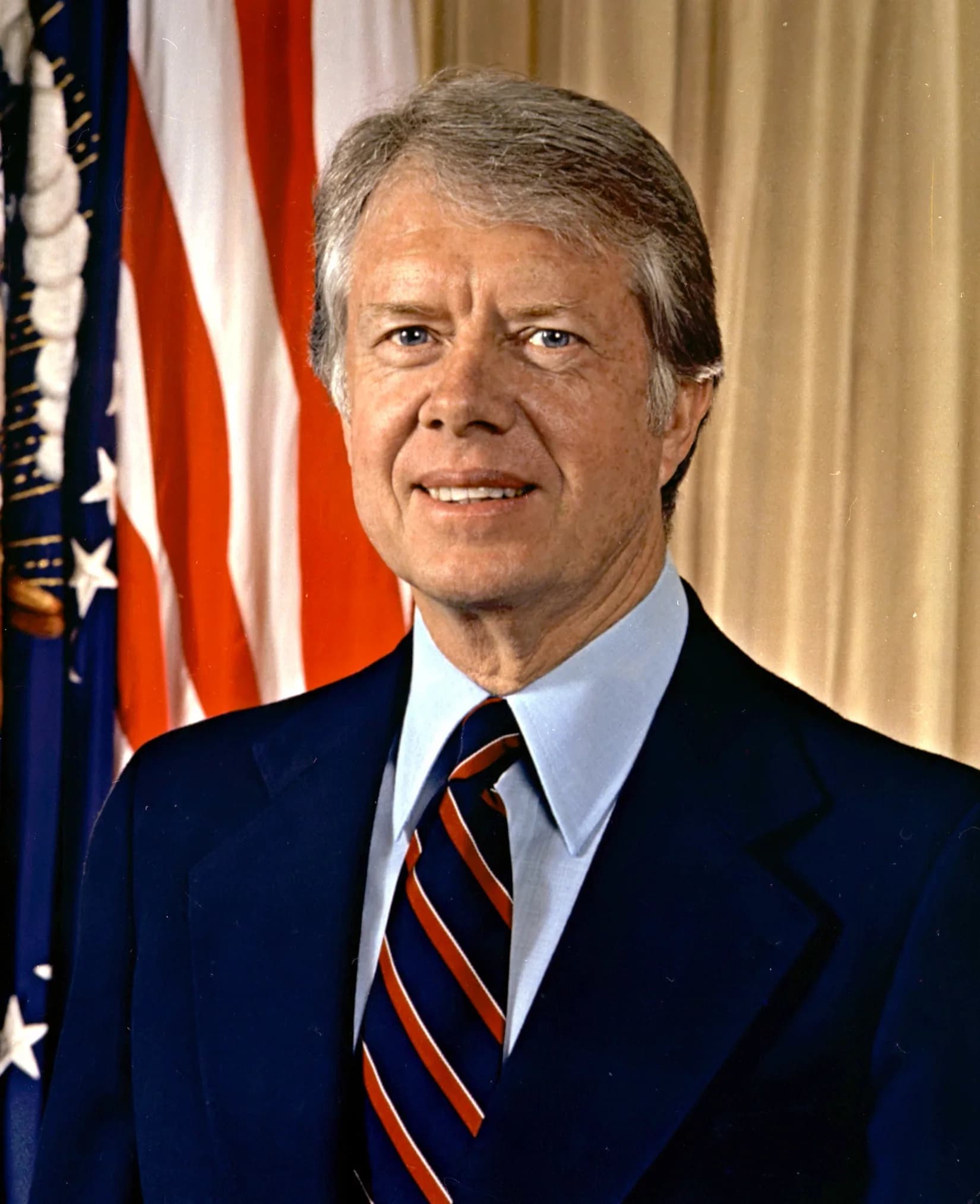
Jimmy Carter (1924–2024) was United States best known for president of the United States from 1977 to 1981.
James Earl Carter Jr. (October 1, 1924 – December 29, 2024) was an American politician and humanitarian. He served as the 39th president of the United States from 1977 to 1981 and was awarded the Nobel Peace Prize in 2002 for his global humanitarian efforts. Carter dedicated his life to advancing democracy and human rights worldwide.
Kapitel
Lebenskapitel
Kapitel 1 · 1924· Kapitel 1 von 7
Early Life and Origins
Jimmy Carter entered the world on October 1, 1924, at the Lillian G. Carter Nursing Center in the United States. His formative years were spent in an environment that instilled in him strong values of community and service. These early experiences in rural Georgia shaped his perspective and prepared him for a life dedicated to the betterment of others, laying the foundation for his later political and humanitarian efforts.
His education and early professional pursuits included training as a naval officer and submariner, professions that require discipline, precision, and leadership. This background provided him with a unique blend of practical and strategic skills, which he would later apply to his career in public service. Carter's diverse professional life also saw him as a farmer and businessperson before fully dedicating himself to politics.
Kapitel 2 · 1963· Kapitel 2 von 7
Career Beginnings
Carter’s political journey began in his home state of Georgia, where he served in the Georgia State Senate from 1963 to 1967. This experience in state legislature provided him with crucial insights into the workings of government and the needs of his constituents. His dedication and effectiveness in this role quickly earned him recognition.
Following his time in the State Senate, Carter successfully ran for the governorship of Georgia, serving as the 76th governor from 1971 to 1975. During his tenure as governor, he worked on a range of issues, demonstrating his capacity for executive leadership. These years as governor established him as a prominent figure in American politics and paved the way for his eventual presidential campaign.
Kapitel 3 · 1977· Kapitel 3 von 7
Major Achievements and Career Highlights
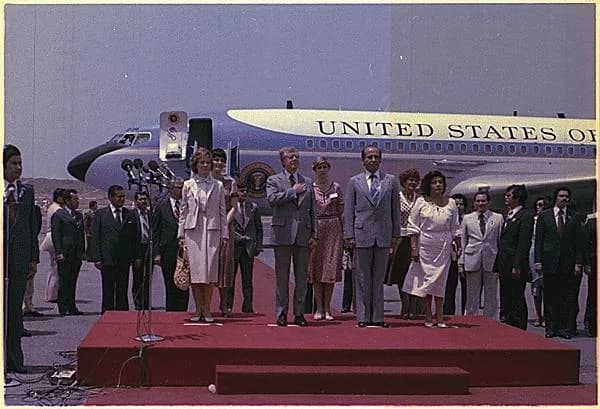
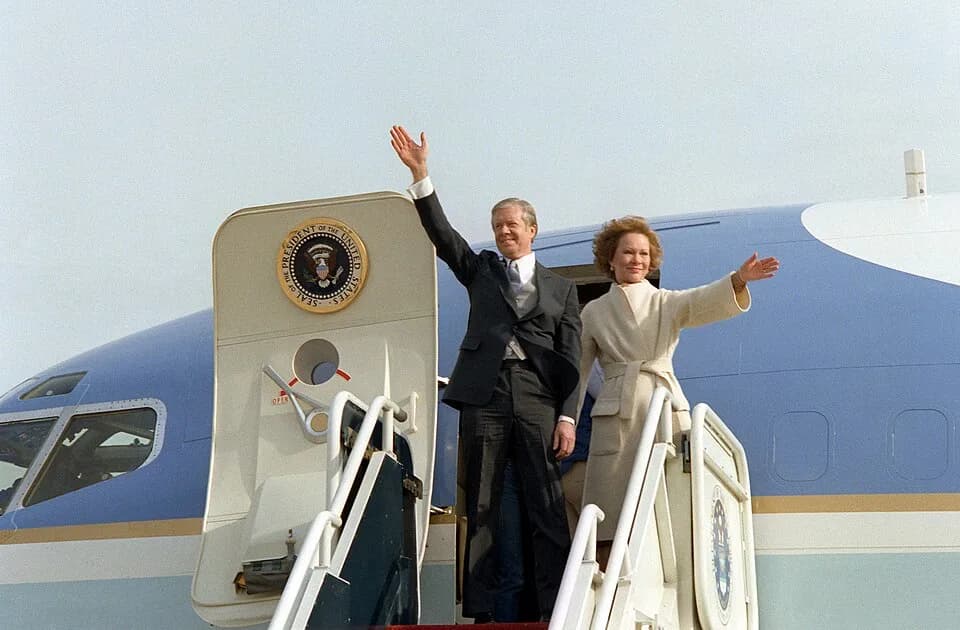
Jimmy Carter's most prominent role was as the 39th president of the United States, serving from 1977 to 1981. During his presidency, he tackled complex challenges, always striving for principled and peaceful solutions. His administration focused on human rights as a cornerstone of foreign policy, a stance that resonated globally and redefined America's diplomatic approach.
Post-presidency, Carter continued his tireless work as a peace activist and humanitarian, earning him the Nobel Peace Prize in 2002. This prestigious award recognized his "decades of untiring effort to find peaceful solutions to international conflicts, to advance democracy and human rights, and to promote economic and social development." His post-presidential endeavors became an unprecedented model for former world leaders.
An extraordinary aspect of his life was his remarkable longevity; Jimmy Carter lived longer than any other president in U.S. history, reaching the age of 100. This milestone underscored a life filled with purpose, service, and a consistent commitment to his values. His various roles as a writer, statesperson, human rights defender, and environmentalist highlight the breadth of his contributions.
Kapitel 4· Kapitel 4 von 7
Personal Life
Jimmy Carter's personal life was marked by a steadfast commitment to his principles and his family. Though specific details about his family life beyond his public roles are not extensively provided, his birthplace at the Lillian G. Carter Nursing Center and his passing at the Jimmy Carter House in the United States tie directly to his personal journey. His journey through a century of life, reaching 100 years old, showcases a life lived fully and purposefully, anchored in his home country.
Kapitel 5 · 1990· Kapitel 5 von 7
Notable Works or Contributions
As a prolific writer and autobiographer, Jimmy Carter authored numerous works that reflected his experiences and insights. These include significant publications such as "Observing Guyana's electoral process, 1990-1992," and "The May 7, 1989 Panamanian elections," which documented his commitment to electoral integrity worldwide. His writings also encompassed broader geopolitical analysis, seen in "The United States and the Soviet Union."
His bibliography also includes "Vienna summit, June 15-18, 1979," a record from a key diplomatic event during his presidency. Furthermore, his involvement in public health initiatives is evident through works like "Task Force for Child Survival." Carter's collected speeches, including his "State of the Union Addresses," offer direct insight into his presidential vision and priorities, alongside broader reflections on global development like "Conference for Global Development Cooperation."
Kapitel 6· Kapitel 6 von 7
Later Years
In his later years, Jimmy Carter solidified his reputation as a global elder statesman and a tireless humanitarian. After leaving the presidency, he devoted himself to resolving conflicts, promoting democracy, and eradicating disease around the world through the Carter Center, which he founded with his wife. This period was characterized by his active engagement in observation missions for elections, bringing integrity and transparency to democratic processes internationally.
His unwavering advocacy for peace and human rights continued for decades, exemplifying a dedication that transcended political office. Even as he reached and surpassed the age of 100, a milestone no other U.S. president had achieved, Carter remained a beacon of service and moral leadership. His final years continued to inspire, demonstrating that a commitment to humanitarianism knows no retirement.
Kapitel 7· Kapitel 7 von 7
Legacy and Impact
Jimmy Carter's legacy is defined by his profound dedication to human rights and his relentless pursuit of peace, both during and after his presidency. He transformed the perception of post-presidential life, demonstrating how former leaders could continue to exert positive influence on a global scale. His efforts to monitor elections and mediate international disputes fostered democratic principles and stability in numerous nations.
The Nobel Peace Prize he received in 2002 cemented his standing as a leading figure in global humanitarianism and diplomacy. Carter’s life exemplified a commitment to moral values, social justice, and environmental stewardship, establishing a standard for ethical leadership. His enduring impact on conflict resolution, democracy, and human rights will continue to inspire generations of leaders and activists worldwide.
Ein Leben in Momenten
Die Momente, die ein Leben prägten


FAQ
Häufig gefragt
Wann starb Jimmy Carter?
Jimmy Carter starb am 29. Dezember 2024 in Jimmy Carter House, United States im Alter von 100 Jahren.
Wo wurde Jimmy Carter geboren?
Jimmy Carter wurde in Lillian G. Carter Nursing Center, United States am 1. Oktober 1924 geboren.
Wofür ist Jimmy Carter am bekanntesten?
Jimmy Carter ist am bekanntesten für president of the United States from 1977 to 1981.
Wie alt war Jimmy Carter beim Tod?
Jimmy Carter war zum Zeitpunkt des Todes 100 Jahre alt.
Welche Nationalität hatte Jimmy Carter?
Jimmy Carter stammte aus United States.
Zeitlinie
Leben im Überblick
Fotogalerie
Ein Leben in Bildern
Klicken Sie ein Polaroid an, um es zu vergrößern · 22 Fotos
QR-Code
Diese Biografie teilen
Drucken & Teilen
Scannen Sie, um diese Biografieseite zu besuchen. Drucken Sie sie für Veranstaltungen, Ausstellungen oder Lehrmaterialien.